
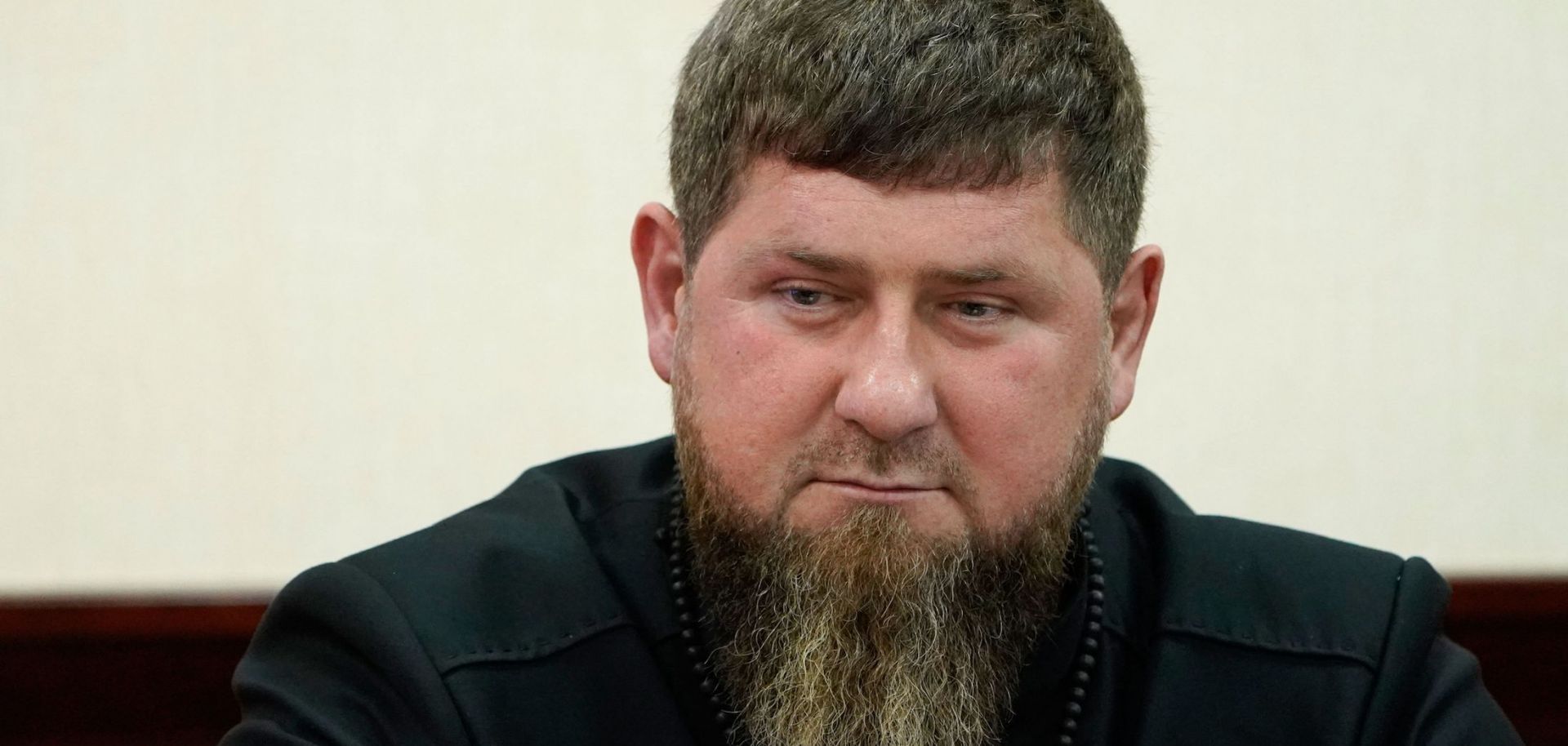
Reports of the deteriorating health of Ramzan Kadyrov, the long-time leader of Chechnya, carry acute and chronic risks for the region's stability, but instability is unlikely to reach anywhere near the level seen in the 1990s. On Sept. 18, prominent Russian journalist Alexei Venediktov reported that Kadyrov was undergoing treatment at Moscow Central Clinical Hospital for kidney failure and that he had undergone "intensive medical procedures." He added that Kadyrov had officially transferred his duties as head of the Chechen Republic on July 3, had since undergone dialysis and other procedures, and an order reversing the July 3 order relieving Kadyrov had not been issued. When asked about reports that the 46-year-old Kadyrov was unwell, Kremlin spokesman Dmitry Peskov said that he had no information. Attention returned to the topic Sept. 15 when a Ukrainian military intelligence service spokesman said Kadyrov was indeed in critical condition. In apparent response to the reports, Kadyrov’s Telegram channel posted a video Sept. 17 of Kadyrov walking in a park. While details remain scant and speculation rife, concern about Kadyrov's continued viability as leader will likely persist even should he reemerge, with political implications for stability in Chechnya and Russia.
- Rumors about Kadyrov's deteriorating health are not new. Speculation picked up in March 2023 amid reports that Kadyrov had been suffering from kidney problems for years and were becoming more serious. These reports are supported by physical signs that Kadyrov is becoming less healthy. He has gained weight in recent months, his public speaking abilities have deteriorated, and his face appears bloated.
- Other recent events pointed to Kadyrov's poor health and desire to prepare accordingly. On Feb. 21, Ramzan Kadyrov did not appear at Russian President Vladimir Putin's federal address in Moscow, attended by nearly all other significant political figures in Russia. He met March 3 with Putin along with Kadyrov's oldest son, the 17-year-old Akhmat. The highly symbolic event was reminiscent of a 2004 meeting when 28-year-old Ramzan Kadyrov came to the Kremlin after his father was assassinated in what amounted to the young Kadyrov's effective presentation to the Russian public as Chechnya's new political leader.
Kadyrov's sudden death would create significant near-term instability in Chechnya and unpredictability regarding the region's future, but large-scale insurgency or renewed war over the region's status within Russia is unlikely. As modern medicine can allow people with poor kidney function to live for decades, it is quite possible that Kadyrov will experience a modest recovery that will allow him to remain Chechnya's formal leader for many years, and even continue to exercise informal control of the region after leaving the post of head of the Chechen Republic, avoiding any sort of acute political crisis. But even if he remains Chechnya's formal leader, doubts about his health will inevitably cause some instability in the region, advancing plans for his eventual succession. Kadyrov has been the focus of power and ideology in Chechnya. His authority is derived from Putin's approval of him, as opposed to elections or Russian law, meaning elite infighting not only within Chechnya but also between the region and Moscow is likely to ensue as factions vie to designate his successor. This will cause significant near-term volatility, but factions are unlikely to take up arms against Moscow on a massive scale similar to what was seen in the 1990s. The Chechen independence movement in exile will attempt to use the situation to destabilize the region. But the opposition has been entirely underground for more than a decade and Kadyrov or his potential successor will not face an immediate threat from independence or pro-democracy forces, only from other Chechen elites seeking to gain power and wealth from Kadyrov's fall from grace — something only Moscow can provide.
- The region's independence movement, known as the Chechen Republic of Ichkeria or simply Ichkeria, has existed all but entirely in exile since before the end of the second Chechen war in 2009. It will attempt to use Kadyrov's poor health or death to distance the region from both Moscow and participation in the war in Ukraine, including via violence. In fact, several natives of Chechnya and members of the Chechen diaspora abroad are currently fighting on behalf of Ukraine, some since 2014. Even so, decades of war and repression has left the pro-independence, pro-democracy movement much too small and isolated from events in Chechnya to affect the situation meaningfully even were they to try to reenter Chechnya. Meanwhile, Chechen jihadist groups, most notably Chechen Islamists residing in Syria and Iraq with at most limited involvement in the Ichkerian independence movement, may seek to return to the region, potentially increasing the risk of terrorism.
- Kadyrov's ruling clique has few allies within the Russian elite outside of Chechnya, who view the region as dangerous, of limited loyalty to Moscow and as siphoning a disproportionate amount of the federal budget. This is one reason Kadyrov has attempted to gain broader support in both the Russian elite and grassroots nationalist circles by at times aligning with former Wagner Group leader Yevgeny Prigozhin and advocates of escalating the war in Ukraine. But Kadyrov has also hinted at the region's selective observance of Russian law during the war, for example when Kadyrov on Sept. 22 said that the national partial military mobilization Putin declared Sept. 21 would not apply to Chechnya because the region had already overfulfilled its conscription quota by 254%.
If Kadyrov's health wanes, Moscow will try to establish greater federal control over Chechnya, but the process will face significant obstacles. Russia's powerful domestic security and intelligence service, the FSB, has long been skeptical of Kadyrov for numerous reasons, most notably radicalization and terrorism concerns related to his Islamist (as opposed to secular) public image and the vulnerabilities related to his loyalty to Putin personally rather than to the broader Russian government in Moscow. If Kadyrov's health significantly deteriorates or if he were to die, the FSB and other influential players in the Kremlin will likely push hard for a succession process that, while preserving stability in the near term, also sets the region on a trajectory to become more like Russia's other regions, with less importance vested in an individual leader and his personal relationship with Putin. But the FSB's desires in this regard will come into conflict with strong Chechen nationalism and an intricate internal balance of power among the region's clans that will not take lightly the perception that the region's leaders are completely selected by Moscow. Should Kadyrov's power come in question, and especially if he dies, a power struggle among various high-ranking officials and clans in the region to be his successor would likely ensue. Inevitably, accusations of selling out the region's interests to Moscow would emerge, increasing the risk of violence. The most viable successors would seek to guarantee the Kadyrov family's status in some form to gain their backing, but also to secure Moscow's backing by promising stability in the region in exchange for stable budget flows to the region. Though Moscow recognizes that accomplishing this will require someone as merciless as Kadyrov, any process requiring a series of arrests and/or killings to secure power and deter challengers cannot be guaranteed to go smoothly.
- A candidate to de facto succeed Kadyrov would be the current acting head of Chechnya Muslim Khuchiev, who since 2018 has been prime minister of the Chechen Republic and has served as acting head of Chechnya on multiple occasions. This suggests he enjoys support from the Kremlin, Kadyrov and multiple factions in Chechnya. A technocrat chosen for the role precisely because he is not seen as an obvious successor to Kadyrov, he is unlikely to replace Kadyrov. (Were a successor designated, Moscow and local elites would preemptively reorient from Kadyrov to this person, something dangerous for Kadyrov.) Adam Delimkhanov, the head of the Chechen branch of Russia’s national guard and effective curator of the region's security services personally loyal to Kadyrov, is arguably the likeliest successor. Despite being older than Kadyrov, at 53 he is still young for leading Russian government officials, and notably enjoys closer connections with Moscow through his membership in the State Duma since 2007. Another plausible successor is Magomed Daudov, a close Kadyrov confidant and highly public figure who heads Chechnya's regional parliament. Kadyrov's son Akhmat is not considered a serious contender because under Russian law the minimum age of governors is 30. That said, Akhmat will likely be politically active.
- Putin gleaned benefits from perceptions that Kadyrov's highly loyal cadre of security forces, such as the 141st Special Motorized Regiment and local riot police, would be willing to go to great lengths to protect Putin's regime. But the credibility of this idea had already been declining given the failure by Chechen forces to play a decisive role in combat in Ukraine, nor did they play an important role in opposing Prigozhin's brief mutiny.
- Kadyrov and the Benoy clan to which he belongs have rivals and enemies among the Chechen population due to the destruction of property during the Chechen wars, seizure of assets during the Kadyrov family's securing of power and deaths or detentions of family members, among many other grievances.
