
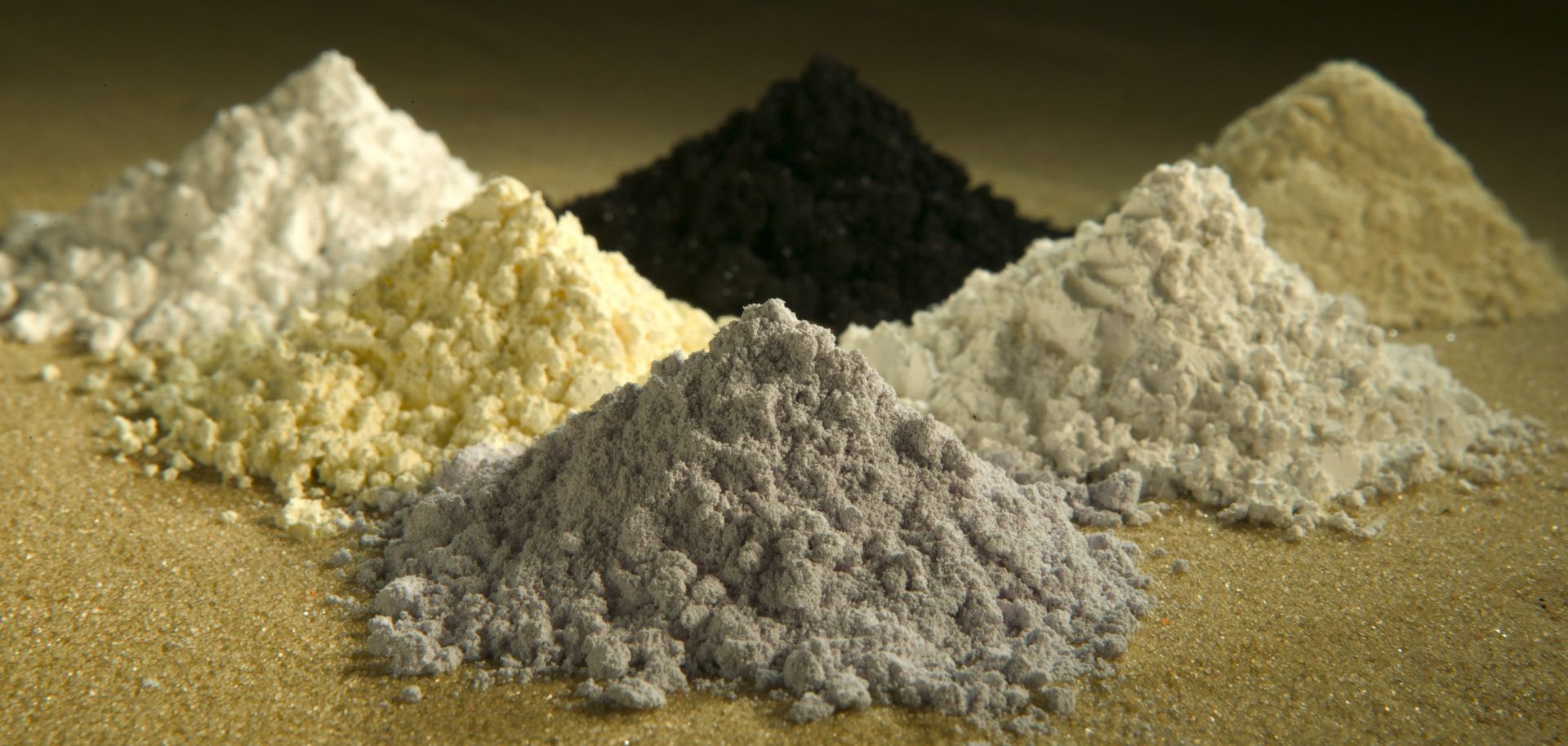
Malaysia's recently announced plan to ban exports of rare earth elements is the latest example of the deepening regional trend of resource nationalism, and will negatively impact Malaysia's international partners in this sector while also affording Malaysia a strategic advantage in the marketplace. Malaysian Prime Minister Anwar Ibrahim on Sept. 11 unveiled his government's 2023-2025 economic plan, which includes several export bans on nonradioactive rare earths. The rare earths covered by the bans include lanthanide, monazite and xenotime, which are used in battery, magnetic, electronic and optical devices and are critical to emerging and renewable technologies. According to Anwar, the bans are meant to enhance domestic processing of these rare earths, better positioning Malaysia in the global market and boosting revenue while "guarantee[ing] a maximum return to the country." The bans have not yet been fully codified into policy, and Anwar did not indicate when the bans would enter effect. Before implementing the bans, Anwar said the government will develop a detailed geological map to help prepare a comprehensive business plan based on the country's geography and reserve locations.
- According to the U.S. Geological Survey, Malaysia accounted for 5% of global rare earth element imports in 2020, ranking it in the top five. Ten of Malaysia's 13 states have lanthanide, monazite or xenotime reserves. The government's 2023-2025 economic plan specifically identifies rare earth minerals as a high-growth, high-value sector that Malaysia will prioritize to drive structural economic reforms.
- In July, Malaysia's minister of natural resources, environment and climate change told lawmakers that Malaysia holds around 16.1 million tons of nonradioactive rare earths valued at an estimated $173 billion.
- Anwar expects the bans to drive the domestic rare earths industry in generating $2.05 billion of Malaysian gross domestic product and creating 7,000 new jobs by 2025. Malaysia's 2023 GDP is projected to reach $424.59 billion, according to the World Bank.
Malaysia is embarking on a path of resource nationalism akin to its neighbor Indonesia amid a regional trend. Many developing economies are looking to use their natural resources, including rare earth minerals, to take advantage of growing global demand for raw and processed materials amid a global push to cultivate supply chain resiliency and diversification. This has led to a rapid increase in global competition for access to these resources that has pushed developed economies to seek access to deposits around the world — and especially access to rare earths, which along with lithium and nickel are critical to the energy transition. Indonesia implemented export restrictions on nickel in 2020 and bauxite in June 2023 amid growing regional resource nationalism, and will likely institute additional bans. For unprocessed nickel especially, Indonesia is hoping to force foreign investors to invest in nickel smelters and processing plants in Indonesia. The new Malaysian export bans similarly aim to result in these materials being processed domestically rather than exported for use in the manufacture of more valuable products and so generating value-added revenue for foreign countries, not Indonesia. Malaysia's relatively small reserves and limited processing capacity mean it will lack the leverage to dominate complex global supply chains from start to finish.
- China also recently restricted the export of gallium and germanium, though mainly to retaliate against U.S. technology restrictions. In 2022, China accounted for 70% of global rare earth exports per the U.S. Geological Survey.
- Malaysia has been exploring resource nationalism in the past few years, jumping up the rankings to 30th worldwide in risk consultancy Verisk Maplecroft's 2019 Resource Nationalism Index report, propelling it from low to medium risk.
- Indonesia has been mulling extending bans on tin and copper exports since January 2022. Its nickel and bauxite bans have met with some success, including attracting billions of dollars of South Korean investment in mineral refining.
Malaysia will likely continue to pursue resource nationalism, negatively impacting foreign investors. Compared to Indonesia and China, Malaysia is not rich in rare earths, holding only 30,000 metric tons; by contrast, China has an estimated 44 million metric tons. As these resources have taken on critical applications in high-demand products such as semiconductors, lasers, high-tech military equipment, smartphones, EVs, magnets, optical equipment and others, Malaysia's decision to ban rare earth exports is aimed more at controlling these resources and influencing their attendant international supply chains than in immediately boosting state revenue. Its relatively small reserves mean that Malaysia's leverage in the rare earth elements global market will remain limited, but the bans will provide a strategic advantage in the longer term by giving it more control of its resources for use attracting foreign investment for smelting and processing and eventually moving up the value chain to the production of high-tech goods. China, which holds at least 85% of global capacity to process rare earths into finished materials, holds a good position from which to pressure raw rare earth element exporters by imposing export quotas of its own to manipulate prices. It also uses its market dominance and technological advantages to influence the sourcing decisions of smaller markets, like Malaysia, via various methods such as strategic stockpiling, vertical integration with Chinese entities and geopolitical leverage.
- Though lacking a relative abundance of rare earth elements, Malaysia is rich in tin, copper and gold, on which it may also impose export controls.
The bans aim to increase Malaysia's refining capacity by gaining foreign investment and know-how, which, depending on how deep the bans go into the supply chain, will allow it to reduce its dependence on China in terms of critical minerals and production of high-tech products. Chinese investment in Malaysian rare earths is set to decline as it looks to other countries in the region to source raw and mixed rare earth compounds, meaning Malaysia will need to grow its domestic refining capacity to make the trade-off worthwhile. But Asian countries beyond Malaysia are likely looking at Indonesia's resource nationalism policies and considering similarly protecting and profiting from their own raw materials. This suggests the trend of protectionism is likely to accelerate as global demand for rare earth elements soars, something primarily driven by geostrategic competition. Should Malaysia's gambit fail to succeed, however, other countries could well become less willing to adopt this strategy.
- Australian company Lynas Rare Earth, the world's largest rare earth element producer outside China, mines rare earth elements in Australia and imports them to its refining facility in Malaysia. Lynas and the Malaysian government are currently in a dispute over environmental concerns, with Malaysia ruling that it cannot import, mine or refine radioactive material. Owing to Lynas' value in the rare earth element supply chain, this order has been postponed to January 2024 and will likely be pushed back further, as the minerals it refines are critical for emerging high-tech industries. Beyond Lynas, Malaysia has little domestic refining capacity.
- According to the U.S. Geological Survey, China imported 100% of exported Malaysian monazite as of 2018.
