
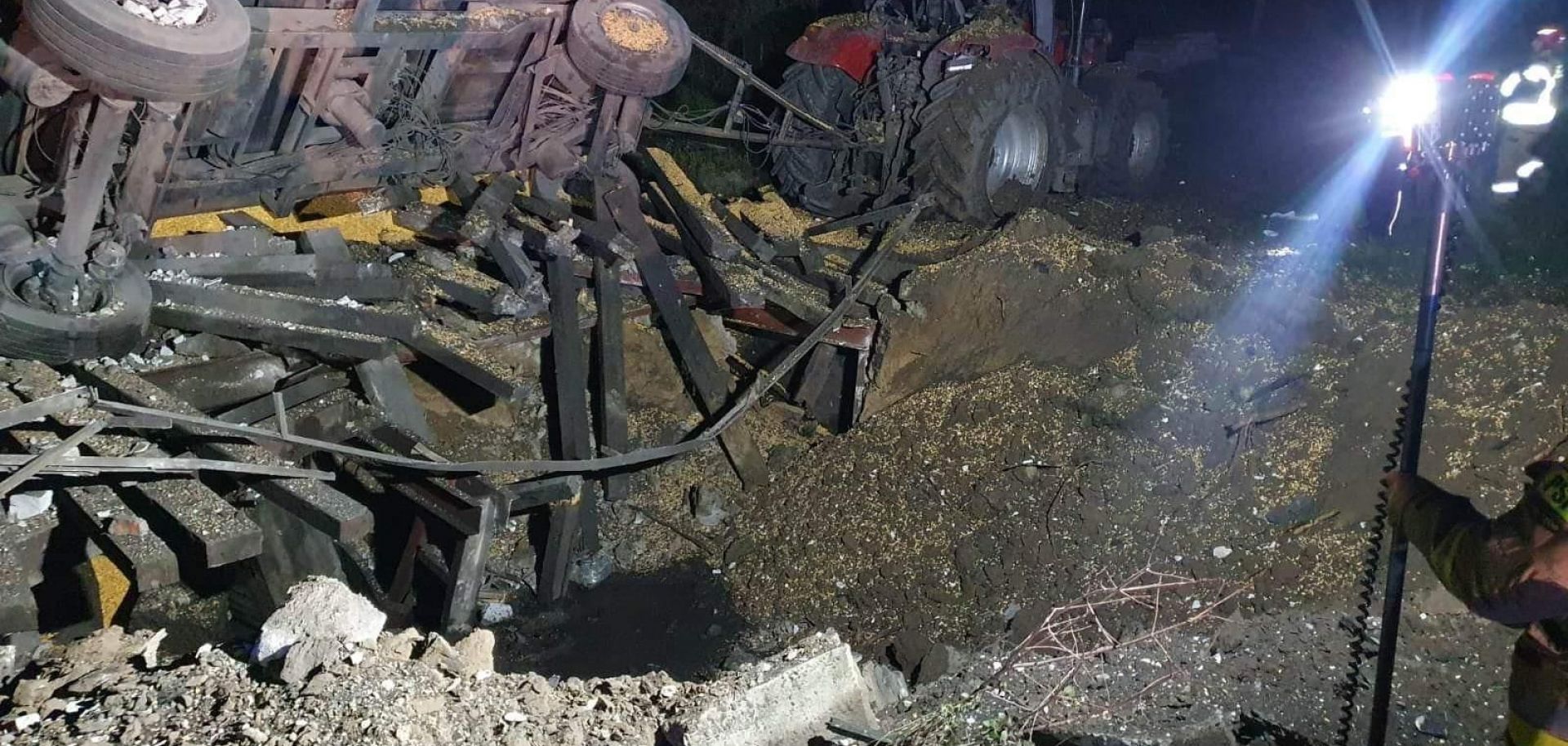
A suspected missile crater in Przewodow, Poland.
Following a deadly blast near its border with Ukraine, Poland will likely trigger NATO's Article IV to start formal consultations among member states at the request of a member that feels threatened by another country or a terrorist organization. However, NATO remains highly unlikely to trigger Article V obligations for the mutual defense of Poland until those consultations have concluded, and even afterward, it is unlikely that NATO will do so to avoid unnecessary escalation with Moscow. On the evening of Nov. 15, two people died in Poland's village of Przewodow near Ukraine due to explosions believed to be caused by Russian missiles or Ukrainian missiles intended to shoot them down. The incident prompted Polish Prime Minister Mateusz Morawiecki to convene an urgent meeting of the country's committee for national security and defense affairs due to the "crisis situation."
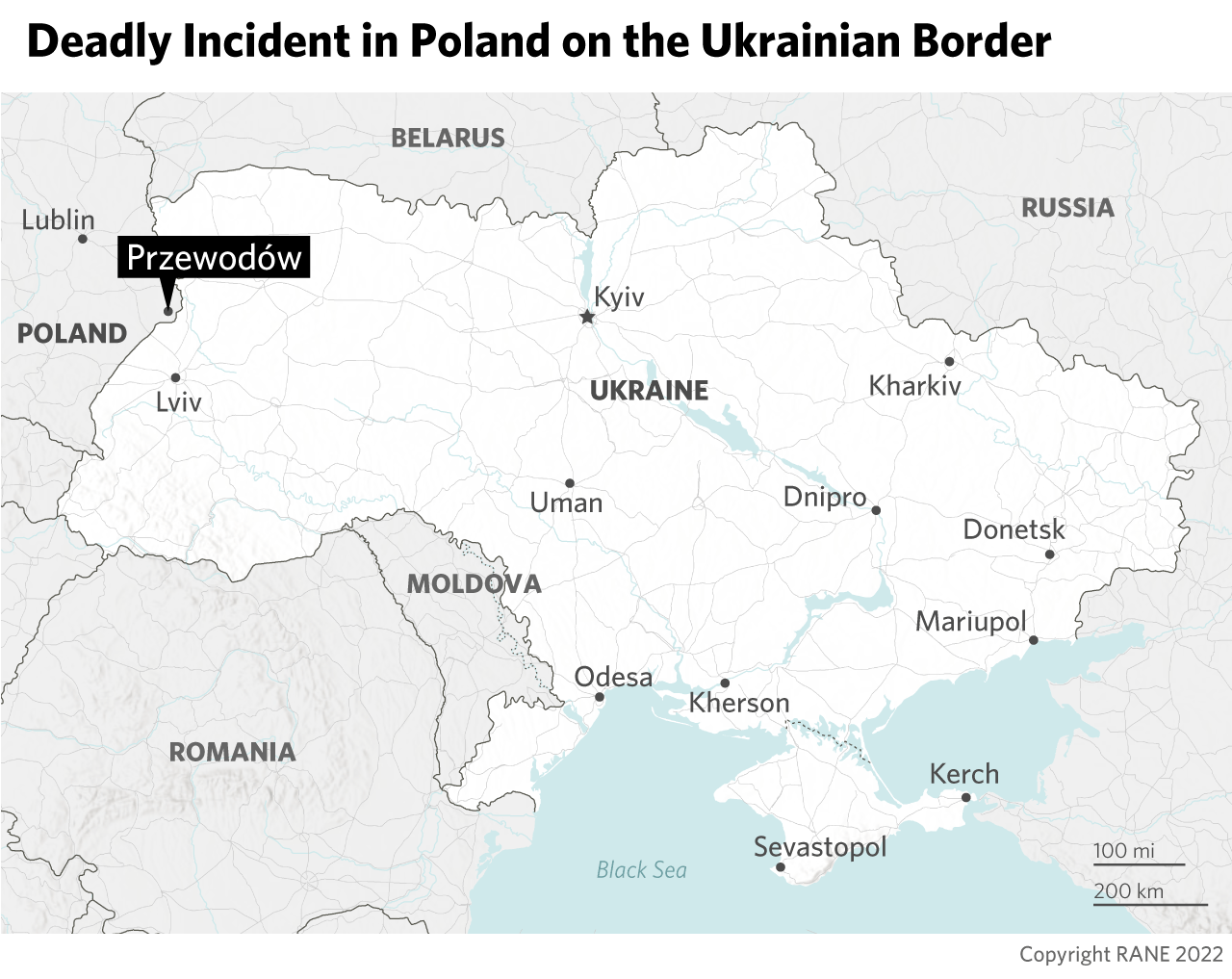
How the situation plays out will largely be dictated by critical details of what occurred, which will likely only be verified over the course of many hours or days. Key questions include the following:
- Was what struck Przewodow the result of a shootdown or a direct strike? If the explosion was caused by a damaged Russian missile (or wreckage from one) after Ukrainian or NATO forces shot it down, a disagreement could ensue between Ukraine and Poland should Polish authorities allege that the Ukrainians shot down a missile over their airspace without Warsaw's authorization. Despite this potential disagreement, the situation would be unlikely to escalate further. And if Ukraine shot down the missile over its own airspace and the wreckage merely fell on Poland, this would de-escalate the situation even more. However, these scenarios of damaged missiles or related wreckage appear relatively less likely than those that follow, given the size and location of the damage. If the damage was caused by a Ukrainian missile intending to intercept a Russian missile but failing to make contact and flying onward into Poland — a scenario that appears increasingly likely based on preliminary analysis of the wreckage — this would lead to temporary tensions between the countries that would likely quickly dissipate, as in the scenarios above. By contrast, if the damage was caused by a Russian strike that intended to target a location in Ukraine but instead misfired and landed in Poland, this would cross the technical threshold of a Russian strike on NATO soil, even if it was unintentional.
- What does NATO assess to be Moscow's intention regarding the violation of Polish airspace? NATO assessments of whether or not Russia intended for a missile to fly dangerously close to the Polish border, let alone cross it, will figure into the alliance's response. If NATO determines that the selection of the flight path crossing the Polish border was intentional, this would significantly escalate the scenario, as it would suggest that Russia is willing to violate NATO airspace to pursue its war with Ukraine. Moscow intentionally crossing NATO airspace with the missile would significantly raise the prospect of the alliance triggering Article V, as Poland or other NATO member states could determine the allegedly "errant" missile is just the first step in Moscow's efforts to test the West's reaction to a future campaign of similar events. However, this remains highly unlikely since multiple key countries, including the United States, have repeatedly said they do not want to come into direct confrontation with Russia.
- How does Moscow explain what happened? The way Moscow reacts publicly may provide some hints regarding its intentions, cognizant that Moscow's public reaction will not provide a full picture of its calculations. The only notable reaction to the incident so far is from the Russian Defense Ministry, which called claims of "Russian" missiles in Przewodow "a deliberate provocation in order to escalate the situation," claiming that "no strikes were made against targets near the Ukrainian-Polish state border by Russian weapons" and that the wreckage published by Polish media from the scene in the village of Przewodow has "nothing to do with Russian weapons." If Moscow denies that its missiles were involved and that the whole thing is a Ukraine or NATO-organized provocation, in spite of NATO's assertions to the contrary, this could suggest that Moscow is laying the groundwork for escalation along similar lines in the future by attempting to normalize such strikes without spurring a NATO response. If, by contrast, Moscow admits that its missiles violated Polish airspace but claims this was unintentional, this could suggest that Moscow is attempting to acknowledge its actions and will take additional steps to avoid such violations in the future, which would de-escalate the situation, although this appears unlikely.
- Could the reaction to the incident in NATO countries incentivize Russia to continue dangerous strike attempts near the Poland-Ukraine border? Should the incident result in widespread panic and calls in European countries for Kyiv to negotiate with Moscow to reduce tensions, this could, paradoxically, incentivize Russia to repeat dangerous strikes close to the Poland-Ukraine border or continue strikes across Polish airspace. These would be designed to fuel fear in the West of a NATO-Russia war, thereby increasing calls for negotiations and limiting arms transfers and other support to Kyiv, fracturing Western unity and support for Ukraine. However, the alliance is more likely to use the incident, even if ultimately attributed to a Ukrainian interception missile, to justify further deliveries of advanced anti-air systems to Ukraine.
