
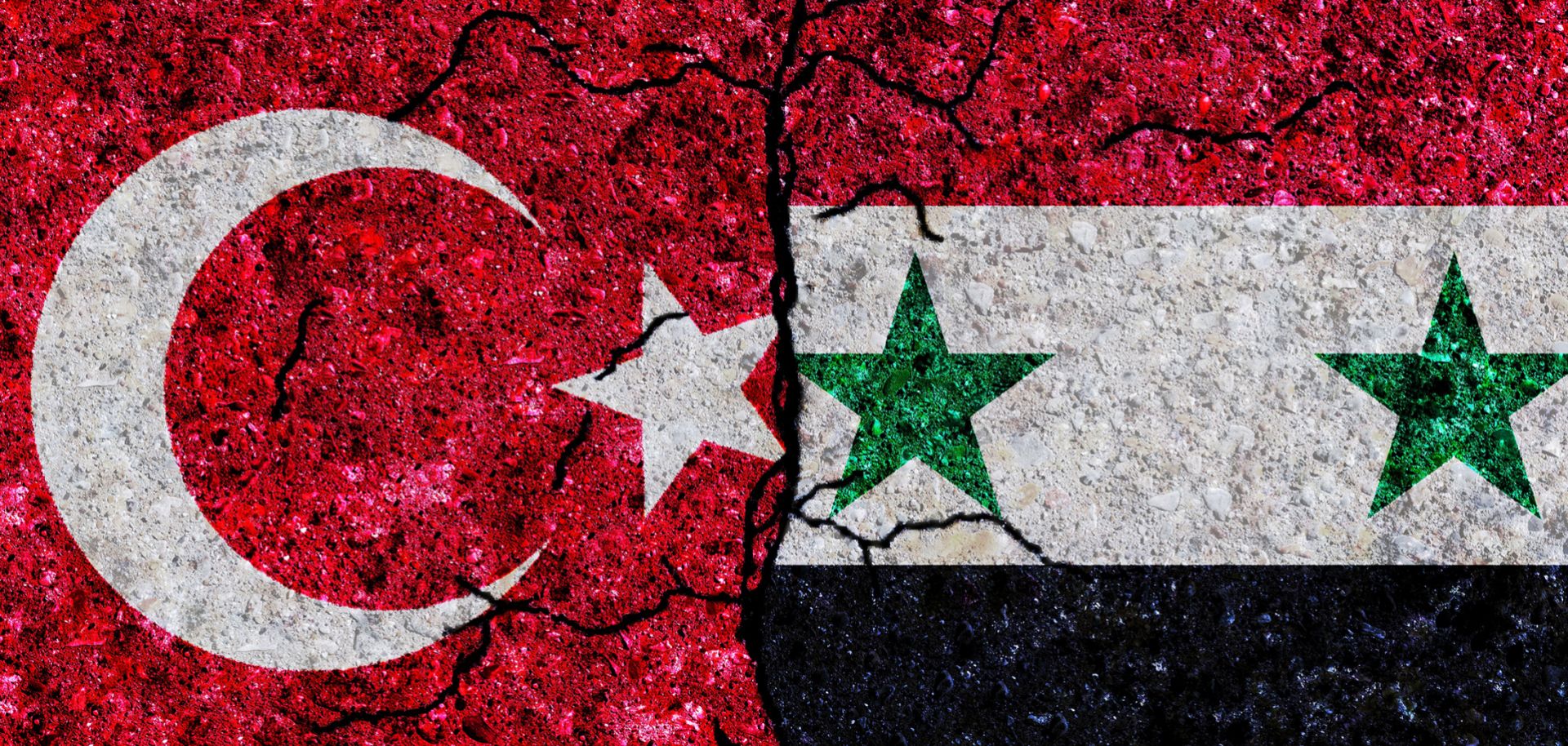
Improved Turko-Syrian relations could enable Russia to redeploy more troops from Syria to Ukraine, and they risk an anti-Turkey backlash from Syrian rebels and radicals. On Sept. 16, Turkish media reported that President Recep Tayyip Erdogan told members of his own party that he was disappointed he did not have a chance to meet with Syria's President Bashar al Assad at the recent Shanghai Cooperation Organization summit earlier in September. This comment is an abrupt shift from Erdogan's rhetoric early in the Syrian civil war when he called on Damascus to overthrow al Assad. Erdogan's statement followed reports that Turkey's national intelligence chief has been meeting with his Syrian counterpart as recently as mid-September.
- Turkey's strategy in Syria has shifted over the years. Initially, Ankara sought the removal of al Assad, who was fighting a wide array of rebels, including members of the Muslim Brotherhood (an offshoot of Turkey's ruling Justice and Development Party), while preventing another Kurdish statelet from developing in the power vacuum of the civil war. But after Russia's intervention salvaged the al Assad government in 2015 and the United States allied with Kurdish militants to fight the Islamic State, Turkey's strategy shifted. Since then, Ankara has focused on building a buffer zone along its border with Syria to block Kurdish and other terror attacks inside Turkey itself and to prevent an inflow of more Syrian refugees.
- Turkey has backed away from rhetoric calling for Damascus to overthrow al Assad as international pressure to isolate Syria's government has weakened. In 2021, the United Arab Emirates, another former anti-al Assad country, hosted the president in Dubai, while Egypt has called for Syria's reentry into the Arab League, from which it was suspended in 2011 when the civil war began.
These events suggest that Ankara is shifting its Syria strategy from covert acceptance of al Assad to overt cooperation and even recognition of his legitimacy, although a full return to Turkey and Syria's pre-war relationship is unlikely. If Turkey starts overtly cooperating with Syria, the countries could build bilateral trust that enables Ankara to pivot fully to an anti-Kurdish militant strategy in Syria. And in exchange for Turkey backing away from supporting rebels in Idlib province, Syria could be willing to work to block the activities of the Kurdish People's Protection Units/Kurdistan Workers' Party (YPG/PKK) in areas throughout the country's north and northeast. However, Turkey will be reluctant to completely abandon Idlib, as the province hosts over one million refugees that Ankara does not want to see cross the border into Turkey. Syria will also continue to pressure Turkey to fully evacuate other areas of Syrian territory, but Ankara will be unwilling to do so without a security guarantee that blocks Kurdish attacks on Turkish territory and without an arrangement that allows Turkey to send home over three million Syrian refugees. But even if Turkey and Syria come to an agreement, Syrian refugees are unlikely to return to al Assad-controlled territory due to fears of government retribution, which means Turkey will probably need to retain some kind of influence in Syria.
- Syrian troops and associated militia are stationed throughout the north and northeast alongside the YPG/PKK. Syrian forces returned to these parts of the country after the attempted U.S. withdrawal in 2019 caused the Syrian Democratic Forces (SDF), of which the YPG is part, to call on Damascus and its allies to help halt a Turkish offensive.
- Idlib province remains a key target for the al Assad government, as it is the last major province of rebels not backed by Turkey or the United States. These rebels continue to focus on overthrowing the Syrian government.
Greater cooperation between Turkey and Syria could enable Russia to redeploy more forces from Syria to Ukraine. Part of Russia's primary reason for remaining in Syria is to help block Turkish military operations from taking more territory. To this end, Russian military police often deploy in YPG/PKK territory to prevent Turkish offensives that would enable Ankara to deepen its control of northern Syria. But Russia is also facing a major manpower crisis in Ukraine; while it is partially mobilizing its reserves at home, it is also withdrawing at least some of the units in Syria that are no longer essential to Syrian security. If Turkey and Syria cooperate in ways that reduce the likelihood of Turkish operations, Russia will be able to treat its remaining troops in Syria more flexibly and redeploy them to the Ukraine front if needed.
- While Russia's military footprint in Syria has remained in the low thousands, Moscow's manpower shortage on the Ukrainian frontlines has created a crisis for the Russian military. Russia has already redeployed an S-300 air defense system to Ukraine from Syria and has reportedly been handing over control of some airports, like those in Aleppo and Palmyra, to Iranian forces.
- Russian troops have also redeployed from Georgia's South Ossetia region, and there have been reports that some mercenaries associated with Russia's paramilitary Wagner Group have left Libya. Russia has also recruited some members of Syrian militias to supplement its forces in Ukraine.
However, closer Turko-Syrian relations risk causing an anti-Turkey backlash among Syrian rebels, including U.S. allies, which might escalate attacks against Turkish targets both in Syria and inside Turkey itself. Turko-Syrian cooperation will anger Syrian rebels, especially in Idlib province, where rebels are not as closely controlled by Turkey. Some of these groups, like Hayat Tahrir al-Sham, an al Qaeda offshoot that is avowedly anti-al Assad, will have greater incentives to attack Turkish forces if it appears that Ankara is cutting a deal with Damascus. Even if these groups resist attacking Turkey, other radicals, like the remnants of the Islamic State, will find recruits and defectors willing to attack Turkey. Meanwhile, the YPG elements of the SDF will likely increase their pace of attacks on Turkish forces in Syria and along the Turkish border, trying to deter another Turkish military operation. This will leave the United States in a difficult position, as there is little political will to expand the U.S. mission in Syria to deconflict SDF-Turkish tensions. Such attacks could instead cause the United States to redeploy forces away from potential SDF-Turkey conflict hotspots, which could weaken U.S. efforts to combat the remnants of the Islamic State.
- Many Syrian rebel forces in Idlib rely on Turkish support and access to the Turkish border for supplies and food, so they would not want to escalate attacks against Ankara unless intense social pressure or a Turko-Syrian reconciliation pushes them into it.
- The SDF is already retaliating against Turkish forces over an ongoing Turkish covert campaign against the group and has killed several Turkish soldiers inside Syria and Turkey. As Turkey has pressed for a green light from Russia to attack SDF territory, it has also developed an asymmetric strategy to strike SDF targets with drones and artillery instead of through ground incursions.
- In previous iterations of SDF-Turkish tension, U.S. forces redeployed to potential hotspots like Manbij to prevent fighting. However, many in Washington are questioning the Syrian mission, making it politically difficult for the Biden administration to consider expanding the Syrian mission beyond its current counterterrorism angle.
