
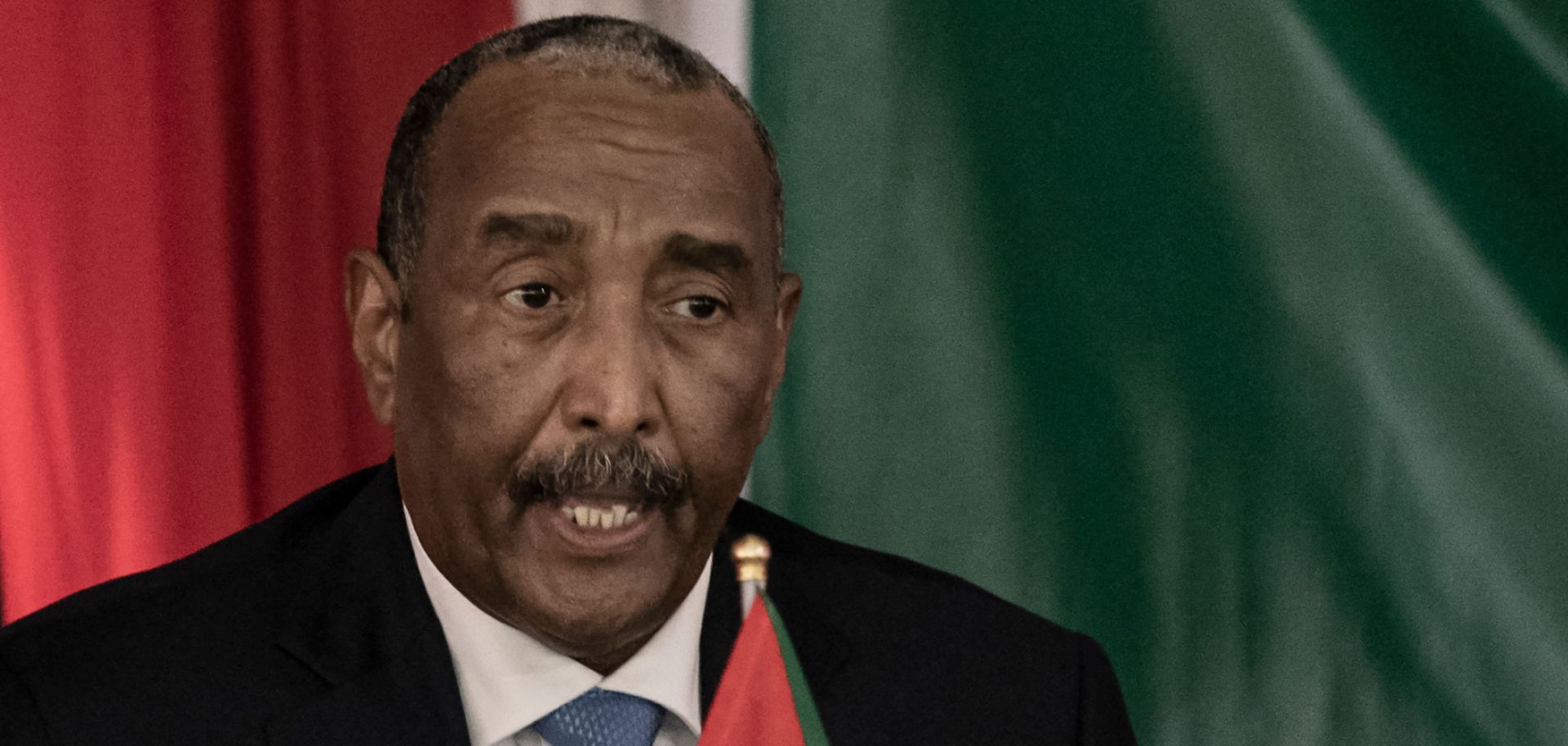
In Sudan, the military’s attempt to distance itself from political negotiations while still maintaining a grip on key governmental powers risks fueling more pro-democracy protests and impeding efforts to ink a power-sharing deal with the country’s civilian groups. On July 4, Sudanese Lt. Gen. Abdel Fattah al-Burhan announced the military was withdrawing from the U.N.-backed dialogue process aimed at breaking the country’s political impasse and called on Sudanese pro-democracy groups to start their own talks to form a transitional government. The unexpected announcement came eight months after the military toppled the civilian government of former prime minister Abdalla Hamdok in the October 2021 coup, which has since seen hundreds of thousands of Sudanese take to the streets in protest (more than 100 of whom have so far died in clashes with security forces). Burhan positioned the move as heeding protesters’ calls to reduce the military’s dominance over the political process. But just days after declaring its intent to distance itself from the political scene, the junta announced it would still maintain power over Sudan’s central bank, some aspects of foriegn policy and, most notably, all matters related to state sovereignty (including border disputes, issues of international interference and relations with South Sudan) — effectively leaving the most important functions of Sudan’s broken political system in the military’s hands. The July 4 announcement has, in turn, been widely interpreted as a move by the military to create the appearance of abdicating power, while still retaining control behind the scenes.
- In the July 4 announcement, Burhan did not specify a timeline for the military’s exit from the political scene, or how the military would be represented in future negotiations with civilian groups. But he did say the army plans to form a new “Supreme Council of the Armed Forces” to replace the current Sovereignty Council (the transitional military body that has ruled over Sudan since the October coup).
- The United Nations, in coordination with the regional African Union and the Intergovernmental Authority on Development, has attempted to facilitate talks between civilian groups and the junta since the former seized power last year. In early July, the United Nations announced its withdrawal from the process, weakening international involvement.
Burhan’s announcement is likely an attempt to distance the military from failing political processes and Sudan’s worsening economic crisis. The junta has attempted to position itself as a legitimate political actor involved in negotiations over the formation of Sudan’s next government. But it’s done so while also suppressing dissent with deadly violence, which has caused key civilian groups to refuse to validate the junta by negotiating with it. As such, military leadership appears to be shifting strategies to maintain its primary objective of preserving power, while also distancing itself from negotiations that appear poised to fail. The military’s narrative that it is supporting civilian governance by stepping back from negotiations has failed to convince the vast majority of Sudanese citizens. But, the narrative does grant the junta some political cover by enabling it to point to infighting amongst civilian groups as a barrier to peace and stable governance. Additionally, the new policy enables the junta to blame widespread economic suffering on the protest movement. The United Nations recently warned that 40% of Sudanese will be food insecure by September amid inflation, currency depreciation, high food and fuel prices, wheat shortages and drought.
Pro-democracy groups are likely to reject non-substantive changes to Sudan’s political system, meaning demonstrations and the political impasse are likely to continue. Civilian resistance groups like the Sudanese Revolutionary Front (SRF), Forces of Freedom and Change (FFC) and the Sudanese Professionals Association (SPA) have mounted an unrelenting protest movement against the junta, demanding that the military step back from all involvement in governance. The junta’s crackdown on the rallies has become increasingly deadly; security forces shot dead nine protesters during the week of June 27, bringing the total number of demonstrators killed since the coup to 113. But despite the growing death toll, the FFC and other civilian groups have said that they will continue demonstrations until the military steps down. While they are likely to face increased pressure to reach a political coalition agreement since Burhan’s announcement, their commitments to resist military control over government institutions via civil disobedience are credible, as these groups have already faced months of police violence, political repression and extreme economic hardship. As the junta continues to show an unwillingness to relinquish power, the impasse between civilian groups and the military is likely to persist.
- Many revolutionary and civilian groups have boycotted negotiations on forming a new transitional government since the October coup. Civilian Prime Minister Abdalla Hamdok, who returned to the position after a deal with the military in late 2021, triggered the latest government formation crisis when he resigned in response to protests in January.
