
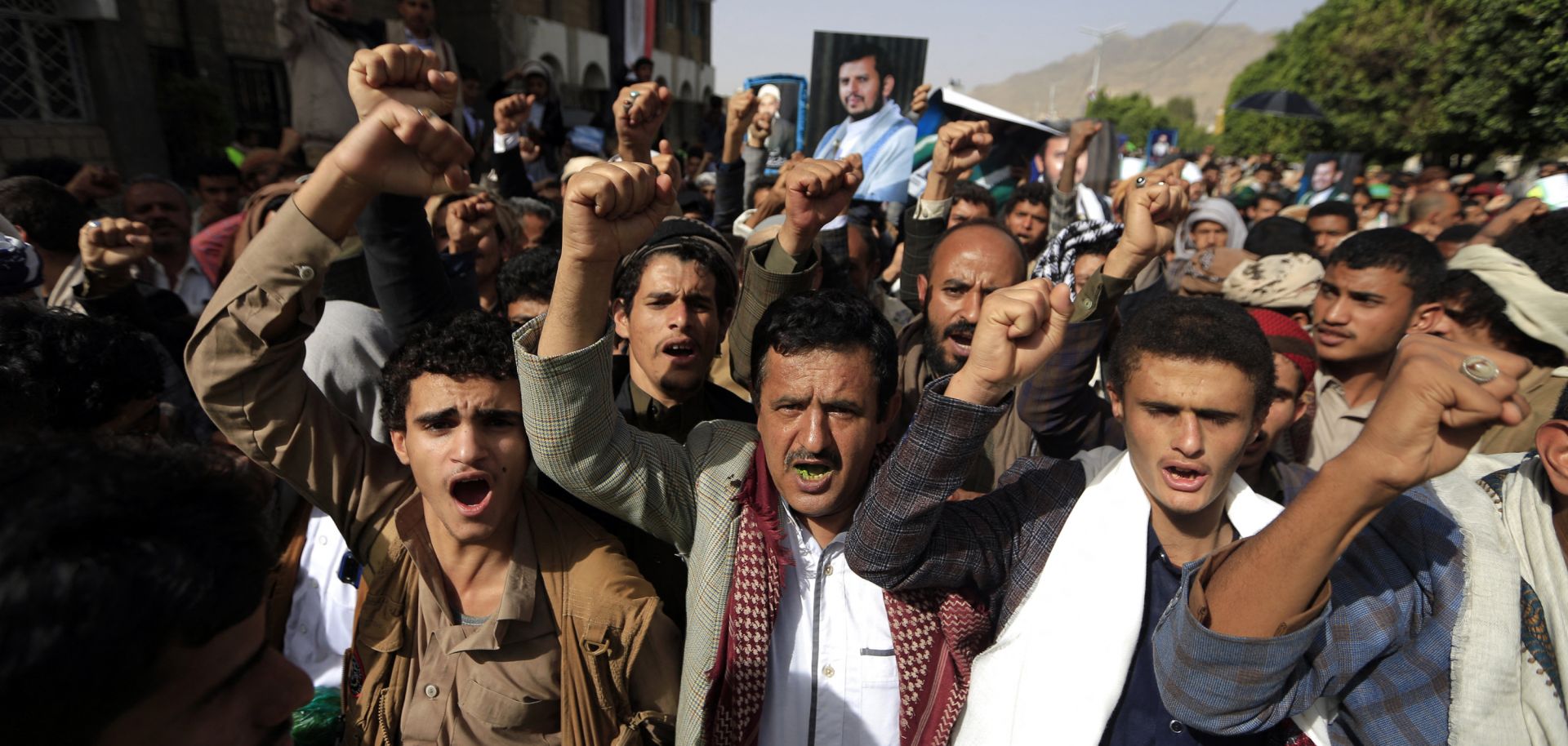
Supporters of Yemen's Houthi rebels take part in a rally in Sanaa on June 3, 2022, a day after the country's warring parties agreed to renew a two-month truce.
With another extension of the U.N.-sponsored cease-fire, Yemen's civil war could be edging toward a frozen conflict, reducing the likelihood of Houthi attacks on Saudi Arabia and the United Arab Emirates. On June 2, the U.N. special envoy for Yemen said the Saudi-backed Yemeni government and Houthi rebels had agreed to extend their latest cease-fire under its current parameters for another two months. The truce — which began on April 2 and is now set to expire on Aug. 1 — marks the longest-lasting national cease-fire that Yemen has seen in six years. The agreement includes allowing humanitarian aid and fuel through al-Hudaydah, some flights into Sanaa airport and talks to reopen roads about besieged Taiz.
- The current cease-fire was initially anchored to the Ramadan holy holiday, which ended in early May. The slow rollout of flights to Sanaa, along with continued fighting around Taiz and Marib, had cast doubt over whether Yemen's warring factions would move to extend the U.N.-backed agreement.
- Mutual mistrust and Houthi ambitions to use military power to consolidate their control of Yemen's north have derailed previous cease-fires. Over the course of Yemen's nearly seven-year-long civil war, localized cease-fires and prisoner exchanges have also taken effect.
- The United Arab Emirates and Saudi Arabia have been signaling they want to draw down from Yemen, as strong Houthi military resistance forces Riyadh and Abu Dhabi to reframe the objectives of their intervention in the civil conflict. The United Arab Emirates withdrew some of its forces in 2019 and Saudi Arabia signaled it was open to a general cease-fire in 2021. Both are key partners of the Yemeni government, which, with Saudi mediation, was reorganized in April to reduce the power of President Mansoor Hadi. The reorganization appeared to ease the implementation of the cease-fire, with anti-Hadi factions in the government — like the Southern Transitional Council (STC) — given more power in exchange for halting fighting.
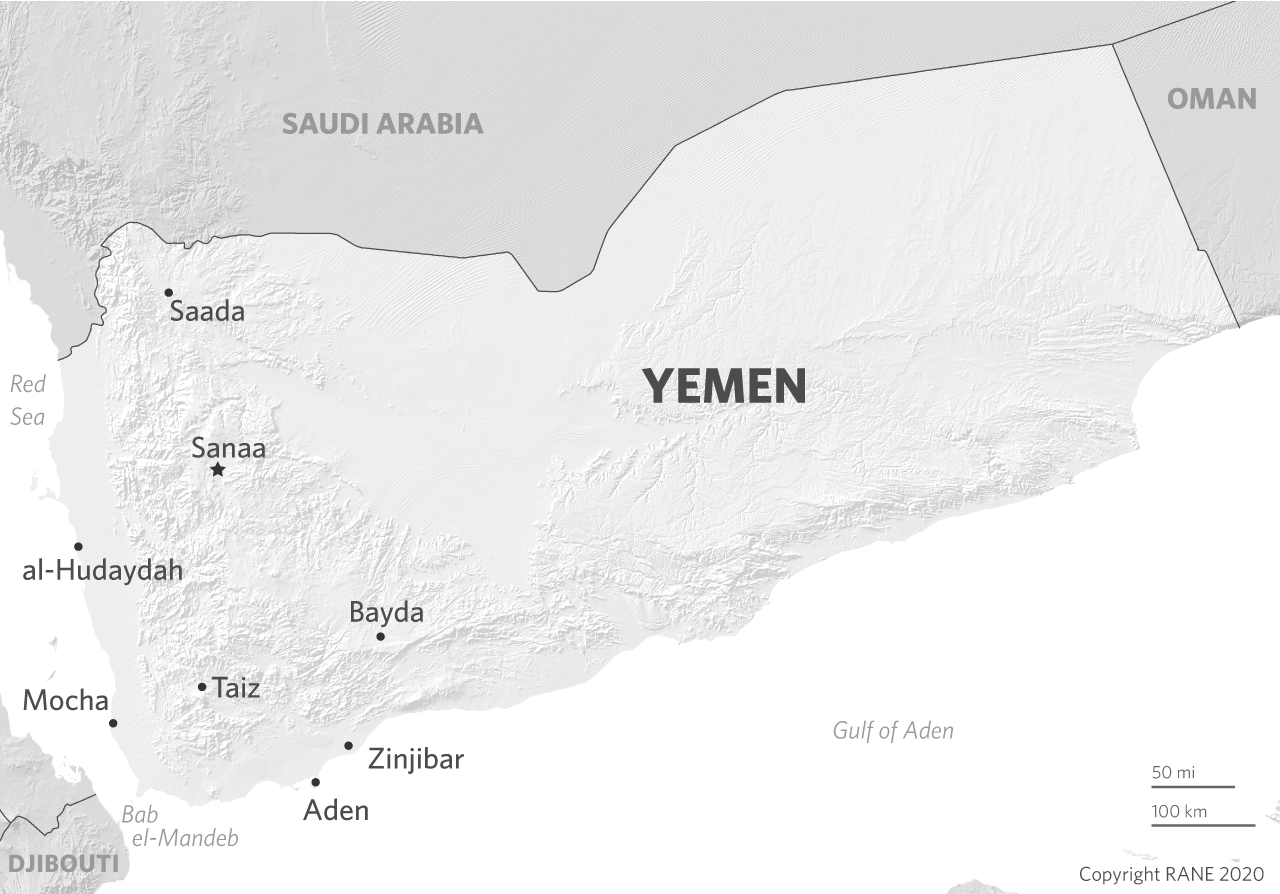
Despite minor violations, the extended cease-fire looks increasingly likely to hold due to the mutual need of Yemen's warring sides to keep humanitarian lifelines open. Yemen, which was already deeply food and fuel insecure, has been hit hard by the commodity shocks caused by the Russian invasion of Ukraine. The dire situation in the war-torn country has increased the incentive for Yemen's factions to pause their fighting in order to help bring in much-needed humanitarian aid. While the Houthis have attempted to take the energy-rich province of Marib with a military offensive since February 2021, increased Saudi air support and Emirati support for STC forces nearby have stymied the advance, leaving the front stalemated and reducing the Houthis' incentive to continue fighting in the face of higher food and fuel prices. Additionally, the Ukraine-related commodity shocks have threatened the Houthis' public support in the north, where the rebel group governs through tribal support and remnants of the General People's Congress (GPC), Yemen's former ruling party. Both the north's tribes and the GPC's leaders have a history of switching sides in the civil war.
- 65% of Yemen's population is food insecure, making both sides of the civil war highly dependent on food imports that have only grown more expensive this year. The country is also vulnerable to shocks in fuel prices because the conflict has taken its own refining capacity offline; Yemen's domestic energy reserves also aren't large enough to cover all fuel imports. Additionally, much of the country's food and fuel imports come through al-Hudaydah on the Red Sea and the Sanaa airport, both of which have been blocked by the Saudi-led coalition.
- Houthi rebels' capture of Sanaa in 2015 was possibly due in part to the acquiescence of the tribes in and around the capital city. These tribes are not ideologically or religiously aligned with the Houthi movement, but offer their support to the rebels in exchange for public services.
The longer the cease-fire hold, the more likely it is that aspects of the Yemen conflict become frozen, including Houthi attacks on the Arab Gulf states, major offensives around Taiz and Marib, and the Saudi air campaign and blockade against Houthi rebels. However, such a slowdown in fighting would remain frail and could easily collapse. With better humanitarian lifelines established and no clear way for either side to gain military advantage, both sides may decide to extend the cease-fire past the August deadline. While minor violations are likely, especially around Taiz and Marib, an extended cease-fire could freeze major combat operations for all sides, leaving the frontlines stalemated and fighting confined to skirmishes rather than cross-border attacks or significant military escalations in Yemen. However, fighting could resume at scale if either side sees a military opening they want to take advantage of with a new offensive. The potential collapse of U.S.-Iran nuclear talks could also see Iran pressure the Houthis, their ally, to resume operations against Saudi Arabia and the United Arab Emirates.
- The Houthis and the Saudi-backed coalition are still far apart on peace negotiations, which hinge on the Houthis' role in a future Yemeni government. Additionally, the coalition is pulled apart by internal differences as one of its major factions, the STC, pushes for either autonomy or even independence for Yemen's south.
