
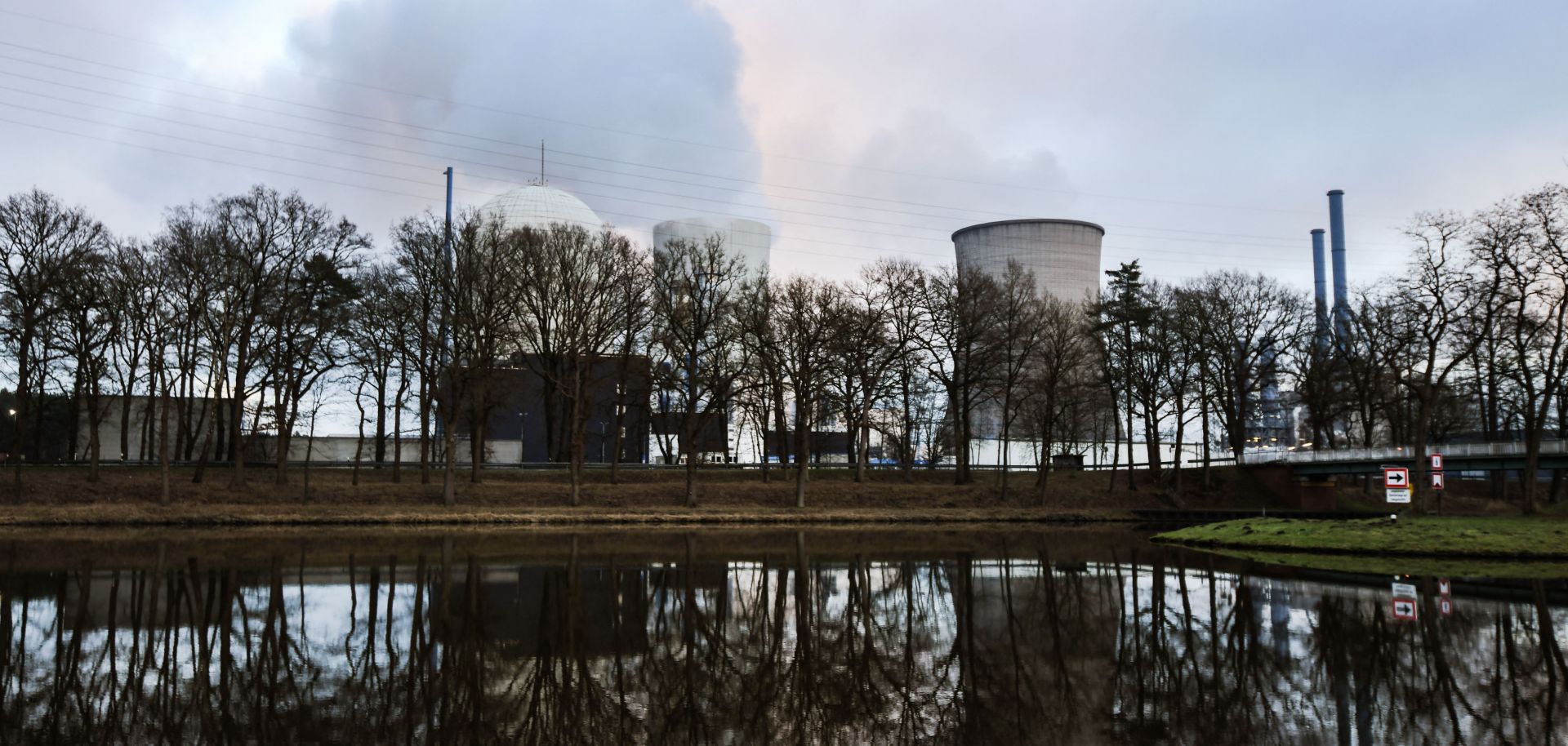
A photo taken on Jan. 12, 2022, shows a gas-fired power plant in Lingen, Germany.
The controversy around the European Commission’s proposed taxonomy of green investments means that the approval process will take at least until mid-2022. The European Council and the European Parliament could also request amendments, prolonging uncertainty for governments and businesses. On Dec. 31, the European Commission released the first draft of the list of energy sources and activities that can be labeled as “green” for investment purposes, which is known in the European Union as the Taxonomy for Sustainable Activities. The list will have widespread economic implications because it will guide public and private investment at the national and supranational level for the next three decades as the European Union implements its Green Deal plan to become carbon neutral by 2050. The sources of energy and activities covered by the taxonomy are particularly likely to receive funding and subsidies from EU institutions and national governments, as well as increased investment from companies and investors as Europe moves away from carbon-intensive activities.
- The taxonomy officially became EU law in July 2020. But EU legislators left most of the implementation details to be addressed through secondary legislation (known in EU jargon as “Delegated Acts”), to then be debated and voted on by the European Council and the European Parliament in 2022.
- The European Commission is currently holding consultations with climate experts and advisers, with the goal of presenting a formal Delegated Act by the end of January. The original deadline for consultations was Jan. 12, but the commission announced on Jan. 10 that the deadline had been moved to Jan. 21. This suggests that there is a significant debate going on about its content.
- Once Brussels issues a formal taxonomy proposal, the Delegated Act will be sent to the European Parliament and the European Council for their revision. The two institutions will have four months to make objections — a period that could be extended by an additional two months, extending the overall timeline to at least July 2022.
- The European Council will have the power to object to the Delegated Act if at least 20 of the 27 EU member states reject it. The European Parliament will also have the power to block the Delegated Act if at least 353 of the body’s 705 lawmakers reject it. If no objections are raised during this process, the Delegated Act will enter into force, possibly in August 2022 at the earliest, completing the legislative process to implement the taxonomy.
The most controversial part of the taxonomy is that it sees nuclear energy and natural gas as “sustainable” and subject to continued investment in certain circumstances. According to Brussels, “new nuclear installations for which the construction permit has been issued by 2045” can be considered green. The same applies to natural gas-related investments that receive a construction permit by the end of 2030, produce emissions no greater than 270g of CO2 equivalent per kilowatt hour (kWh), replace a more polluting fossil fuel plant, and plan to change to low-carbon gasses by the end of 2035. This is a compromise aimed at appeasing France, which relies heavily on nuclear energy, and Germany, which defends the use of natural gas. Many countries in Central and Eastern Europe also support including nuclear energy in the taxonomy. Some Southern European countries are supportive of natural gas as a “bridge” fuel to replace more carbon-intensive resources like coal before eventually transitioning to cleaner energy sources. However, countries including Austria, Luxembourg, Spain and Denmark have expressed their opposition to including natural gas and/or nuclear power in the taxonomy. Austria has even threatened to take the European Commission to court over this issue.
- The exceptions for nuclear energy and natural gas in the taxonomy have also sparked controversy between the three members of Germany’s coalition government. The pro-environment Green Party has accused Brussels of “greenwashing.” The pro-business Free Democratic Party (FDP) has criticized the Greens for objecting to the taxonomy. German Chancellor Olaf Scholz's Social Democratic Party (SPD), meanwhile, is largely supportive of natural gas.
- On Jan. 12, the Institutional Investors Group on Climate Change (IIGCC), which represents some of the world's biggest asset managers, warned that the European Commission’s proposal would “seriously compromise Europe’s status as a global leader in sustainable finance” and potentially trigger a “race to the bottom” in energy investment that could weaken the bloc’s climate ambitions.
National governments and EU lawmakers could push the European Commission to introduce amendments to the taxonomy, which would slow the ratification process and delay some new funding for the selected activities. At this point, the opponents of the taxonomy at the European Council and the European Parliament do not seem to have the numbers needed to outright block it. However, political negotiations and horse-trading between national governments and members of the European Parliament could result in amendments to make the taxonomy more palatable for the entire bloc. For example, the debate may not center strictly on the issue of whether to include or exclude natural gas and nuclear energy, but on how strict the rules for inclusion should be. But while this would broaden support for the document, it would also prolong uncertainty about the exact content of the taxonomy, which would result in some EU institutions, national governments, investors and businesses delaying their investment decisions until the definitive list is approved.
- In an attempt to minimize the controversy, Brussels has promised that the eligibility criteria for nuclear energy and natural gas will be updated as technology evolves. Brussels has also made it clear that the taxonomy is an evolving document subject to frequent revisions.
