
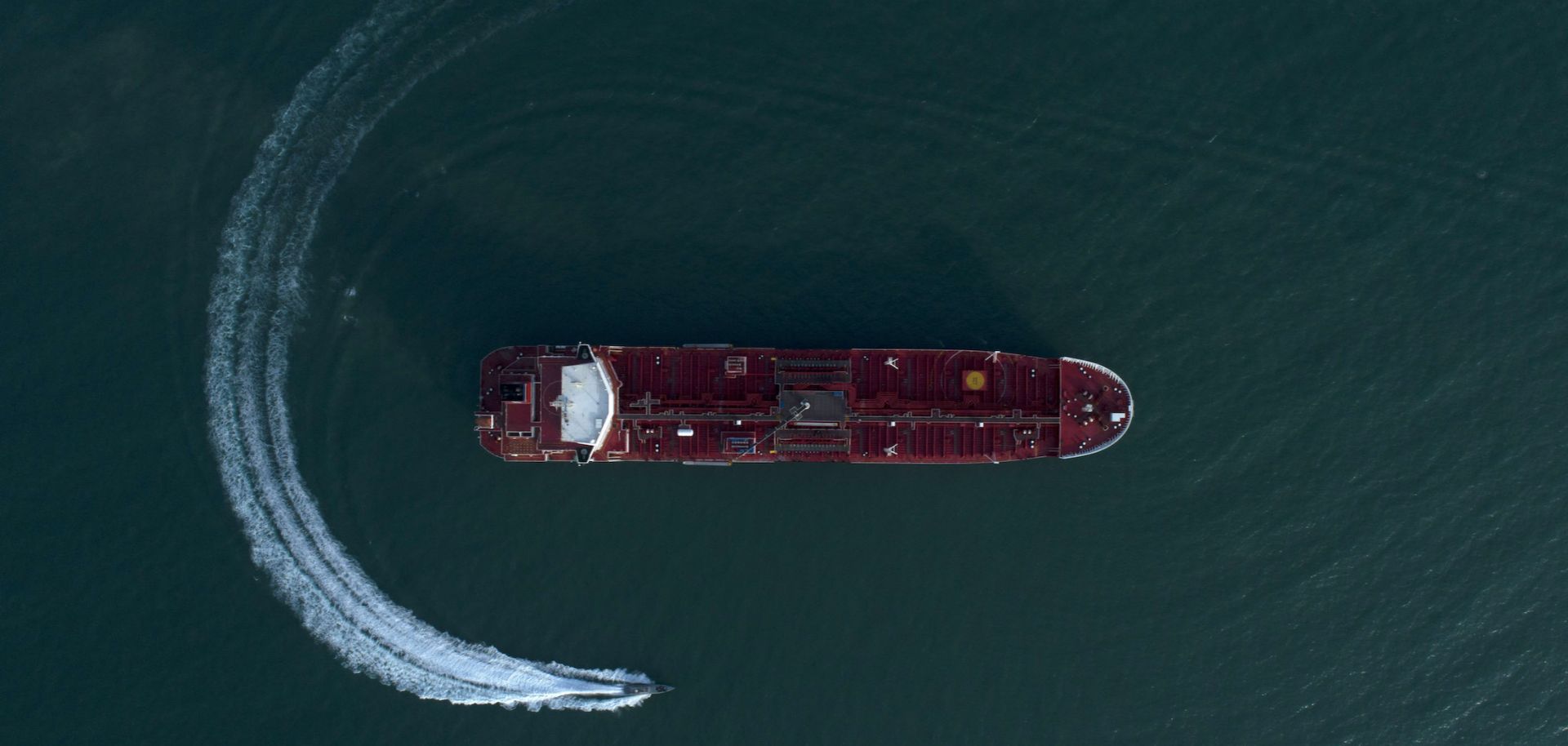
A photo taken in July 2019 shows a boat circling the U.K.-flagged Stena Impero tanker after being seized by Iranian forces in the Strait of Hormuz.
Iran appears to be ramping back up its naval harassment activities in order to gain leverage in negotiations with the West and display strength at home. Such aggressive behavior, however, risks upending those talks altogether by threatening regional security. A hijacking and deadly attack within days of each other near the strategic Strait of Hormuz reflects a higher risk tolerance akin to previous periods of frequent Iranian naval harassment. On Aug. 3, hijackers seized the Panama-flagged Asphalt Princess tanker while it was transiting the Gulf of Oman and demanded that the vessel set sail for Iran. The hijacking of the vessel, which is owned by a Dubai-based firm, comes only days after a suspected Iranian unmanned aerial vehicle (UAV) killed two sailors on board the Israeli-linked Mercer Street tanker. While the details of its involvement in both incidents may never be confirmed, Tehran is likely the culprit based on past precedent, geographic proximity and probable motive.
- The suspected armed Iranians who seized the Asphalt Princess tanker reportedly left the ship on Aug. 4. According to an exclusive published in The Times, the crew shut off the engine shortly after the hijackers boarded the vessel, which could explain why the hijacking was ultimately unsuccessful.
- Iran has denied any involvement in the Asphalt Princess seizure and warned external observers to resist pointing blame at Tehran. But in a recorded radio conversation with the Emirati coastguard, a crew member said the hijackers were Iranian and wanted to direct the tanker toward Iran’s Bandar Abbas port.
Iran is showing a greater willingness to undertake risks just as a new, more hard-line president takes office and seeks to bolster respect for Tehran both at home and abroad. Tehran’s provocative maritime behavior coincides with this week’s inauguration of a new, more conservative presidential administration under cleric Ebrahim Raisi and could signal the onset of a more aggressive posture in the broader region and toward other global powers. The maritime brinkmanship could also help communicate a message of strength and defiance domestically, as Raisi tries to distance himself from his more moderate predecessor, Hassan Rouhani, and focus on building Iranian sovereignty.
- During his eight-year term as president, Rouhani often faced criticism from hard-liners at home for his perceived deference to the West. Rouhani will most likely be remembered for having negotiated the Joint Comprehensive Plan of Action (JCPOA) nuclear deal with the United States and other global powers, only to have the next U.S. administration not only withdraw from the deal under his watch but implement a maximum pressure campaign in a bid to force Tehran to adjust its regional behavior.
Dangerous maritime incidents like the Aug. 3 hijacking could be part of broader Iranian attempts to secure sanctions relief in JCPOA negotiations. With less conventional military power than its regional peers and with few firm regional allies, Iran’s negotiation tactics with the West usually involve a balance of risky, asymmetric measures that seek to communicate to the United States and its regional allies that there is a high cost for keeping Iran under sanctions. Continued use of maritime harassment would also indicate that Iran thinks it can tolerate sanctions pressure and is using such behavior to try to acquire concessions. This strategy aligns with Raisi’s likely domestic messaging imperative, as he tries to communicate Iran’s resilience and strength, as well as a broader desire to only accept negotiations that suit its interests.
Iran’s increased provocative maritime activity signals a more difficult nuclear negotiation process with Western powers, in part because it jeopardizes regional security. Threatening commercial vessels creates economic and security risks for a wide range of actors, including countries with which Iran has been negotiating in Vienna. The increasing pace of provocative incidents points to a broader risk of attacks in the region, including additional attacks on commercial tankers or oil and gas infrastructure in neighboring countries, particularly those which are close to the West (like Saudi Arabia and the United Arab Emirates). The United Kingdom, for example, is upset about the death of one of its citizens in last week’s suspected UAV attack, which will roil U.K.-Iran relations and likely hamper future nuclear negotiations. An accelerated use of risky tactics like maritime harassment also indicates a hardened Iranian position toward talks, which ultimately risks negotiations falling apart altogether.
- Iran and the JCPOA commission made it through six rounds of talks in Vienna in recent months before they floundered. There is no date yet for the next round of talks, and more Iranian aggression could further delay the next session.
- The European Union is sending Enrique Mora, Deputy Secretary-General of the European External Action Service and coordinator of EU-led nuclear talks with Iran, to represent the bloc at Raisi’s inauguration on Aug. 5. But continued functional EU-Iran ties could be at risk, possibly weakening EU support for further negotiations if more provocative Iranian activity threatens global commercial maritime traffic.
