
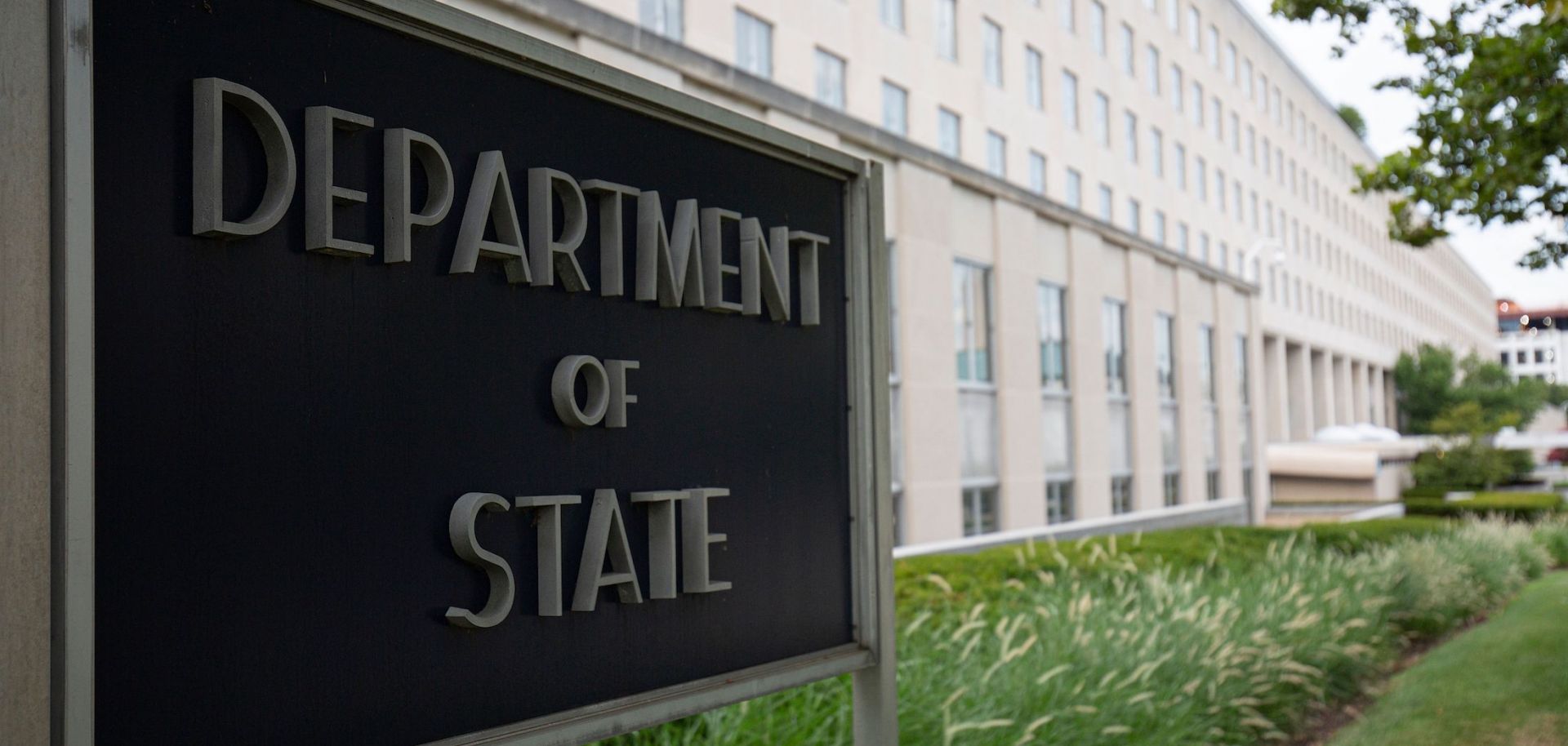
The U.S. State Department building is seen in Washington D.C. on July 22, 2019.
The White House is continuing its cautious and relatively slow-paced approach to Hong Kong, as it tries to avoid disrupting business continuity in the city and ensure the volatile political dynamic doesn’t drive the overall U.S.-China dynamic, including outreach on issues such as trade. On Oct. 14, the U.S. State Department issued its required Hong Kong Autonomy Act report to Congress, listing 10 Chinese and Hong Kong officials found to have materially contributed to eroding the region's autonomy. The report warned that banks that conduct significant transactions with the individuals listed could face U.S. secondary sanctions, including restrictions on U.S. dollar transactions and measures targeting corporate leadership. This sets the stage for a potential increase of U.S. pressure on foreign, Hong Kong and Chinese financial institutions operating in the city. However, the nature of the Oct. 14 report suggests a less escalatory approach, though that could change depending on the State Department’s next report, which is slated to be released within the next two months.
- Congress passed the U.S. Hong Kong Autonomy Act on July 14, which gave the White House a 90-day deadline to produce a list of individuals who have materially contributed to the erosion of the city’s autonomy, as well as a 60-day deadline for identifying financial institutions that would then be sanctioned within a year.
- The report criticized recent actions by the Hong Kong government to crack down on dissent and protests, as well as and delay legislative elections. But such pressure from the United States and other foreign powers has failed to deter Beijing and Hong Kong authorities from using their new national security law to limit pro-democracy activity in the city, which has managed to split the opposition camp and lowered protest turnout in recent months.
The White House notably declined to take the opportunity to expand its previous list of sanctioned individuals or identify any specific banks in the report, using the moment to instead further put businesses on notice to rethink their transactions with this small group. Despite bipartisan calls in Congress for a tough response, U.S. actions on pressuring China over Hong Kong since the imposition of the new national security law have been slow and relatively limited. This approach has given foreign banks operating in Hong Kong ample time to react and leaks indicate that most have already heavily scrutinized their customer lists in order to limit their exposure to potential U.S. sanctions. The State Department’s report is thus unlikely to force significant changes in banks’ behavior.
- The U.S. State Department report consists of 10 individuals previously sanctioned on Aug. 7, including Chief Executive Carrie Lam. Moreover, the report actually removed the city’s former police commissioner, Stephen Lo Wai-chung, from its list, signaling a less broad-based approach.
- Lo recently shifted his business to state-owned Bank of China, and Lam has said she’s also had issues with credit card companies, which indicate some lenders in Hong Kong have already cut ties with these individuals.
U.S. pressure on Hong Kong will likely remain incremental until at least the November election, as the Trump administration seeks to avoid jeopardizing both business continuity in Hong Kong and the city’s status as a global and regional financial hub, as well as U.S. outreach to China on issues such as trade.
- In May, U.S. President Donald Trump announced plans to strip Hong Kong of its special treatment under U.S. law, with the State Department de-certifying the region soon after. This has since given the United States the power to impose China-level tariffs and a host of other measures. But instead, Washington has continued to limit itself to much less severe measures, such as requiring “Made in China” labels to Hong Kong goods, revisiting shipping tax agreements and ending extradition.
- Washington has refrained from identifying major Hong Kong institutions or businesses and from actions to undermine Hong Kong’s dollar peg — both moves that could cause substantial disruption to business in the city and erode its standing as a global economic hub.
