
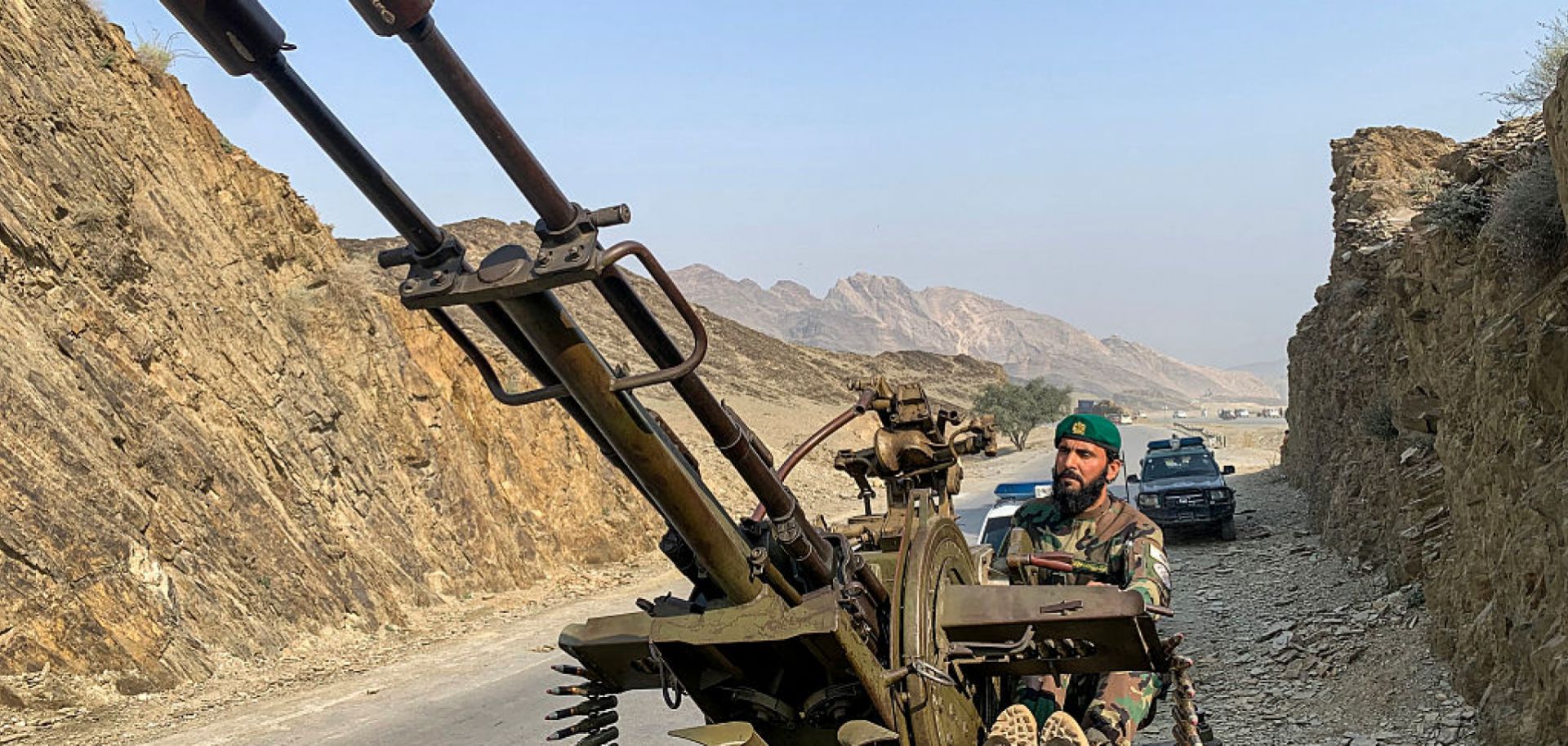
The ongoing escalation between Pakistan and Afghanistan marks a shift into overt interstate conflict, and while the most likely near-term trajectory is a sustained cycle of cross-border strikes and retaliation rather than full-scale war, the conflict could worsen. On Feb. 27, Pakistan launched a series of airstrikes against targets in multiple Afghan cities, including the cities of Kabul and Kandahar and Paktia province, hitting what Pakistani officials described as militant infrastructure and Taliban-linked facilities. The strikes followed several days of intensifying clashes along the border, during which Afghan Taliban forces and Pakistani troops exchanged fire across multiple points along the frontier, culminating most recently in what the Taliban characterized as a late Feb. 26 retaliatory military offensive along six border provinces. Pakistani authorities framed the Feb. 27 strikes as part of a broader campaign responding to militant attacks, while the country's defense minister publicly described the situation as tantamount to "open war." Taliban authorities have retaliated with cross-border shelling and ground assaults on Pakistani border posts, saying they inflicted casualties and overran some positions. Both sides reported military and civilian losses, though casualty figures remain contested and unverified, with some people displaced in affected border areas. The escalation represented a significant departure from prior patterns of limited skirmishes, as it involved more substantial strikes on major urban centers and an explicit acknowledgment by officials that the conflict had entered a new, more overt phase of confrontation.
- A Pakistan military spokesperson said 274 Taliban fighters have been killed and more than 400 injured in the Pakistani attacks. He added that 83 Taliban posts were destroyed and 17 captured. He added that at least 12 Pakistani soldiers have been killed and 27 injured.
- In very different numbers, the Taliban government said eight Taliban fighters were killed and 11 were wounded. He added that 55 Pakistani soldiers were killed and 19 posts were seized.
The escalation is rooted in yearslong tensions fueled by Pakistani accusations of militant havens in Afghanistan, accelerated by a recent surge in cross-border attacks and domestic political pressures on Islamabad. The Feb. 27 incidents reflect deeper structural tensions that have been building since the return of the Taliban to power in Afghanistan in 2021, centered primarily on the issue of militant havens and cross-border insurgency. Pakistan has long accused the Afghan Taliban of tolerating or indirectly supporting the activities of Tehrik-i-Taliban Pakistan, an anti-Islamabad militant organization responsible for numerous attacks inside Pakistan, including a recent surge in high-profile bombings and assaults in early 2026. These attacks (which typically target security forces, but have occasionally targeted religious sites and urban centers) have heightened domestic pressure on Pakistani leadership to respond decisively, particularly amid domestic political and security challenges. Afghan authorities have denied harboring TTP fighters, and accused Pakistan of violating Afghan sovereignty through repeated airstrikes and cross-border incursions. The dispute is compounded by long-standing disagreements over the British colonial-era Durand Line, a still-contested border that neither side considers legitimate. Over the past several months, tensions have been inflamed by border closures, trade disruptions and the mass deportation of Afghan refugees from Pakistan, all of which have deepened mistrust and reduced diplomatic space for de-escalation. The situation has also been shaped by a pattern of tit-for-tat escalation: militant attacks inside Pakistan lead to Pakistani strikes in Afghanistan, which in turn provoke Taliban retaliation along the border. This cycle became more intense in February, with successive incidents rapidly narrowing the gap between indirect conflict and direct state-on-state confrontation. At a broader level, regional dynamics (including Pakistan's concerns about Indian influence in Afghanistan and the Taliban's desire to assert sovereignty and legitimacy) have contributed to a security environment in which both sides perceive escalation as strategically necessary, even at the risk of wider conflict.
- Following a period of intense border violence and Pakistani aerial operations in Afghanistan, Afghanistan and Pakistan reached a ceasefire in October 2025. These negotiations, held in Doha with mediation from Qatar and Turkey, followed Islamabad's demands for Kabul to suppress cross-border militancy. While Pakistan cited a rise in insurgent attacks, Afghan officials rejected claims of harboring militants, instead accusing the Pakistani military of infringing on Afghan sovereignty and sheltering Islamic State affiliates.
The conflict is likely to persist in the coming weeks as a limited but ongoing confrontation, though pathways remain open for rapid escalation and externally mediated de-escalation. The most likely near-term scenario is a continuation of the conflict, characterized by periodic Pakistani airstrikes against suspected militant targets inside Afghanistan and retaliatory Taliban attacks along the border. In this scenario, neither side will seek full-scale war, but will continue calibrated military actions to signal resolve and satisfy nationalist political sentiment, resulting in a prolonged low-intensity conflict with recurring spikes in violence and growing humanitarian consequences. While Pakistan targeting major Afghan urban centers more widely this time around is an escalation from previous iterations of the conflict, a full-scale war appears unlikely because both sides face significant internal constraints. Pakistan is managing economic and security pressures at home, while Afghanistan lacks the conventional capacity and international support needed for sustained interstate warfare. A less likely but more escalatory scenario could involve expanding the scope and scale of military operations beyond current levels to include deeper and more frequent strikes into major Afghan cities, sustained targeting of Afghan military or government installations, larger ground incursions and/or the involvement of additional regional armed groups. This path would destabilize not only Afghanistan and Pakistan but also the wider region, drawing in neighboring states. Finally, a third scenario involves a de-escalation process through diplomatic intervention, likely mediated by regional powers such as China, Iran, Russia or Saudi Arabia, which have strategic interests in preventing instability. Such mediation could produce a temporary ceasefire, renewed diplomatic communication and/or coordination mechanisms or commitments by the Taliban to curb TTP activity. But in any case, implementation would remain fragile and violations would be frequent, especially since Pakistani escalation has thus far driven the Taliban closer to the TTP, a historic partner.
- On Feb. 27, China called for an immediate ceasefire, with Foreign Ministry spokesperson Mao Ning stating that Beijing is mediating through its own channels and urging both "friendly neighbors" to resolve disputes via dialogue to ensure regional stability. Turkish Foreign Minister Hakan Fidan meanwhile held telephone consultations with his counterparts in both Kabul and Islamabad, and with mediators from Qatar and Saudi Arabia, to push for de-escalation.
