
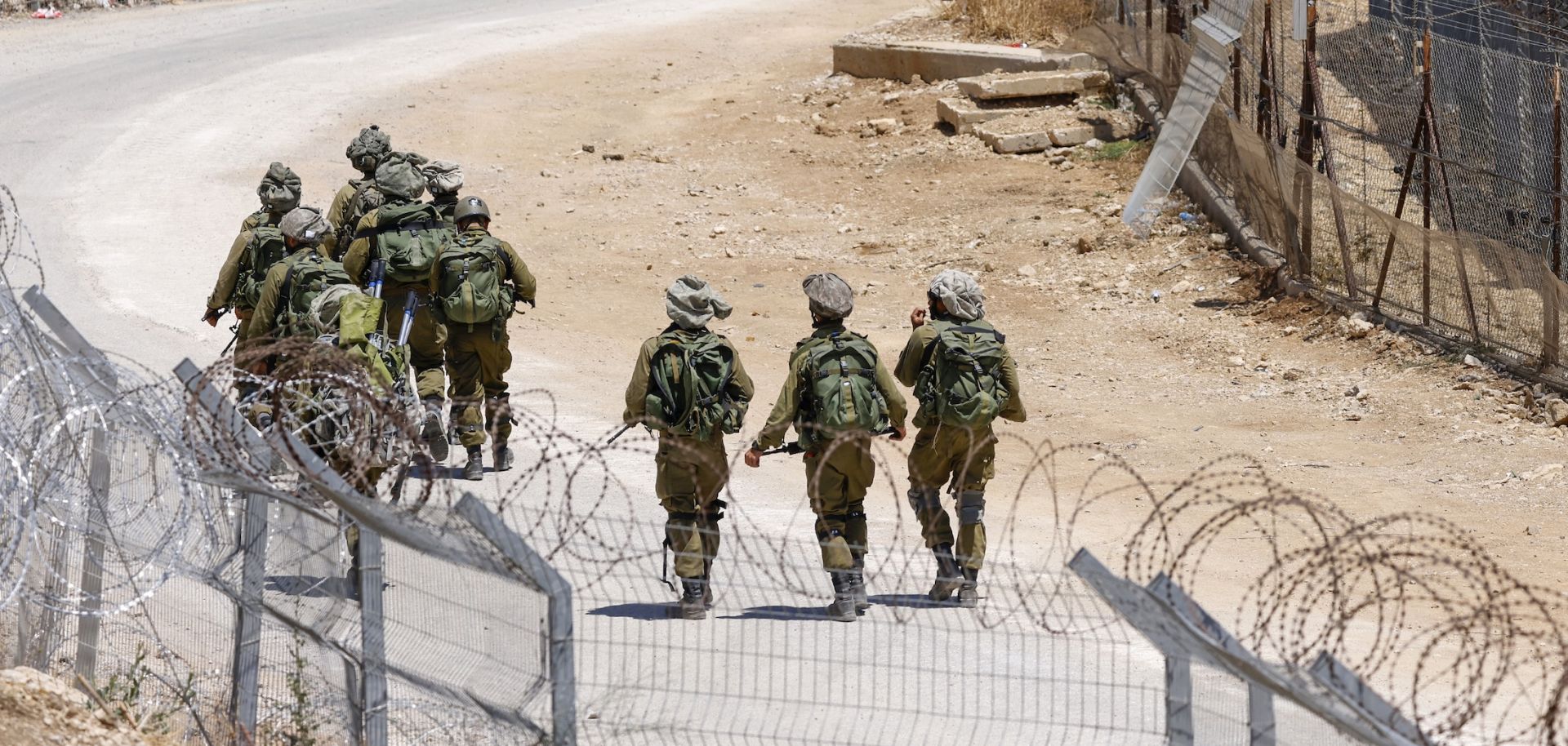
Syria and Israel's new intel-sharing agreement will likely reduce cross-border tensions in the coming months, but structural constraints and unresolved security dynamics mean the arrangement will remain fragile and prone to renewed escalation, limiting prospects for a sustainable, broader security pact. On Jan. 6, Syria and Israel announced that they had agreed to establish a joint mechanism aimed at sharing intelligence and coordinating military de-escalation under the supervision of the United States. The mechanism will also facilitate engagement and commercial opportunities between the two neighboring countries. Additionally, the new framework envisions the creation of a southern economic zone in Syria designed to incentivize stability through investment, reconstruction and cross-border economic activity — mirroring projects promoted by U.S. President Donald Trump for Gaza and southern Lebanon, where economic incentives are intended to complement security arrangements and reduce incentives for renewed violence. Syria and Israel have been engaged in intermittent talks over the past year, seeking a pact that would halt repeated Israeli strikes in Syria by addressing Israel's security concerns. The Jan. 6 joint statement marks the first official trilateral acknowledgment that the talks, now in their fifth round, are yielding concrete, albeit piecemeal, outcomes. Against this backdrop, the United States is reportedly now pushing both countries to schedule more meetings to reach a larger security agreement to de-escalate tensions on their shared border.
The intel-sharing agreement represents the culmination of U.S. mediation efforts in recent months to de-escalate tensions between Syria and Israel. U.S.-brokered talks between Israel and Syria stalled for months due to conflicting core demands. Israel has insisted on a new security framework, like a demilitarized zone, to counter evolving threats in southern Syria, while seeking to retain the border territories that Israeli troops have occupied since the December 2024 collapse of Bashar al Assad's regime. Conversely, Syria wants to revert to or update the 1974 disengagement agreement without sacrificing sovereignty or agreeing to broad demilitarization. Adding complexity, violence erupted in the southern Syrian region of Suwayda in June 2025 between Israeli-backed Druze and Syrian government-affiliated Sunni Bedouin militias, which led to intervention by Syrian state security forces, revenge killings and subsequent Israeli attacks on Syrian state forces. Progress has been further hindered by Israeli distrust of Syria's transitional leadership under President Ahmad al-Sharaa. While Damascus views an interim agreement as a means to stabilize the south, protect its territorial integrity during the transition, and focus on recovery and governance, al-Sharaa's political space is limited by the need to avoid appearing as if he is appeasing Israel.
- Israel and Syria signed the Agreement on Disengagement after the Yom Kippur War of 1973. The deal established a U.N.-monitored buffer zone in the Golan Heights and set limits on troop deployments, which have helped stabilize the two countries' shared border for decades, despite the absence of formal diplomatic relations.
The U.S.-backed mechanism will likely reduce Syria-Israel tensions in the coming months by improving security coordination and limiting escalation, but any progress toward a comprehensive security pact will remain incremental. While stopping short of a formal security pact, the U.S.-backed coordination mechanism will likely partially address Israel's core concerns, such as a demilitarized southern Syria, through improved threat detection, information-sharing and communication with Syrian authorities. For Israel, this arrangement will also likely implicitly preserve limited operational freedom to neutralize threats in Syria as needed, much like the ceasefire framework in Lebanon. However, the threats originating from Syria are less intense and more fragmented than the centralized threat posed by Hezbollah in Lebanon, which will reduce the risk of rapid escalation — especially given that the United States will likely also act diplomatically as a restraint on Israeli military responses. In the short term, and especially amid U.S. pressure, this will likely reduce Israeli strikes in Syria, easing tensions and giving Damascus room to focus on internal stability and governance challenges. Crucially, the intel-sharing mechanism will also open the door for talks on a broader comprehensive security arrangement between Syria and Israel, making a full pact more plausible, though progress will still be slow due to deep mistrust and red lines.
- The biggest constraint to the recently announced mechanism is its mutual applicability. The framework lacks specific timelines for Israel's withdrawal from southern Syria, suggesting that further meetings between Syrian and Israeli officials, along with continued U.S. mediation, will likely be necessary to ensure implementation.
In the longer term, the intelligence-sharing agreement will remain fragile, as unresolved sectarian tensions, rogue actors and limits on sustained U.S. diplomatic engagement risk triggering renewed Israeli strikes and undermining prospects for deeper normalization. The risk of Israeli military operations will persist, especially if the United States becomes distracted by other crises (e.g., Venezuela or Iran) and is less able to restrain Syria and Israel through consistent diplomatic pressure. The ongoing threat of sectarian violence and ceasefire violations in southern Syria involving Israeli-backed Druze militias will likely also keep tensions high, straining the current intel-sharing mechanism and any potential future security pact. Israel is unlikely to cease its support for the Druze fully, given that Israel has its own Druze population and leverages its ties to the community to project influence in Syria. This dynamic will continue to anger Damascus, complicate its efforts to unify Syria, and deepen opposition to deeper engagement with Israel among al-Sharaa's hard-line allies. Meanwhile, rogue or non-state actors operating within demilitarized zones in Syria, such as the Islamic State or groups affiliated with the Muslim Brotherhood, will likely continue to challenge Israel as well. If Syrian authorities fail to address these threats, Israel will likely respond with military strikes at the risk of re-escalating tensions, eroding trust and hindering broader normalization efforts.
