
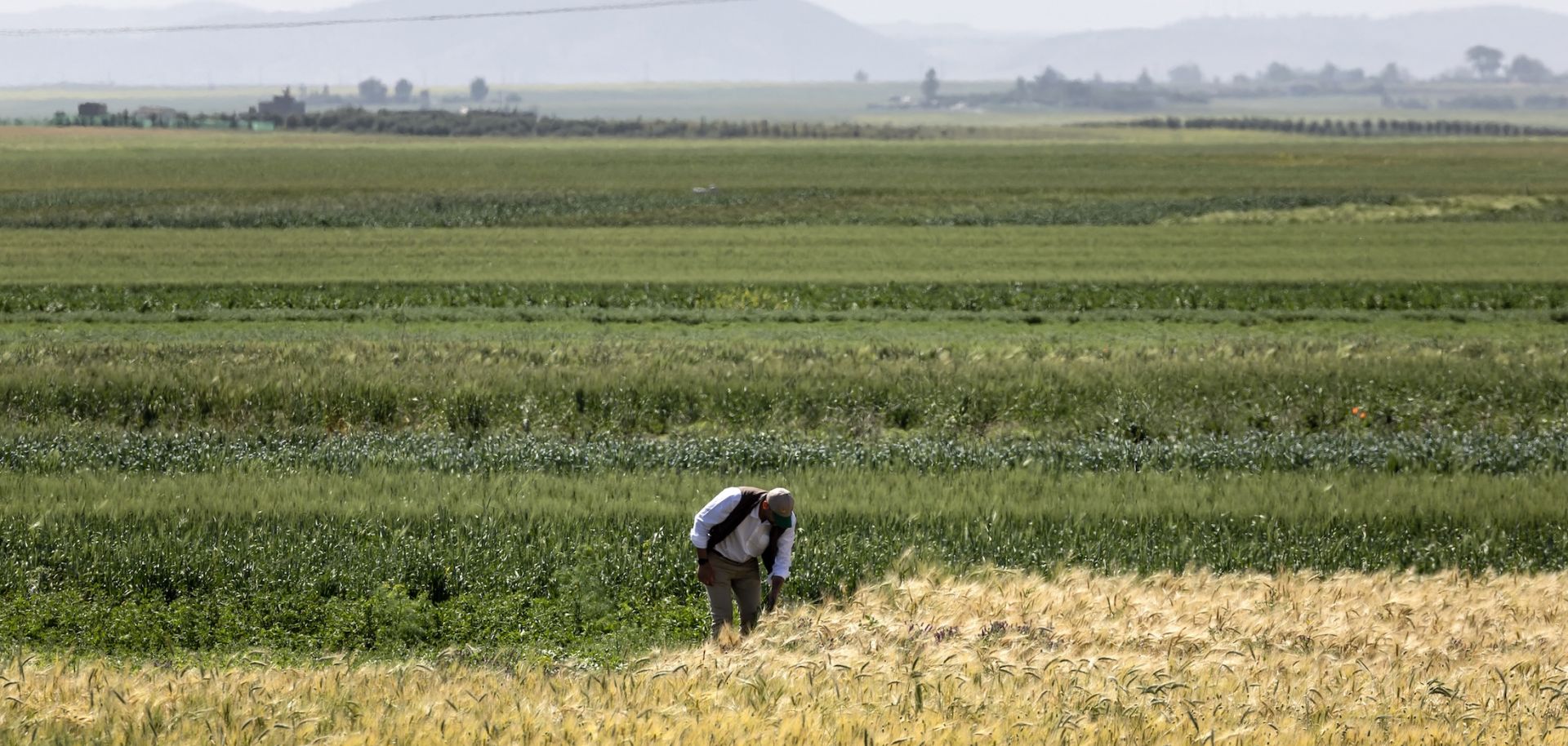
Morocco's short-term harvest yield increase is very unlikely to signal an end to persistent drought conditions, meaning the country will likely continue to rely on food imports and its agricultural sector will likely continue to lose jobs, worsening economic conditions ahead of the 2026 parliamentary elections. In late June, the U.S. Department of Agriculture's Foreign Agricultural Service forecasted that Morocco's wheat and barley harvest, which usually occurs from May through July, would increase its yield to 4.4 million tons, a 40% increase from the previous year's 3.1 million ton harvest. In addition, the broader agriculture sector — which made up about 10% of Morocco's GDP in 2024 — is expected to expand by 2.5% in 2025, according to the Moroccan central bank, after contracting by 4.8% in the previous season due to the effects of the multi-year drought. The increase is largely due to heavy rain and snowfall in March and April, which increased the average dam reservoir filling rates that provide water for irrigation. In mid-March, average reservoir filling rates across the country reached 35%, an increase from 26% in the previous year. Nevertheless, Morocco's rainfall level is still 18% below the long-term average.
- Although the average reservoir filling rates have increased, the March and April rain and snowfall were primarily concentrated in the northern parts of Morocco, where drought conditions are typically less severe. As a result, several regions in central and southern Morocco continue to experience critically low reservoir levels, with storage falling below essential thresholds and some falling to just 19.6%, which is significantly below the national average.
- Since 2018, Morocco has experienced a multi-year drought, with 2022 being the driest year on record in three decades. Moroccan climatology experts have cautioned that droughts have afflicted Morocco for centuries, and despite the severity of the latest drought, it is not inherently a new phenomenon. Morocco's vulnerability to droughts is in part due to Morocco's geography in the transitional climate zone between the Mediterranean Sea and the Sahara, in addition to the climatic effects of the Atlas mountain range, which creates a rain shadow effect and dry conditions.
In recent years, the Moroccan government has expanded efforts to expand its agricultural sector to improve the country's food security and expand its agricultural exports, facilitate job creation, and reduce unemployment. Although Moroccan efforts to develop and modernize its agriculture sector date back to the 2008 Green Morocco Plan, which aimed to increase Morocco's agricultural productivity and double the value added, Rabat has increased its efforts in recent years. In 2020, the government unveiled its Generation Green 2020-2030 plan, whose main objectives are to improve and enlarge the agricultural sector through the creation of 350,000 new jobs, the growth of the agricultural middle class by 350,000-400,000 households, and the doubling of agricultural exports and the percent they contribute to GDP. The 2022 Russian invasion of Ukraine increased the cost of Moroccan grain imports, further incentivizing the Moroccan government to boost domestic agricultural production and improve its food security, since Morocco imports around 40% of its food, with a significant amount coming from grains. Nevertheless, the multi-year drought has worsened some of the problems that Morocco's agriculture modernization efforts have tried to address, including aging irrigation infrastructure, water inefficient irrigation systems and rural-urban migration. Water stress shrank the livestock sector by 38% between 2016 and 2025, increased Morocco's reliance on food imports to supplement domestic production, and increased Morocco's unemployment rates due to farmers losing their jobs. In June, the Moroccan Minister of Equipment and Water announced accelerated efforts to construct new dams, desalination plants and create water transport systems to improve distribution in order to relieve some water stress.
- According to the Moroccan statistics agency, unemployment rates increased from 13% to 13.4% between 2023 and 2024, largely driven by the effects of the drought. In 2024, around 140,000 agricultural workers lost their jobs due to the persistent drought, joining the ranks of Morocco's 1.63 million unemployed.
- Although the Moroccan agricultural sector is unlikely to use significant amounts of desalinated water due to the cost, the increased availability of desalinated water would enable water in reservoirs to be re-allocated for irrigation purposes.
Continuing drought conditions will likely result in additional job losses in the agricultural sector and a further heavy reliance on food imports, thereby increasing the cost of living and hindering Morocco's progress toward the Generation Green 2020-30 goals ahead of the 2026 parliamentary elections. Despite the improving outlook for the current grain harvest season, Morocco's temporarily increased rain and snowfall are unlikely to curb years-long drought conditions, especially since the precipitation is still below the long-term average. As such, Morocco will likely continue to rely heavily on food imports, including grains and livestock, in the coming months to supplement its domestic production, which will likely further increase the cost of living, fueling economic grievances ahead of parliamentary elections in 2026. Furthermore, long-term drought conditions, worsened by climate change, will likely hinder Green Generation 2020-2030 ambitions, constraining Rabat's economic diversification and development goals. For one, although water infrastructure projects have been fast-tracked ahead of their original schedules, they remain multi-year efforts that will not meet the immediate water needs of the agricultural sector, particularly in central and southern regions that already receive limited rainfall. Second, the agricultural sector will likely continue to lose jobs due to below-average harvests despite government efforts to expand the sector. While the Moroccan government has invested in job creation, the highest growing sectors have been in services, industry and construction, and the agriculture sector has not significantly benefited from the job creation initiatives. As such, younger graduates, already facing some of the highest levels of unemployment in the country, are less likely to enter the agricultural sector and instead pursue careers in these growing sectors. Finally, even though the government has pursued initiatives to make the agricultural sector more drought-resistant through the adoption of water-efficient irrigation systems and planting drought-resistant crops, the adoption of these technologies favors larger farms, and by some estimates, modern agriculture only accounts for 15% of the cultivatable land. As a result, smaller farms will likely remain vulnerable to water stress in the medium to long term and be the most at risk for additional job losses.
- According to the June Foreign Agriculture Service report, Morocco is forecasted to import 6.7 million tons of wheat, an increase of 100,000 tons of wheat from the previous year, and 900,000 tons of barley in the 2025-26 marketing season.
- The Moroccan government pledged $1.4 billion to support job creation in 2025 to address the country's rising unemployment concerns, especially ahead of the 2026 parliamentary elections.
- According to the Moroccan statistics agency, inflation was at 2.0% in the first quarter of 2025, an increase from 1.2% during the same period in 2024, largely driven by increasing food prices.
