
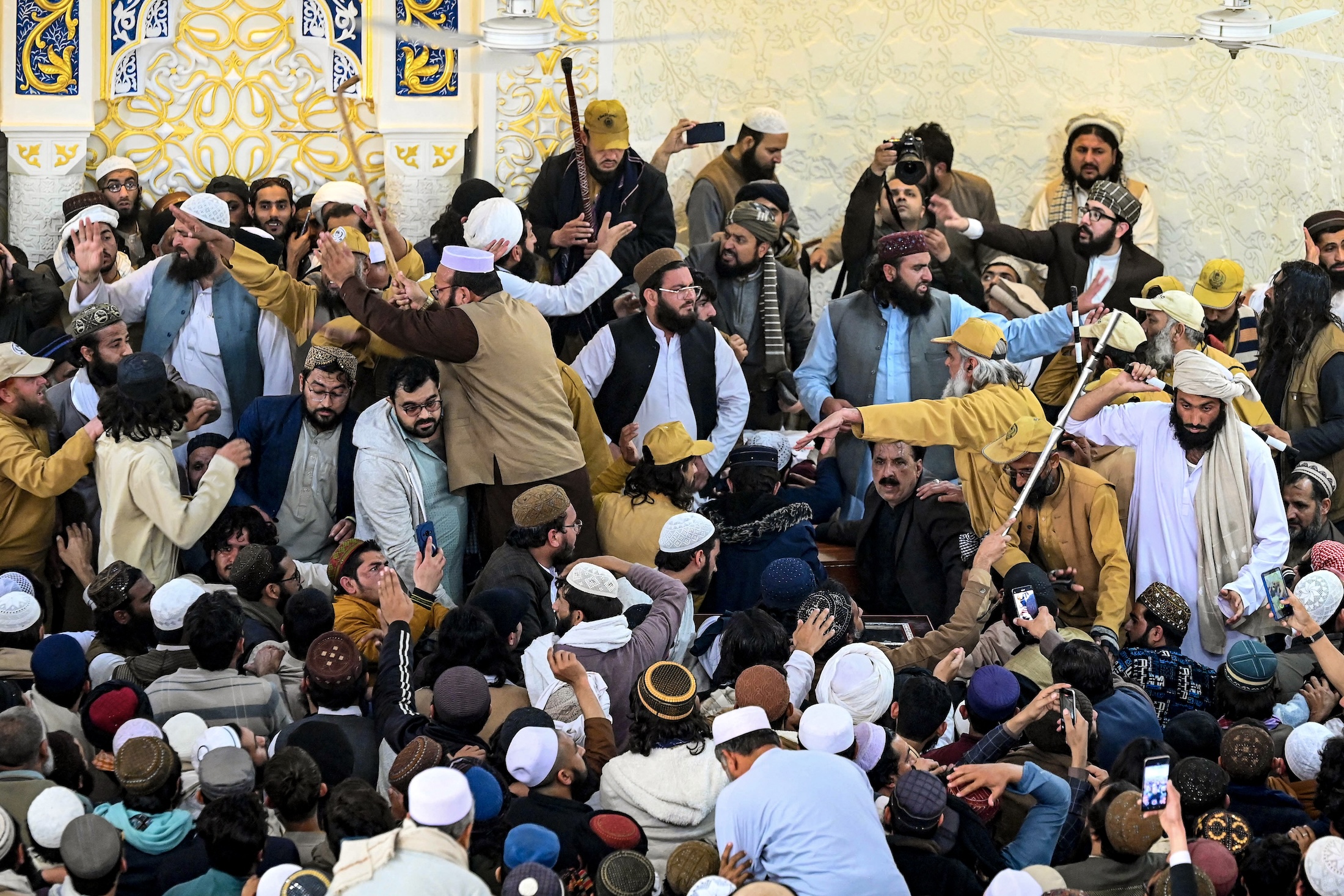
Pakistani militants' growing capabilities and coordination will enable more frequent and sophisticated attacks against security forces, Chinese interests and occasionally civilians, worsening Pakistan's security crisis and consequent threats to personal safety, business operations and foreign investments. Militant attacks in Pakistan have surged in recent weeks after the Islamist extremist Tehrik-i-Taliban Pakistan, or TTP, announced on March 14 its commencement of a spring offensive and after Baloch separatists in early March pledged to more closely coordinate attacks on Pakistani security forces and Chinese interests. Within 48 hours after the TTP's announcement, the group carried out dozens of attacks on security forces in Pakistan's northwestern province of Khyber Pakhtunkhwa, employing a range of capabilities like suicide bombers, roadside bombs and snipers. Meanwhile, Baloch separatists also carried out several high-profile attacks, most prominently the Balochistan Liberation Army's unprecedented March 11 seizure of the Jaffar Express passenger train in the southwestern province of Balochistan. Though separatists have targeted the train before, this was by far the most sophisticated such attack. After using explosives to stop the train carrying some 425 passengers in a remote, mountainous region, separatists took scores of people hostage and demanded Pakistan's government release alleged militants and other political prisoners. The stand-off lasted a day until authorities were able to secure most of the hostages and kill all the militants; another 23 security personnel, three railway employees and five civilian passengers were also killed during clashes. Baloch separatists continued to carry out attacks in the days that followed in apparent retaliation for Pakistan's refusal to release the prisoners as demanded. The most prominent of these was a deadly March 17 suicide bombing targeting a paramilitary convoy in Balochistan, which killed five security personnel and four civilians and wounded at least 35 others.
- Baloch separatists' attack on the Jaffa Express train came just over a week after Baloch Raji Aajoi Sangar, a loose alliance comprising several Baloch separatist groups, announced on March 2 that it would restructure into a more centralized group named the Baloch National Army and would ramp up attacks on Chinese interests and Pakistan's security forces. Though it remains unclear whether the train attack was a direct result of these recently announced efforts, the statement on the new group's formation said militants intend to transform "scattered guerrilla attacks into an organized and coordinated resistance" with a greater focus on directly targeting Pakistan's military installations and weakening its intelligence networks. The statement said the new group will also coordinate with the Sindhi separatist Sindhudesh Revolutionary Army, particularly in the city of Karachi and other parts of Sindh province.
The recent spate of attacks and sophistication of separatists' assault on the Jaffa Express train underscore militants' growing capabilities and determination to intensify their fight against the government, enabled by Pakistan's insufficient response to the years-long scourge of terrorism. Pakistan's economic challenges have long constrained its ability to resource major counterterrorism operations to combat the surge in militancy the country has experienced since the Afghan Taliban retook control of neighboring Afghanistan in August 2021; that event galvanized regional militants and provided space for some groups to develop their capabilities and ramp up attacks on Pakistan. Severe political instability in Pakistan also narrowed Islamabad's focus (especially from 2022-23) to countering former Prime Minister Imran Khan and his Pakistan Tehreek-e-Insaf party, which mounted a historic political challenge to Pakistan's influential military before a heavy crackdown stymied the movement. Militants' tactics and capabilities have also evolved and intensified the challenges faced by Pakistan's authorities. For instance, the TTP has become a more capable and resilient organization in part due to the at least tacit support it receives from the Afghan Taliban, which, among other things, seemingly permits the TTP to remain in eastern Afghanistan despite pressure on Afghan authorities from Pakistan's government. The TTP's current leader has also improved the group's cohesion and expanded its membership by regularly subsuming other local militant groups. Recent years have seen the group steadily return to parts of northwestern Pakistan — facilitated by temporary ceasefires it negotiated with Pakistan's government — further bolstering the group's ability to mount attacks in Khyber Pakhtunkhwa and elsewhere. Meanwhile, Baloch separatist attacks have spiked as Pakistan's continued crackdowns on Baloch activists and failure to sufficiently improve life in the province have intensified Baloch grievances. This trend has widened separatists' appeal, drawing greater numbers of women and young men into militancy, and has made separatist leaders open to deadlier tactics like suicide bombings. These developments have enabled Baloch separatists to undertake even more sophisticated attacks on Pakistani security forces and Chinese nationals, whom separatists accuse of exploiting Baloch land and resources. Beyond the March 11 Jaffar Express train attack, Baloch separatists have undertaken attacks likely facilitated by sympathizers in Pakistan's security services and/or intelligence leaks. These attacks include the October 2024 bombing of a convoy of Chinese nationals outside Karachi's international airport, as well as coordinated attacks on August 25-26, 2024, targeting security forces, major infrastructure and civilians across Balochistan.
- While less active in Pakistan than the TTP, the Islamic State has also remained a major militant threat. Unlike the TTP — which has officially adopted stricter targeting parameters in recent years to limit civilian casualties and consequent backlash — the Islamic State often intentionally targets civilians, particularly religious minorities, in mass casualty attacks like suicide bombings of Shiite mosques.
- Militant groups' strategic cooperation exacerbates the challenge Pakistan faces in countering their activities, as anti-Pakistan militants of varying ideologies and motivations share tactical and other knowledge, as well as coordinate operations to boost their capabilities. In particular, ties between Islamist militants like the TTP and Baloch separatists have grown quickly in recent years, facilitated in part by influential Baloch militant figures opening up to the idea of such cooperation. Additionally, the Sindhi separatist Sindhudesh Revolutionary Army's planned coordination with Baloch separatists' recently announced, more centralized group suggests links between various militants will only expand further.
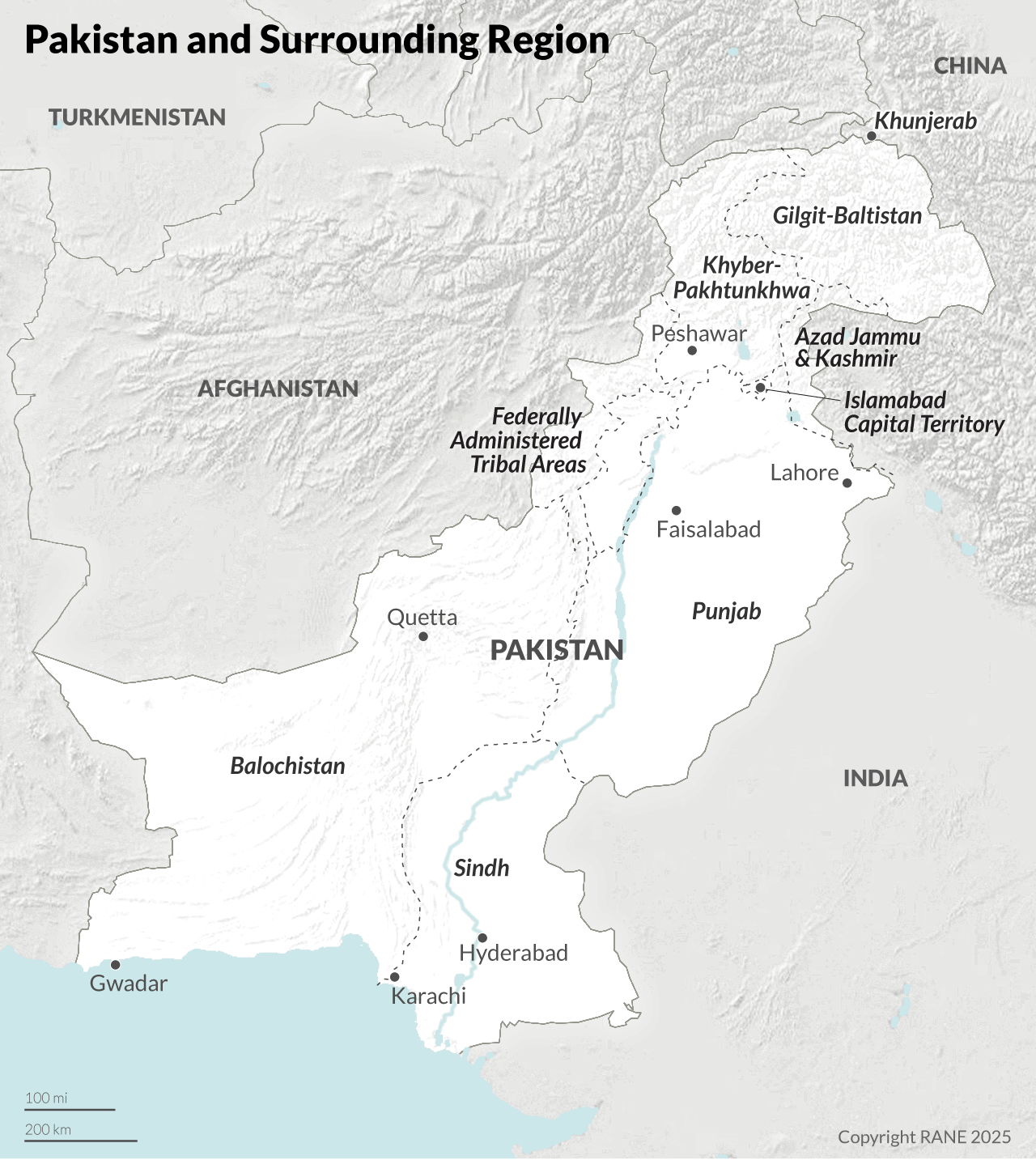
Militants' improving capabilities and plans for greater coordination will likely increase the frequency and sophistication of attacks against security forces, Chinese interests and occasionally civilians, worsening personal safety concerns and risks of business continuity disruptions in Pakistan's restive western provinces and increasingly elsewhere. Militants' recently demonstrated ability to carry out dozens of attacks over 24-48 hours and conduct a mass hostage-taking operation on a major passenger train elevates the baseline threat militants pose, particularly in the restive provinces of Khyber Pakhtunkhwa and Balochistan. Though the specific groups and locations linked to these incidents vary, the fact that militants of differing ideologies and capabilities are increasingly collaborating based on their opposition to the Pakistani state means even groups that have historically been less capable risk gaining the ability to carry out more complex attacks, potentially as soon as the coming months, given that armed groups often carry out spring offensives in Pakistan. The TTP, which is primarily active in Khyber Pakhtunkhwa, probably will carry out more frequent and/or deadlier attacks on security forces, especially assaults on security installations like paramilitary outposts and military bases. Its growing ties to Baloch separatists also suggest the group's attacks on Chinese interests will rise, portending increased violence against Chinese nationals, such as workers traveling to and from investment projects in Khyber Pakhtunkhwa. Meanwhile, the Baloch separatist groups that make up the recently announced centralized force explicitly conveyed their intent to employ violence more strategically, namely by increasingly assaulting military installations and degrading Pakistani intelligence capabilities and networks. Separatists may accomplish the latter by increasingly attacking intelligence offices — as they did in March 2024 at the Gwadar Port Authority complex in Balochistan — and by exploiting security services' historically shaky operational security to ascertain the identities of and subsequently assassinate intelligence officers and assets. The TTP as recently as 2023 claimed responsibility for assassinating two intelligence officers in Punjab, suggesting militants' efforts to boost such operations may fuel an uptick in attacks beyond Khyber Pakhtunkhwa and Balochistan, especially as the TTP and Baloch separatists strengthen cooperation. The Sindhi separatist Sindhudesh Revolutionary Army's pledge to join the newly established Baloch separatist group may also presage a rise in attacks specifically in Sindh province, depending on the extent to which the two sides strengthen their sharing of capabilities and coordinate operations. Such operations would occur alongside separatists' attacks on Chinese nationals and investment projects, intending to disrupt ongoing work on these projects and discourage Beijing from further such investments.
- Even militant groups that do not formally establish cross-ties will likely take cues from each other's activity when timing attacks. For instance, a day after the Baloch Raji Aajoi Sangar separatist alliance announced its formation of a new, more centralized group on March 2, the TTP-linked Islamist-extremist Hafiz Gul Bahadur group carried out a major attack against a military compound in Pakistan's northwest with car bombs, killing at least 12 civilians and injuring dozens of others.
- The TTP's claim of responsibility for the January 2023 assassination of the two intelligence officers in Punjab, including Inter-Services Intelligence Deputy Director Multan Naveed Sadiq, may indicate its budding efforts to restore a distinct counterintelligence capability. The group's spokesperson at the time said a "secret squad of TTP" was responsible for the attack, seemingly referring to Lashkar-e-Khorasan, a separate militant group that also released a claim of responsibility for the assassination. Lashkar-e-Khorasan historically was based in northwest Pakistan, maintained links to the TTP and focused on counterintelligence; it maintained around 300 members at its peak in 2012 and was reportedly linked to the assassinations of some 250 alleged U.S. and Pakistani intelligence assets.
Chinese pressure may push Pakistan to undertake a more heavily resourced counterterrorism campaign, but economic challenges and political disagreements would still limit its scale and efficacy, suggesting foreign hesitance to invest in Pakistan will persist and constrain broader improvements to the country's stability. Pakistan's economic challenges have pushed the government to prioritize improving security and making progress on Chinese investment projects in an effort to foster economic recovery. These priorities suggest that Chinese pressure on Islamabad to better mitigate militant threats to its interests may push Pakistan to modestly bolster counterterrorism resources and/or make marginal adjustments to its strategy. That said, Pakistan's prolonged reliance on less costly but fairly ineffective tactics to counter militancy — namely, a wide range of nonkinetic means like combatting terrorist funding and only small-scale, intelligence-based counterterrorism raids — suggests Pakistan's economic insecurity has long strained authorities' resources and willingness to undertake a more substantive counterterrorism effort. The country's total debt stands at around 70% of gross domestic product, and authorities have further increased borrowing in recent weeks amid insufficient revenue collection, suggesting resource constraints will continue to limit authorities' ability to implement a major shift in counterterrorism strategy. Pakistan will thus likely continue depending largely on less costly nonkinetic means and more narrowly focused, smaller-scale kinetic tactics, regardless of these tactics' inefficacy in bringing about a meaningful and lasting reduction in attacks. Continuing political polarization and disagreement will further limit the likelihood that authorities implement a major shift in strategy, as disunity has reduced the opposition's willingness to partake even in discussions of ostensible mutual concern such as that of national security. Even if Pakistan had the resources for a major military campaign, politicians in Khyber Pakhtunkhwa and Balochistan would likely be resistant given the violence and mass population displacements such campaigns have previously entailed for these regions. Additionally, a more prolonged reduction in attacks would likely require authorities to address broader drivers of militancy, such as Baloch grievances over authorities' alleged abuses and Balochistan's particularly poor conditions, but crafting effective policy solutions to these challenges would be more complex and time-consuming than merely relying on kinetic responses. All of this means Pakistan will remain susceptible to worsening militancy over the coming months and potentially years, sustaining foreign hesitance to invest in the country and likely constraining progress on preexisting projects there. Among other things, this will limit the extent to which Pakistan's economy improves and will prolong elevated insecurity and instability.
- An increase in the frequency and sophistication of militant attacks, especially on Chinese interests, would increase the likelihood of Pakistan allowing China to deploy additional private security personnel and/or allowing Chinese personnel to carry firearms to better defend against militant attacks. However, depending on the severity of the violence, even these measures may not be enough to assuage Chinese concerns, suggesting disruptions from militant attacks and measures to protect Chinese nationals will likely continue to constrain progress on Chinese investment projects.
