
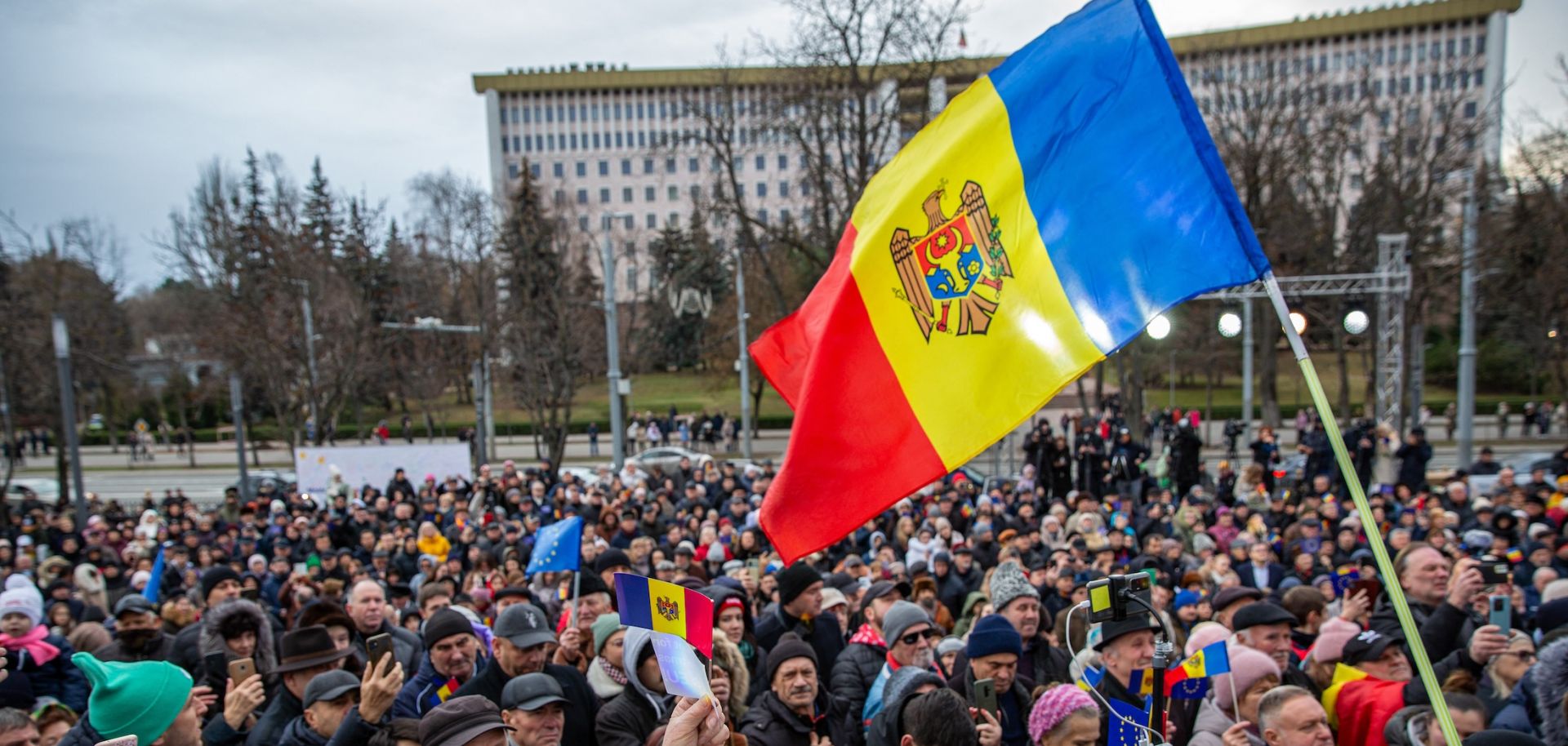
Pro-Russian political forces will step up efforts to destabilize Moldova ahead of the October presidential election and referendum on Moldova's EU integration, slowing and potentially endangering Chisinau's pro-European course. On April 16, the Moldovan Constitutional Court approved holding a referendum on constitutional amendments proposed by the ruling Party of Action and Solidarity (PAS) regarding the country's European integration. The referendum will mandate several text changes and additions to Moldova's constitution ''reaffirming the European identity of the people of Moldova'' and the ''irreversibility of Moldova's European course.'' Referendum participants will be asked, ''Do you support Moldova's accession to the European Union?'' — a provision that a majority of Moldovans are expected to support. The referendum is aimed at boosting the electoral chances of incumbent president Maya Sandu, because it will take place simultaneously with the first round of the country's presidential election on Oct. 20. On April 22, Moldovan pro-Russia opposition politicians held a meeting in Moscow to announce the formation of a new pro-Russian political bloc run by fugitive Moldovan oligarch Ilan Shor on a platform advocating accession to Moscow's Eurasian Economic Union rather than the European Union. Named ''Victory,'' the pro-Russian political bloc will campaign against the referendum and support pro-Russian candidates in the presidential race. The Shor-aligned ''Victory'' bloc could play the role of kingmaker because the presidential vote is likely to go to a second round, where the bloc will likely support traditional pro-Russian candidate Igor Dodon, as polling suggests that the election could be close.
- Polling from the International Republican Institute published March 28 shows that President Sandu is the most trusted politician in Moldova, but also that 57% of respondents hold an unfavorable view of her. The politician with the highest approval rating is Ion Ceban, the mayor of Chisinau and leader of the opposition National Alternative Movement party, who is viewed favorably by 56% of the country. He has spent extensive time in Russia and seeks to garner support from both pro-EU and pro-Russian constituencies, and there is speculation he will run in the presidential election.
- Igor Dodon, the leader of Moldova's traditional pro-Russian political forces, did not attend the April 16 Moscow meeting. He was president of Moldova from 2016-2020, and his pro-Russian Electoral Bloc of Communists and Socialists (BCS) party is the second-largest party in the Moldovan parliament. However, his presidential chances and his BCS party's broader popularity have waned for numerous reasons, most notably because its leftist positions are unpopular among some younger and pro-Russian voters, in addition to corruption allegations against Dodon and other party members. This has seen Moscow instead shift its support toward Shor and his Victory pro-Russian political movement. Shor, however, faces massive corruption charges in Moldova and is currently living in exile in Israel, which means he can only play the role of kingmaker in the upcoming election rather than assume power himself.
- The upcoming referendum will be Moldova's first that seeks to change the country's constitution. Moldova has held other referendums since its independence in 1991, but they either failed due to low turnout or did not have legally binding effects. Doina Gherman, an influential lawmaker from the ruling PAS party who heads the commission in the Moldovan parliament on foreign policy and European integration, confirmed on April 16 that the October referendum's passage would see the constitutional amendments automatically enter force without an additional legislative vote, noting ''there is no need for [members of parliament] to validate what the people have decided.''
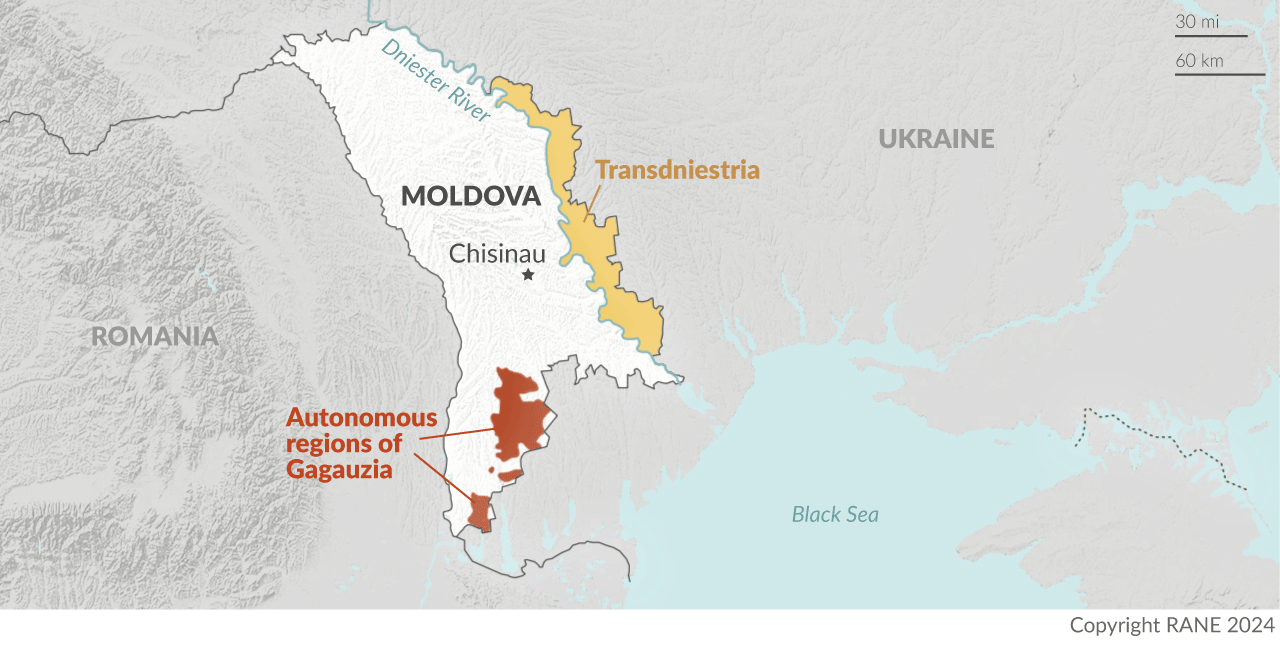
Pro-Russia groups will use Moldova's problematic relations with its breakaway region of Transdniestria, and increasingly with its autonomous region of Gagauzia, to destabilize the country and fuel pro-Russian sentiments. The conflict in the unrecognized, pro-Russian breakaway region of Transdniestria has been the root of Moldova's political, economic and security problems since the country gained independence 33 years ago. In the lead-up to the October presidential election and constitutional referendum, Moscow will likely work with local Moldovan authorities to continue fueling rumors that Transdniestria will soon be annexed by Russia, in an effort to destabilize Moldova by maintaining the perceived threat that the country may soon be forced to go to war with Russia over the territory. Many Moldvans, however, do not believe Russia and its allies in Transdniestria would actually pursue a major military provocation against Moldova, because Russian forces in neighboring Ukraine are far from the breakaway region, and such a conflict would only worsen Transdniestria's economic crisis. With a conflict over Transdniestria currently not seen as a credible or imminent threat, Moscow will instead increasingly leverage Moldova's other problematic region of Gagauzia to threaten Sandu's government and its pro-EU agenda. This can be evidenced by the recent election of Evghenia Gutsul as Gagauzia's governor with Shor's endorsement. In recent months, Gutsul has engaged in numerous provocations intended to fuel anti-government, pro-Russian and separatist sentiments among Gagauzia's ethnically Turkic population. She was also named the Executive Secretary of Shor's ''Victory'' political movement, indicating a shared intent to use the region to obstruct Moldova's government and its European integration.
- The Autonomous Territorial Unit of Gagauzia is a largely agriculture-based region in Moldova named for the Gagauz people who inhabit the territory. The Gagauz are ethnically Turkic and speak a dialect of the Turkish language, in contrast with the Romanian-speaking Moldovan majority. Since Soviet times, Russia has used the region's push for greater autonomy and protection from Moscow to pressure and constrain pro-Romanian and pro-European tendencies in Chisinau.
- Since becoming Gagauzia's governor in July 2023, Evghenia Gutsul has become a fast-rising star in pro-Russian politics. But while she appeals to younger voters, at 37 years old, she does not meet the 40-year age requirement to run for the president of Moldova. However, her political future will be challenged by criminal corruption proceedings against her: on Apr. 24, the Anti-Corruption Prosecutor's Office of Moldova announced that it had completed an investigation and transferred to court a corruption case alleging the daily and systematic import of money from Russia into Moldova beginning in 2019 to finance her and other Shor associates' political activities.
- On March 6, Gutsul met Russian President Vladimir Putin in Sochi. She has also made frequent trips to Moscow, where she last month struck a deal that allows all pensioners and public sector employees in Gagauzia (who comprise one-fifth of the region's 120,000 residents) to receive monthly payments equivalent to $100 (in a country where the average pension is $220). The scheme effectively bribes Gaguazians to support Moscow over the Moldovan government; the monthly payments will be issued by Russia's Promsvyazbank and sent through Russia's Mir electronic payment system (the Mir system is sanctioned, meaning Gaguazians will be expected to travel to Russia or other friendly countries to receive the payments).
While Russian efforts to destabilize Moldova will increase in the coming months, they are unlikely to decisively reverse the current government's pro-European course. If Sandu fails to secure another term as president, it would likely halt further substantive progress toward Moldova's European integration because her successor would probably not share her pro-EU views. For the Sandu administration, a defeat in October would also likely threaten to reverse all the progress it has made toward European integration by emboldening pro-Russian forces ahead of parliamentary elections in 2025. However, Sandu still appears likely to secure another term, albeit in a close second-round vote, due in part to the concurrent referendum likely boosting turnout among pro-European voters. Despite pro-Russian forces' ongoing efforts to fuel anti-government sentiment and protests, many Moldovans also still support Sandu's pro-EU agenda, as European integration is associated with higher living standards. In addition, the pro-Russian vote may struggle to unite behind a candidate as controversial as Dodon (who lost handily to Sandu in the 2020 presidential election), further boosting the Moldovan president's chances at victory. If Sandu is reelected, pro-Russian forces will likely become even more desperate to win the 2025 parliamentary election, which would be their last chance to secure power at the national level until the next presidential election in 2028. This would likely see pro-Russian forces double down on their efforts to destabilize Sandu's government before and after the 2025 legislative vote.
- The 101 seats in the Moldovan parliament are elected by party-list proportional representation in a single nationwide constituency. Sandu's PAS party currently holds 63 seats, while Dodan's BCS party holds 32, and politicians aligned with Shor hold 6.
- Compared with the presidential election, next year's parliamentary election may provide a better opportunity for pro-Russian and anti-PAS political forces to gain influence in the Moldovan government, as they will not have to rally behind a single candidate. But while pro-Russian parties may expand their presence in the parliament in 2025, they currently appear unlikely to win over enough voters to secure the 51 seats needed for a legislative majority, given that European integration remains broadly popular among the Moldovan electorate.
