
Turkey's March 31 municipal elections will likely see the ruling Justice and Development Party (AKP) and the opposition both focus on infrastructure improvements, but a strong showing for the AKP will likely increase government confidence in a constitutional referendum vote to secure another term for President Recep Tayyip Erdogan. The municipal elections include key races in the opposition-held Istanbul and Ankara, Turkey's two largest cities. The two cities switched from AKP mayors in the 2014 municipal elections to opposition Republican People's Party (CHP) mayors in the 2019 elections. However, the opposition coalition, the Nation Alliance, that led to the election of CHP mayors in Istanbul and Ankara fragmented after the May 2023 presidential and parliamentary elections, in which President Erdogan was re-elected. As a result, parties that were part of the Nation Alliance and those that had struck deals with the CHP, such as the Iyi Party and the pro-Kurdish Peoples' Equality and Democracy Party will run with their own candidates in the upcoming municipal elections. In the large cities of Istanbul, Ankara and Izmir, issues related to the rising cost of living, access to transportation, irregular migration, and upgrading/maintaining urban infrastructure will likely be top of mind for voters.
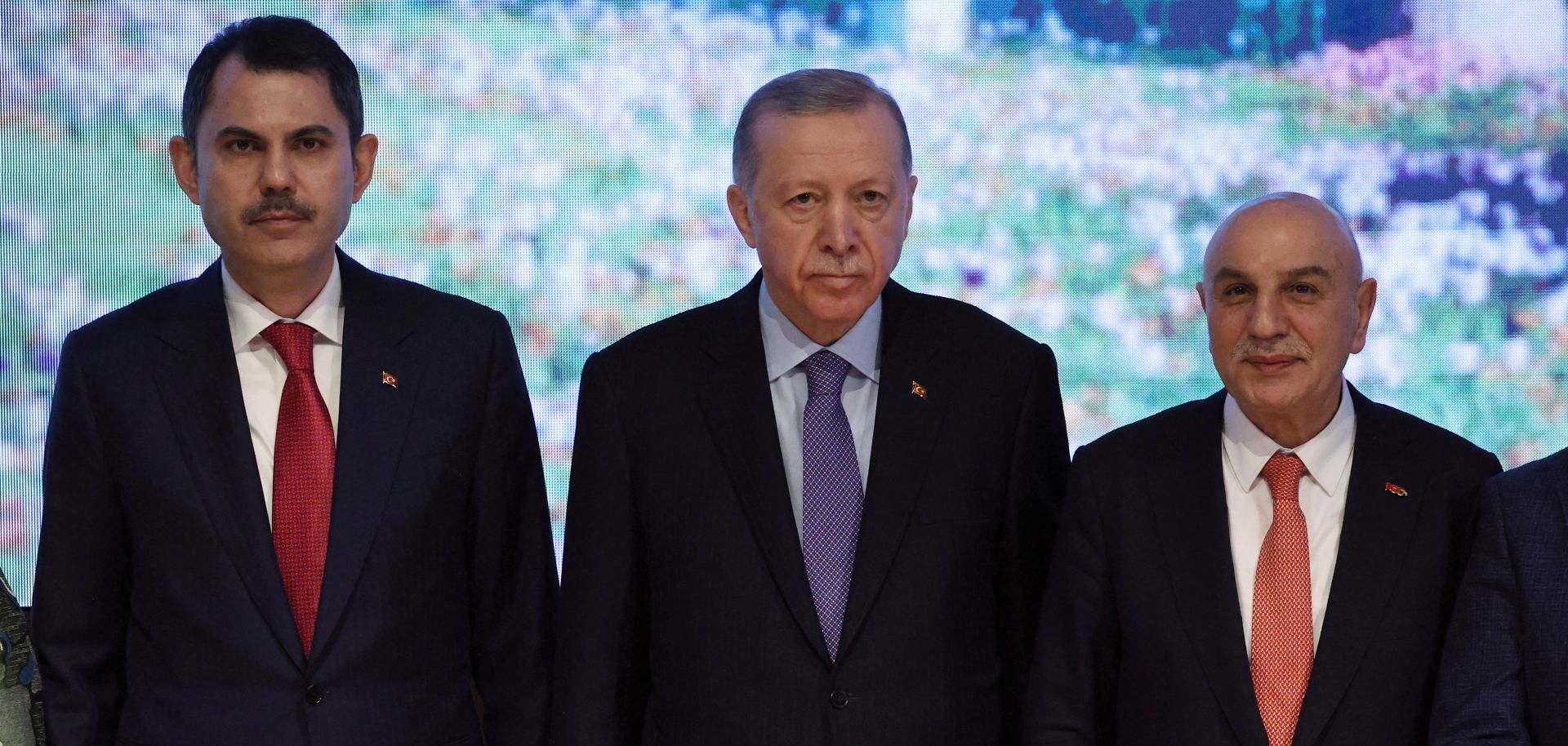
- The incumbent Istanbul mayor, CHP candidate Ekrem Imamoglu, said that the 2024 municipal elections would send a message to Erdogan's government that Turkey wants ''democracy, justice and rule of law.'' In Istanbul, the AKP nominated former Minister of Environment and Urbanization Murat Kurum to challenge Imamoglu. Recent polls have shown a close race in Istanbul; a HBS Research and Consultancy survey conducted in February had Imamoglu in the lead with 44.3%, followed closely by Kurum at 43.1%.
- Kurdish voters, who comprise roughly 11% of the electorate in Istanbul, will likely play a key role in the election in Turkey's largest city. Although they largely sided with the opposition in previous elections when pro-Kurdish candidates were not fielded, the DEM party's pro-Kurdish candidates will likely receive some of the Kurdish vote, further fragmenting support for the opposition candidate.
- In Ankara, Turgut Altinok, the head of Kecioren district, is running as the AKP candidate against the incumbent mayor and CHP candidate Mansur Yavas. A February poll conducted by HBS Research and Consultancy showed Yavas leading with 40.3% compared with Altinok's 35.2%.
An AKP win would enable the ruling party to regain influence in major cities and foster infrastructure improvements and megaprojects, addressing the major concern for earthquake resiliency. If the AKP regains Istanbul and/or Ankara, it would reinstate the party's influence in Turkey's main electoral districts. On the campaign trail in Istanbul, AKP candidate Kurum has pledged to improve the city's infrastructure and address the cost of living crisis by expanding social services. Fears of a strong earthquake that could devastate Istanbul have grown over the past year after twin earthquakes struck southeastern Turkey in February 2023, killing thousands and causing widespread destruction. Against this backdrop, Kurum's focus on fortifying the city's infrastructure — combined with his experience as the former minister of Environment and Urbanization — will likely help him woo voters in Istanbul. Kurum's victory would likely enable the AKP to implement its planned megaprojects in the city, including Erdogan's controversial Istanbul Canal, which has been a point of contention between current Mayor Imamoglu and the central government due to environmental concerns. Similarly, in Ankara, AKP candidate Altinok's campaign has focused on urban transformation and earthquake resiliency. If elected mayor, Altinok has also pledged to expand social services in the Turkish capital, including access to healthcare for disabled citizens.
- The devastating 2023 earthquakes that hit southern Turkey and nearby northern Syria have increased fears about a large, impactful earthquake damaging infrastructure in Istanbul, which is located near the North Anatolia faultline. Houses and apartments built after the 1999 Izmit earthquake in Turkey were constructed for earthquake safety. However, nearly two-thirds of housing in Istanbul was built before then and thus remains vulnerable to earthquake damage. As part of his mayoral campaign in Istanbul, Kurum has pledged to remove all hazardous buildings and construct 650,000 new housing units, with the municipality paying for half of the expenses for the infrastructure overhaul. In Ankara, the AKP candidate Altinok also cited the city's old buildings as a concern in a possible earthquake.
- Istanbul Mayor Imamoglu filed a complaint against President Erdogan's $15 billion Istanbul Canal, citing environmental concerns and traffic concerns, which Turkish courts upheld. The canal would connect the Black Sea to the Sea of Marmara and provide a maritime alternative to the Bosphorus Strait. Kurum supports the Istanbul Canal plan.
The Turkish government will likely push for constitutional reform to allow Erdogan to run again in 2028, and AKP mayoral victories in Istanbul and Ankara would increase the Turkish government's confidence in a referendum vote to gain popular support in major cities. At some point before the 2028 presidential and parliamentary elections, the AKP will likely suggest a constitutional referendum to allow Erdogan to run for an unprecedented fourth term. If its candidates perform strongly in Istanbul and Ankara's upcoming mayoral races, it will likely embolden the AKP to pursue the referendum vote, which the party can then use to demonstrate popular support for the changes. The AKP and its allies currently lack the two-thirds majority in the parliament to approve constitutional changes, and they need an extra 42 votes from other parties for a three-fifths majority to send constitutional changes to a referendum vote. But if the opposition suffers another electoral defeat in Istanbul and Ankara after failing to oust the AKP from power in the 2023 national election, opposition parliamentarians may cut deals with the government to preserve their political careers, which could see some vote in support of a constitutional referendum.
- In 2017, the AKP pushed a constitutional referendum to move toward an executive presidency, consolidating power under Erdogan. The constitutional amendments received more than three-fifths of the votes in parliament and moved to a popular vote. Although the referendum passed, many of the major cities, including Istanbul and Ankara, voted against the amendments.
Conversely, a strong showing for the CHP in Istanbul and/or Ankara would improve the opposition's political viability ahead of the 2028 national election, and would similarly portend increased efforts to improve the two cities' earthquake resilience. If the CHP retains control of the mayorships in Istanbul and Ankara, it would signal the opposition party's continued competitiveness in the two major cities, which were once AKP strongholds. Should he be re-elected, Imamoglu would likely continue to pursue infrastructure improvements in Istanbul (including by expanding the city's metro system), while also working to address the daily concerns of citizens (like earthquake preparedness). If Yavas secures another term as Ankara's mayor, he would likely continue to expand infrastructure projects from his first term, including increasing access to clean water, building earthquake-resilient new housing, and fostering rural development. More broadly, the municipal elections will serve as a barometer ahead of the presidential and parliamentary elections scheduled for 2028. A strong showing for the CHP in major cities would demonstrate the opposition's viability in elections outside of a formal alliance like the Nation Alliance. Furthermore, if other opposition parties' candidates perform poorly in the municipal elections, they may be more willing to join an opposition coalition, despite the Nation Alliance's poor performance in the 2023 presidential and parliamentary elections.
- Earlier this month, Imamoglu revealed his ''Istanbul Resistant to Disasters Project'' to address the threat of earthquakes and natural disasters in Istanbul. The proposal will provide disaster awareness training for citizens, reinforce 22,000 of 50,000 homes between 2024 and 2029, and provide rental support.
