
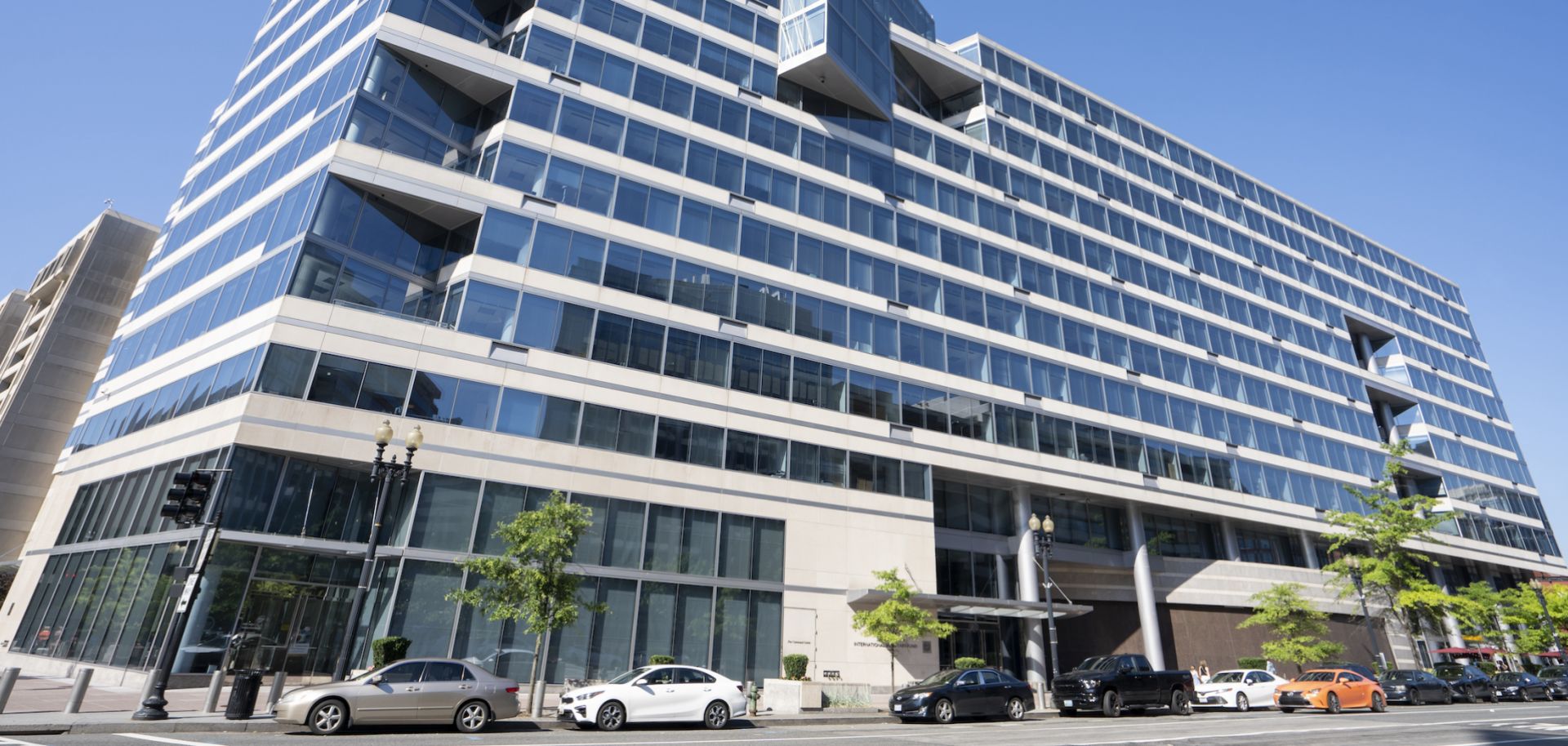
In response to a failed IMF review, Sri Lanka will likely seek to strengthen revenue collection, as well as potentially cut public spending and implement some structural reforms. Doing so, however, will exacerbate risks of public backlash and still leave Colombo in a difficult position with foreign creditors. On Oct. 5, Sri Lanka's central bank cut interest rates by 100 basis points in a bid to appease the International Monetary Fund (IMF) by increasing revenue and fostering economic growth as inflation cools. This came after the IMF announced on Sept. 27 that it failed to reach a staff-level agreement with Sri Lanka following a first review for the country's $2.9 billion Extended Fund Facility, delaying the release of a second tranche of approximately $330 million. An IMF mission team visited Sri Lanka from Sept. 14-27 and found that while the South Asian country's economy continues to gradually improve and stabilize, there remains ''continued uncertainty'' amid ''subdued'' economic growth and reform momentum. This is in part driven by Sri Lanka experiencing recent slowdowns in foreign exchange reserve accumulation, as well as expected revenue shortfalls of around 15% below initial targets by year-end. While the IMF has not provided a concrete timeline for a potential agreement that could release the tranche, both the IMF and Sri Lanka's acting finance minister have stated discussions to secure the tranche continue.
- Sri Lanka has witnessed some improvements since 2022 when its economic crisis saw record inflation along with fuel and food shortages, which helped drive mass protests that eventually drove the prior president to flee the country in July. Over the past six months, tourism and overseas remittances have significantly increased, inflation has plunged from over 50% to 1.3%, and local currency has appreciated by around 12%. Additionally, the country's foreign exchange reserves rose to $3.6 billion in August from a low of $1.9 billion at the end of 2022. The government also recently completed the local currency portion of its domestic debt restructuring plan and is continuing discussions with its external creditors.
Besides fiscal policy adjustments, the IMF has stressed the importance of Sri Lanka making structural reforms and anti-corruption efforts as Colombo remains behind on its commitments. According to the Sri Lankan Parliament, 38 of the 100 commitments in the country's 2023 IMF program have been fulfilled, while another 19 commitments have been partially addressed; the remaining 43 have not yet been met. Meanwhile, the IMF's Governance Diagnostic Assessment (GDA) — which was conducted from March 20-31 and published on Sept. 30 — emphasized the need to address corruption issues and implement structural reforms as a means to ensure stability and debt sustainability in Sri Lanka. This prompted the IMF to outline 16 short- and medium-term recommendations to address weaknesses in anti-corruption legal frameworks, anti-money laundering, public finance management and tax policy practices, among other structural issues.
- The IMF's bailout conditions called for an ''in-depth governance diagnostic exercise'' intended to assess ''corruption and governance vulnerabilities.'' Sri Lanka is the first country in Asia to be subject to such an exercise, underlining the extent to which corruption has contributed to the country's economic crisis.
- Sri Lanka's Parliament passed anti-corruption legislation in mid-July, which paved the way for the updated Anti-Corruption Act to take effect Sept. 15. The new act contains a number of provisions that enhance pre-existing anti-corruption laws, including by increasing financial consequences, mandating electoral candidates declare assets and expanding the scope of laws to target private-sector bribery.
- The IMF has highlighted structural issues that pose challenges to Sri Lanka's economic growth. These include a lack of checks and balances in governance institutions, disorganized regulatory infrastructures that oversee public resources, and insufficient transparency and fiscal discipline that impacts macroeconomic stability.
Sri Lanka will likely subscribe to most of the IMF's recommendations in an effort to secure the second bailout. But this will open the door to protests, and progress on curbing corruption will face pushback. Though recent economic improvements signal that another crisis is not imminent, the absence of an IMF agreement and the consequent delayed release of the $330 million tranche will likely challenge the government's efforts to boost Sri Lanka's economic recovery. Thus, Colombo will be incentivized to meet the IMF's recommendations by strengthening revenue collection, as well as by potentially cutting public spending. Some of these policies will likely be introduced in the country's 2024 budget, which is expected to be finalized by late November. The government's general commitment to reform implementation thus far — and particularly its conduct of a painful domestic debt restructuring — suggests it will remain largely in line with the IMF's bailout conditions. Additionally, presidential elections due by September 2024 may incentivize the government to implement additional IMF recommendations to try to improve economic conditions and stability beforehand, as seen over the past year. That said, further austerity measures will heighten risks of public backlash, such as low-level protests and strikes, which could constrain some reform implementation — particularly on more challenging issues like countering corruption, and especially as political sensitivities heighten before the presidential polls. Additionally, the long-standing and entrenched nature of corruption will sustain challenges to improving governance, despite Sri Lanka's recent efforts to bolster anti-graft institutions, as well as the existence of both anti-corruption legislation and enforcement mechanisms. This will likely continue to be highlighted by activists and opposition politicians' calls for a more transparent enforcement mechanism, especially given that government-appointed committees in Sri Lanka have a history of engaging in corrupt behavior.
- Sri Lankan President Ranil Wickremesinghe has consistently emphasized the need to implement painful economic reforms to bring the country out of its current crisis, most recently during the government's domestic debt restructuring.
Discussions with creditors on external debt restructuring will likely put Sri Lanka in a difficult balancing act to appease both China and its other official creditors, potentially risking further delays in the IMF bailout. Another key issue arising out of the failed staff-level agreement with the IMF is Sri Lanka's delayed response in restructuring its external debt, reportedly in part due to slow progress with its largest creditor, China. While Sri Lanka and the Export-Import Bank of China reportedly reached a preliminary deal late last month, Colombo will likely face related obstacles appeasing its other official creditors and, in turn, the IMF. While China is Sri Lanka's largest bilateral lender, its other creditors — including India and Japan — have voiced concern over potential special deals Colombo may reach with Beijing that have more favorable conditions, like no debt ''haircuts.'' If Sri Lanka first reaches an agreement with its other creditors before China, it risks enabling the latter to secure a better debt deal, which is why Colombo's other creditors have called for unified deals. In that regard, recent media reports suggest Sri Lanka's other creditors will likely closely watch ongoing China-Sri Lanka talks and will seek to make a restructuring deal conditional on Colombo getting Beijing aligned with the terms put forth by the other creditors. If that happens, Sri Lanka's major creditors like the United States, Japan and India will likely aim to sign a memorandum of understanding on debt restructuring with Sri Lanka around the Oct. 9-15 IMF and World Bank annual meetings. While a successful debt restructuring could improve investor confidence and increase funding flows, Sri Lanka will struggle to balance the needs of its largest lender against the conditions of other creditors and members of the Paris Club, which will risk resulting in the loss of either lender and potentially further delay the release of the IMF tranche.
- By the end of 2022, Sri Lanka owed Chinese lenders $7.4 billion, totaling a fifth of Sri Lanka's external debt. In March, the Export-Import Bank of China stated that it would not demand immediate repayments but instead negotiate on ''medium- and long-term debt treatment'' to ensure debt sustainability in Sri Lanka. China's assurance helped Sri Lanka secure the IMF's $2.9 billion bailout fund.
- Sri Lanka's official creditor committee consists of 17 countries (including members of the Paris Club) and is co-chaired by India, Japan and France. The Paris Club — a group of mostly Western bilateral creditors — pledged in February to support Sri Lanka's debt restructuring.
