
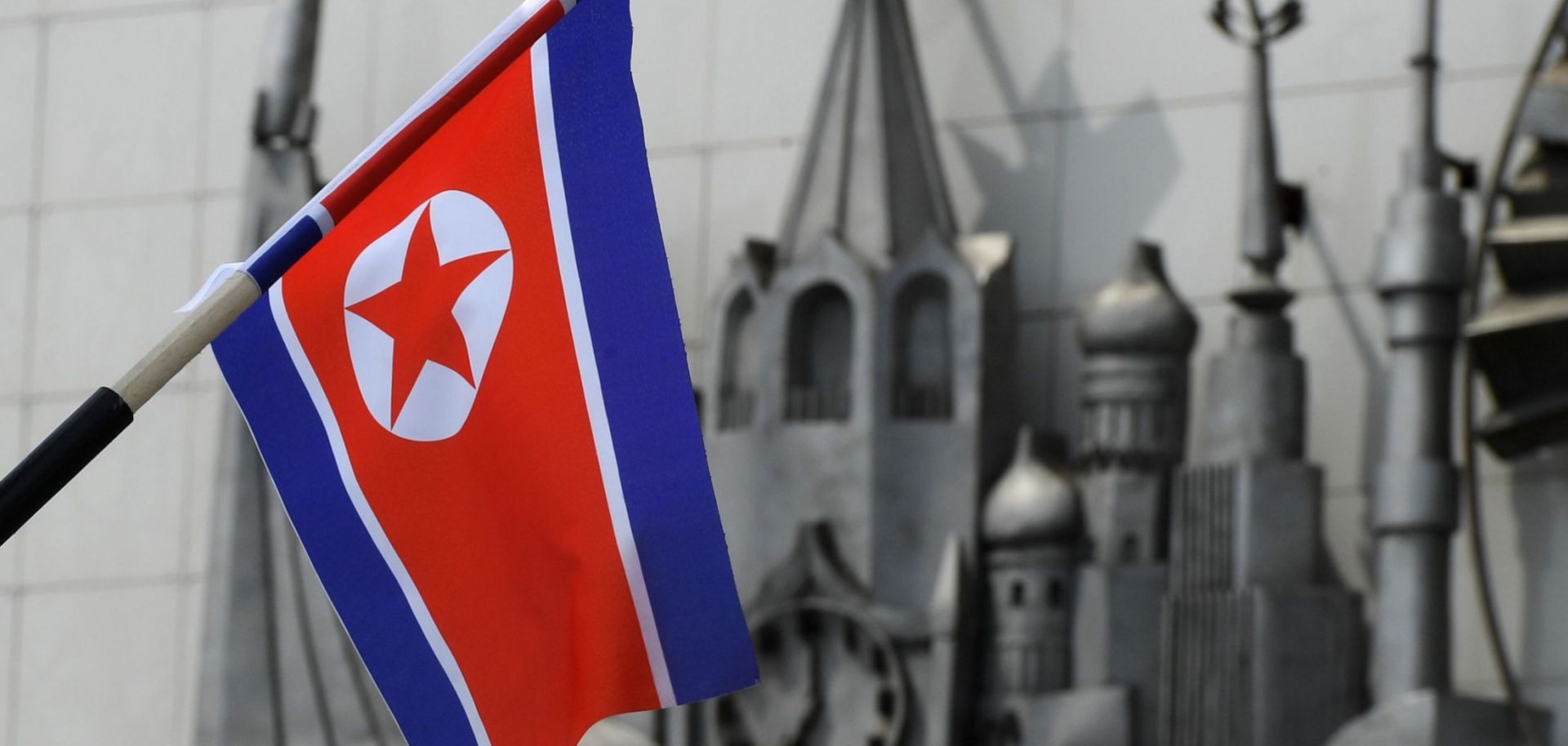
North Korea's potential provision of weapons to Russia's war effort in Ukraine could bolster Moscow's long-term arms procurement and provide Pyongyang with key imports and a chance to balance ties with Russia against China. On Aug. 30, U.S. National Security Council strategic communications coordinator John Kirby announced the United States had intelligence that North Korea and Russia were in high-level discussions for the former to sell weapons to the latter for its war in Ukraine. Kirby added that these negotiations may continue for months and could include North Korea providing Russia with multiple types of artillery ammunition and raw materials. This comes after North Korea's supreme leader Kim Jung-Un in mid-August urged his top officials to expand the country's weapons production capacity after touring munitions factories. In Ukraine, the Russian army is in need of greater supplies of artillery (of all kinds) to credibly threaten future offensives and mobilization measures.
- In November 2022, the United States said North Korea was covertly supplying Russia with a ''significant'' number of artillery shells using the Wagner Group as the buyer. Because the Wagner Group's procurement is closely interconnected with Russia's Defense Ministry, it is not certain — and ultimately inconsequential — whether the Wagner Group or the regular Russian army was the end user of these ammunition supplies, as they were used to fuel Russia's war efforts in Ukraine.
- On July 27, Russian Defense Minister Sergei Shoigu visited North Korea, where he attended a military parade with Kim. This visit likely included arms negotiations, and U.S. intelligence suggests Shoigu's trip spurred a second visit by Russian officials for negotiations.
- North Korea has long held massive stockpiles of munitions to both deter and prepare for a war with its rival, South Korea. Estimates vary, although many experts put North Korea's stockpile of artillery shells in the millions. However, a large portion of these shells are quite old and of questionable accuracy and condition.
- Russian forces in Ukraine are currently trying to deflect a large Ukrainian counteroffensive, seeking to minimize land losses until the winter months when fighting will die down and the battle lines will solidify.
North Korean artillery and ammunition could help Russia continue its war in Ukraine in the long run and more credibly threaten future mobilization and offensives, putting greater pressure on the West to pursue negotiations. North Korea's expansion of arms production capacity is likely dual purpose: to both backfill North Korean stockpiles — drawn on to support Russia — with newer munitions, and to build the capacity to provision Russia's war effort in the long term. North Korean artillery shells, in particular, could supply Russian forces on the front lines. In the short term, this may help Russian forces mitigate land losses under the ongoing Ukrainian counteroffensive until the winter lull. But more importantly, a steady continued flow of weapons from North Korea via that country's expanded production will ensure Russia has sufficient supplies to endure a protracted conflict in Ukraine, as equipment and ammunition rationing is likely a major reason why Russia has not conducted wider scale mandatory mobilization needed for more offensives that would induce Ukraine to negotiate. Additionally, such arms purchases would enable Russia to grow the size of its deployed manpower while keeping its rate of artillery ammunition expenditure in Ukraine closer to current levels. However, despite the shock factor of the mass quantities of artillery shells (and to a lesser extent rocket artillery and missiles) that North Korea could provide to Russian forces, the Ukrainian side continues to enjoy ample and advanced weapons supplies from the West as well. The North Korean deal is thus unlikely to make Russia capable of a sudden mass offensive and land grab of its own in the coming months. This situation could become a major bargaining point, giving Russia the munitions necessary to hold its battle lines indefinitely as Moscow waits on Ukraine's Western partners to grow weary of backing what they fear could devolve into another frozen conflict.
North Korea, for its part, stands to gain a significant source of funds, food and energy from a potential arms deal with Russia, which will enable Pyongyang to counterbalance its traditional dependence on China as well. For North Korea, such a deal could result in greater imports of grain to alleviate its perennial food insecurity, along with more energy imports (including jet fuel) to provision the North Korean military. An agreement with Russia could also provide some funds for North Korea's cash-strapped government, likely in rubles, which Pyongyang would probably just use to buy back more food, Russian energy, and supplies for its industrial expansion. In addition, Moscow could agree to take in more North Korean laborers to supply its factories and mineral extraction enterprises in Russia's ill-populated Far East, which would provide Pyongyang with both remittances and a reduced burden of feeding its people. The deal could further signal to China that its traditional client state North Korea is leaning toward Russia, both economically and strategically. Though neither side is even remotely likely to drop the partnership, this pressure may push Beijing to engage more with Pyongyang, including potentially through greater purchases of North Korean exports and provision of Chinese technology and grain, despite China's own concerns about food security.
- Jet fuel is in constant short supply in North Korea. Should the deal with Moscow include this highly refined petroleum product, it could allow North Korea's military to better train its pilots and conduct more sorties near the South Korean border, which could cause brief periods of higher tensions and temporary disruptions to South Korean flights.
- Since Kim came to power in 2011, he has prioritized advancing North Korea's weapons program to deter the United States, despite Beijing's desire that Pyongyang limit actions that could prompt Washington to get more militarily involved in Asia. Furthermore, in his 10 years of leadership overlap with Kim, Chinese President Xi Jinping has only visited North Korea once, in 2019.
- South Korea may use the new Russia-North Korea arms pact to ask the West for additional support against Pyongyang. But the fact that there is little more the West can do to punish an already maximally sanctioned North Korea means that Seoul won't get much out of this situation.
