
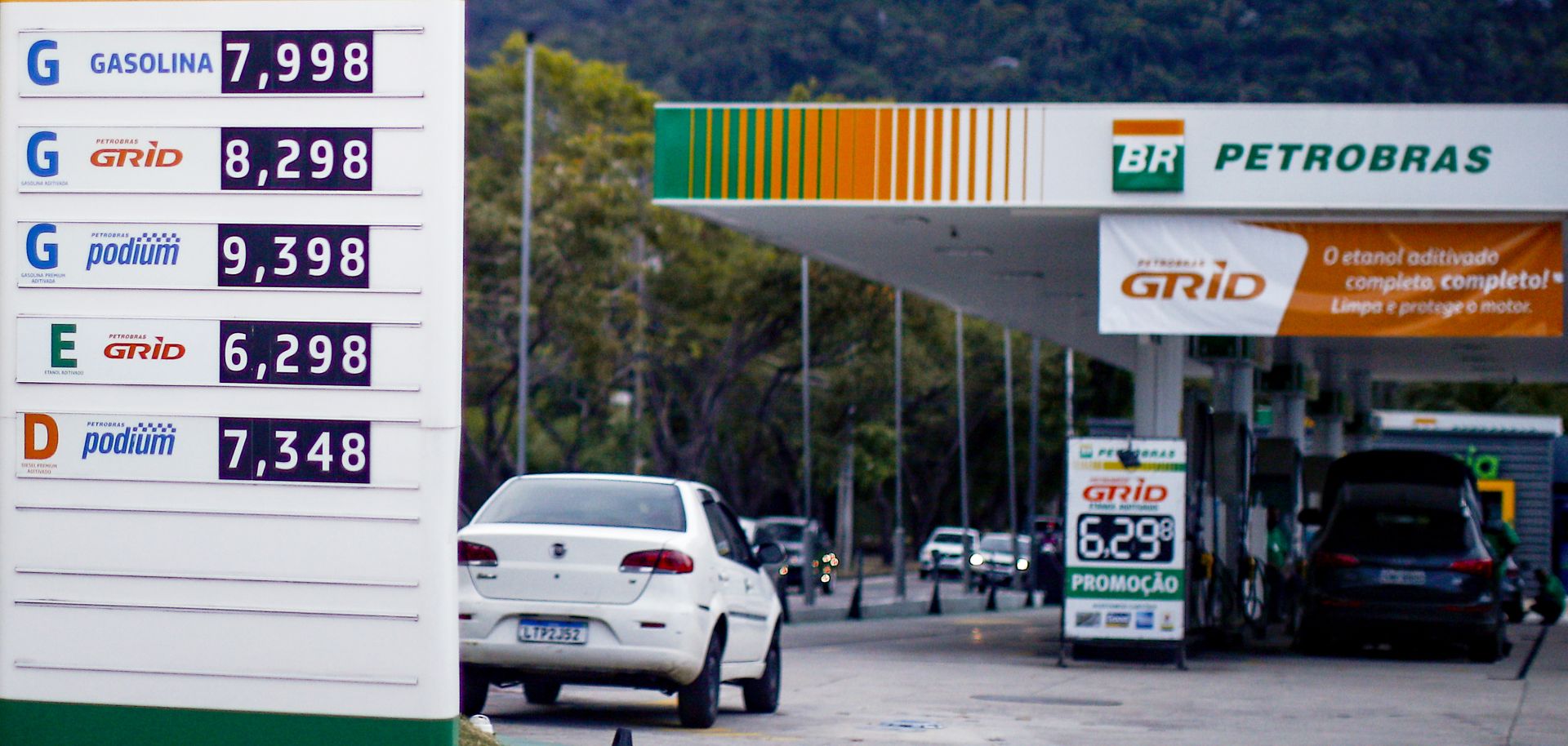
A list of prices is seen at a gas station operated by the Brazilian state-run oil company Petrobras in Rio de Janeiro, Brazil, on March 12, 2022.
Editor’s Note: Since this assessment was published, the nominee for Petrobras CEO Adriano Pires has withdrawn from consideration due to a conflict of interest. This does not alter the likelihood that Brazilian President Jair Bolsonaro will seek to decrease domestic fuel prices, likely by nominating another candidate for the position with a similar ideology.
The appointment of a new CEO to head Brazil's state-run energy firm Petrobras signals the Brazilian government will try to contain volatile fuel prices, which will decrease inflationary pressures in the near term and boost President Jair Bolsonaro's chances ahead of the October general election. On March 28, Brazil's Mines and Energy Ministry announced plans to replace current Petrobras CEO Joaquim Silva e Luna with Adriano Pires, a traditionally market-oriented energy consultant, during a shareholders meeting later this month. The removal of Silva e Luna, a former defense minister who has only held the position at Petrobras for less than a year, indicates the government is seeking to appoint a CEO that is more favorable to measures that would lower fuel prices.
- On March 10, Petrobras announced its biggest single price hike since 2016 raising the price of gasoline by 18.7%, diesel by 24.9% and liquefied petroleum gas (cooking oil) sold in refineries by 16% after 57 days of holding the price steady. The price hike drew criticism from Brazilian politicians including Bolsonaro, who assessed that it would hurt households and the economy.
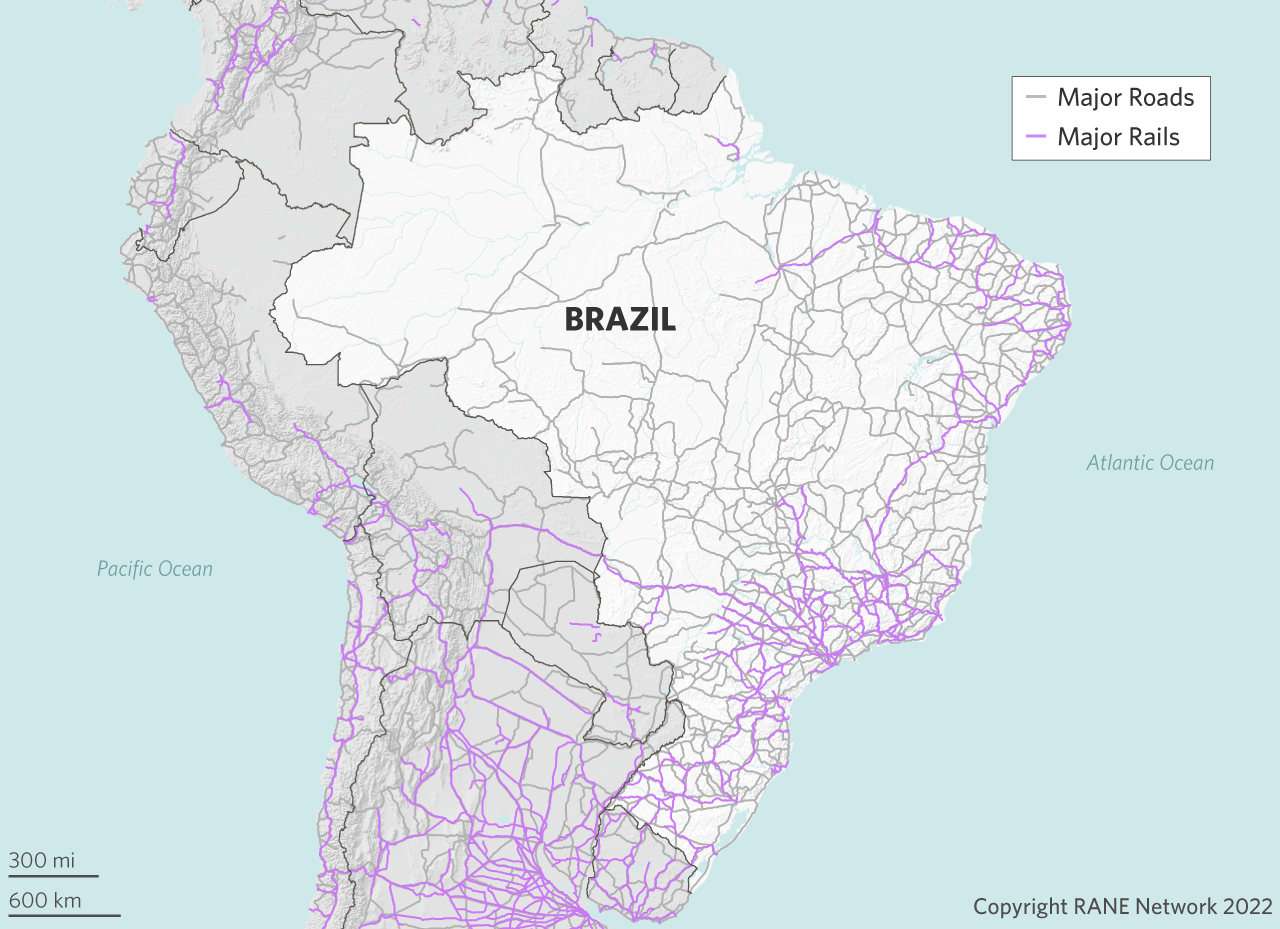
Pires' appointment increases the likelihood that Petrobras will introduce a temporary subsidy to mitigate rising fuel prices, which could eventually increase inflationary pressures if global fuel prices remain high. Pires has publicly advocated for a temporary subsidy to decrease volatile fuel prices instead of altering Petrobras' current pricing policy of pegging its rates to international benchmarks. Such a subsidy, if implemented, would likely quell inflationary pressures that are associated with high fuel prices, as Brazil's economy is heavily dependent on ground transportation to move goods across the country's vast geographic landscape (such as moving agricultural products from the country's inland to main cities and ports). Budget constraints, however, will eventually force the Brazilian government to lift the subsidy, likely sometime after the October general election. If global energy prices are still high when the subsidy is lifted, Brazil could experience high rates of inflation as the sudden increase in fuel prices would likely have a ripple effect on the broader economy. This would likely affect the price of the country's domestic food prices and exports, making agricultural imports more expensive for countries like China.
- Petrobras has a monopoly on oil refining in Brazil, meaning any change in pricing in the company's products reverberates across the country's entire energy market.
- Global oil and gas prices have increased following Russia's invasion of Ukraine and the subsequent sanctions the United States and its Western allies have imposed on Russian energy exports. Over the past month, Brent crude prices have hovered at around $100 per barrel (up from around $90 a month prior to the invasion).
Brazil's government is trying to keep domestic fuel prices low to ease the financial burden on households and businesses in an attempt to bolster Bolsonaro's popularity ahead of the October general election. Brazilians have historically voted with their pocketbooks, with incumbent candidates often performing poorly in elections held during times of economic instability and vice versa. With this in mind, Bolsonaro is likely attempting to freeze domestic fuel prices in an effort to tame both the direct impact of higher gasoline and diesel, as well as the secondary impact increased energy costs have on food prices. Controlling inflation in the coming months could help the far-right president win the favor of the lower- and middle-class voters who make up the base of his left-wing opponent, Luis Inacio Lula da Silva. With all 513 seats in the lower house and a third of the 81 seats in the upper house are up for reelection in October, Brazil's Congress is also unlikely to object to Bolsonaro's attempt to lower fuel prices, as better economic conditions would also boost the prospects of those many lawmakers who are seeking another term.
- According to Datafolha's latest poll, left-wing candidate da Silva would win 43% of the vote if the first round of the presidential election was held on March 24, with Bolsonaro winning only 26%. This is a four-point increase from the 22% Bolsonario was projected to win in Datafolha's previous poll, though da Silva remains the favorite.
