
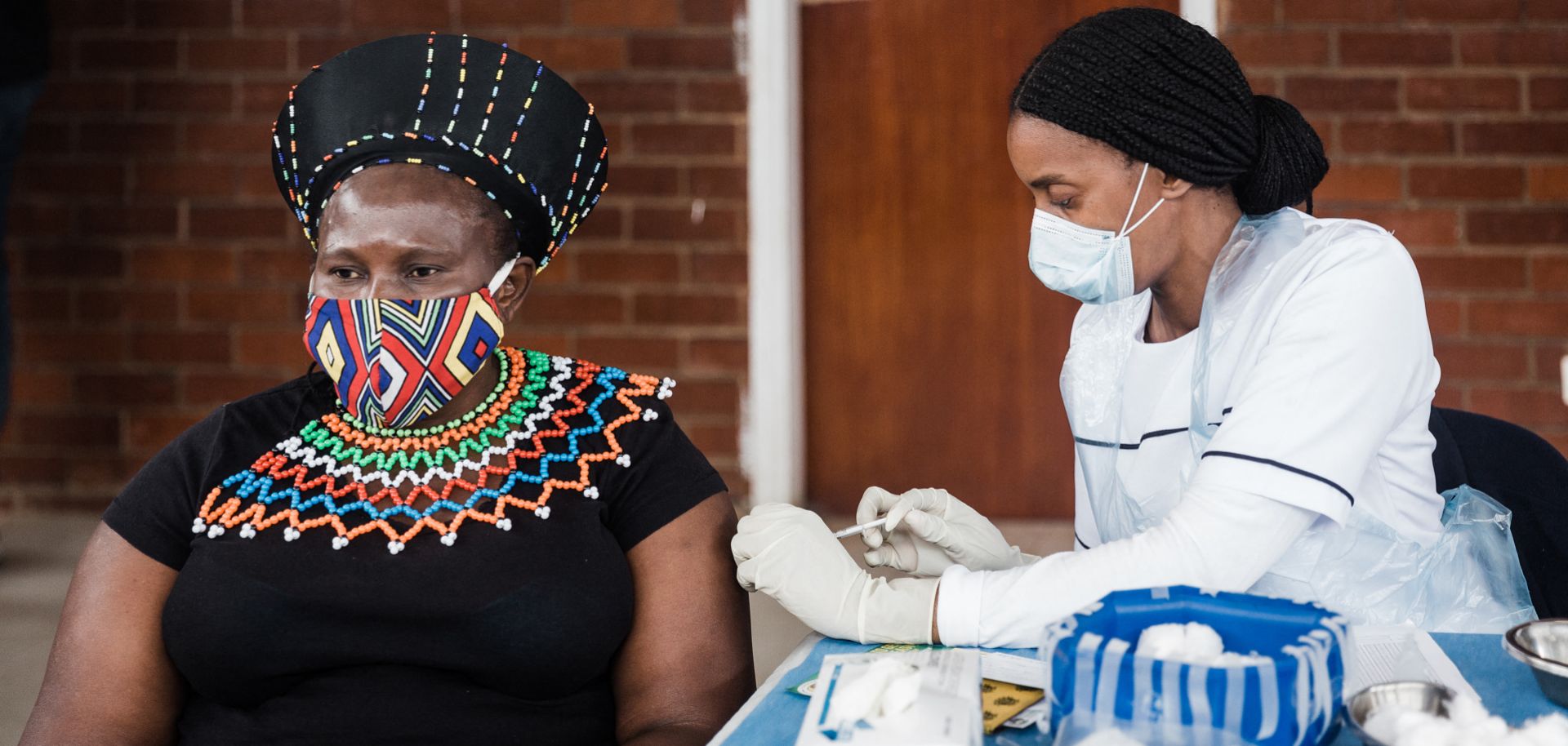
A woman receives a jab of a COVID-19 vaccine in Durban, South Africa, on Sept. 24, 2021.
The COVID-19 pandemic’s unique development in Africa suggests the Continent will be dealing with the repercussions of the virus for years to come — diverting resources from long-standing health, education and infrastructure issues. Africa is not a monolith, and each region, country and province has had a unique battle with COVID-19. That said, the Continent has stood out from the rest of the world in its overall low infection rates, lax lockdown measures and low percentage of vaccinated citizens. Although a relative lack of global connectivity may explain low infection and death rates, health officials say a number of factors could also be related. Many of Africa’s largest and poorest countries are lagging the furthest behind global COVID-19 targets, generally due to vaccine shortages, although distribution problems, health supplies funding and vaccine hesitancy are also to blame.
- Of the 1.2 billion people estimated to be living in Africa, COVID-19 has so far only killed 147,000, and most of those deaths have been concentrated in northern African states and the country of South Africa. This contrasts sharply with the United States, where nearly 700,000 of the country’s 328.2 million people have now lost their lives to COVID-19.
- With the notable exception of South Africa, most African countries have imposed little-to-no lockdown measures to contain COVID-19’s spread.
- Only 15 of Africa’s 54 countries had reached the World Health Organization’s target of having at least 10% of their population fully vaccinated by the end of September.
Low infection rates, however, have not spared African countries from the pandemic’s global economic fallout, which the World Bank estimates could ultimately push 40 million more people across the Continent into extreme poverty. Despite low COVID-related mortality rates, many African states’ economic prospects took a nosedive amid reduced global demand in sectors ranging from energy to tourism, low oil and gas prices, and low commodity prices. National GDP in Botswana, the Republic of Congo and South Africa declined by approximately 10% in 2020. More than 30 million Africans also fell into extreme poverty last year. Across the Continent, economic recovery measures are in progress, with the International Monetary Fund predicting an average of 3.4% growth in GDP across sub-Saharan Africa. Even so, growth is uneven and recovery prospects are damaged by long-standing socioeconomic inequalities. Low vaccination rates will also ensure that the risk surrounding potential future outbreaks remains high.
For African nations engaged in fiscal recovery, ongoing economic hardship will be more deadly than COVID-19. International actors have called for increased vaccination and containment efforts in Africa. But while made in good faith, such calls fail to realize that this will ultimately risk harming Africans’ quality of life by further suppressing economic activity via lockdown measures, while diverting key resources away from other long-term development projects across the Continent. Investment in health initiatives to combat malaria, tuberculosis and HIV, the development of schools and educational facilities, and projects aimed at boosting employment and infrastructure all stand to suffer from a diversion of resources to the fight against COVID-19 — posing a severe threat to Africans’ livelihoods for years to come. Further, economic hardship exacerbates political tensions, which will catalyze violent protests in nations across the Continent. In Kenya, for example, increased fuel, food and water prices will aggravate existing strains between ethnic groups ahead of next year’s elections, and will likely manifest as violent protests and widespread unrest. With a 34.4% unemployment rate and sky-high commodity prices, South Africa is another country to watch, with violent political turmoil ahead of November municipal elections highly likely.
