
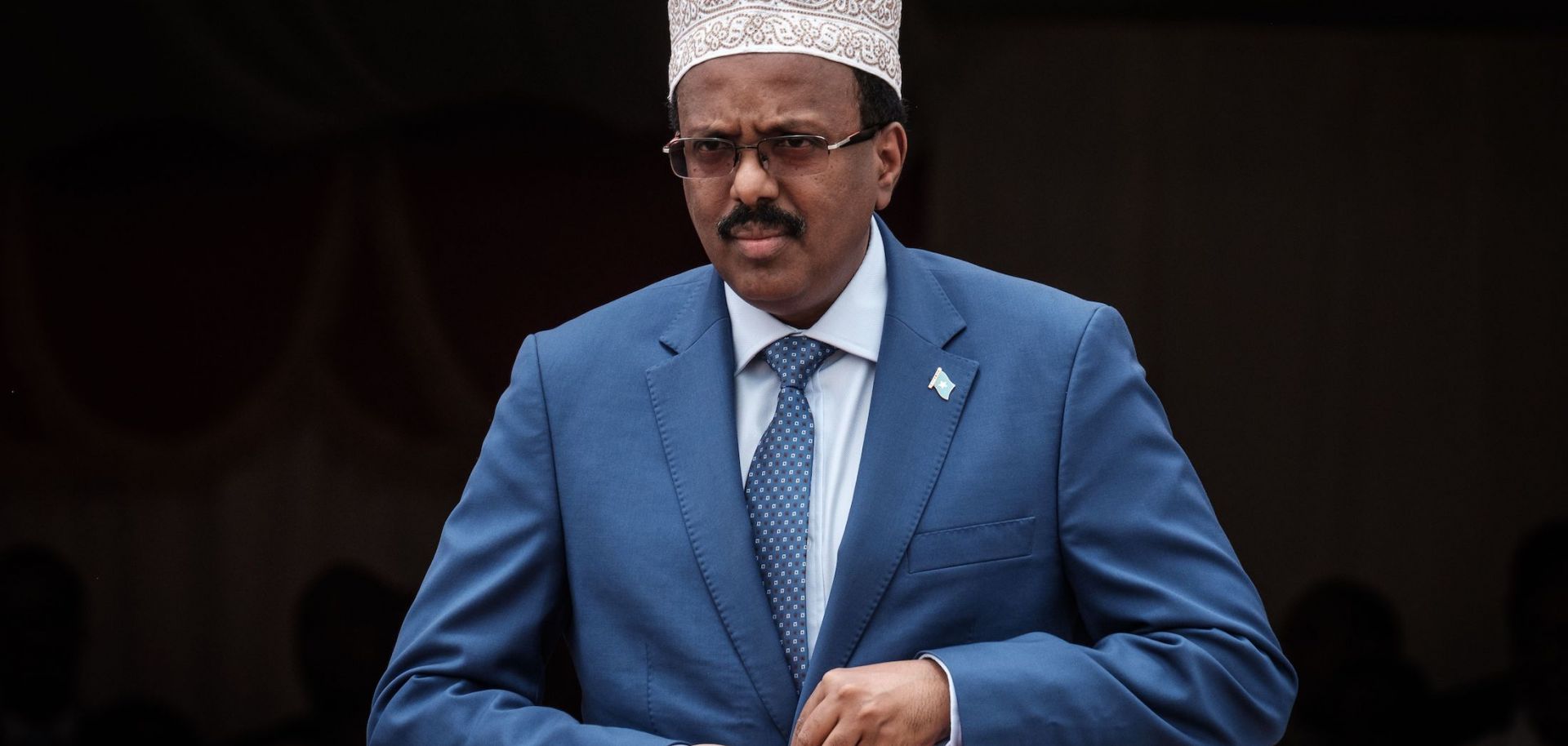
The suspension of the prime minister's authority to hire and fire government officials is the latest in a series of confrontations between President Mohamed Abdullahi Mohamed and Prime Minister Mohammed Hussein Roble that will destabilize an already fragile political environment. Mohamed stripped Roble of these powers Sept. 16 following accusations that Roble violated the constitution when he attempted to replace the director of the National Intelligence Service Agency earlier this month. Conflict over the directorship of NISA took center stage Sept. 8, when Roble suspended then-Director Fahad Yasin over his handling of the June disappearance and killing of NISA operative Ikran Talhil Farah. Farah was reportedly preparing to expose a controversy over the training in Eritrea of Somali troops.
- Mohammed and Yasin attributed Farah's death to al Shabaab, but the Islamist militant group denied any involvement. Farah's family subsequently filed a lawsuit against NISA and Yasin, implicating Mohamed's coalition in the incident.
- Under the auspices of advocating for the slain intelligence operative, Roble attempted to appoint Bashir Mohamed Jama as NISA's director, only to be blocked by Mohammed, who instead chose Yasin Abdullahi Mohamed to fill the role.
- In response to the competing appointments, a military standoff arose among NISA's assorted security organizations. The Dufaan, comprised mainly of al Shabaab defectors loyal to Yasin, faced off with the Waraan and Gaashaan units, two groups trained by the United States and committed to Roble's authority over the security establishment. The outnumbered Dufaan eventually yielded.
The strife between Mohamed and Roble greatly diminishes Somalia's odds of achieving its long-hoped for peaceful elections and power transition. Ahead of indirect lower house parliamentary and presidential elections, which have been pushed back for over a year and are now scheduled for Oct. 10, Mohamed appears to be making a power grab in the face of mounting challenges to his reelection. In a clan-based political environment such as Somalia, electoral disputes between disparate factions have a tendency to erupt into armed conflicts over decades-old grievances. Unless tension is quickly dispelled, peaceful elections are unlikely to occur on schedule.
- Violence over the last three months in response to the mounting factionalism within the government was temporarily quelled when Mohamed appointed Roble head of security for the upcoming elections; both men, however, reportedly have reached out to various armed groups in Mogadishu in anticipation of more violence.
