
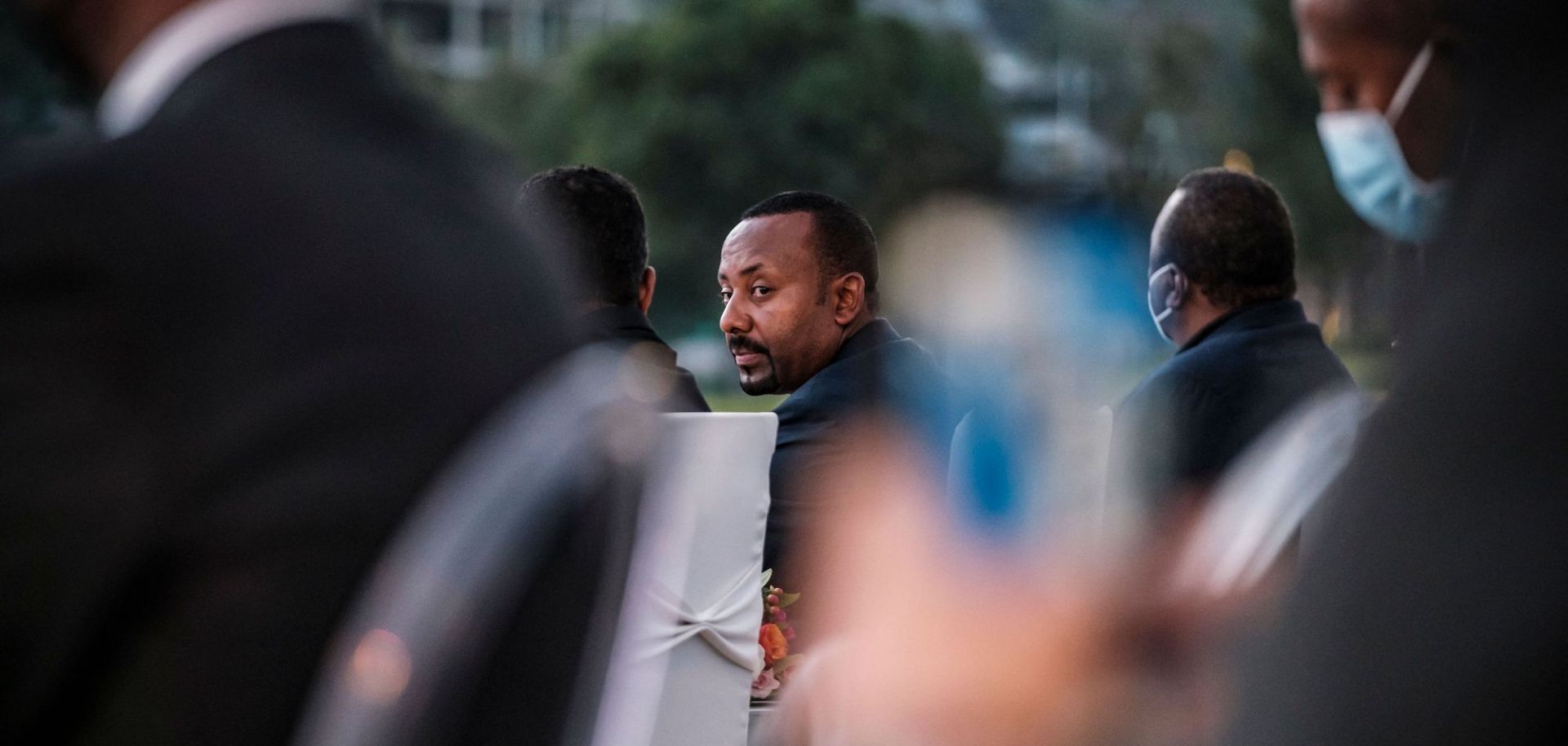
Ethiopian Prime Minister Abiy Ahmed is seen at a ceremony for the signing of a telecom licensing agreement on June 8, 2021.
A rebel victory in Ethiopia’s Tigray region risks triggering more conflict elsewhere in the country, placing both Prime Minister Abiy Ahmed’s political future and his economic reform plans in peril. On June 30, Abiy said Ethiopian forces had withdrawn from Tigray’s regional capital of Mekelle because it was no longer the “center of gravity for conflicts.” The prime minister’s public remarks were his first since the Tigray People’s Liberation Front (TPLF) announced they took control of Mekelle on June 28 after launching an offensive two weeks before that forced Ethiopian troops to flee the city. A senior Western official told The Wall Street Journal that the TPLF offensive destroyed a “sizable number” of the Ethiopian National Defense Force (ENDF) divisions deployed to Tigray and took “thousands” prisoners of war, lending credence to the TPLF’s claim that a major military operation forced their exit and that it was not just a withdrawal. On June 28, the ENDF also declared a unilateral cease-fire, which the TPLF rejected.
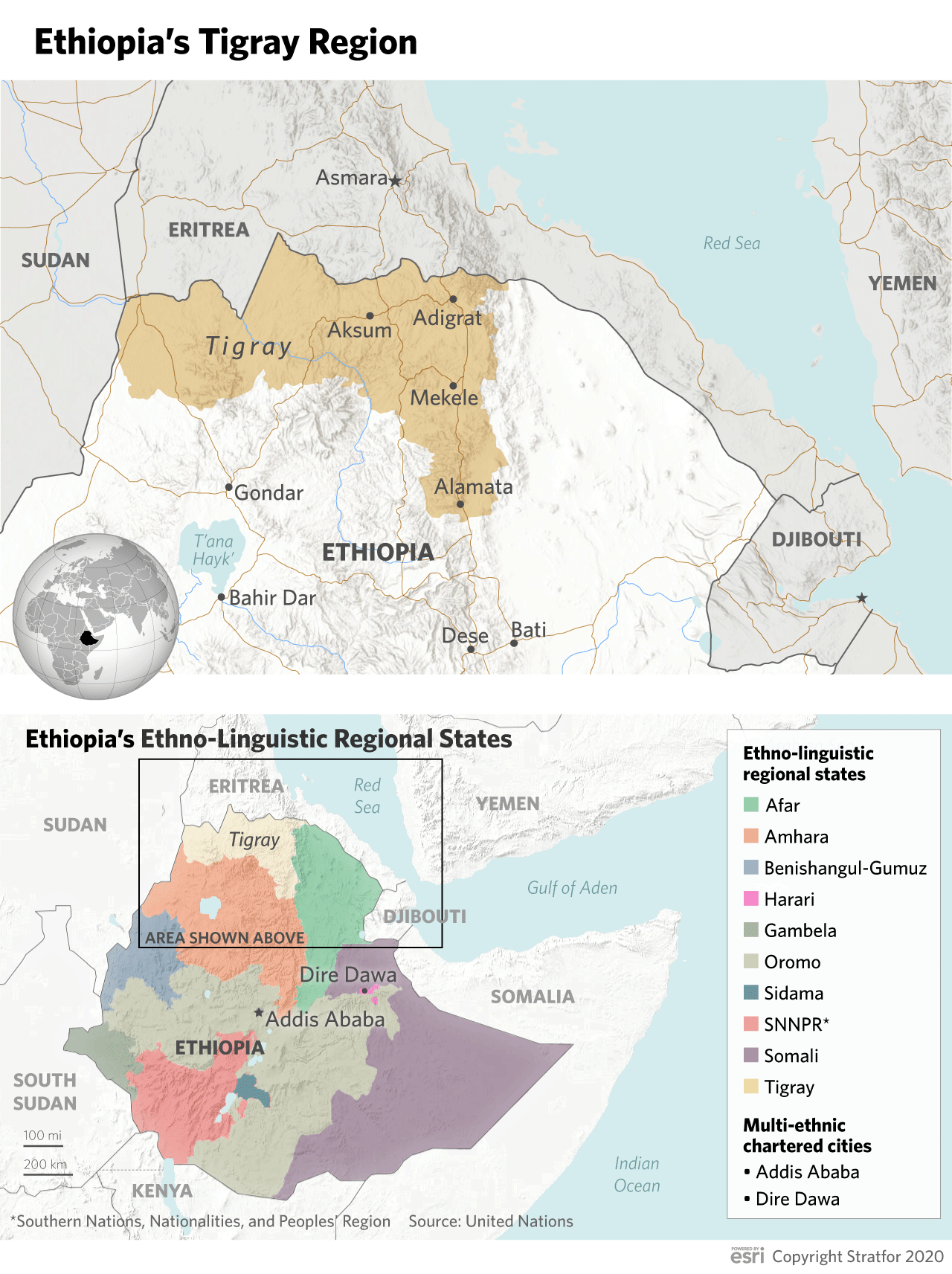
Despite the TPLF’s quick seizure of Mekelle and the ENDF’s unilateral cease-fire, the conflict in Ethiopia will likely worsen over the coming months. The TPLF has said it will not stop its offensive operation until all ENDF and ENDF-allied forces can no longer threaten Tigray, including the forces from Ethiopia’s Amhara region and the troops from neighboring country Eritrea that both joined the ENDF during its November offensive. Eritrea and Amhara, however, are unlikely to accept a permanent re-entrenchment of the TPLF in Tigray. Eritrea views the TPLF as an existential threat, given its role in the two countries’ 1998-2000 conflict that took place along Eritrea’s border with Ethiopia’s Tigray region. Amhara nationalists had also hoped to use the TPLF’s decline to expand their influence within Ethiopia. The Amhara branch of Ethiopia’s ruling Prosperity Party has already said that the four former TPLF-controlled territories it seized after the November offensive will remain in Amhara, raising the risk for potential clashes in the future.
The loss of Mekelle will damage Abiy's political standing while increasing tensions both within his Prosperity Party and with his Amhara nationalist allies. Abiy rose to power in 2018 promising to strengthen Ethiopia’s nationalism and self-identity, while eroding the power of the country’s traditionally strong ethnic regions like Tigray and Amhara. This contrasted with the TPLF’s backing of an ethnic-centered federation with powerful states when it ruled the country for nearly three decades. While Amhara nationalists shared Abiy’s vision, the TPLF’s success shows the limits of centralized power in Ethiopia’s ethnically diverse borders. Although the Prosperity Party is likely to have a major victory in the June 21 parliamentary elections once results are announced, it is possible that Abiy’s Amhara allies will view him as a liability and not a strong enough leader to carry out the necessary reforms to cement a central power. This could force Abiy to act even more strong-handed in Tigray in the future in order to secure his position. Otherwise, his allies might seek to fill a perceived void.
The Tigray conflict and the enduring political risk will limit Abiy’s room to fully implement his economic reform strategy, leading to worse economic conditions in Ethiopia. Since taking office in 2018, Abiy’s government has made limited progress on its economic liberalization reforms. Those aimed at increasing foreign competition against the state-owned carrier Ethio Telecom are among the furthest along. But foreign investors have still proven to be lukewarm, with bids on the telecom license falling below expectations. In addition to shuttering factories in the region, the conflict in Tigray has resulted in reputational risk, as the United States and other Western countries have also sanctioned some Ethiopian officials over the humanitarian crisis brought on by the violence. Moreover, economic conditions in the country are worsening, with inflation hitting 20%. Famine now risks spreading beyond just Tigray as well amid security crises and shortages caused by the ongoing conflict. Continued political turmoil and armed combat in Tigray will further delay economic reforms and may result in many of them being shelved entirely as Addis Ababa focuses on more pressing security issues and maintaining political viability.
