

The Tigray People's Liberation Front (TPLF), the ruling political party in Ethiopia's northern Tigray region, is trying to expand its rule at home after losing control of the country's centralized government in 2018. When Hailemariam Desalegn resigned as prime minister after violent protests in the Amhara and Oromo regions, it also initiated the dismantling of the TPLF's 25-year reign as Ethiopia's dominant political force. The loss of power and persecution of certain key TPLF figures has since led the Tigray elite to retrench itself within its separate region of Ethiopia, where its own ambitions for autonomy or even secession have been simmering. The TPLF's ostentatious disregard of the federal government's decision to delay August elections is thus a clear signal to Addis Ababa that its authority is not recognized in Tigray.
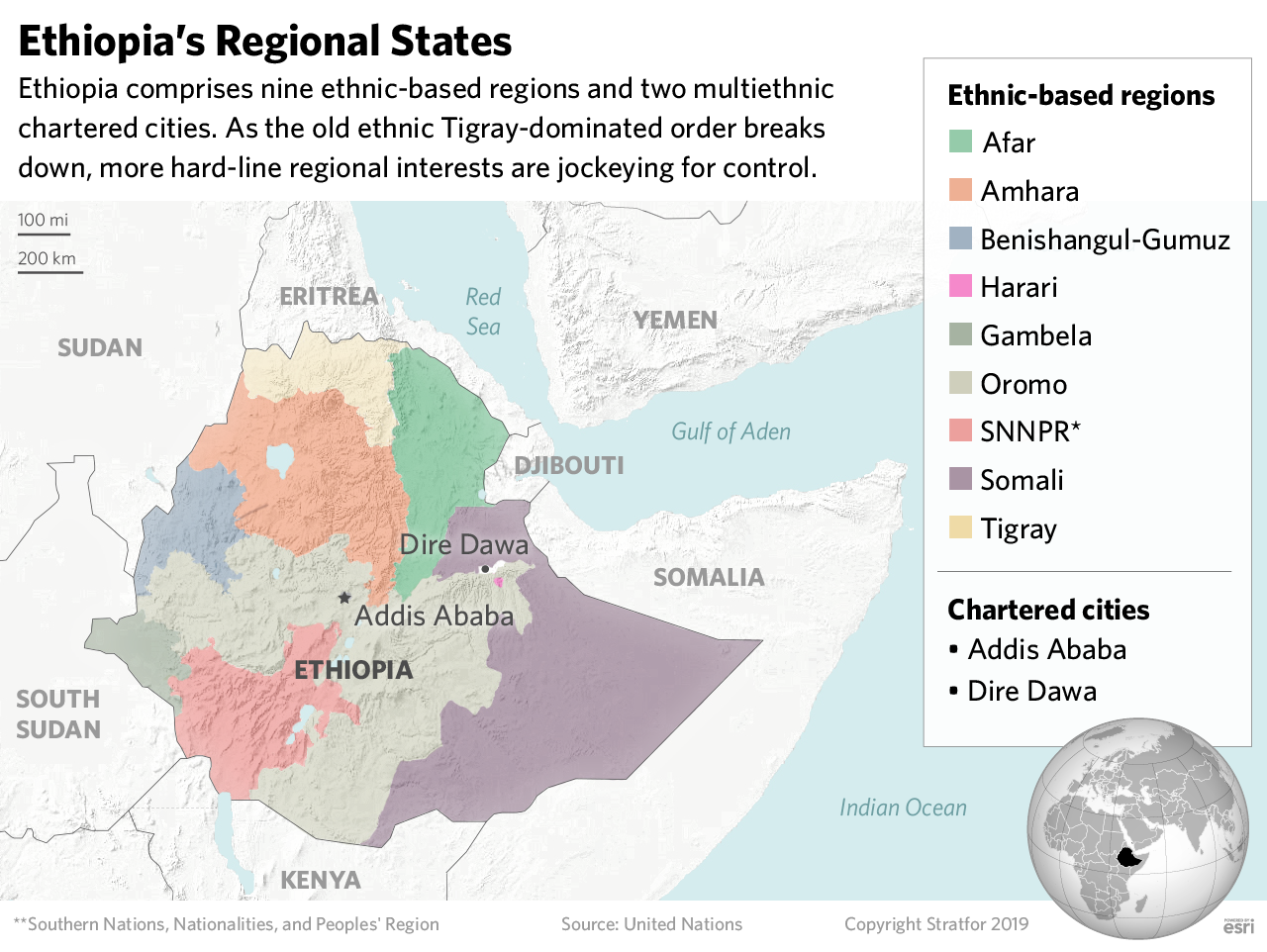
The Tigray region's quest for regional autonomy also comes amid existing regional pressures against the federalist structure in Addis Ababa. Growing unrest among Amhara and Oromo Ethiopians, the country's two largest ethnic groups by population, has forced a crisis on the country's central structure of governance in recent years. Persistent military crackdowns and persecution managed to quell the initial wave of protests in 2016, but confrontations have continued to occur. Even the appointment of Abiy Ahmed, who hails from the Oromo region, has failed to keep quell successionist demands from regional opposition groups.
This constant state of tension between Addis Ababa and Ethiopia's regions, as exemplified by the TPLF's recent move to hold elections, does not spell an immediate risk of the country's disintegration. But it does significantly impede the central government's ability to effectively govern. The rift between those supporting the federalist agenda and those struggling for greater regional autonomy has progressively widened since 2016 and will likely continue to do so. This raises the risk of violent opposition against the central government, or at the very least, regular disruptions to business operations and the political process through recurring localized uprisings. The postponed elections in Tigray will be a notable test to Abiy Ahmed's ability to bring regional ethnic groups and political parties on board to support his rule and federalist agenda.
