
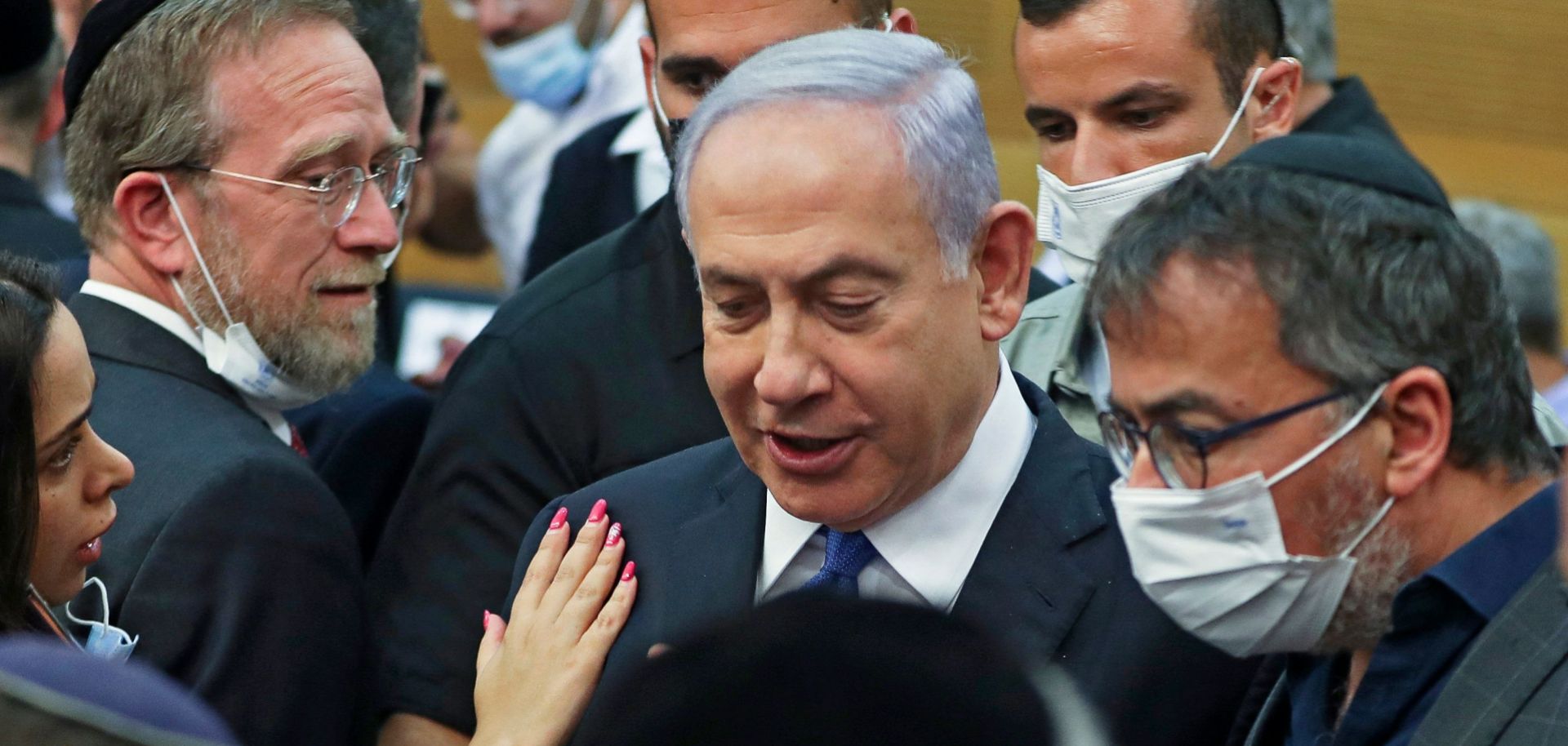
Israeli Prime Minister Benjamin Netanyahu on June 2, 2021, attends a special session of the Knesset in Jerusalem.
Though supplanting long-time Israeli Prime Minister Benjamin Netanyahu might appear like a landmark moment, the Israeli center-left's political victory will prove ephemeral due to various factors. These include demographics, probable future conflicts with the Palestinians and a lack of international pressure on Israel that together empower Israel's rightward ideological drift. The more rightward Israel goes, the more it risks alienating its Western allies, especially a United States increasingly critical of Israel's Palestinian strategy. That criticism could one day force Israel to choose between its right-wing values or its integration with the global economy.
The New Coalition
For the moment, the center-left has cause to celebrate. On June 2, parties that have been out of power for over a decade (or never been in power at all) announced a unity government that will end 12 years of Netanyahu's right-leaning leadership. It is the first time the center-left has enjoyed power since 2009, when the government of former Prime Minister Ehud Olmert fell apart under the weight of corruption charges. But though there are places where the center-left may make progress, like pushing for greater secularization of Israel, many forces are still in play that strongly suggest this unity government represents just a temporary pause in Israel's rightward shift.
Israel's center-left has been weakening for years as voters grew less attracted to its policies, especially its aim to negotiate a Palestinian state. But it has not vanished even as it represents a smaller and smaller share of the population. While other systems have more restrictive voting systems that often filter out smaller parties, Israel has a constitution that in many ways favors them and the ideological diversity they bring. Israel has a relatively low electoral threshold for winning representation of just 3.25% of the national vote, which allows small, fringe or splinter parties to emerge rapidly. This produces a dizzying array of smaller parties unseen at the national level in many other parliamentary democracies. In addition to facilitating the rise of fringe parties, the system also has allowed the center-left to survive in a changing political landscape — and now to work its way into government by serving as critical votes for the ruling coalition.
In the upcoming unity government, there are areas of strategic and policy overlap. The national budget, not passed since 2019, is a pressing matter, especially with the country emerging as a COVID-19 success story and its economy primed to take advantage of this. Environmental policies may also be passed: In climate-vulnerable Israel, even its right-wing is keenly aware the country must adapt. This unity government may also push to change current conscription laws that exempt the ultra-Orthodox from military service, as the military worries its readiness could be undermined by the ever-larger share of young Haredim opting out of military service. And it might pursue anti-corruption measures and cost-of-living policies, issues generally popular across the country's ideological spectrum, as well as electoral reform measures like term limits designed to help end the sort of political paralysis seen over the past two years. The anti-Iran covert campaign will likely continue as well; even the Islamists of Ra'am, an Israeli-Arab party that is part of the new government coalition, will find it hard to argue against the need for Israel to erode Iran's proxies and undermine its nuclear program.
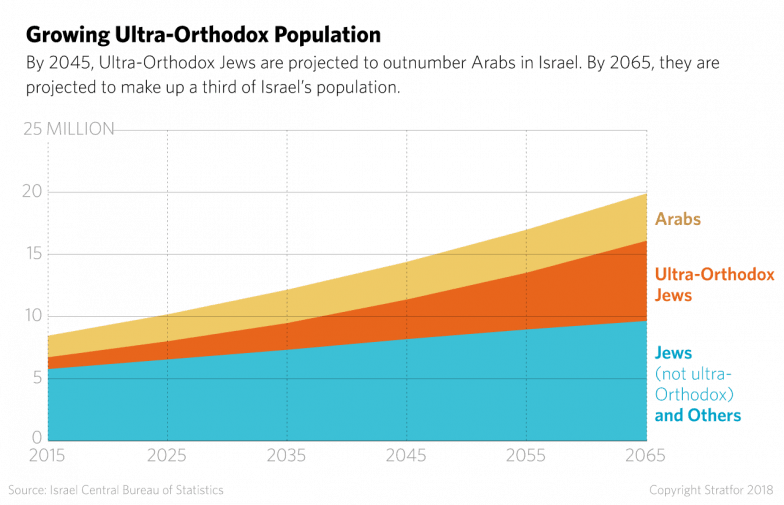
But these potential areas of cooperation are unlikely to alter the country's rightward drift. Even now, despite centrists Yair Lapid and Benny Gantz serving as alternative prime minister and defense minister, respectively, the coalition will in many ways remain a right-wing government. It will be led by a right-wing, pro-settler prime minister who once favored annexing all of Area C in the West Bank, and its ability to remain in power is only guaranteed so long as the trifecta of three right-wing defector parties — Yamina, Yisrael Beitenu and New Hope — all agree to stay on board.
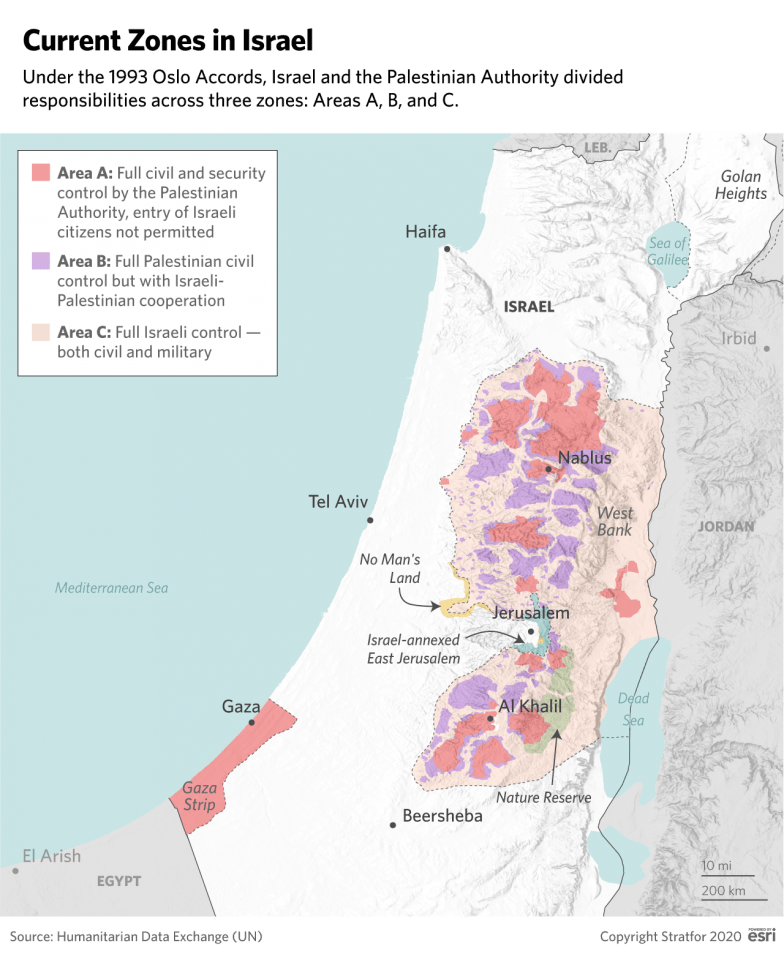
Demographics dictate that right-wing, nationalist party ideologies increasingly will come to dominate Israeli politics. The ultra-Orthodox have a fertility rate of 4.2% versus 1.2% for non-Orthodox Israeli Jews. Israeli immigration, though it has rebounded from the doldrums of the 2000s, is increasingly dominated by religious or nationalist emigres leaving Eurasia or the United States; two out of three immigrants to Israel making aliyah (the official term for Jewish immigrants moving to Israel) come from Ukraine or Russia, the source of previous waves of more religious and/or nationalist immigrants. Meanwhile, Israel's right-wing attitudes have come to dominate the overall youth vote, with most of this demographic rejecting a Palestinian state and favoring military deterrence over diplomacy with militants. The sentiment is likely a product of their historical experiences during the Second Intifada; various Gaza wars with Hamas; and more recently, the normalization process with the United Arab Emirates, Bahrain, Morocco, and Sudan that demonstrated that Israel does not need to concede territory to the Palestinians in exchange for regional recognition and integration.
The new unity government can do little to stop those trends. Adjusting the birth rate to secularize the country is impractical, while trying to recruit secular Jews to make aliyah to Israel is becoming a tougher sell given that the country's rightward drift is alienating parts of the Diaspora — something the Jewish Agency, the institution in charge of bringing Jewish immigrants to Israel, has warned of for years.
Israeli youth attitudes are likely to harden further due to future clashes with the Palestinians, which are likely. The new unity government has no mandate to pursue a peace process, and its right-leaning parties, including its prime minister, are largely uninterested in a Palestinian state, oppose giving Palestinians Israeli nationality and favor expanding settlements in the West Bank. Leaving the Palestinians in limbo and building more settlements guarantees more conflict — conflicts that Israeli youth likely want to resolve with greater military deterrence rather than political negotiations after seeing the failures of the Oslo Accord and the settlement withdrawal from Gaza to bring regional peace. Already, 72% of Israelis opposed the recent cease-fire in Gaza — a sign of right-wing attitudes dominating opinions regarding military strategies.
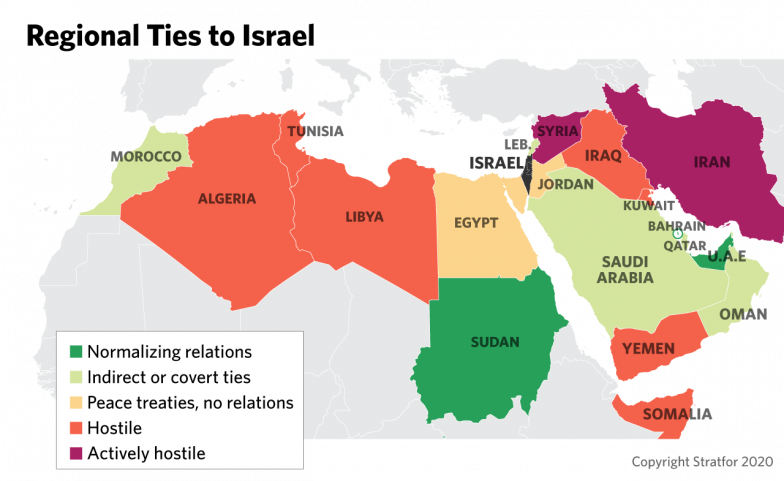
The right-wing drift won't in fact produce Israel's swift isolation. More Arab states will favor ties with Israel, if they calculate that their populations with tolerate them, over solidarity with the Palestinians. Israel's technology, military prowess, educational institutions and still-formidable clout with the United States make it an attractive partner for many Arab states. As global Muslim opinion becomes less willing to forgo these advantages for the Palestinian cause, normalization will become more viable regardless of Israel's right-wing drift. In Europe and the United States, criticism of Israel will continue to be tempered by concerns over accidentally feeding long-standing anti-Semitism, something that will slow potential Western policy shifts that would be seismic enough to convince Israelis to change their political attitudes.
The Risks of the Rightward Drift
The right-wing drift will have potentially negative consequences domestically and abroad, such as political unrest and international isolation. The far-right, as embodied by Jewish supremacist party Otzma Yehudit in the Knesset and anti-assimilation activist groups like Lehava, is emerging as a stronger force. It is becoming more practiced in political violence, as evidenced by the riots in Arab-Israeli communities in May 2021 and by Shin Bet's warnings that right-wing social media is fueling sentiments that result in attacks on politicians. While a small part of the population, Israel's low electoral threshold has already allowed the far-right to enter the Knesset, in the March 2021 election. Once the current unity government departs the scene and right-leaning parties assemble a new government, it might win enough seats to negotiate a committee or ministerial seats and drag the country's policies toward controversial far-right demands. This in turn could destabilize Israeli politics and security, provoking clashes with Israeli Arabs and spurring conflicts with Palestinians in Gaza and the West Bank.
A greater right-wing drift will also undermine Israel's democratic reputation, part of the country's soft power that has proved diplomatically and economically useful. Freedom House ranks Israel and Tunisia as the Middle East and North Africa's only free countries, which helps pro-Israeli politicians in the West justify support for the country despite its occupation of the West Bank, and undermines the efforts of the boycott, divestment sanctions movement, a grassroots, largely academic and online effort that seeks to isolate Israel economically. But the right-wing drift has caused Israel to slide towards Freedom House's "partially free" designation, where it would join countries like Kuwait, Ukraine and Mexico.
In the long run, the right-wing drift could eventually undermine Israel's reputation to the point that pro-Palestinian activists and politicians in key countries like the United States could force a major rethinking of ties with Israel. With Israel likely to remain heavily dependent on the West for arms and economic ties, that will expose Israel to pressure it will have difficulty resisting, potentially widening differences between centrist and left-leaning Israelis who want to maintain those ties and the right-leaning ones who would rather forgo them in pursuit of their ideological goals. If Israel appears to be a right-wing dominated flawed democracy, some in key capitals like Washington, London and Paris will be bolder in trying to interfere with Israel's internal policies and its treatment of the Palestinians, potentially repeating the history that led up to the Oslo Accords in 1993 in which U.S. pressure on Israel was instrumental in forcing talks. Should formerly friendly governments and politicians change their tone on Israeli policies and become more interested in an Israeli-Palestinian peace process, then history could begin to repeat itself.
