
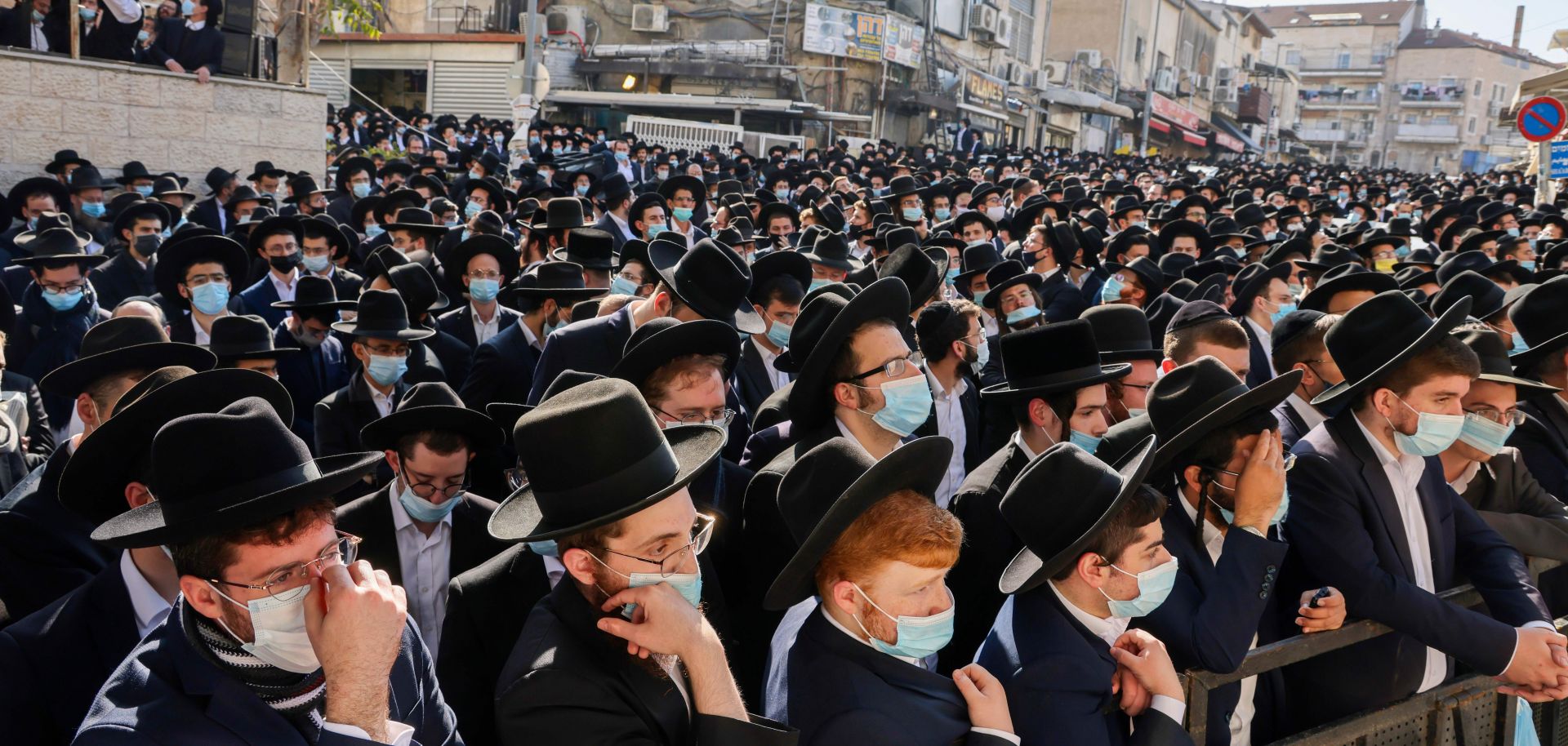
Ultra-Orthodox Jewish men attend the funeral of Rabbi Aharon David Hadash, the spiritual leader of the Mir Yeshiva, in Jerusalem's ultra-Orthodox neighborhood of Beit Yisrael on Dec. 3, 2020.
Israel's youth population is pushing the country decidedly to the political right. As the transition to this age cohort unfolds, the question of which Israeli nationalist party will be in charge comes to the fore. Will they be incrementally expansionist, security-minded, economically-focused types of parties like Likud? Or will they be more ideologically committed to the cause of annexing settlements types of parties like Yamina? Or will they be religiously-focused, culturally conservative, increasingly demographically muscular types of parties like the ultra-Orthodox party Shas? The predominance of one of these three types will have consequences for Israel's regional security posture, on occasion bringing it in line with some new allies in the Gulf while reaffirming enmity with Iran and Turkey.
Who Are Israel's Young Nationalists?
Unlike many other democracies, Israel's youth vote is nationalist, comprising the base of right-wing nationalist parties like Likud and of settler-friendly parties like Yamina and the ultra-Orthodox parties like Shas. During Israel's interminable series of elections in 2019-20, the country's largely nationalist youth cohort gave an advantage to Netanyahu versus the centrism of his opponent, Benny Gantz. These Israeli Millennials and Gen Zers, born mostly after 1980, came of age in an era of intractable conflict, where peace was often restored through military deterrence rather than diplomacy and where economic pressures and rising religious feeling made West Bank settlements seem proper despite an unending chorus of international condemnation.
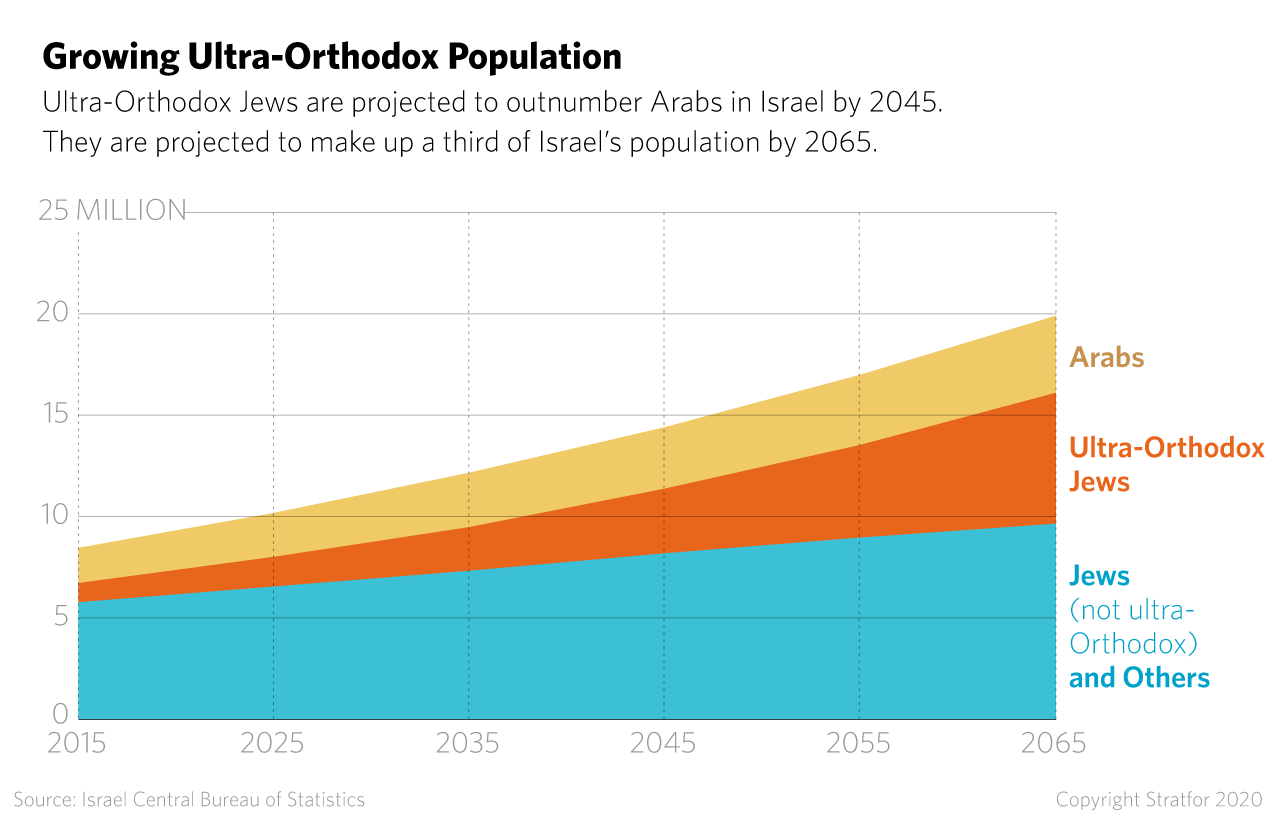
Some of them are the grandchildren of the country's original, often center-left, founders. But many are also the descendants of post-Soviet Jewish immigrants who infused Israel with new right-wing political and social traditions. They represent the fruit of a baby boom of the ultra-Orthodox, a group that has gone from 5% of Israeli's population in 1990 to around 12% today. They agree on broad aspects of Israel, like its Jewish identity, its need for peace through strength, a desire for close cooperation with the United States, and a willingness to brush past international norms when seen as in Israel's interest.
Natural Israeli Regional Allies, and Enemies
Many states are experiencing nationalist surges, increasing the role of traditional culture in everyday life, seeking greater defense independence and capability, and shedding their adherence to the post-World War II order when it suits them. For Israel in particular, it has also meant a drift toward militarily hawkish policies against rivals like Iran and its proxies, expansion and territorial annexation at home, and a desire to find ways to lessen Israel's exposure to international institutions and pressures that might try to shift its behavior.
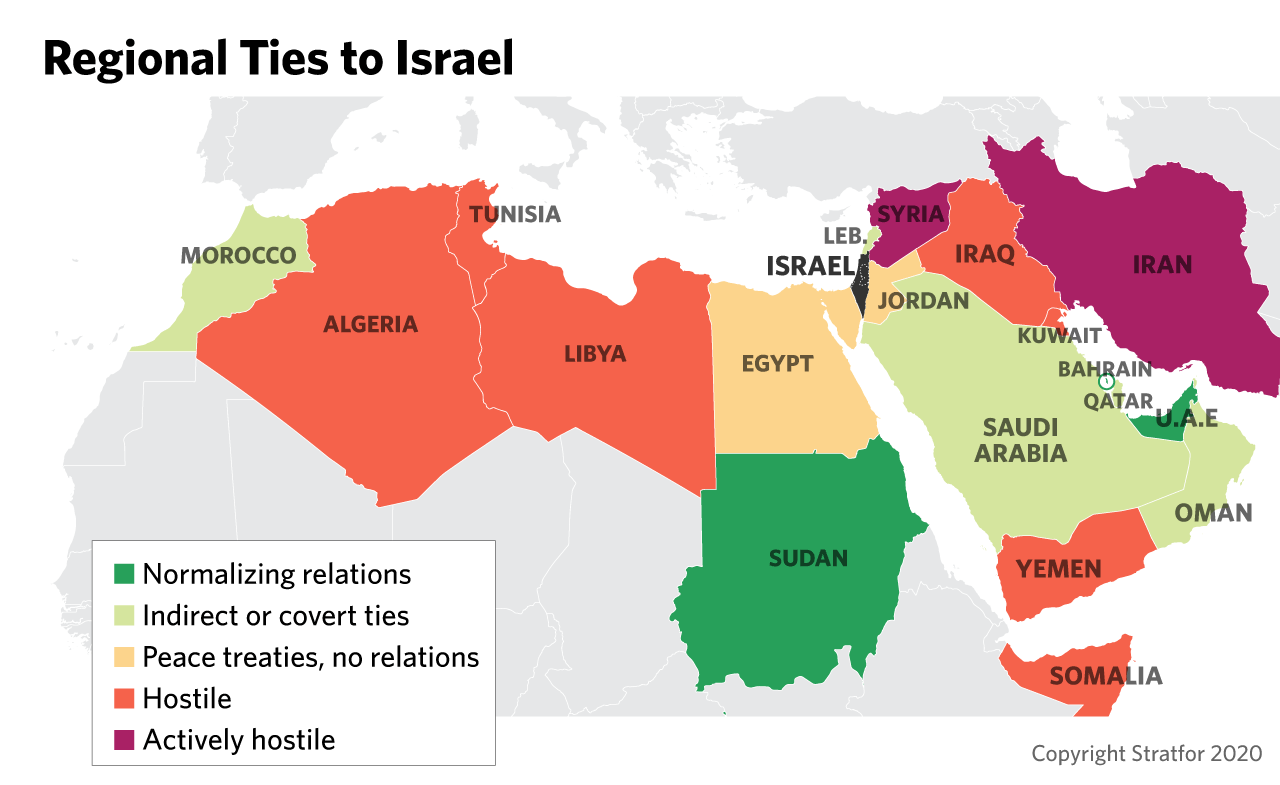
It has regional allies in its pursuit of some of those goals, namely, pushing back Iranian power and deemphasizing the global human rights, legal institutions and international traditions that can constrain a state's policies. Saudi Arabia, Bahrain, the United Arab Emirates and Egypt to differing extents have similar goals, and it is that commonality that is helping drive the present normalization of Arab ties with Israel. As Israel drifts further to the right, these relationships seem likely to solidify, with economic and social ties growing between these countries cementing their bonds. As they reinterpret their national interests, these newfound allies will also see less of a threat from Israel's drift toward a one-state solution as the Palestinian issue — once an ideological mainstay of Arab states — is demoted below new national imperatives like Iran, economic diversification and defense independence.
But Iran and, to a lesser extent, Turkey will remain rivals. While they are swinging toward nationalism, too, their nationalist ideology includes an anti-Israel component. Iran has shown no sign it will move away from its virulently anti-Israeli platform. Though it has a treaty with Israel, Turkey is also drifting toward a Turkish-Islamist nationalism that views Israel with hostility, and which provides quick political points when invoked by the ruling party.
Closer to home, however, are the Palestinians. Israeli nationalists tacitly are moving toward a one-state solution to the Palestinian issue. As Israeli settlements grow, and annexations — whether de jure or de facto — carve up the West Bank, questions over what will become of Palestinians living in rump enclaves will grow. There are various solutions, ranging from wholesale annexations and nationalization of Palestinians that might upend Israel's internal demographics and politics to potential autonomous zones that would assuage Israeli security fears while preventing Palestinians from entering Israel's voter rolls.
The impact on Israel's rightward drift in its relationships with Europe and the United States is less certain. In these Western allies, rising tides of largely left-wing youth voters do show some demographic muscle and political interest in reinforcing the postwar global norms and human rights concerns Israel's right-wing sometimes butts up against. Even now, this left-wing cohort is seeking to shape the incoming Biden Cabinet, where human rights will likely take a higher priority than under U.S. President Donald Trump. But at the same time, Europe and the United States have less and less interest in micromanaging the Middle East; recurrent attempts to find a lasting peace between Israel and the Palestinians have befuddled president after president, and the matter does not appear to be a high priority for the incoming White House.
And unlike in the 1990s and 2000s, when the United States was able to implement unilateral strategies in the Middle East, Israel has ways to counteract some of that pressure. It can expand its economic and security relationships with its new Gulf Arab allies, themselves concerned they might feel U.S. pressure to change policies. But it can also go farther afield, to Russia and China, which after decades of military and economic growth can increasingly offer real offsets to America's still considerable economic and defense influence in Israel. The mere threat of that pivot, whether to Moscow or Beijing or both, might be enough to thwart some U.S. attempts to reshape Israeli policies.
Meanwhile, there is much Israeli's three right-wing strands disagree on. For example, the ultra-Orthodox show little sign they are willing to abandon cherished principles and join Israel Defense Forces, even as their youth numbers swell. This alarms the other factions, which worry such principles will undermine the effectiveness of Israel's military over time. Meanwhile, more ideological settlers wish not merely to bend international norms but to break them and to move for formal annexation, while more center-right parties don't want to risk ties with the outside world with such sudden brash behavior.
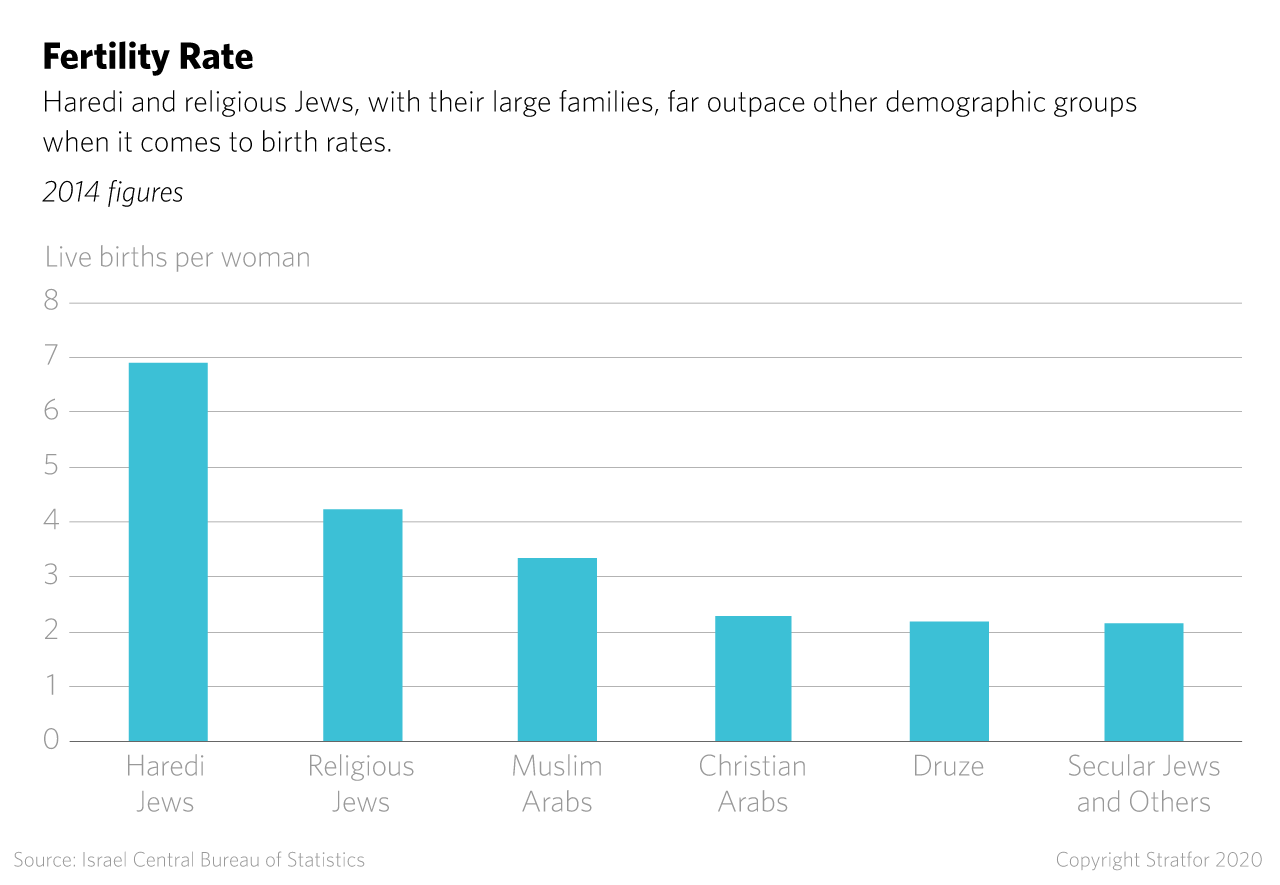
With the right-wing likely to be a more and more dominant force in Israel, right-wing coalitions and their prime ministers will give form to how these ideologies impact Israel's regional behavior. Some prime ministers will be elected on hawkish but essentially conservative platforms, taking risks in pursuit of principle when it suits them politically and diplomatically, like Netanyahu has made a political career of. Others might be more like Naftali Bennett of Yamina, who has signaled he would pursue expanded settlements and annexations in spite of the diplomatic and potential security backlash. What therefore may end up defining Israeli behavior the most as it turns to the right is not so much the external pressure of allies, but rather the dynamic among right-wing factions.
