
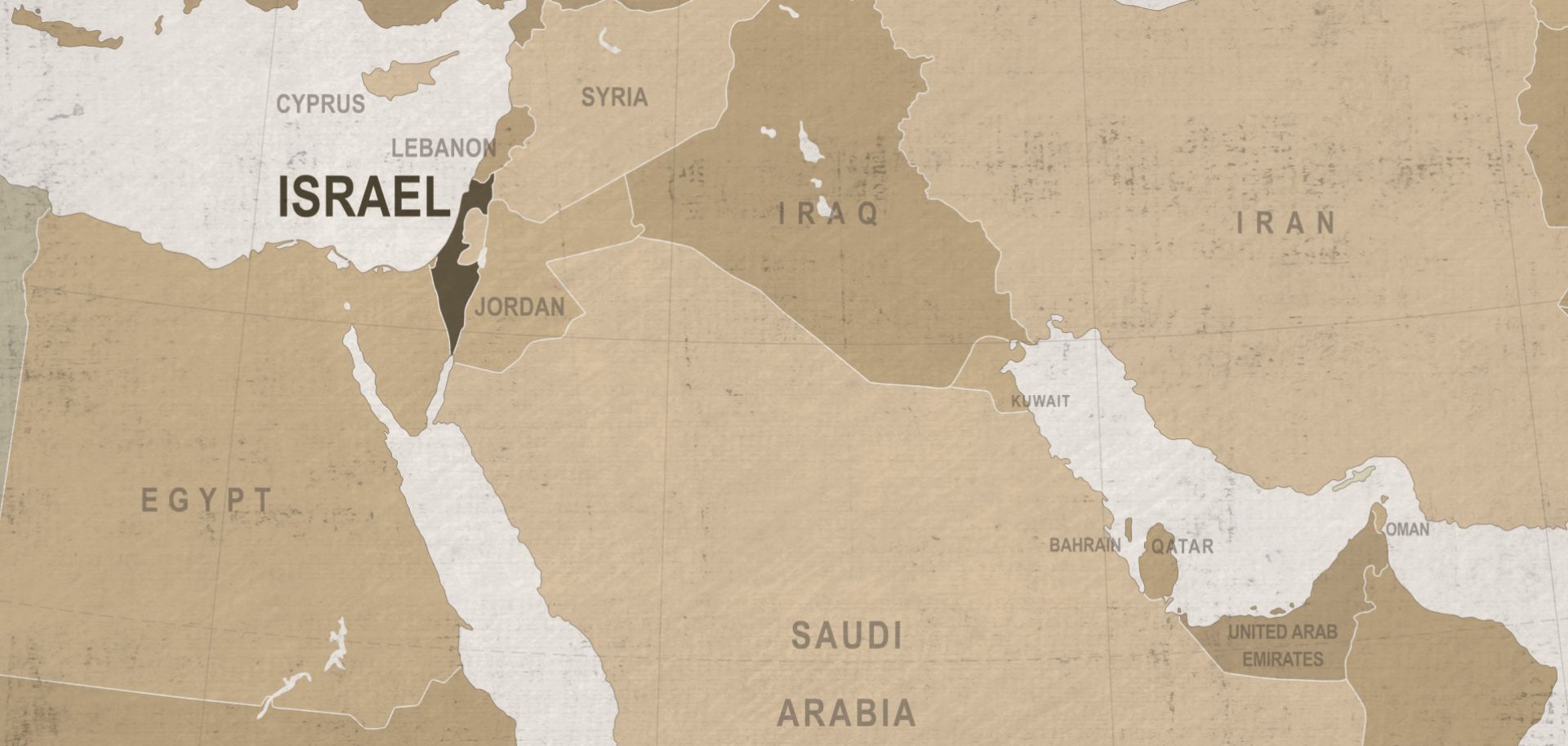
The waning influence of the pan-Islamism and pan-Arabism movements, combined with increasing U.S. pressure, will cause Oman, Bahrain and Morocco to soon join the United Arab Emirates in formalizing ties with Israel, accelerating a longer-term normalization trend that no longer hinges on the formation of a Palestinian state. The allure of Israel's technology and defense capabilities could also compel other Muslim states with covert ties and limited histories of overt conflict with Israel, such as Pakistan, to follow suit. Israel will, in turn, see expanding global economic ties that strengthen its post-pandemic recovery, as well as stronger regional allies that bolster its position against Iran should the upcoming U.S. election yield a less hawkish administration in Washington.
The major drivers that have traditionally kept Israel isolated in the Muslim world are changing, opening the door for states interested in enhanced trade and diplomatic ties to explore normalization.
- Pan-Islamist and pan-Arabism movements once largely centered around anti-Israel narratives, which led many Muslims to support isolating from and even fighting wars with Israel. These movements, however, are weakening as a result of being partially discredited by their long records of fomenting unsuccessful conflicts with Israel, their history of governance that has not always improved living standards or delivered essential services, and their inspiration of radical extremists such as al Qaeda and the Islamic State in Syria and Iraq. Pan-Islamist and pan-Arabism ideologies now remain most popular among older Muslim generations, who make up an increasingly small minority of the roughly 1.8 billion Muslims living around the world (the average age of Muslims worldwide was 24 in 2015).
- Since President Donald Trump took office in 2016, the United States has also been more actively engaging in pro-Israel policies, applying diplomatic pressure in some places and mediating in others. This has included recognizing Israel's sovereignty over East Jerusalem and the Golan Heights, supporting a new and largely pro-Israel peace plan with the Palestinians, and mediating Israel's relations with its Arab Gulf neighbors, including brokering the recent UAE-Israel deal. That dynamic, however, may change following the U.S. presidential election in November, as Trump's main challenger Joe Biden has indicated he'd increase scrutiny on Israel and scale back Trump's pressure campaign against Iran.
- Of the 30 countries without formal relations with Israel, only eight have histories of major conflict. And of those, only Lebanon and Syria have gone directly to war with Israel, with the remaining five (Iran, Iraq, Libya, Sudan and Tunisia) having engaged in mostly covert proxy action.
Oman, Bahrain and Morocco are among the countries most likely to explore a normalization path with Israel similar to the United Arab Emirates', which would grant them access to Israeli education, technology and defense cooperation.
- Oman has long derived its domestic legitimacy from its Ibadi form of Islam and centuries-long tradition of the sultanate, rather than pan-Islamism or pan-Arabism. A close U.S. ally, Oman also relies on its stable relationship with Washington for much of its external security. Oman has never had a covert or overt military conflict with Israel, and its covert ties include regular visits by Israeli government officials, including Prime Minister Benjamin Netanyahu in 2018.
- Bahrain's monarchy recently shifted away from pan-Islamist and pan-Arabism ideologies, especially after the Arab Spring produced a populist, Shiite-dominated street protest movement that attempted to topple the government. Bahrain is also reliant on its good relations with the United States and hosts the U.S. Navy's Persian Gulf-based 5th Fleet. Bahrain has never been directly at war with Israel and has covertly hosted Israeli officials for years, with the first official visit by an Israeli cabinet member in 1994. Bahrain also utilizes Israeli cyber technologies and recognized Israel's "right to exist" in 2018.
- After the Arab Spring, Morocco's monarchy took control of of its Islamist movement in the local branch of the Muslim Brotherhood. It is also a strong U.S. ally with a treaty relationship dating back to 1787, and has ongoing trade and tourism ties with Israel. Although nominally at war, Moroccan troops never fought on the ground in the series of Arab-Israeli wars that took place between 1948 and 1973. In fact, Moroccan intelligence allegedly aided Israel in the 1967 conflict.
Saudi Arabia, Qatar and Sudan will likely start trending toward normalization, but will not seek to quickly publicize it like Abu Dhabi. The varying strategic, diplomatic and ideological pressures in these countries means there is no guarantee one will move faster than the others.
- Saudi Arabia has never engaged in a major war with Israel. The kingdom also allows Israeli overflights and purchases Israeli cybersecurity technology. But pan-Islamist and pan-Arabic ideologies (and the anti-Israel narratives that underpin them) remain popular with significant segments of the Saudi population, despite Riyadh's efforts to reduce their influence. And while a close ally of the United States, Saudi Arabia also prioritizes independence on certain foreign policy matters, such as the Palestinian question and the development of its own civilian nuclear program.
- Qatar has never had an overt conflict with Israel, and continues to cooperate with Israel to maintain humanitarian corridors in Hamas in the Gaza Strip. But Qatari nationalism, especially after the Arab Spring, incorporates aspects of pan-Islamist and pan-Arabic ideologies as part of the country's regional soft-power strategy. And despite having strong ties with Washington and hosting a major U.S. airbase, Qatar also prizes an independent foreign policy that includes ongoing relations with Iran and Hamas in the Gaza Strip.
- In Sudan, the influence pan-Islamist and pan-Arabic ideologies has begun to gradually wane following the ousting of longtime authoritarian leader Omar al Bashir in April 2019. Sudan's new transitional government is also more open to taking policy decisions that will bring it closer to the United States in the hopes of being removed from Washington's list of state sponsors of terrorism, which has isolated Khartoum from international financial markets since 1993. Israel directly attacked Sudan in both 2009 and 2012 to interdict arms to Hamas, which has since strained their relationship, though there are signs the two countries have slowly begun making amends. In February, Sudan opened its airspace to Israeli overflights, and Netanyahu also recently visited with the transitional government's head, Gen. Abdel-Fattah Burhan, in Uganda, where they reportedly discussed normalization.
Other countries with large economies and Muslim populations, such as Malaysia and Pakistan, have stronger Islamist influences, which will restrain but not necessarily preclude normalization with Israel.
- Led by a nationalist Islamist party, the Malaysian government carries out indirect trade, often through Singapore, with Israel to avoid blowback from its large Muslim population. Trade between the two countries reached $1.53 billion in 2013, the most recent year data was available,
- Pakistan has a history of security cooperation with Israel that it could continue to build on. Pakistan's national intelligence agency has reportedly informed its Israeli counterpart about potential terrorist attacks as recently as 2008 about potential terror attacks. The U.K. government has also reported incidents of Israel providing military supplies to Pakistan as recently as 2012.
Such an expansion of trade, intelligence and security relationships with Muslim-majority countries will help globalize Israel's technology sector. Arab Gulf states will also increasingly be able to access Israeli technology, educational institutions, and security equipment and technology.
- Israel's desert-friendly agricultural technologies are well-suited for food-scarce Arab Gulf nations, and Israel's higher education sector also outperforms most Arab Gulf institutions.
- Israel's healthcare technologies are often highly sought after by governments and businesses around the world. Israel and the United Arab Emirates agreed to jointly develop a COVID-19 vaccine as a part of their new normalization deal. And individual citizens in numerous countries, including Kuwait and Indonesia, have reportedly reached out to Israel to ask for its help in managing their countries' COVID-19 outbreaks.
- Israel is prepared to sell the Iron Dome defense system and other high-end defense technologies, as well as ease restrictions on arms sales from the United States, to friendly Arab Gulf countries as well.
