
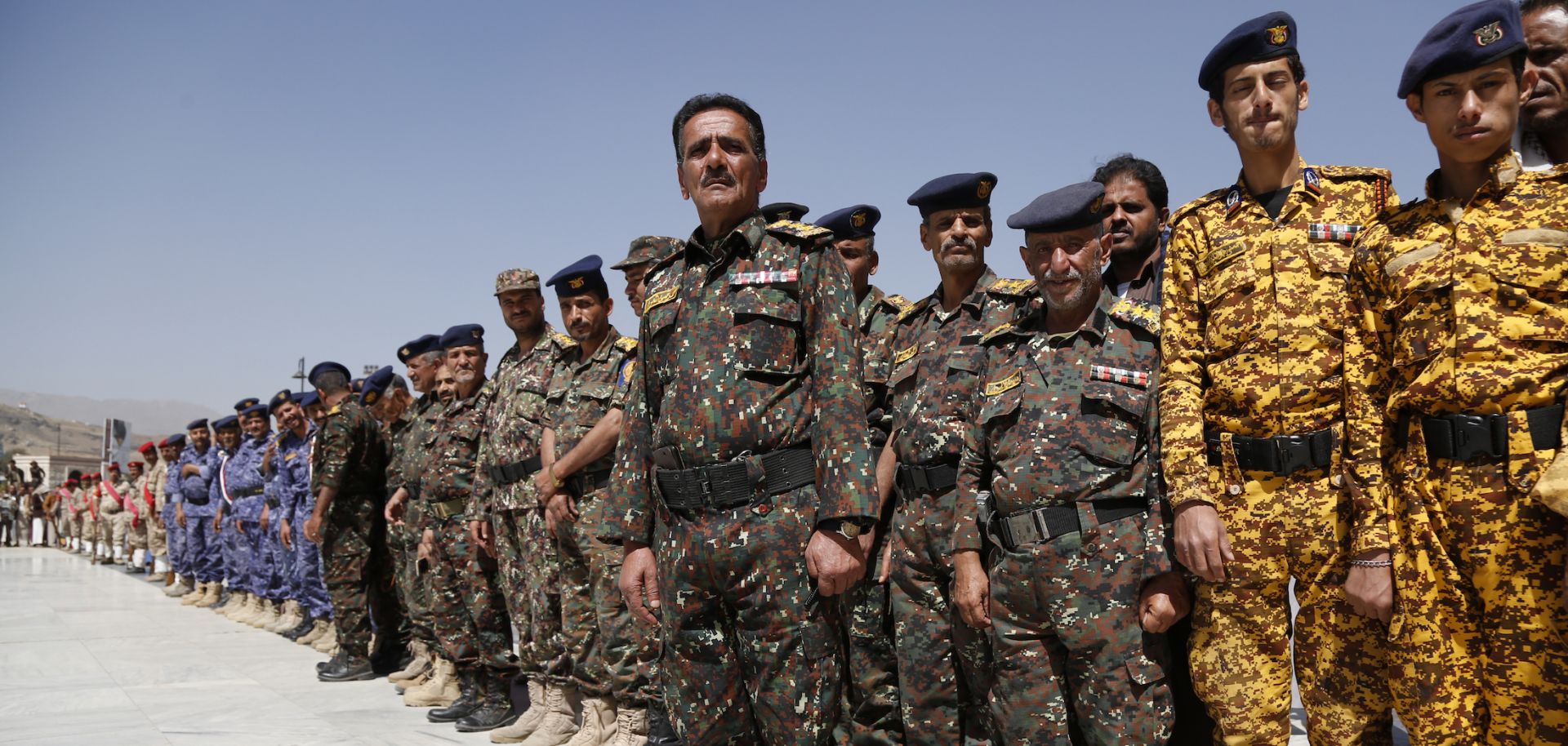
Houthi rebels hold a funeral for fighters killed in Marib, Yemen, on March 23, 2021.
Yemeni Houthis’ likely rejection of a Saudi cease-fire will pressure the United States to soften its criticism of Saudi Arabia’s campaign in Yemen to avoid more rebel advances that would worsen the country’s humanitarian crisis. On March 22, Saudi Foreign Minister Prince Faisal bin Farhan announced a new cease-fire proposal for the Yemeni civil war. The proposal included a nationwide halt in fighting, a U.N. supervisory role, a reopening of the Sanaa airport and Hodeidah port, and a resumption of political negotiations between Houthi rebels and the internationally recognized government of President Abdrabboh Mansoor Hadi. The Houthis, however, appear poised to reject the offer. Houthi chief negotiator Mohammed Abdul-Salam, speaking to Reuters, said the group expected the blockade to be lifted first, saying it should not be used as a pressure tool. After the cease-fire was announced, Saudi airstrikes also hit Houthi targets near Hodeidah and Sanaa as fighting continued around the key province of energy-rich Marib.
- Oman and Kuwait have been mediating ongoing talks between the Houthis and Saudis to end the Yemeni civil war. But despite repeated attempts to establish working relations and build confidence, cease-fires have been limited and localized. The port of Hodeidah has been under a shaky cease-fire since late 2018. In April 2020, Saudi Arabia declared a nationwide cease-fire to ease conditions during the COVID-19 pandemic, but the Houthis did not agree to the truce and Saudi-led airstrikes continued.
- In February 2021, the administration of U.S. President Joe Biden said it was reviewing arms sales to Saudi Arabia and would end U.S. military support for the Saudi military intervention in Yemen.
- The Biden administration has been pressuring Riyadh to seek a diplomatic solution to the Yemeni civil war as the White House prioritizes humanitarian conditions in the country.
The Houthis will engage with the diplomatic process only when pragmatic to extract concessions and plan for future military maneuvers designed to consolidate their control of northern Yemen. The ongoing campaign at Marib is a potential major victory for the Houthis, and would put them in control of the province’s gas, oil and water resources. This would boost their economic control of Yemen and increase their leverage for negotiations with the Saudi-backed Hadi government. The Houthis are also unlikely to accept a cease-fire when in a position of strength in Marib.
- The Houthis seek autonomy for Houthi-dominated provinces and a greater say in Yemen’s governance and resource distribution. Northern Yemen, which the Houthis control, is where the movement draws support from the region’s Zaydi Muslims. Negotiations between the Hadi government and the Houthis have stalled in part over the future role of the Houthis in Yemen, particularly as the group has developed links with Iran over the course of the civil war.
Houthi’s rejection of the cease-fire would force the United States to soften its criticism of Saudi Arabia’s actions in Yemen. Washington could potentially even support more aggressive Saudi military action, including the use of airstrikes, to blunt Houthi offensives and prevent territorial gains at the expense of the White House’s humanitarian goals. The Saudi airforce is heavily armed and supplied by U.S. defense companies, but civilian casualties from airstrikes have drawn outrage in the United States. Saudi use of airpower in Yemen is meant to be part of the Biden administration’s six-month strategic review of U.S.-Saudi ties, which includes the humanitarian impact of the war in Yemen. However, airpower is a key means for the Saudis to prevent further Houthi advances and to pressure the Houthis militarily. If Marib province falls, it could trigger the 800,000 refugees currently in the region to flee further south into Hadi government territory.
- When the Biden administration froze arms sales to the Saudis and Emiratis in February 2021, it cited an end to “offensive weapons” but did not specify which systems would be included under that designation. U.S. officials have said the administration is debating which systems to block with an eye toward improving humanitarian conditions in Yemen.
