
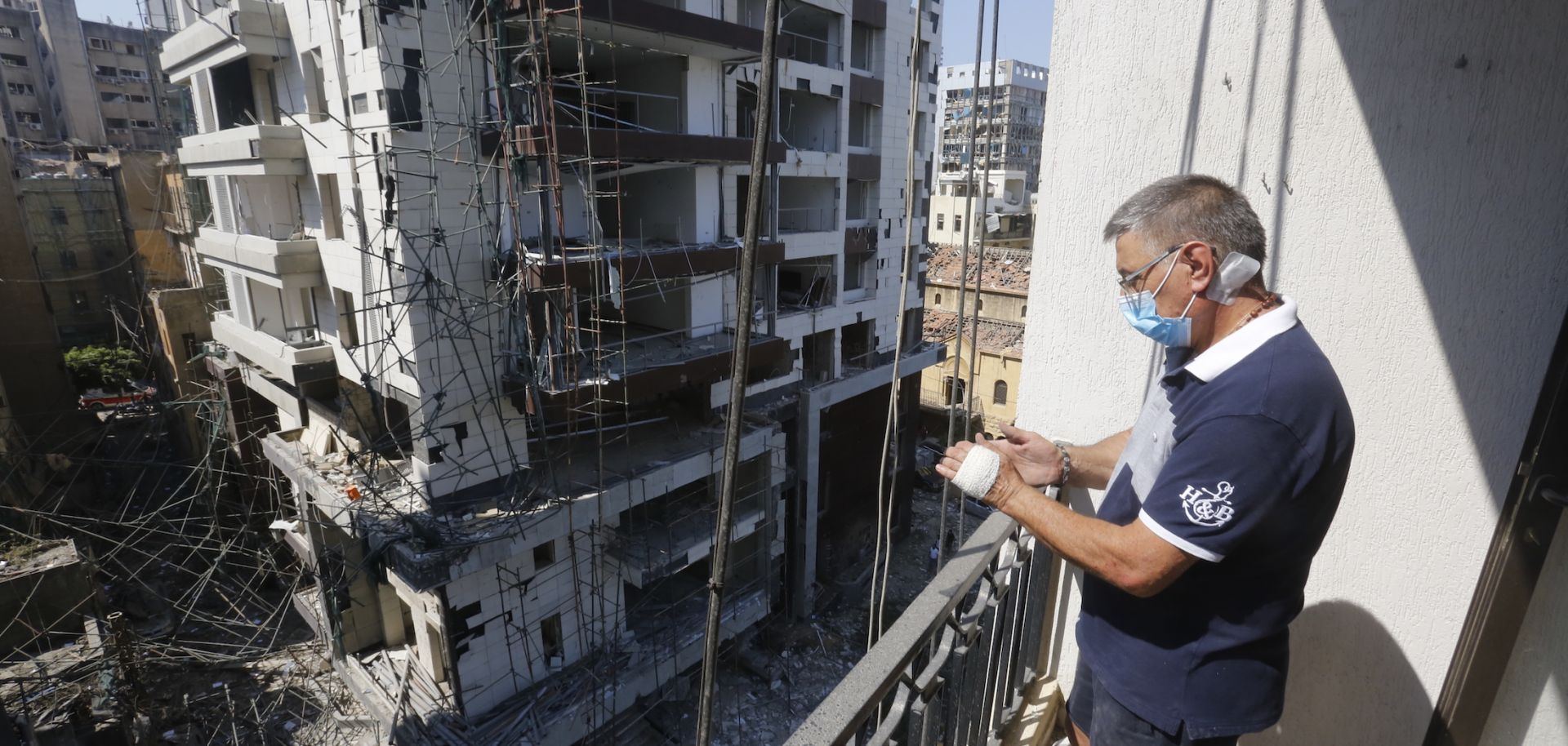
A man looks from the balcony of a building, damaged by the port explosion a day earlier, in Beirut, Lebanon on Aug. 5, 2020.
The rising tide of popular anger over the Beirut explosion, along with the subsequent resignation of Prime Minister Hassan Diab’s government, could yield piecemeal economic and political reforms by reinvigorating demands for real change in Lebanon’s entrenched political system, which has long benefited wealthy sectarian stakeholders while failing to address the country's deteriorating economy.
From Bad to Worse
Prior to the Beirut explosion, Lebanon's dual economic and financial crises were already expected to deteriorate, disproportionately impacting the country's poor and middle classes who lack the leverage to pressure the government for concrete change. Wealthy Lebanese, who back political elites throughout the country's government, maintain foreign currency cash reserves and overseas bank accounts, which cushion them from some of the depreciation of the Lebanese lira and associated losses of purchasing power.
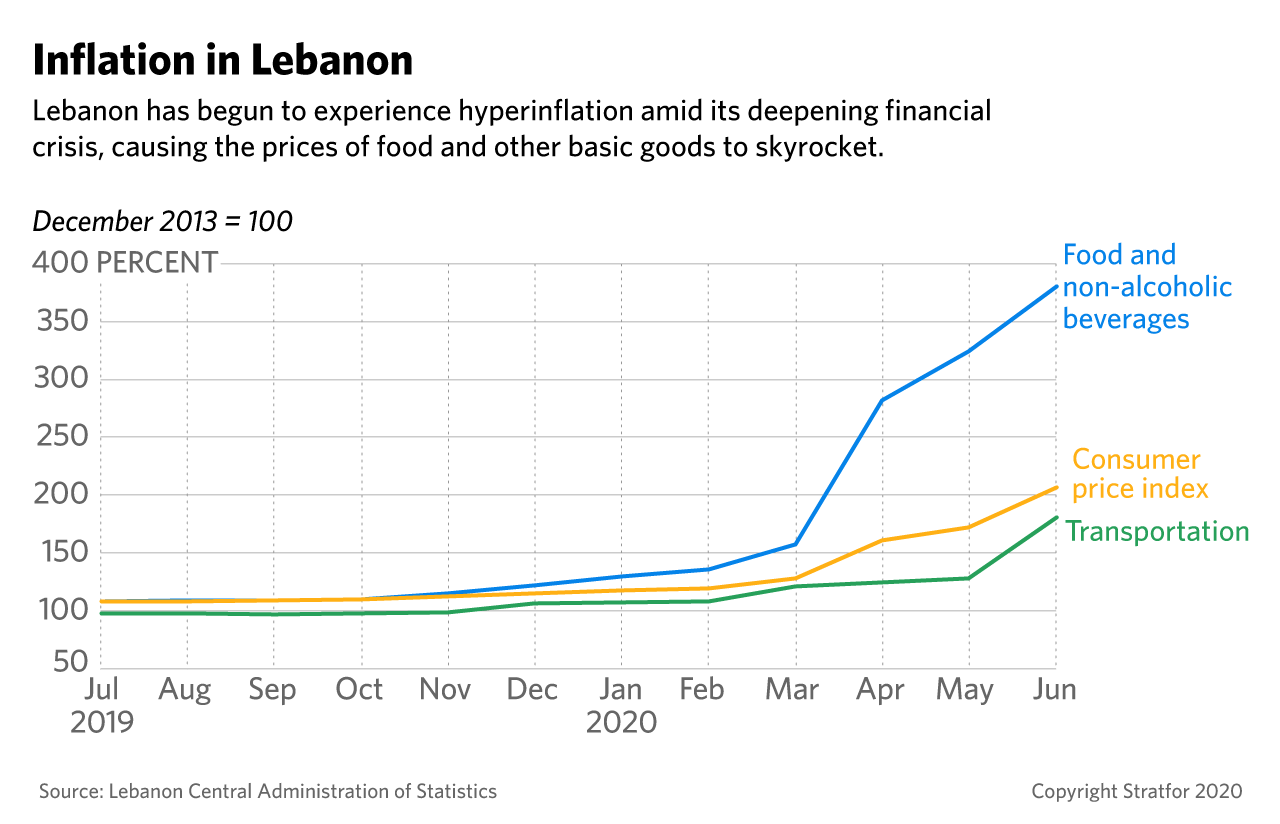
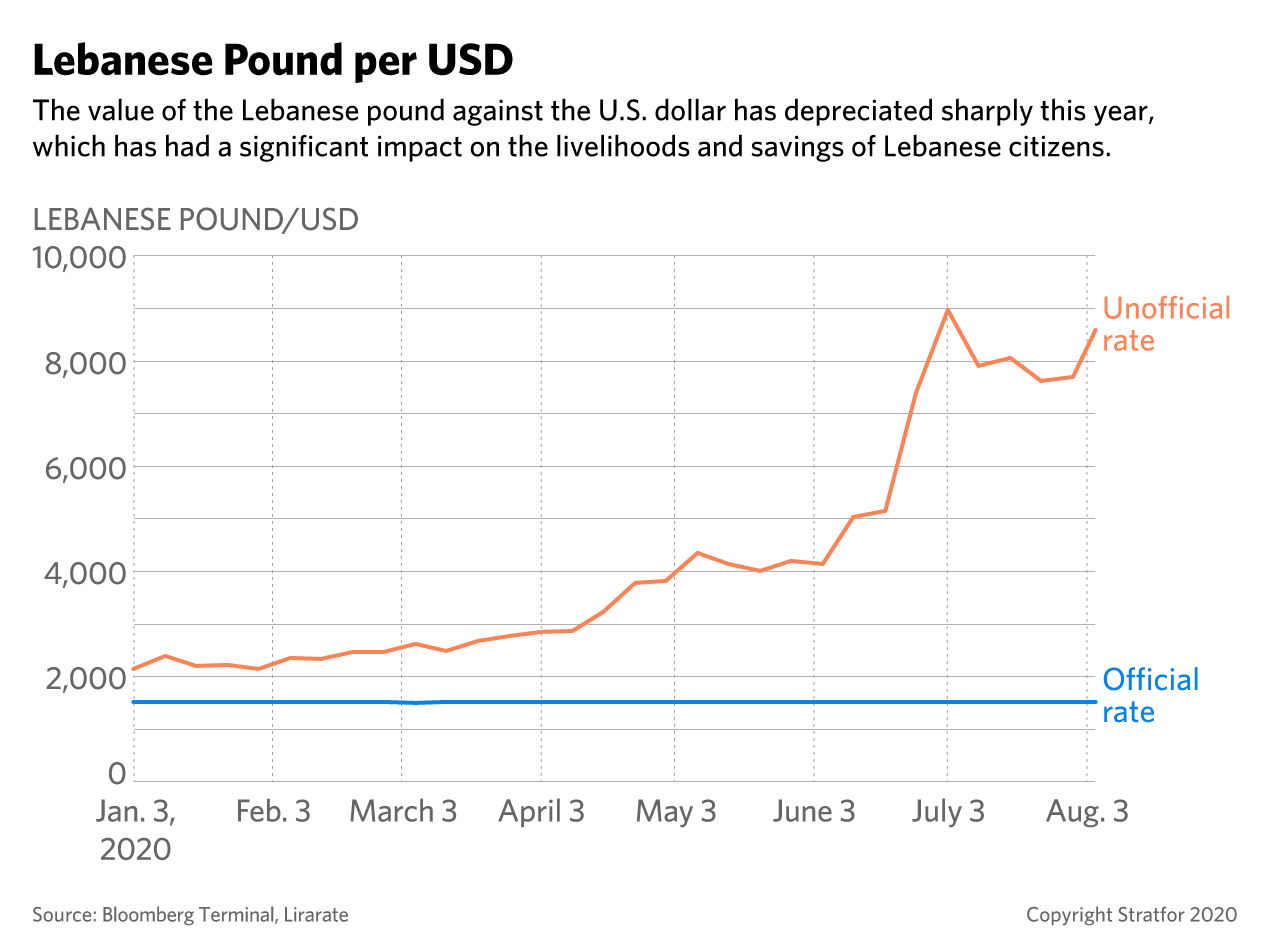
- Lebanon is experiencing its second consecutive month of hyperinflation for the first time since the country's civil war decades ago, with the value of the Lebanese pound on the parallel market plummeting by 80 percent since the beginning of the year.
- Basic goods and medicines are running out, and the country's electricity supply, already spotty for years, is weakening further as cities across the country go dark for hours.
- Unemployment is at 35 percent with half of the Lebanese population now living below the poverty line.
- The Beirut explosion will prompt a brief influx of foreign aid and foreign currency in the coming weeks. But while this will temporarily buoy the Lebanese economy, it will not be enough to solve the country's structural financial inefficiencies in the long term.
Those with the power to resolve Lebanon's ongoing crises have long resisted doing so for fear that any political or economic reforms would come at the cost of their current influence and financial benefit. Negotiations with the International Monetary Fund (IMF) for much-needed funding have stalled in recent months, as various government institutions required to agree on a reform path have refused to cooperate with each other, in part because it would force them to release some of their wealth. Finger-pointing between Maronite and Shiite officials over culpability for the Beirut explosion is another similar example of the factional feuding that has continued to halt the reforms needed to address Lebanon's economic and political crises.
A Catalyst for Change?
While the wholesale collapse of Lebanon's political system is unlikely, the added stress from the Beirut disaster and renewed public anger may finally provoke small changes, including compromises between feuding political parties to loosen much-needed foreign aid, adjustments to the country's electoral law, plans for early elections and/or additional resignations of powerful officials.
- On Aug. 10, Prime Minister Diab’s entire cabinet resigned amid growing calls for government officials to step down in the wake of the port explosion. Such resignations, however, don’t guarantee lasting change to the calcified sectarian structure of Lebanon’s political system, as they only leave vacuums in positions that can be filled by the same parties and factions. For this reason, the thousands of Lebanese citizens who have taken to the streets in Beirut in recent days have also demanded early elections and electoral reforms to ensure the next government doesn’t simply follow its predecessors’ path in policy and corruption.
- Lebanon's foreign allies, such as France and Canada, have also demanded political reforms as a prerequisite for any substantial financial aid beyond near-term humanitarian relief. The IMF has conditioned any new aid on the government committing to reforms as well.
What to Watch For
Security threats that risk pushing the country to the brink of another violent civil conflict have the potential to trigger political reforms.
- Anger over gross negligence due to the Beirut Port explosion could force more powerful officials, including longtime parliamentary and party leaders, to step down by galvanizing a more violent and persistent strand of the dormant anti-government protest movement that began in October 2019, though this will merely open vacuums in the same government positions rather than create concrete change.
- A direct clash between sectarian and religious authorities, and their respective political parties and militias, could force political compromises by threatening to spur another civil war — something the establishment is deeply wary of. Leading up to the Beirut explosion, the Maronite Patriarch had already broken taboos by criticizing the Iran-backed militant group, Hezbollah. Another full-scale conflict between Israel and Hezbollah is unlikely but possible, and would likely devastate much of the country, including the capital of Beirut.
- Assassinations of one or more high-profile individuals — an unfortunate hallmark of Lebanon's political history — could also trigger substantial political change, just as the assassination of former Prime Minister Rafic Hariri spurred the most recent seismic shift in Lebanon's political structure in 2005. Anger over the Beirut explosion could motivate rogue actors to consider such a violent option in order to force government action and/or exact revenge.
Anything that forces the country's wealthy political stakeholders to feel the same economic strain as the rest of Lebanon could also yield reforms, such as:
- An influx of private direct aid to nongovernmental organizations (NGOs) and individual organizations, but not to government coffers, to help with Lebanon's growing humanitarian crises, including the recent port disaster.
- Prolonged lira depreciation and hyperinflation, which would eventually detract from the pockets of the wealthiest in the country (though this may take many months or years, as the poor and middle class continue to feel the brunt of Lebanon's deteriorating financial situation).
