
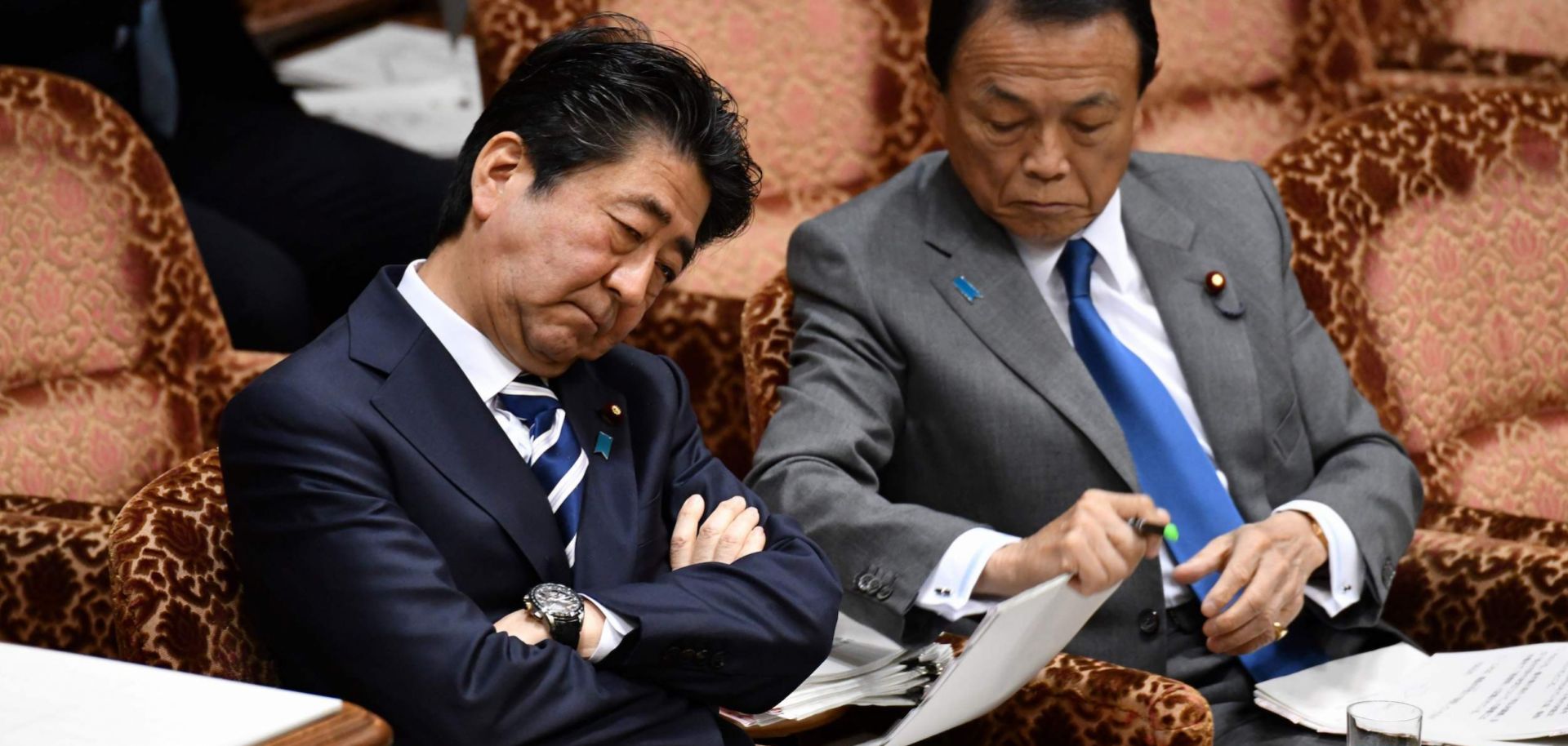
Shinzo Abe (left), prime minister of Japan, and Taro Aso, finance minister, attend a budget committee meeting in the upper house of parliament in Tokyo on March 19, 2018. Abe has hit back at critics accusing him of favoritism and a cover-up. The accusations have hurt his popularity and weakened his grip on power.
In the diplomatic thaw over North Korea, Japan finds itself out in the cold. The United States and North Korea have suddenly signaled a potential shift in their relations, the ice has broken between Pyongyang and Beijing, and the two Koreas are set to hold a summit for the first time in 11 years — all of which leave Japan struggling to reassert itself in the changing Northeast Asian landscape. This week, Japanese Prime Minister Shinzo Abe will meet U.S. President Donald Trump at Mar-a-Lago in Florida, hot on the heels of Japan's first foreign ministerial visit to South Korea in three years, the resumption of economic dialogue with China after eight years and unsuccessful attempts to broker a bilateral dialogue with North Korea.
But Abe will visit the United States amid dire political fortunes at home. His approval ratings plunged to new lows on April 15 amid the four scandals and resulting protests that have dogged his administration. The prime minister only managed to reverse a similar dip in July 2017 by demonstrating his diplomatic shrewdness after North Korean missile tests. Because Japan sits on the outside looking in, Abe is hoping for another good showing, although the prospects for success are debatable. For all of Japan's proactive efforts to put itself back into the equation in Northeast Asia, Tokyo is still in a reactive mode, meaning it has no option but to lean on the other major actors on North Korea to influence developments.
Getting Back on the Front Foot
Until the shock announcement of a summit between Trump and North Korean leader Kim Jong Un, Tokyo's perspective on Pyongyang dovetailed neatly with Washington's campaign to exert maximum pressure on the communist state over the past year. The latest diplomatic warming, however, has left Japan with a great deal to lose. China enjoys deep trade ties and an alliance with North Korea, South Korea is pursuing the lure of unification and near-term economic incentives, and even Russia is offering Kim economic relief and diplomatic cover at the United Nations. Japan, by contrast, has long relied on its attachment to U.S. efforts to contain Pyongyang. Because the current issues regarding North Korea stem from U.S.-Korean ties (along with a strong role for China), Japan has few avenues to pursue to achieve its objectives. Tokyo intends to bide its time and work indirectly through Washington, Seoul and Beijing until it can insert itself more directly into the picture.
The country is already weighing its options on how to appropriately engage. As in previous discussions with the United States, Abe will likely use his trip to reiterate Japan's stalwart support for the U.S.-led "maximum pressure" campaign against North Korea. Such a campaign, however, could become irrelevant (or short-lived) if Trump and Kim achieve a breakthrough. Negotiators from both countries are reportedly conducting back-channel talks to draft a list of measures that each will propose regarding a denuclearization plan. The U.S. sweeteners include humanitarian aid and the establishment of a liaison office and eventually an embassy. North Korea is requesting that the United States normalize its ties with Pyongyang, facilitate a peace treaty to officially end the Korean War, provide security guarantees and remove U.S. strategic and nuclear assets from South Korea. While the United States could maintain its economic measures against North Korea for some time after any deal (even if there is no guarantee that the two sides will clinch a deal), Japan is seeking alternative means of projecting influence.
Accordingly, it is anticipating a potential shift in its role in the U.S.-led campaign against North Korea. Because of Japan's economic clout and broad international aid footprint, it could contribute funds or food assistance to any U.S.-authorized humanitarian campaign, having previously done so in 2000 during the last thaw in U.S.-North Korean relations. In the early 2000s, Tokyo also reportedly offered between $5 billion and $10 billion in economic development assistance as a component of World War II reparations. The carrot of aid could help Japan again intervene directly in the issue, although the poor state of its relations with Pyongyang could scuttle such endeavors.
Knocking on Neighbors' Doors
At the same time, Japan is also cultivating links with other critical parties. Japan's ties with China and South Korea have long been frosty due to maritime disputes and wartime issues, but Tokyo is moving to warm up relations. Tokyo and Beijing resumed a long-stalled dialogue on economic matters during a visit the week of April 15 by Chinese Foreign Minister Wang Yi. Their respective leaders are expected to make reciprocal visits for the first time since both assumed office in 2012. During Wang's visit, Japanese and Chinese officials expressed concern about the prospect of a trade showdown and affirmed cooperation on East China Sea disputes. The week before, Japanese Foreign Minister Taro Kono had visited South Korean President Moon Jae In. The visit came after a downturn in relations due to a controversial deal on wartime comfort women; Tokyo and Seoul signed that deal in 2015 during the last visit by a Japanese foreign minister to South Korea. In the talks with China and South Korea, Japan aims to smooth ties ahead of a rescheduled trilateral summit in early May; the meeting was canceled last year due to tensions over North Korea. If Japan hopes to expand its influence on North Korea beyond its indirect impact through the United States, China and South Korea will be essential. Beijing has already proved valuable, reportedly facilitating some of the direct overtures between Tokyo and Pyongyang, while Seoul's assistance in voicing some of Japan's concerns will be vital during its April 27 summit with the North.
But there are limits to Japan's improving its ties with China and South Korea. Tokyo and Beijing have resumed economic dialogue, but the room for progress is restricted. Washington has targeted both China and Japan over trade, but Japan remains on the same page with the United States on key trade issues. It seconded a recent U.S. complaint at the World Trade Organization criticizing China's intellectual property practices. At present, Seoul has played down the comfort women issue — in part due to the need to stand with Washington and Tokyo against Pyongyang — but any detente with North Korea could usher in a harsher South Korean stance regarding its eastern neighbor.
The U.S. Road to Pyongyang
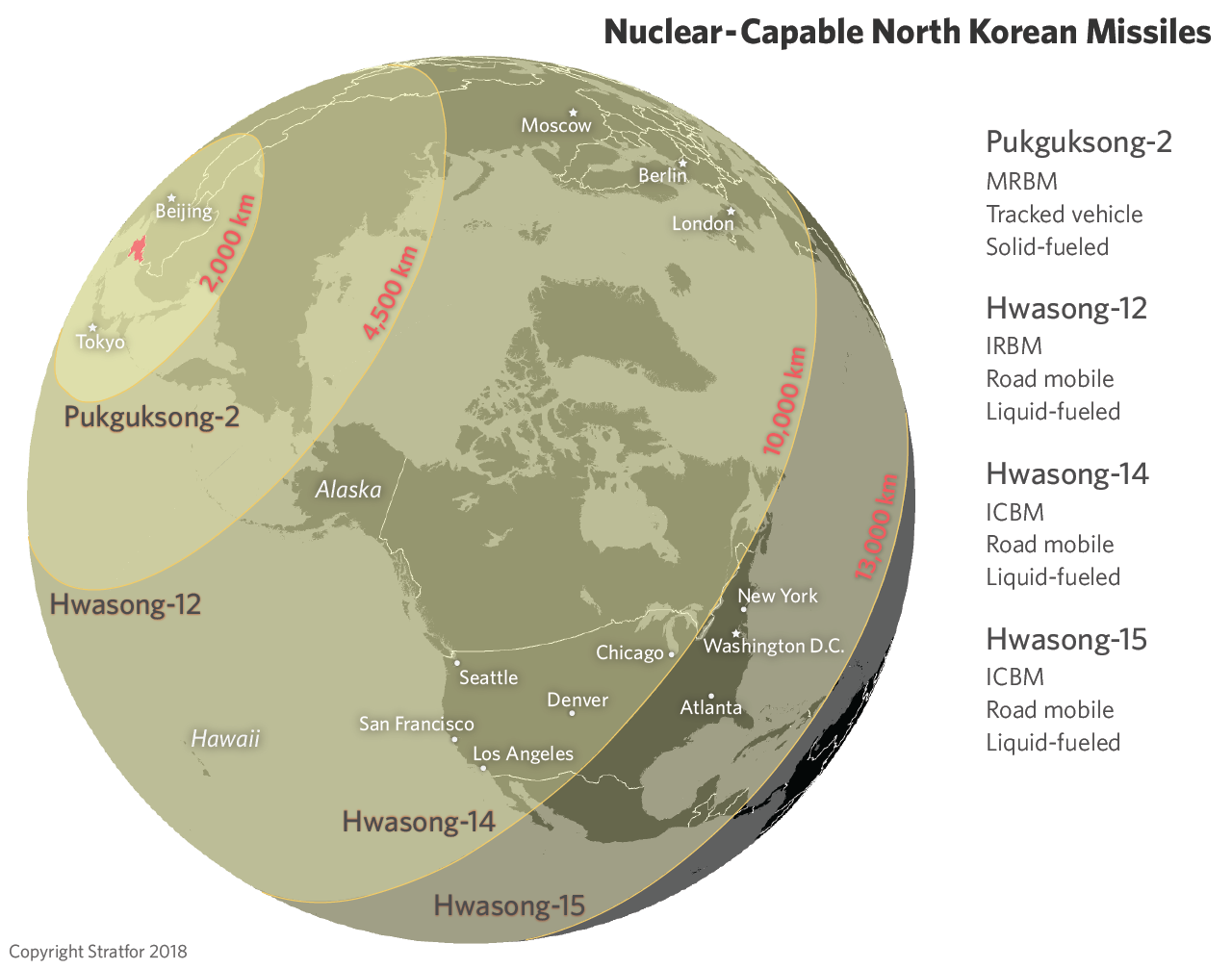
Because Japan's path to success is unlikely to run through Beijing or Seoul, Tokyo will closely follow the U.S. lead on North Korea. Japan has duly asked Washington to include its most pressing demands during talks with North Korea — namely, a resolution to Japan's claim that the number of Japanese nationals abducted in the 1970s and 1980s by Pyongyang far exceeds the 13 it has acknowledged and an end to the threat its medium-range missiles pose to the island nation. (Japan has also put out feelers to South Korea as to whether Seoul could represent Tokyo's interests on the issue, albeit with little success.) Tokyo's insistence on addressing the abduction issue has severely limited progress in its overtures to North Korea, which has reportedly declared the matter closed after the return of some abductees in the early 2000s. And because of North Korea's renewed ties with the United States and China, Kim could have enough leverage to strike the issue from the agenda. Moreover, the United States might lack the energy to go to bat for Japan on North Korea's intercontinental ballistic missile program and medium-range systems due to the exertions that the push for denuclearization will entail.
But beyond the short-term reverses in failing to address its most critical concerns about North Korea, Tokyo welcomes the prospect of de-escalation so it can pursue its longer-term strategy of counterbalancing China's regional rise. On this front, Japan has reason to entertain some hope. Trump has reportedly told administration officials to evaluate whether the United States should join the Comprehensive and Progressive Trans-Pacific Partnership (CPTPP), a trade pact that was designed to offset China and that Washington abandoned in 2016. Although Trump later downgraded Japan's expectations by emphasizing bilateral trade issues and noting his intention to revisit the deal only if the participants substantially improved the pact, Japan would welcome any sign that Washington could join the CPTPP. In fact, Japan's leaders fought to preserve many of the measures the United States demanded in the deal. But because Washington walked away, the other countries suspended many of the articles Tokyo sought to insert, although they could reinstate the clauses if the United States returned to the table. And as Japan pushes the United States to return to the multilateral format, it will also try to address U.S. criticisms of Tokyo's trade surplus, perhaps with offers of military and energy deals to offset the imbalance.
The sit-down with Trump will highlight Abe's strong relationship with the U.S. leader, but given the limits of Japan's position on North Korea, Tokyo has little hope of effecting a momentous breakthrough. Instead, Japan will find itself following the same indirect strategy as it reaches out to the other key actors on Pyongyang. And until Japan can bring more of its weight to bear on North Korea, its best chance of influencing developments in Northeast Asia lies across the ocean in Washington.
