
In the wake of his military's quashed coup, Turkish President Recep Tayyip Erdogan is not the only world leader taking stock of his hold on power. When such uprisings occur, officials in other countries — no matter how disparate their governments or how distant their borders — inevitably wonder whether it could happen to them.
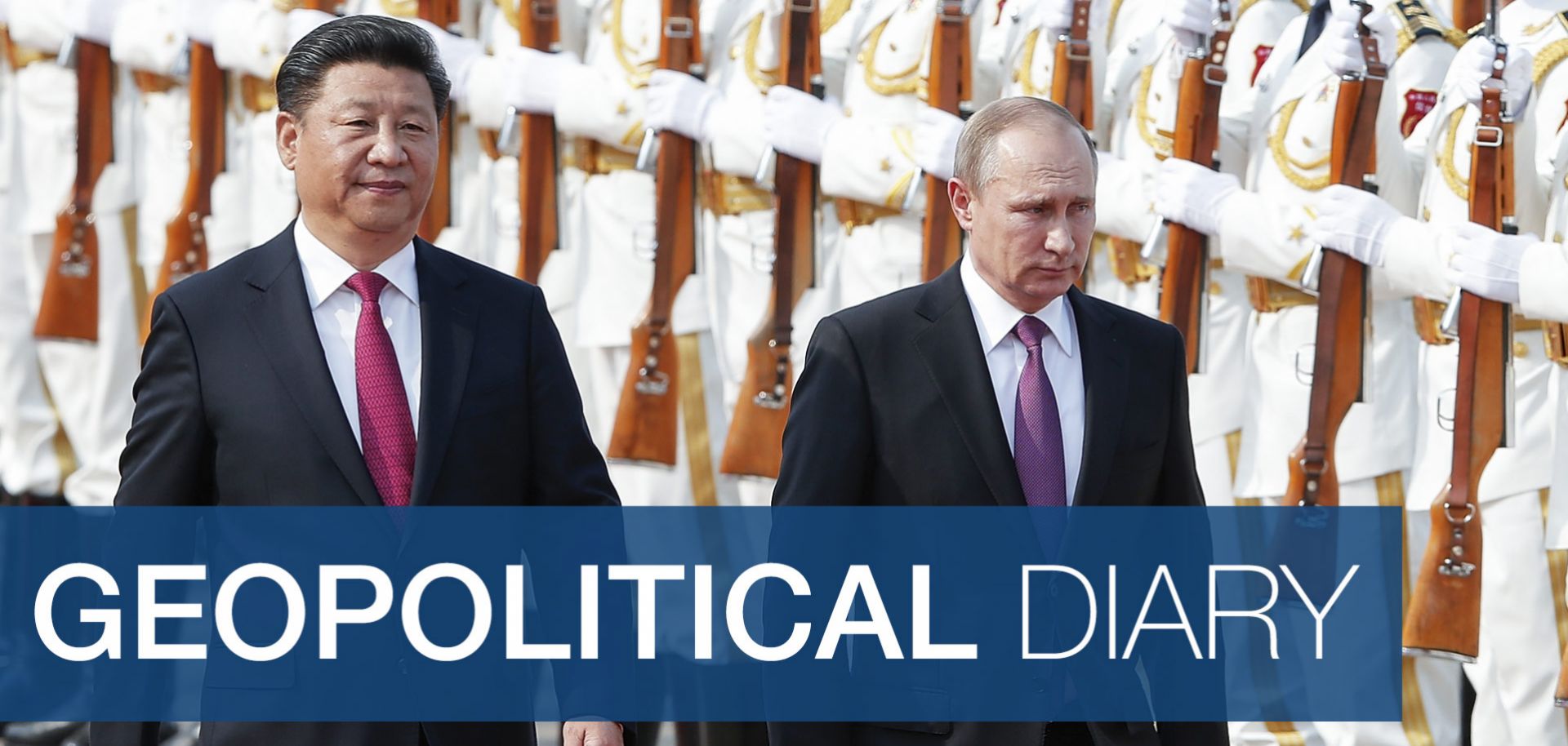
Despite having firm control of their militaries, the governments of Russia and China are vigilant — even paranoid — that their forces could turn on them. For nearly two decades, Russian President Vladimir Putin has worked to secure the loyalty of his people, including the armed forces. Over the weekend, Russian commentators were in frenzy, noting the similarities between Erdogan's and Putin's governing styles and speculating over whether such a revolt could take place in Russia. A handful of commentators even posited that Putin could take advantage of such a crisis to solidify his hold on power, much as the Kremlin has used its standoff with the West to stir up nationalism. Putin revealed his own anxiety over dissent among the security and military services when, in April, he created a branch of the armed forces under his direct control.
China, too, is constantly worried about maintaining control of its military. Even before the People's Republic of China was founded, the survival of the Communist Party of China was tied to its power over the army. To this day, the Party emphasizes that the People's Liberation Army is the Party's army, not the nation's army. In 1989, the Tiananmen Square protests put this idea to the test. After declaring martial law, Beijing called on the 38th Army (which is charged with defending the capital) to deal with the protesters. The commander dragged his feet and eventually refused orders to use force against the protesters, deciding that he was first and foremost a servant of the people. Ever since, the Communist Party of China has implored the People's Liberation Army to engage in continued political education and to resist calls of "professionalization," "nationalization" and "de-politicization" that could weaken its commitment to the Party.
Meanwhile, other countries face a more pressing risk of political insurrection. Sub-Saharan Africa is a hotbed of political ferment, and the region's weak security institutions and many personality-driven regimes foster a great potential for uprisings. Countries at particular risk in the near term include the Central African Republic, which has contended with transitional governments since the successful Seleka rebellion in 2013, and the Democratic Republic of the Congo, where a transition of power has yet to occur through democratic means and where elections are scheduled for November.
Throughout the Middle East, coups have punctuated post-colonial history, informing the structure of national militaries. In the kingdoms of the Gulf states, Jordan, and Morocco, the armed forces have been carefully built, monitored and managed to reduce the risk that an overly strong or disloyal military could overturn the government. Iran's best-equipped military force, the Islamic Revolutionary Guard Corps, was founded to guard the guiding ideology that led to the 1979 overthrow of the shah, while the remnants of the shah's army lost influence. In crisis-riven Middle Eastern and North African states such as Libya, Yemen and Syria, military forces and governments are already competing for power.
Iraq has a long and violent history of coups and an unstable government in power. In addition, several clashing militias wield the majority of the country's military power; the Iran-backed Popular Mobilization Forces present a perpetual threat to the political status quo. Egypt is still dealing with the fallout of its 2013 coup, during which the military regained power from the Muslim Brotherhood-led administration. And though Algeria's government caters to the interests of its robust military, the power transition currently underway could give rise to instability.
Among the leaders most forcefully condemning Turkey's coup was Pakistani Prime Minister Nawaz Sharif. Like Erdogan, Sharif is the democratically elected leader of a populous Muslim country, one whose 68-year history includes four periods of military rule. The last military ruler, Gen. Pervez Musharraf, stepped down in 2008, but fears of another coup endure. In August 2014, the head of the opposition Pakistan Tahrik-e-Insaf party clamored for military intervention in a boisterous protest in the capital. Just last week, banners urging Gen. Raheel Sharif to take over the country sprang up around Pakistan. Though a small political party called Move On Pakistan claimed responsibility for the campaign, the banners reflect the Pakistani public's widespread cynicism about politicians.
The risk of another coup in Venezuela drastically changed the government's domestic security strategy and altered the balance of power in national politics. After an attempted mutiny in April 2002, former Venezuelan President Hugo Chavez purged the armed forces of dissident officers and rewarded loyal ones with government posts. As a result, the armed forces became far more powerful than at any other point in recent decades. Today, the Venezuelan military's influence remains strong; earlier this month, Venezuelan President Nicolas Maduro appointed the defense minister to a kind of parallel presidency. For now, no clear threat against Maduro has emerged from the armed forces, but given the country's rampant domestic instability, a popular uprising is possible. In the event of such a revolt, there is no guarantee that the military would remain loyal to or united behind Maduro.
For the leaders of these states, the coup in Turkey had one silver lining: It failed. As Ankara embarks on a series of trials, purges and consolidations among the military, judiciary and political systems, the rulers of other countries will re-examine their own structures to ensure their grasp on power.
