
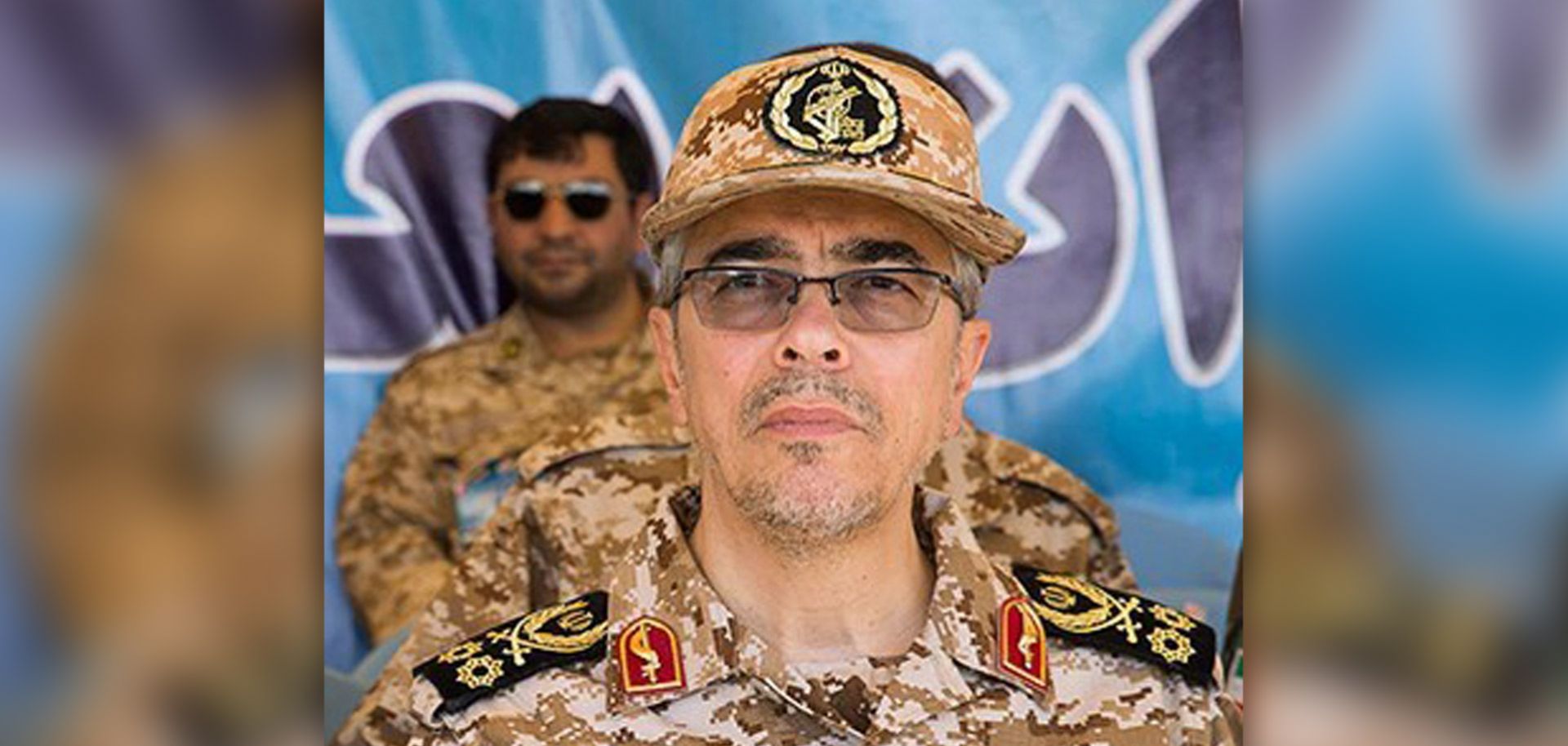
The Iranian Armed Forces General Staff was created in 1989 to oversee coordination among Iran's three major security services: the army (known as the Artesh), the IRGC and the Law Enforcement Force. Since its inception, the body had been run by Maj. Gen. Hasan Firouzabadi, who had close ties to Khamenei before joining Iran's Basij paramilitary force. By replacing Firouzabadi with Bagheri — a man who does not share Firouzabadi's support for the nuclear deal — Khamenei can re-engage with the West economically while making the argument at home that Iran will stay true to its revolutionary spirit. Because Bagheri also has an extensive background in military intelligence, his new role will also better position the country's security services to address the threats now rising on multiple fronts.
Fighting on Foreign Soil
Syria, in particular, has created unforeseen challenges for the Iranian military. On May 6, Jaish al-Fatah and Jabhat al-Nusra launched a successful offensive against IRGC forces in Aleppo province that ended in the stunning capture of the village of Khan Touman. The incident dealt a heavy blow to the IRGC's reputation and prompted several organizational changes within the Iranian military. Moreover, although the IRGC acts in Syria largely through proxy militias, reports of mounting Iranian casualties have begun to reach Tehran, increasing the pressure on Iranian leaders to act.
Bagheri will be responsible for creating and implementing Iran's new Syrian strategy and for coordinating the IRGC's movements there with those of the Iranian army. While the IRGC will continue to take the lead in Iran's activities on the Syrian battlefield, the army has been deployed as a supplementary force, and Tehran will be able to secure its interests only if the two can interact smoothly. Meanwhile, the IRGC has also reportedly begun to consolidate its influence in Iraq. Since late 2014, the head of the IRGC's Quds Force, Qassem Soleimani, has become a familiar sight in Iraqi military meetings, and there has even been talk of forming an elite force within the country akin to the IRGC.
The recent adjustments to Iran's military posture, coupled with the June appointment of Hossein Jaberi Ansari as the deputy foreign minister for Arab and African affairs, have raised questions about the direction of Iran's foreign policy. Ansari, also the Iranian Foreign Ministry spokesman, has been critical of Iran's stance in Syria and has pushed for a solution to the civil war that relies on diplomacy rather than military might. His new position as one of Iran's most visible diplomats to the region's Arab states could indicate that Tehran is seeking to ramp up its diplomatic engagement in the Middle East even while reinforcing its military positions in Syria and Iraq. After all, Iran's official foreign policy stance often serves as a counterbalance to the active, but discreet, activities of the IRGC abroad, especially in Syria, Iraq and Lebanon. And with Turkey, Russia and the United States demonstrating greater openness and cooperation in the past few weeks, Iran may simply be recalibrating its diplomatic approach in kind. At the same time, though, the rapid-fire changes taking place across Tehran's foreign policy apparatus could be a sign of the burgeoning competition among Iranian policymakers behind the scenes.
Instability at Home
The government can hardly afford a power struggle within its upper echelons at the moment. During his inaugural address July 5, Bagheri warned that Iran's greatest internal threats emanate from the country's northwest and southern border regions, where militant activity has given rise to unrest.
The northwest, home to the majority of Iran's Kurdish population, has long been a hotbed of political and militant activity. Lately, however, the area surrounding the city of Mahabad has been rife with attacks, prompting the IRGC to launch reprisals against Kurdish positions in the region. Perhaps of greater concern to Tehran, the Democratic Party of Iranian Kurdistan has declared its intent to build stronger political ties to Iraqi Kurdistan, which could eventually increase the party's ability to seize and hold territory. Though the IRGC itself has worked closely with the Kurdish peshmerga in Iraqi Kurdistan to keep approaching Islamic State forces at bay, Tehran is less inclined to permit the emergence of a formal Kurdish state within its own borders.
To the southeast and southwest, meanwhile, protracted Balochi and Ahwazi insurgencies show no sign of abating. Historically, Iran has had to work with Pakistan's intelligence service to root out militant cells in the region, a partnership for which Bagheri is uniquely suited. Before his recent appointment, Bagheri served as the Armed Forces General Staff's deputy of intelligence and operations, and his experience in military intelligence dates to the Iran-Iraq War. This professional pedigree has left him better prepared than his predecessor to lead the Iranian military in addressing and containing the asymmetric threats posed by the country's Kurdish, Balochi and Ahwazi militants.
Constraints on the IRGC's Growing Power
Though the recent structural adjustments to Iran's military and Foreign Ministry were driven by short-term security issues, they will have a lasting effect on the IRGC's relationship with other Iranian organizations, particularly the army.
The IRGC and the modern Iranian army were born out of civil war. In the wake of the 1979 Iranian Revolution, the IRGC was built to safeguard the revolution's ideals and ensure that the country's supreme leader — at the time, Ayatollah Ruhollah Khomeini — controlled a military apparatus able to compete with the regular army that arose from the fallen shah's military. To this day, the IRGC reports directly to the supreme leader and is considered the defender of Velayat-e-Faqih, or rule by Islamic jurists.
Initially, the IRGC's command structure was fairly informal. Over time, however, it has evolved to more resemble that of a typical military organization, preventing its long-standing rivalry with Iran's army from fully dying out. In some ways, the army still behaves more like the formal military of a state, complete with the duty of fielding a blue-water navy. But the IRGC has increasingly inserted itself in issues of national security, including cybersecurity, missile development and the wars in Syria and Iraq. Favoritism under former President Mahmoud Ahmadinejad also resulted in a larger budget for the IRGC during his term, a discrepancy current President Hassan Rouhani has tried to address by increasing the army's budget by 15 percent.
The IRGC's defeats on the Syrian battlefield have laid bare the consequences of its military rivalry — and the benefits to be gained from integrating more closely with the army. In fact, the idea of merging the two is not unprecedented, though it likely could not be acted upon until Khamenei's successor has been chosen. Either way, the IRGC and army have been tasked with working together more closely in foreign theaters than they have in the three decades since the Iran-Iraq War, and it is possible that Rouhani may try to pull them even closer at some point.
In the meantime, the IRGC will face stiff competition for funding as well. Though Rouhani increased the IRGC's budget during his first two terms, he has since outlined a 20 percent cut for the group in 2016, a proposal that has been met with opposition in parliament. Moreover, each step the president has taken to open the country to foreign investment has been interpreted by his conservative adversaries as an attempt to reduce the share of the Iranian economy dominated by IRGC-owned companies. These businesses, particularly the Khatam-al Anbia engineering subsidiaries, thrived under Ahmadinejad and Western sanctions, giving the IRGC substantial economic clout and financial resources. Now those firms could see their sway diminish amid the country's economic opening.
Nevertheless, the IRGC, which is tasked with Iran's most prized security portfolios, will continue to gain influence in the Islamic republic and throughout the region. The supreme leader will protect the force's role in Iranian military and foreign policy at all costs to preserve his own political standing while it shields the country from threats, both without and within.
