
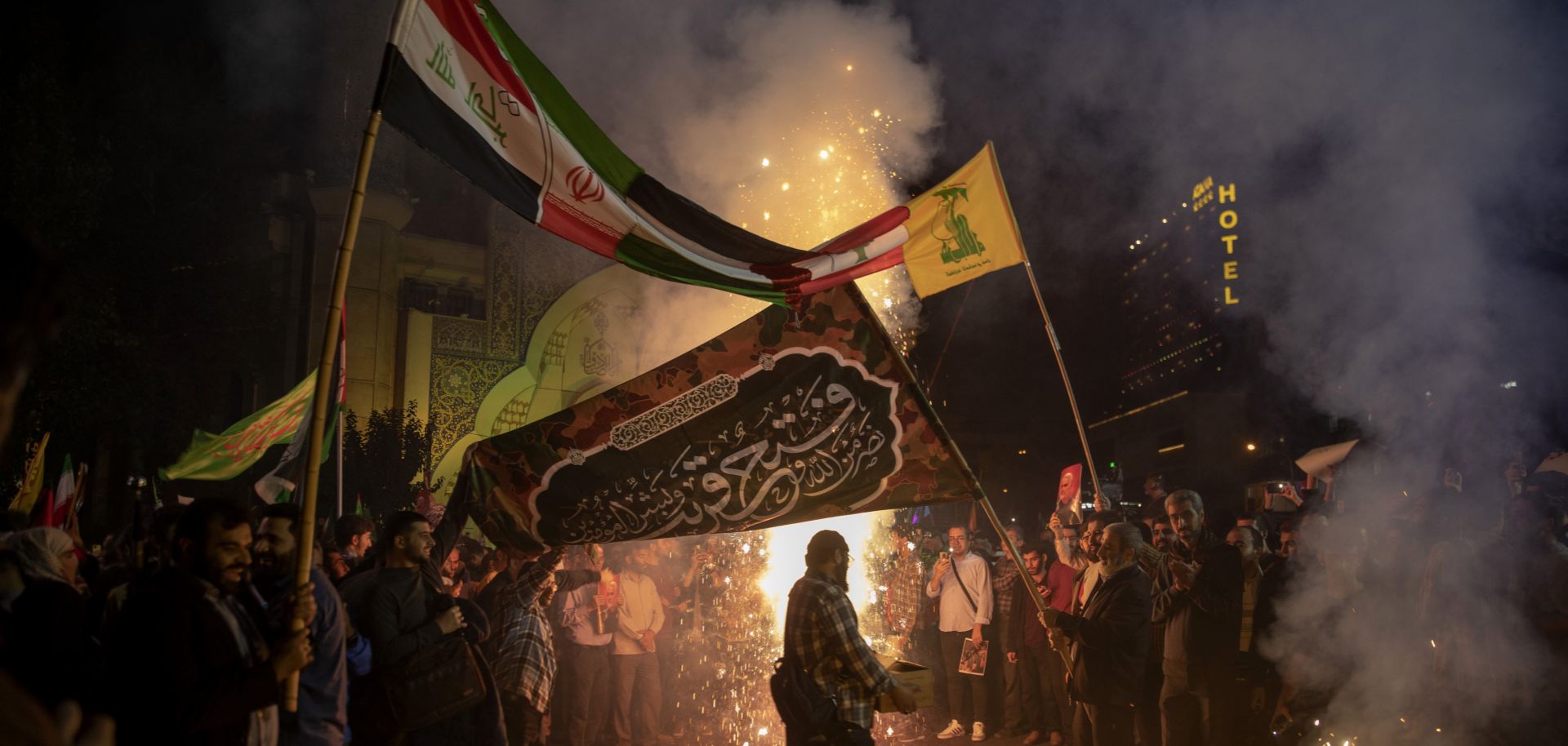
While Iran was likely involved in planning Hamas' attack to a certain degree, Israel's retaliation will depend on Tehran's exact participation, opening the door to direct Israeli attacks against Iran's nuclear program that could, in turn, spur attacks by Iranian proxies against Israel and the U.S. interests in the region. According to an Oct. 8 report by The Wall Street Journal citing senior Hamas and Hezbollah members, Iran's Islamic Revolutionary Guard Corps (IRGC) helped plan the Oct. 7 Hamas attack on Israel that killed more than 900 Israelis and resulted in the kidnapping of more than 100 people. The report said that beginning in August, senior IRGC officials — including, at times, Quds Force commander Esmail Ghaani and, Iranian Foreign Minister Hossein Amir-Abdollahian — met biweekly with Hamas, Palestinian Islamic Jihad (PIJ) and Hezbollah to plan the attack, which Iran allegedly gave its final approval for on Oct. 2. The veracity of the specifics in The Wall Street Journal report is under scrutiny as it is unclear why Iran's foreign minister, whose whereabouts are closely tracked, would attend such planning meetings. The extent to which Iran purportedly helped with the attack is also unclear, as Tehran's support can range from simply being present at meetings where a potential operation was discussed and approving plans to direct tactical aid, to actually planning and carrying out the attack itself. Hamas, the Palestinian militant group that governs the Gaza Strip, had its own political reasons for launching an attack on Israel at this time as well, with or without Tehran's help. But at a bare minimum, Iran's long-established support of Hamas — including its transfers of arms and missile technology to the group — helped facilitate the recent attack, even if Tehran wasn't deeply involved in planning it as alleged in The Wall Street Journal report.
- Notably, Israeli officials have so far declined to blame Iran for the attack. On Oct. 9, a spokesperson for the Israel Defense Forces said that Israel ''can't yet say if [Iran] was involved in the planning or training,'' while another said that there was ''no evidence or proof'' of Iranian involvement. In a prime-time national address later the same day, Israeli Prime Minister Benjamin Netanyahu refrained from blaming Iran for the attack. Israel's cautious approach is likely an extremely calculated effort to politically preserve its options, including the option to not strike Iran directly.
The shifting geopolitical landscape in the Middle East gives Iran an incentive to support — if not outright plan — Hamas' actions, regardless of Tehran's specific participation in the attack on Israel. The attack comes amid reports that U.S. efforts to normalize diplomatic ties between Saudi Arabia and Israel — Iran's two primary regional rivals — have made significant progress in recent months. To sweeten a potential normalization deal with Israel, the United States has also been negotiating a defense pact with Saudi Arabia, which could include explicit guarantees that Washington would come to the kingdom's aid in the event of an attack. Such a pact would dramatically strengthen U.S. defense commitments in the region and the emerging anti-Iran bloc the White House has been supporting. In addition, a normalization deal may include nuclear energy cooperation that could see Saudi Arabia start a civilian nuclear program, potentially enabling the kingdom to develop nuclear weapons in the future. Iran's desire to prevent these developments gives it a potential motive for backing the Hamas attack, as such a strike could temporarily disrupt Saudi-Israeli normalization talks by spurring another bout of Israeli-Palestinian violence that makes it more politically difficult for Saudi Arabia to cast aside the Palestinian issue in order to seal a deal with Israel. Indeed, in the wake of the attack, Israel's retaliation has already killed hundreds of Palestinians; the Israeli government also recently announced plans to cut food shipments, power and water to the Gaza Strip as part of a ''siege'' against the region, and is widely expected to soon launch a ground assault. Beyond an attempt to derail Israeli-Saudi normalization talks, Iran has probably also assessed that increased violence between Israel and its neighbors (as well as potential retaliation directed at Iran itself) would strengthen hard-liners within Iran and enable the Islamic Republic to reinforce the Islamic Revolution's narrative, thereby distracting Iranians from socio-economic challenges they face at home. Moreover, in recent years, Israel has carried out multiple assassinations and covert attacks against military and nuclear targets on Iranian soil, something that Tehran would have an incentive to retaliate against Israel for.
- In the short term, the Hamas attack and the political optics of Israel's subsequent retaliation against Palestinians in Gaza could disrupt Israeli-Saudi normalization talks. But in the long term, Iran's likely involvement in the strike risks reinforcing the realpolitik underpinning normalization efforts by further highlighting the need for Israel and Saudi Arabia to work together against Iran's growing aggression and regional clout.
- The Hamas attack may also disrupt the recent U.S.-Iran deal for the United States to unfreeze about $6 billion in Iranian funds held abroad. Under a prisoner swap in September, the funds were unfrozen in South Korea and moved to Qatar, which has been tasked with overseeing transactions to ensure Tehran only uses the $6 billion to purchase food, medicine and other humanitarian goods. In signing off for Hamas' attack, Tehran appears to have assessed that it can continue surviving without those funds as it's done for years, despite Iran's challenges securing medicine and food from abroad.
If concrete evidence emerges that Iran was heavily involved in the planning and preparation of the attack, it would increase pressure on Israel to retaliate against Iran and any entities that were involved. While Israel has carried out a number of covert strikes in recent years targeting Iran's missile, drone and nuclear programs, it has so far refrained from overt action. However, the brazen nature of the Hamas attack could lead to Israel feeling the need to take significant, potentially overt, action against Iran in order to demonstrate Israel's willingness to directly strike back against such aggression without the ambiguity that covert action can sometimes have. In Israel's eyes, this not only could serve as a potential deterrence for future action by Iran and its proxies, but also disrupt and degrade key Iranian military and other strategic programs to disrupt efforts to plot more attacks. It is highly likely that Israel would take the opportunity to strike Iran's nuclear program with the goal of setting it back as much as possible. Still, any large-scale Israeli military operation would be complex, as it would need to strike Iranian radar and air defense systems in order to increase the success probability of an operation in destroying its targets. Last year, the Israeli Air Force also reportedly upgraded its U.S.-built F-35 fighter jets to reach Iran without aerial refueling, enabling Israel to carry out a strike with minimal U.S. support. Iran may be open to inviting Israeli retaliation as it would further feed Tehran's drive to drum up nationalism to detract from its other challenges and unite against an enemy (in this case Israel) and cast aside internal political differences. Short of overt action, Israel would at a bare minimum increase its assassination and bombing campaign targeting Quds Force and other senior IRGC officials involved in the facilitation, planning or discussion of the Hamas attack.
Finally, Iran's approval of the attack demonstrates Tehran's high-risk appetite, which increases the potential for a broader conflict with Israel, the United States and other U.S. partners in the region. Iran has long viewed its proxies as a deterrence to U.S. or Israeli strikes on its territory. It's thus likely that those with close political ties to Iran — including Lebanon's Hezbollah and a number of Iraqi militias (such as the IRGC-backed Iraqi militia Kataib Sayyid al Shuhada and Badi Organization) — would carry out attacks on Israeli or U.S. interests in their vicinity if Israel or Washington launches a direct attack on Iran in response to the Hamas attack. Given that Hezbollah figures were also reportedly present at the meetings discussing the recent Hamas attack, it is likely that the Lebanese armed group has almost certainly started planning its own potential operations, as clashes on the Israel-Lebanese border have killed several Hezbollah members since the initial Hamas attack. In addition, the aforementioned Kataib Sayyid al Shuhada issued a public statement on Oct. 8 saying that if the United States intervened in the Gaza conflict, the U.S. presence in Iraq and the region would become legitimate targets. The same would certainly be true if Washington supported or enabled an Israeli strike on Iran. More broadly, Iranian retaliation for a potential U.S. or Israeli attack would also include the typical menu of Iranian-linked action seen in recent years, but on a larger scale, including potential strikes against oil and gas infrastructure in the region, attempted attacks against Israelis abroad, threats to shipping the Persian Gulf, and cyberattacks targeting U.S. and Israeli companies operating in the Middle East.
- Iran has previously shown a willingness to target the United States in response to Israeli action. In October 2021, for example, Iran reportedly launched a drone strike against a U.S. military base in Syria in response to an Israeli attack on Iranian military targets in the war-torn country.
