
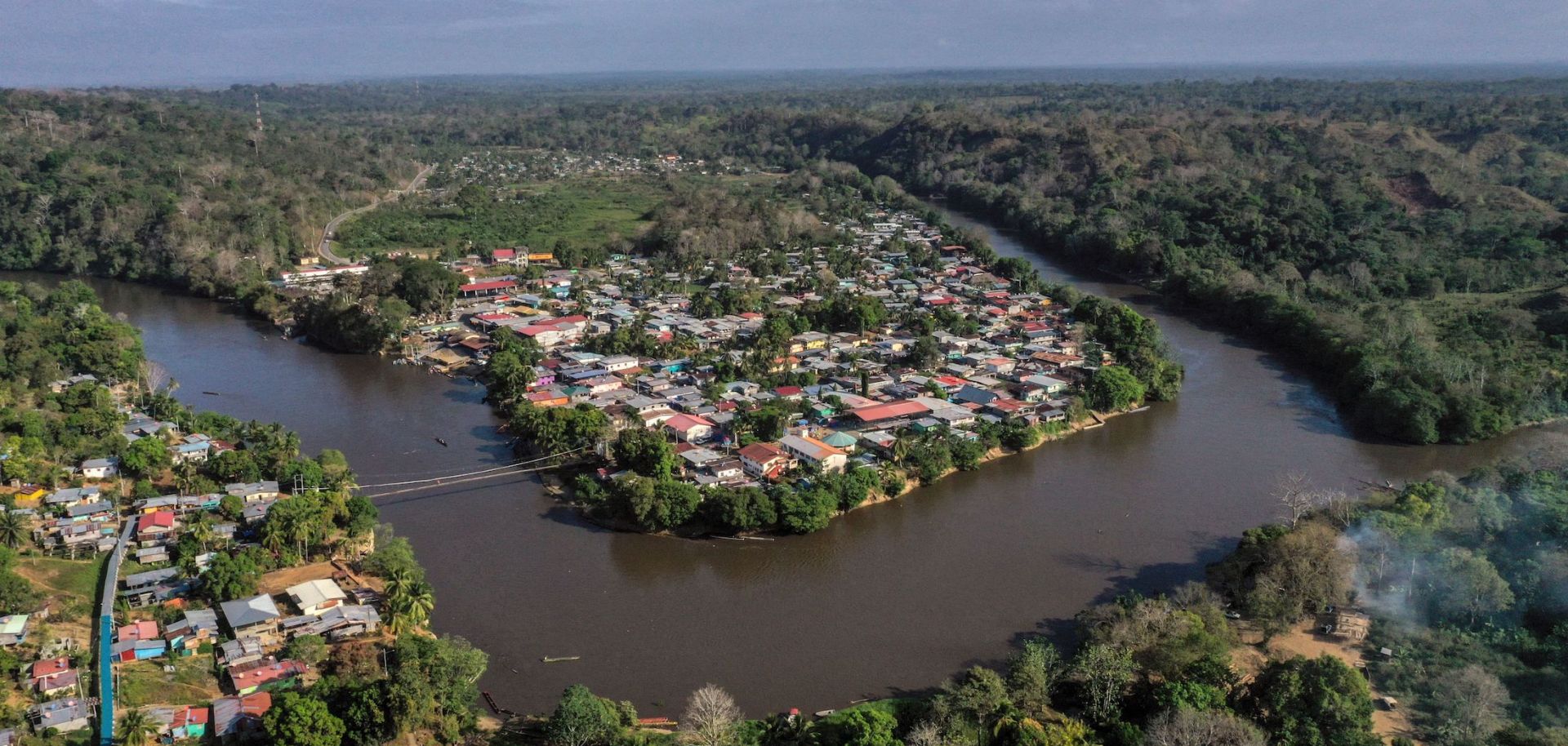
Record-breaking migration across Central America is straining government resources and increasing organized crime; as governments struggle to effectively respond, political tensions, supply chain disruptions and safety threats could rise over the next year. The Office of the United Nations High Commissioner for Human Rights reported Sept. 5 that the Darien Gap between Panama and Colombia has seen more than 330,000 migrant crossings so far in 2023, the highest number of annual crossings ever recorded. As migrants have moved north through Central America, countries have reported a surge in migrant encampments. In Costa Rica, migrants unable to afford the bus fare to travel north to the Nicaraguan border have congregated on the border of Panama, leading authorities to declare a state of emergency in the region. Migrant arrivals in Honduras reached record levels in July and August, the majority of them arriving through the eastern border with Nicaragua. Mexico has already seen elevated numbers of migrants reach the country, with authorities in July apprehending more than 70,000 migrants in a single month for the first time, more than double the country's reported apprehensions in July 2022.
- The regional drivers for migration — poor economic conditions, insecurity and government repression — remain pronounced throughout the region. According to data from the Mexican Refugee Aid Commission, most asylum requests in Mexico in 2023 have come from Haitians, Hondurans, Cubans, Salvadorans and Venezuelans.
- Nearly 250,000 people crossed the Darien Gap in all of 2022, nearly double the 133,000 crossings in 2021.
- In August, Costa Rican authorities reported that between 2,000 and 3,000 migrants were entering the country daily from Panama through the Paso Canoas border crossing, up from 13,248 in all of April 2023.
The surge in migration has strained government resources in transit countries, subsequently increasing the presence of criminal groups engaged in human trafficking. Transit countries in Central America historically have not experienced the brunt of regional migration given that migrants move through the region's countries as quickly as possible on their way to the U.S. border. With the exception of their approach to refugees from neighboring Nicaragua, Costa Rican authorities have typically managed regional migration by easing migrant travel and preventing buildups in cities and near border crossings rather than by providing long-term humanitarian assistance. In recent months, however, Costa Rica's transportation infrastructure has been unable to meet the elevated demand amid record-high migration, leading to increased encampments that local authorities have proved unprepared to handle. Throughout the region, strained transportation and humanitarian resources have made migrants increasingly desperate, raising their vulnerability to human trafficking organizations that transport migrants through countries and smuggle them across borders, often through unsafe means. These groups include major transnational criminal organizations like El Salvador's MS-13, Mexico's Cartel de Jalisco Nueva Generacion, and Colombia's Gulf Clan. Though these groups have long had a transnational presence, they have typically focused their operations on securing drug routes and seizing control of territories with businesses worth extorting. With the increased profits possible from the record-high number of migrants, groups have increased activities in areas where they previously did not have extensive operations.
- The Southern Mexican state of Chiapas has historically been a low-crime state, but in recent years has seen increased violence alongside a buildup in migrant encampments near the Guatemala border. The Cartel de Jalisco Nueva Generacion and the Sinaloa Cartel have clashed with each other and smaller local groups to gain control of human trafficking routes, resulting in shootings and bombings near Mexico-Guatemala border crossings.
With migration potentially rising further next year, governments will continue to struggle to combat its effects, creating political, supply chain and safety challenges. As conditions in migrants' countries of origin show few signs of significant improvements, migration is likely to remain elevated or even increase next year. Amid persistent high migration, governments throughout Central America will be unable to provide enough support for migrants to safely transit their countries. In some cases, governments may face pressure to decrease funding for programs as local residents' frustration with surging migrant populations increases. As countries across the region face food insecurity and inflation challenges (including Guatemala and Honduras), political and funding limitations may prevent improvements to programs for migrants. Governments may also consider increasing border security measures, with Panamanian officials noting in August that they are overwhelmed and weighing the possibility of closing the land border with Colombia. As the countries have no official road crossing, however, it is unclear how this could be accomplished. Such measures would likely extend wait times at official border crossings, but the region's largely porous borders mean that such efforts would have little effect on migration levels and instead could drive even more migrants to use human trafficking groups. As human trafficking groups expand their presence, crime may increase in areas unequipped to handle it, creating safety risks for businesses and travelers throughout the region, with the potential for attacks to occur in the vicinity of border crossings, delaying regional supply chains and raising operational and insurance costs. Creating additional supply chain concerns, cargo drivers throughout the region have previously referenced safety concerns during labor actions, and a further increase in the targeting of cargo trucks (which are commonly used in human trafficking operations) may lead to further disruptive trucker strikes.
- Truckers in Chile and Mexico have referenced poor safety conditions for drivers during protests over the last year. In Chile, protesters explicitly blamed Venezuelan migrant encampments in the country's north for violent crime targeting cargo drivers, resulting in violent clashes in January 2022 and disruptive blockades in November 2022.
- One of the countries where residents could express frustration with migration policies is Costa Rica, which is experiencing its most violent year on record. Citizens and opposition political figures may criticize the diversion of resources to migrants stranded at the country's southern border, rather than to security forces to combat threats to Costa Ricans.
- The increase in migration may create diplomatic tensions. Nicaragua, for example, makes little effort to cooperate with other governments on migration, an issue that may further isolate the government of President Daniel Ortega from his Central American neighbors. Panama has also previously criticized the Colombian government for not collaborating on efforts to reduce Darien Gap crossings.
- As locals' frustration with increased migrant encampments worsens, protests against migrants, xenophobic attacks and a long-term rise in the popularity of far-right and anti-immigration political figures are possible. Migrants themselves may also become increasingly frustrated with the lack of humanitarian support and the increased price of legitimate transportation options, with the potential for protests in cities, at border crossings and near migrant processing facilities.
