
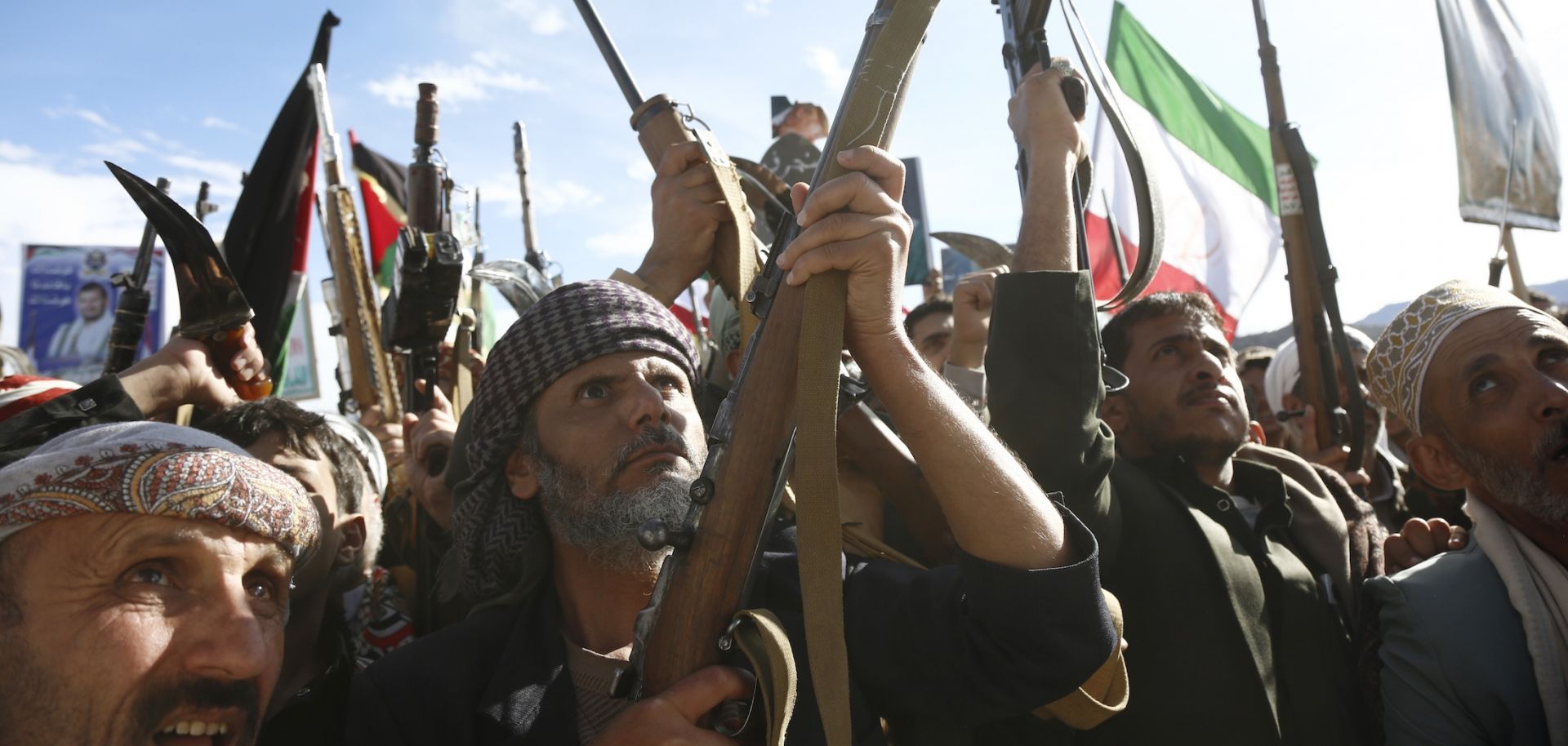
The Houthis' recent entry into the Iran conflict raises the risk of escalating attacks against Red Sea shipping and potentially Gulf energy infrastructure, which would worsen the regional crisis and its global economic disruptions. Yemen's Houthi movement launched multiple drone and missile strikes targeting Israel in recent days, marking their first attacks since the war between Iran, Israel and the United States broke out on Feb. 28. On March 28, the Iran-backed group launched what it claimed was a barrage of ballistic missiles toward Israel, including one targeting the port city of Eilat that was reportedly intercepted by the Israeli military. A subsequent attack occurred on March 30, with Israel intercepting two drones launched from Yemen. The Houthis' spokesperson declared the attacks were in support of Iran, Iran-backed militias in Iraq and Hezbollah in Lebanon, and vowed to continue the strikes until Israel and the United States halted their attacks across the region. The spokesperson also threatened to target Israeli-linked ships in and around the Red Sea.
- On March 27, Houthi leader Abdul Malik al-Houthi stated the group was not neutral in the Iran war, and noted that the Houthis were monitoring the situation and would intervene if necessary. Senior Iranian officials have also recently suggested that the Bab el-Mandeb Strait, which connects the Red Sea and the Gulf of Aden, could be activated as an additional front if the conflict further escalates.
Despite the Houthis' alignment with Iran, a combination of domestic priorities and strategic considerations initially kept the group from joining the broader regional conflict. Until now, the Houthis' hesitation likely stemmed from several key constraints. For one, direct involvement in the Iran conflict would expose them to U.S., Israeli, and potentially Saudi retaliation, including strikes on the group's leadership and military capabilities, as well as critical infrastructure within Yemen. Such external strikes could, in turn, reignite internal conflict back home in Yemen, where many tribal factions have already expressed discontent with governance and living conditions amid the country's increasingly dire humanitarian crisis. Moreover, unlike the Gaza war, when the Houthis launched repeated attacks against Israel and effectively closed the Red Sea to maritime traffic, joining a conflict in direct support of Iran may not have resonated as strongly with populations under Houthi control, particularly given Yemen's dire economic and humanitarian conditions. Additionally, differences between Yemeni Zaydi Shiite and Iranian Twelver Shiite doctrines mean that the Houthis' alignment with Iran is not universally shared at the societal level in Yemen, potentially limiting mobilization and increasing the risk of internal dissent. The need to conserve resources after years of conflict and disrupted supply chains probably contributed to the Houthis' initial hesitation as well.
- Despite their alignment with Iran, the Houthis operate with a degree of autonomy and are not under direct command-and-control, enabling them to act based on their own strategic calculus.
While currently focused on Israel, the Houthis are likely to progressively expand their target set if the war intensifies, raising the risk of disruptive attacks on commercial shipping, military bases and energy infrastructure in the region, which in turn would hike the global economic repercussions of the current conflict. The Houthis will likely conduct more missile and drone attacks against Israel in the coming days, as they seek to strain Israeli air defense systems while remaining below thresholds that would trigger major retaliation from the United States or Gulf countries — though Israel, despite its preoccupation with Iran and Lebanon, will likely respond by conducting at least sporadic airstrikes in Yemen. However, several factors are likely to push the Houthis toward further escalation, despite the risks of retaliatory strikes and domestic backlash. First, supporting Iran reinforces the Houthis' role within Tehran's "Axis of Resistance." It also enhances the group's regional standing and strengthens domestic legitimacy by aligning with a broader confrontation against the United States and Israel. Additionally, the Houthis have likely assessed that if Iran suffers a strategic defeat and its power projection capabilities are degraded, they themselves could become a future target for Israel and the United States, regardless of their level of participation in the current war. Furthermore, the conflict presents an opportunity to leverage the Houthis' geographic position along the Red Sea and Bab el-Mandeb Strait to disrupt global trade and increase economic costs, potentially strengthening their bargaining position in future negotiations, particularly with Saudi Arabia over Yemen's future. Taken together, these calculations mean the likelihood of Houthi escalation will continue to grow as the war intensifies, particularly if Iran's position deteriorates significantly, the United States initiates ground operations inside Iran and/or if critical Iranian infrastructure, like power plants, is targeted at scale. In such scenarios, the Houthis would be incentivized to progressively expand their attacks against commercial shipping in the Red Sea and eventually also target vessels, energy infrastructure and military assets linked to the United States, Israel and their allies, including within the Gulf. Such developments would not only escalate the ongoing regional crisis but also impose further economic costs that ripple across the world.
- Since the onset of the war and Iran's retaliatory strikes on Gulf energy infrastructure, Saudi Arabia has diverted more than half of its oil exports through the East-West pipeline via Yanbu port on the Red Sea. This pipeline could thus become a target of future Houthi attacks if they escalate, worsening the global energy shock from the crisis.
- During the Gaza war, the Houthis attacked vessels in the Red Sea linked to Israel, the United States or their allies. The group's maritime strike campaign largely halted commercial passage through the Red Sea, while also increasing shipping costs and transit times by forcing companies to reroute via the Cape of Good Hope. While activity partially stabilized over the course of 2025, the Houthis' renewed threats to Red Sea shipping, coupled with the effective closure of the Strait of Hormuz amid Iran's attacks, risk further disrupting key global trade corridors.
If the Houthis escalate their attacks across the region, the war will likely expand into a sustained and destabilizing front in Yemen, potentially reigniting the country's civil war and prolonging disruptions to Red Sea shipping. Over time, an extended Houthi attack campaign that results in larger retaliation by Israel, the United States and/or Gulf countries could significantly worsen humanitarian conditions in Houthi-controlled areas and increase the risk of internal fragmentation, particularly given existing tribal divisions that have already surfaced over the past year due to differences over governance and economic and living conditions. Moreover, if the Houthis directly target Saudi Arabia or are significantly weakened by external strikes, Riyadh may also reassess its current posture in Yemen, where it has been trying to reinforce the ceasefire with the Houthis and focus on a political settlement rather than a military one. Instead, Saudi Arabia could become more incentivized to attack the Houthis, which would risk reigniting Yemen's civil war, disrupting the current balance of power and potentially imperiling the Houthis' hold over northern Yemen. In this scenario, the Houthis would likely also remain incentivized to attack commercial vessels in and around the Red Sea, sustaining disruptions to maritime trade.
- During the brief U.S. conflict with the Houthis in 2025, various reports indicated that both Saudi Arabia and the United Arab Emirates were considering launching an offensive against the Houthis to retake the strategic port city of Hodeidah. Saudi-Emirati tensions have since escalated after rival forces engaged in the most direct conflict in years in Yemen. But the Iran war has at least temporarily diminished Saudi-Emirati frictions, opening the door to renewed Saudi-led efforts to counter the Houthis.
- In 2023 through 2024, Hezbollah explicitly conditioned reaching a ceasefire in Lebanon on a truce in Gaza. However, under sustained Israeli pressure and internal constraints, the Iran-backed Lebanese group was ultimately forced to drop that demand and accept a separate ceasefire. This suggests that any attempts by Iran to similarly link the Houthis' actions to the broader conflict may also face constraints, as local dynamics, costs and domestic pressures can override regional coordination objectives.
