
What We're Tracking
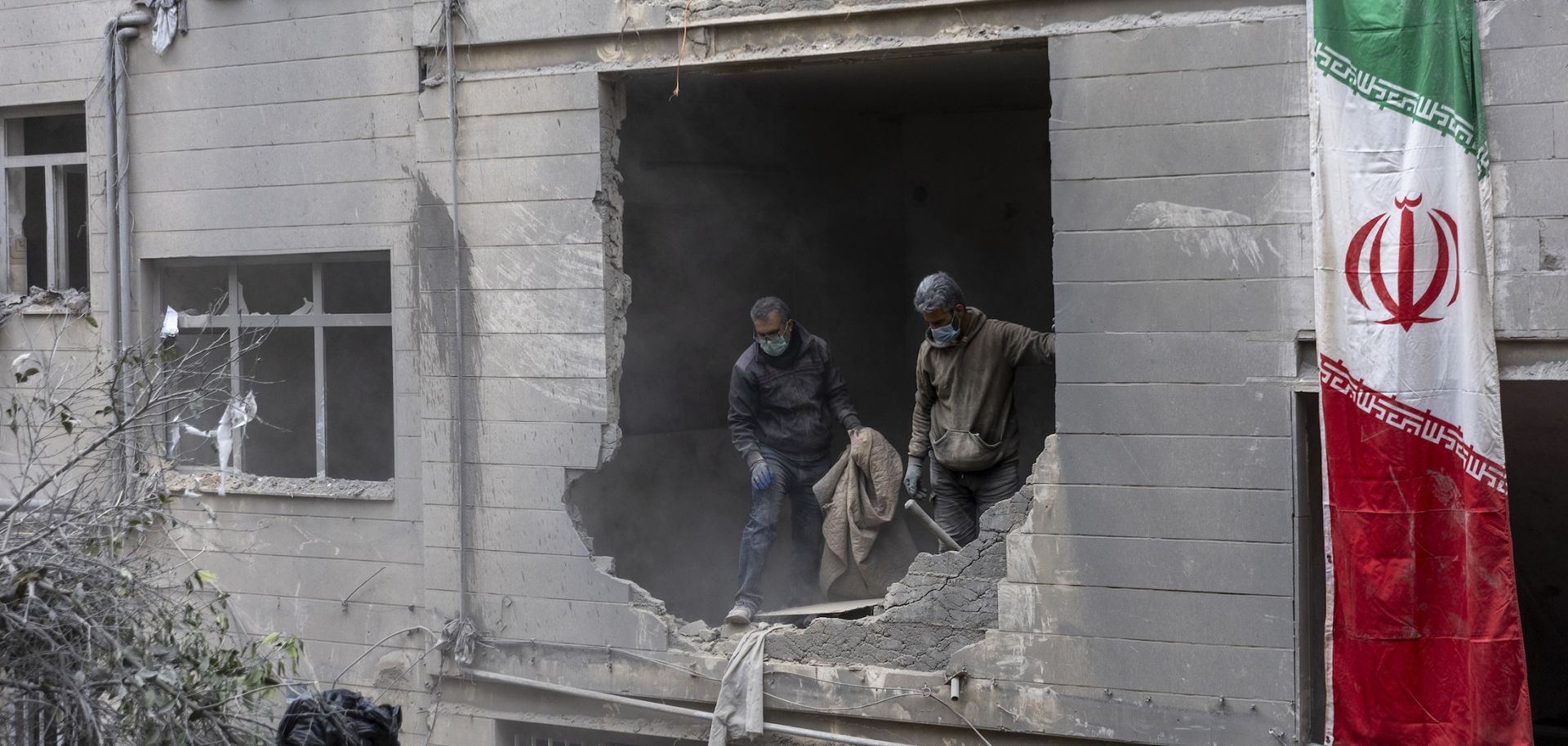
The Iran war continues. The Iran war will almost certainly continue through the next week amid Israeli threats to escalate and expand strikes due to Iranian attacks targeting Israeli civilians and the U.S. deployment of additional military assets to the region. Though U.S. President Donald Trump's delay of the deadline for Iran to reopen the Strait of Hormuz until April 6 will provide some space for de-escalation, major gaps between U.S. and Iranian demands, mutual mistrust and Iran's rejection of Trump's 15-point plan make a diplomatic breakthrough unlikely. The additional U.S. assets deployed to the Middle East, including the USS Boxer, will meanwhile move toward the region, and the United States is expected to decide the week of March 29 on deploying up to an additional 10,000 troops. Meanwhile, Israel may escalate its attacks on Iran and, depending on the Israeli targets, risk widening Iran's retaliation throughout the region.
A European Parliament delegation visits China. The European Parliament will send a delegation to Beijing and Shanghai from March 31 to April 2, comprising members of the Committee on the Internal Market and Consumer Protection and the head of its China delegation for meetings with Chinese officials, lawmakers, customs authorities and e-commerce giants. The visit, marking the parliament's first delegation to China in eight years, precedes trips by the official China delegation in May, the Foreign Affairs Committee in July and the Trade Committee in October, signaling a broader reengagement strategy. The visit comes amid a thaw in EU-China tensions after last year's lifting of sanctions and incremental progress on trade disputes, providing a tactical opening for dialogue, investment and limited cooperation on trade and market access amid rising U.S. protectionism. Even so, structural issues, including human rights, industrial overcapacity and China's support for Russia, continue to constrain the depth of any broader rapprochement.
The Knesset votes on a state budget ahead. The Israeli legislature is expected to vote on the second and third readings of the 2026 state budget late March 29 or early March 30 ahead of the March 31 deadline to approve the budget. In the past few weeks, the Cabinet revised the draft budget to increase defense spending amid the ongoing Iran war and cut 3% of domestic spending, despite backlash from opposition parties. The state budget will likely pass, as the coalition government under Israeli Prime Minister Benjamin Netanyahu has a slight majority in the Knesset, and most ultra-Orthodox parties will support the bill even without the passage of an ultra-Orthodox draft exemption law, given wartime priorities. If the Knesset fails to adopt the state budget ahead of the deadline, the Knesset will be automatically dissolved and Israel must hold snap elections within 90 days.
Washington and Havana continue to talk as a Russian tanker approaches. The United States and Cuba will continue negotiations this week amid the island's worsening energy and humanitarian crises. Although bilateral negotiations have been private, media reports indicate they involve security guarantees, economic liberalization and U.S. geopolitical objectives, meaning they will likely persist for several weeks. Meanwhile, Moscow confirmed March 25 that it was sending oil and fuel to Cuba as humanitarian aid despite a U.S.-enforced blockade. One Russian vessel has redirected to Venezuela, while the other is reportedly headed toward the Caribbean and is expected to arrive by April 2, which could create friction between Cuba and Russia and the United States.
Recommended Reading
How the EU Is Responding to Its Latest Energy Crisis
To address Iran-related energy disruptions, the European Union will likely opt for a patchwork of national relief measures, rather than a more comprehensive market intervention.
The Growth Outlook for India's Pharmaceutical Sector Remains Strong, Despite Global Uncertainties
India's pharmaceutical and medical technology sectors are set to grow significantly over the next several years amid manufacturing incentives, regulatory reforms and trade deals.
The Geopolitics of Demographics: Politics and Economics
While far from deterministic, demographics plays a key role in influencing a country's domestic and international politics, as well as its economic and financial development.
Podcasts
Visit the podcasts page to hear conversations about geopolitical and risk intelligence.
