
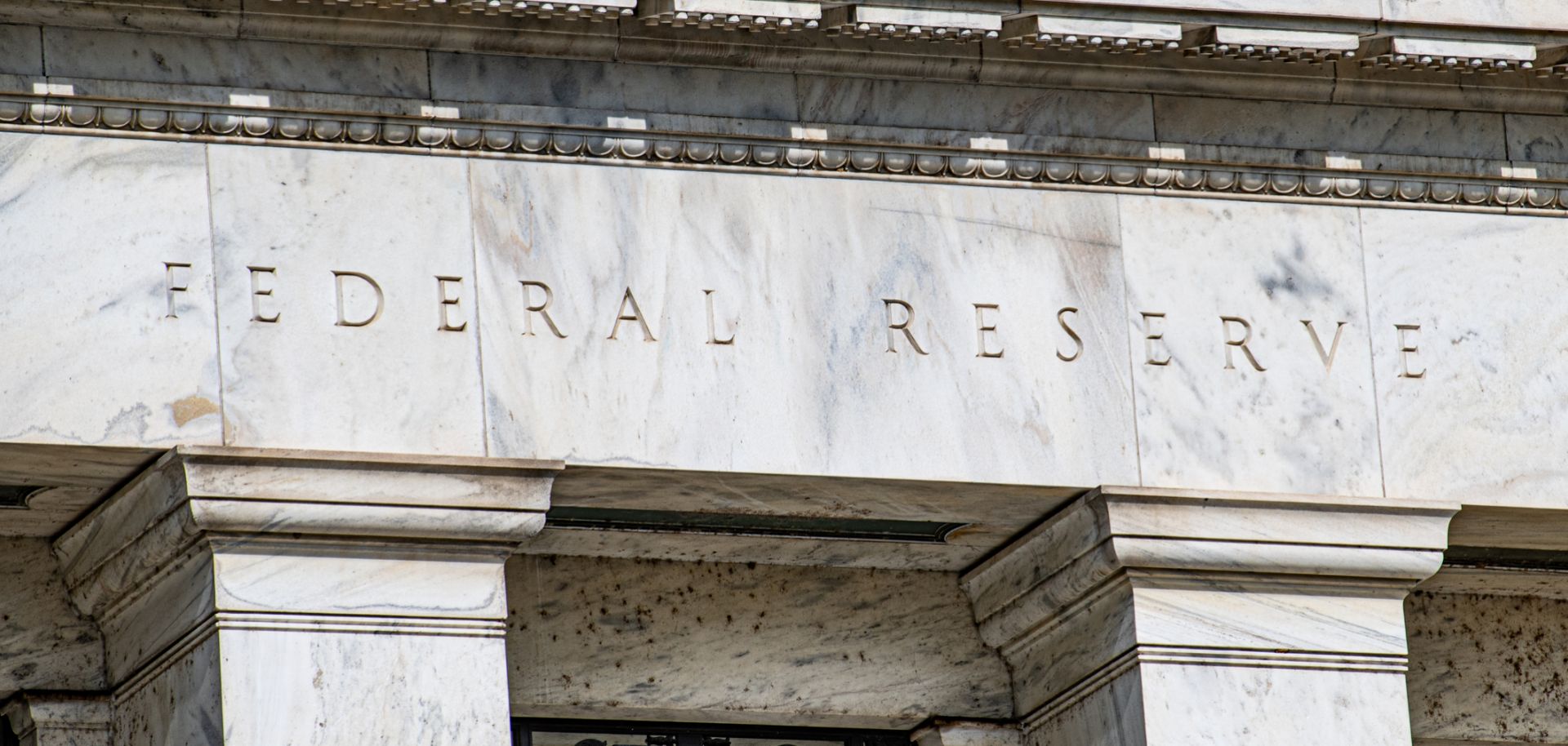
U.S. President Donald Trump's dismissal of Federal Reserve Governor Lisa Cook, if upheld by the courts, will dent the Fed's credibility but will alone not compromise its independence, though continued White House pressure could still fuel market volatility. In a late-evening social media post on Aug. 25, U.S. President Donald Trump announced his decision to fire Cook ''effective immediately'' over alleged mortgage fraud, escalating his dispute with the U.S. central bank over its failure to pursue rapid monetary easing in response to a weakening labor market. Cook denied the allegations and expressed her intention to remain at her post, and is now seeking an injunction. U.S. financial markets' reaction to the news has so far been relatively muted, but if Cook's dismissal is upheld by the courts, it could worsen volatility by weakening the Fed's credibility.
- In the wake of Trump's announcement, short-term U.S. interest rates decreased marginally and long-term rates increased modestly. The dollar also weakened slightly, though equities remained largely unchanged.
- Legally, Fed governors are independent and serve 14-year terms. Under the Federal Reserve Act of 1913, the U.S. president can only dismiss a Fed governor ''for cause,'' with those causes being either malfeasance and misconduct, though no president has ever done so.
- Trump cannot legally dismiss regional Federal Reserve Bank presidents, five of whom sit as voting members on the 12-member Federal Open Market Committee (FOMC), which sets interest rates. Unlike Fed governors, these regional Fed leaders are not appointed by the U.S. president but by their respective banks' nine-member boards for renewable five-year terms.
Cook's dismissal marks an escalation in the Trump administration's efforts to pressure the Fed into lowering interest rates amid signs that the U.S. labor market is weakening. The announcement comes amid indicators that the labor market may be softening, as the U.S. economy only added 73,000 jobs in July. Against this backdrop, the White House has been trying to increase pressure on the Fed, specifically its board of governors, to cut interest rates in an effort to boost economic growth, decrease mortgage costs and lower government debt expenses. According to the Financial Times, the Trump administration is also reportedly considering modifying the appointment process for regional Fed presidents, who, along with the governors, form the FOMC that sets interest rates. But despite the White House's intensifying pressure campaign, the FOMC has so far not lowered rates. However, in his speech at the Jackson Hole conference on Aug. 22, Fed Chair Jerome Powell seemed to open the path toward an interest rate cut during the FOMC meeting on Sept. 16-17, citing a ''shifting balance of risks.'' The fact that Trump announced Cook's dismissal just days after Powell made these remarks further indicates an intensified effort to coax Fed officials into lowering rates during their upcoming meeting. However, the Fed faces a dilemma as economic indicators pull monetary policy in different directions. Inflation remains above the 2% target (2.7% in July 2025), driven by Trump's tariffs, while the increase in non-farm payrolls has slowed dramatically over the past two months, pointing to a broader economic slowdown. The weak labor market data could provide the Fed with a credible reason to lower rates without looking like it is caving to Trump's pressure campaign, but only if inflation does not further increase in the coming months.
- Inflation continues to run above the Fed's 2% target. In July 2025, U.S. headline inflation stood at 2.7% — an increase from 2.4% in May 2025, but a decrease from 2.9% in July 2024. This trend indicates ongoing pricing pressures, partly attributed to the impact of tariffs on consumer goods, especially household furnishings and supplies.
- The U.S. labor market showed significant weakness in July 2025, adding only 73,000 jobs. This figure, coupled with a substantial downward revision of 258,000 jobs for the preceding two months, points to a notable slowdown. Other indicators, such as declining wage growth and a rise in continuing jobless claims, further underscore a softening market.
- Powell's term as Fed chair ends in May 2026, but his term as governor does not end until January 2028.
While its continued attacks on the Fed risk fueling market volatility, the Trump administration would need to overcome significant institutional and legal obstacles to significantly weaken the bank's independence. Governor Cook has made it clear that she will litigate her dismissal and will seek an injunction that allows her to stay at her post in the interim. After working its way through the courts, the issue will likely ultimately end up at the U.S. Supreme Court, which, in the past, has effectively ruled to protect the Fed's independence. Most recently, in May, the Supreme Court ruled that Trump can fire members of two independent agencies ''without cause,'' but explicitly stated the decision did not apply to the Federal Reserve. This indicates the court is unlikely to side with Trump by confirming he has the authority to fire Cook, unless the courts establish ''cause.'' If, however, the Supreme Court allows the firing ''without cause'' or finds that the relatively minor allegations levelled against Cook are enough for her to be removed, this would weaken the bank's credibility and even reduce its independence, leading to increased financial market volatility. But a more fully-fledged loss of Fed independence would also require replacing many Fed governors with Trump loyalists, which would be difficult due to the Senate's need to confirm nominees and its past reluctance to confirm controversial picks during Trump's first term. If such a scenario occurred — where the Supreme Court upholds Cook's dismissal for what appears to be a minor issue, and the Senate allows the White House to ''stack'' the Fed with loyalists — it would sharply raise concerns about a highly dovish monetary policy, where the Fed pursues large rate cuts of 50 basis points or more. While equity markets might benefit from a looser Fed policy, such heavy-handed government intervention could cause broader financial panic and a massive sell-off of U.S. assets, including a significant weakening of the dollar. On the contrary, a slightly more dovish policy that involves incremental rate cuts consistent with stable or falling inflation would not significantly impact the Fed's credibility. The dollar would still weaken, but less dramatically, due to a narrowing of the interest differential between the United States and the rest of the world.
- The 12 voting members of the FOMC include seven governors, the president of the New York Federal Reserve, and four other regional presidents on a rotating basis. Two of those governors' terms expire before Trump leaves office in 2029, meaning he will be able to choose their replacements. (In fact, one vacancy opened up early following the resignation of Adriane Kugler in August.) If Cook's dismissal is also upheld, it would enable Trump to nominate a third governor. But even if the Senate were willing to confirm ardent political loyalists to fill those three vacancies, the White House would still not control a voting majority on the FOMC. Two other Trump appointments may lean dovish but are not political loyalists of the president.
- The current 53-47 Republican majority in the Senate would likely not be enough to confirm highly controversial Fed nominees put forth by Trump. This is because some Republican senators are retiring and are thus less concerned with the political repercussions of voting against the wishes of the president. While Republicans are expected to retain control of the Senate after next year's mid-term elections, Trump will also be a lame-duck president by then, which will diminish his ability to coax lawmakers into approving risky Fed nominees.
