
China will likely largely rely on foreign partners to combat an uptick in militant threats to its citizens and interests abroad, but a growing Uyghur militant threat could enhance Beijing's willingness to more proactively and directly counter an increased threat of attacks, including via larger deployments of paramilitaries or even targeted killings. In the weeks since a rebel offensive ousted longtime Syrian President Bashar al Assad in December 2024, Chinese Ambassador to the United Nations Geng Shuang has called on the country's new rulers to "stand firm" against extremist forces and underscored that Syria "must not be used to support terrorism or threaten the security of other countries." China's apprehensions have been fueled by rhetorical threats made by the Uyghur militant Turkistan Islamic Party, aka the East Turkistan Islamic Movement, in the period surrounding al Assad's ouster. Among the threats TIP made in a propaganda blitz that month, the group's leader on Dec. 6, 2024, threatened Chinese "disbelievers" with the "same torment that the disbelievers in [Syria] have tasted." Two days later, the day the Syrian regime fell, TIP released a video saying it would take its fight to China's Xinjiang region, listing several cities there it threatened to move into. Though TIP has not garnered as much international attention as other militant groups in Syria like Islamic State, its up to 4,000-5,000 fighters in Syria fought closely alongside the approximately 15,000 fighters of the largest Syrian rebel group, Hayat Tahrir al-Sham. As ties between the groups go back years, HTS chief and Syria's current leader, Ahmad al-Sharaa, has defended TIP's contributions and presence in Syria, going so far in 2020 as to praise TIP's commitment "to defending Idlib against the Assad regime's aggression," because "as Uyghurs, they face persecution in China — which we strongly condemn — and they have nowhere else to go." Though al-Sharaa has maintained Syria does not hold enmity toward China and would only continue to permit TIP's presence so long as it "abides by our rules," this has done little to ease China's concerns — especially as Syria's new rulers have since promoted TIP's chief in Syria to brigadier general and two other Uyghur fighters to colonel in Syria's new Defense Ministry.
- TIP was originally created in the late 1990s as a Uyghur militant group whose goal was to establish an Islamic state in China's Xinjiang province and Central Asia. China has accused it of being behind numerous attacks in China over the years, most of which have been carried out in Xinjiang, but some of which have occurred elsewhere in the country. Among the latter were an October 2013 vehicle-ramming attack in Beijing's Tiananmen Square that killed two people and injured dozens nearby, and a March 2014 knife attack at Kunming Railway Station in Yunnan that killed 31 people and wounded 143 others. Many of China's claims have not been independently verified, and authorities have often linked attacks allegedly motivated by Xinjiang separatism to TIP regardless of actual concrete connections between the two.
- Syria's transitional authorities announced in December 2024 that rebel factions in the country, including TIP, would be dissolved and integrated into the country's official forces under the aegis of the Defense Ministry. How fully some of these groups will be integrated — particularly the Uyghur militant TIP, which explicitly threatened China on the day the al Assad regime fell — remains unclear. And if TIP is well-integrated into the ministry, members who believe strongly in the group's ambitions beyond Syria will have a motivation to relocate out of the country, where they would likely pose a greater threat to Chinese interests.
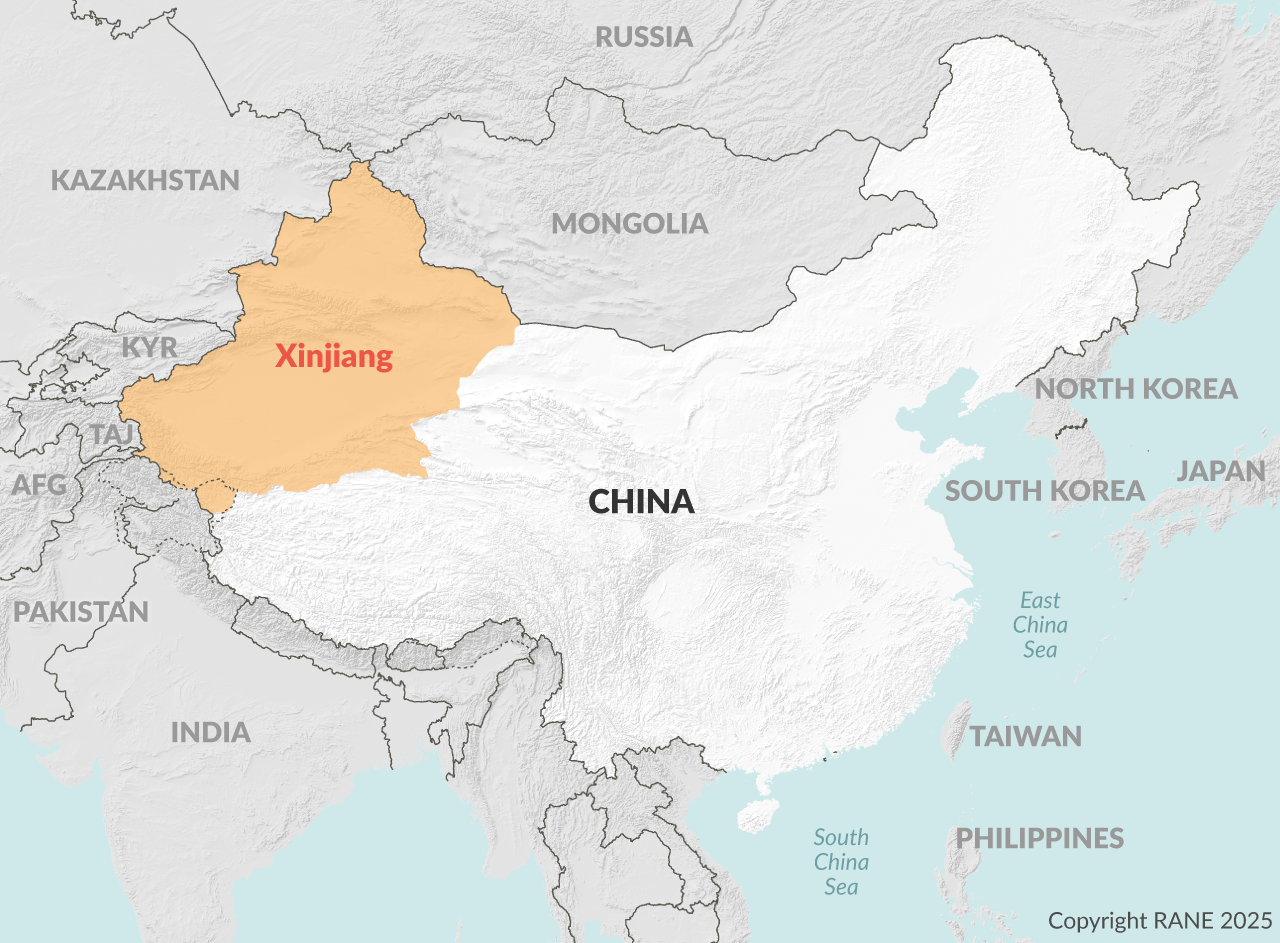
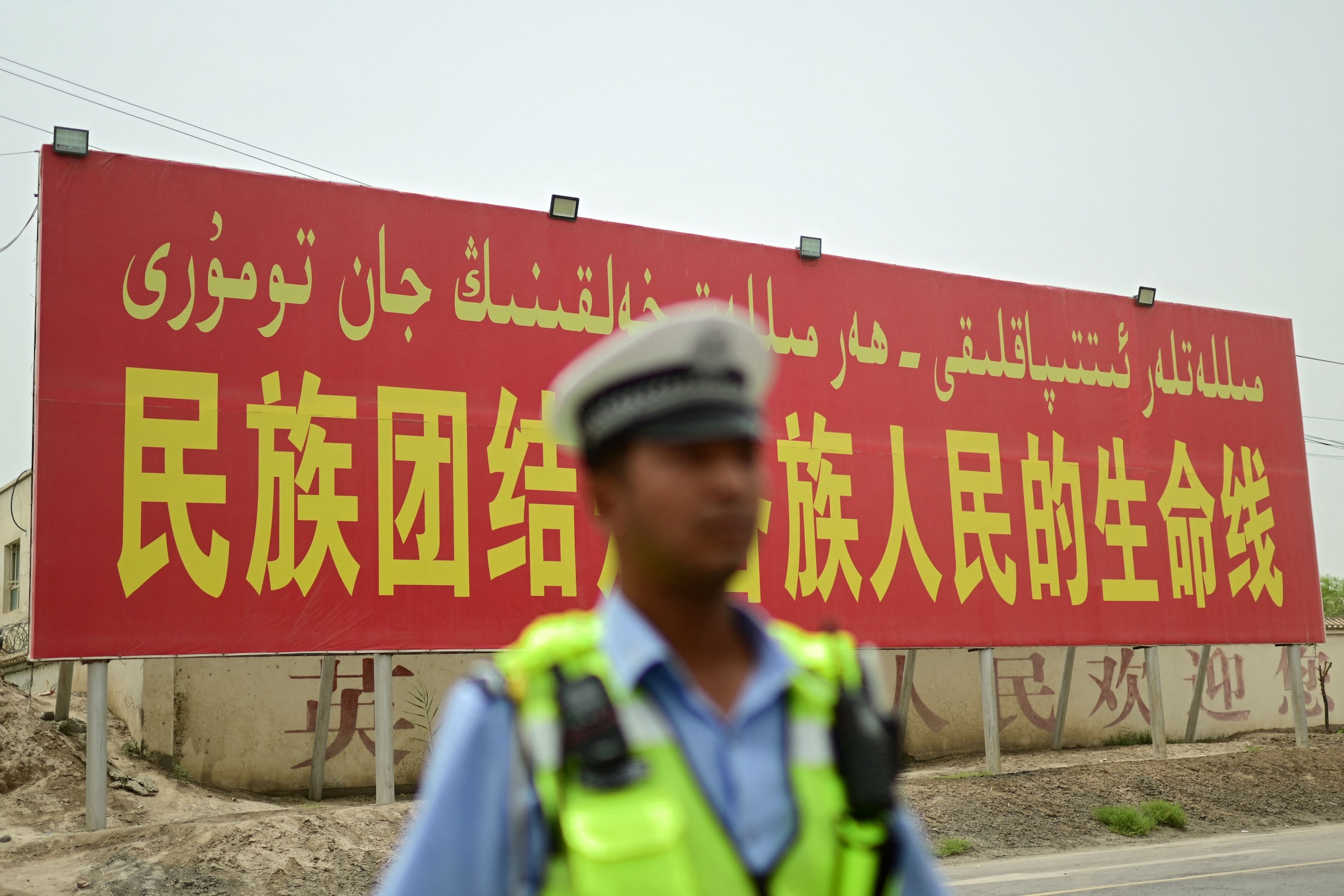
Beijing's concerns about TIP have grown since the Afghan Taliban retook Afghanistan, as TIP has reportedly established training camps there and supported attacks targeting China's outsize interests in South Asia. China for years has considered TIP a major national security threat and used it to justify its effective police state across the northwestern province of Xinjiang, where it maintains extensive prison camps and has imposed systems of forced labor on the Uyghurs. These measures over the past decade significantly reduced TIP's alleged attacks in China, but also pushed TIP members abroad, particularly to Afghanistan and Syria. During this time, TIP developed close relations with militant groups in their new regions, most notably the Afghan Taliban and HTS. With the support of TIP fighters, these groups would go on to take over Afghanistan and Syria, respectively. These new regimes' subsequent refusal to meaningfully crack down on TIP in reward for its yearslong loyalty and support has fueled China's concerns, especially given it has reportedly enabled TIP in Afghanistan to establish training camps in parts of the country. Beyond these camps supporting the group's up to 1,200 estimated fighters in Afghanistan, TIP reportedly also allows other militant groups like Tehrik-i-Taliban Pakistan and the separatist Balochistan Liberation Army to use them to develop their capabilities, and has more broadly collaborated with them on attacks targeting Chinese nationals and investment projects in Pakistan. This has facilitated a steep uptick in militant attacks, driving China to ramp up pressure on the Afghan Taliban and the government of Pakistan to crack down on militants. In Pakistan's case, China has also pushed for a more active role in protecting its local interests given Pakistani security forces' failure to do so satisfactorily. Against this backdrop, China has reiterated its concerns regarding TIP in many statements, including one in February 2024 in which its Foreign Ministry spokesperson deemed the group "a terrorist organization that causes great harm," and one that Beijing views as "a core concern of China in its counterterrorism effort and a shared responsibility of the international community."
- After the Afghan Taliban retook Afghanistan in August 2021, the group reportedly moved TIP fighters away from the country's border with China and appears to have pressured TIP to maintain a low profile to assuage Beijing's concerns. But the Afghan Taliban does not appear to have cracked down on TIP to the extent it has with Islamic State Khorasan Province, which, unlike the TIP, is an enemy of the Afghan Taliban and has carried out most attacks on Afghan authorities in recent years. The Afghan Taliban also does not appear to have acquiesced to China's requests for Uyghur militants to be extradited and/or deported back to China. This has allowed TIP to develop its presence in Afghanistan further, continue publishing propaganda and support attacks on Chinese interests in the region.
- Media reports and local sources indicate China in recent years has bolstered its military presence and conducted clandestine surveillance activities around the Wakhan Corridor, which connects northeastern Afghanistan with China's Xinjiang province. Beijing has also pursued fairly close relations with the Afghan Taliban in a bid to strengthen its influence over the group due to its links to TIP, among other things. These efforts have included Beijing conducting regular diplomatic engagements with Afghan officials, as well as exploring investment projects in Afghanistan.
- The spike in militant attacks targeting China's investments in Pakistan have particularly irked Beijing given these investments represent some of China's largest abroad. Media and local reports indicate Beijing is pushing Islamabad to allow armed private Chinese security personnel to help protect Chinese investment projects and nationals, though it remains unclear what precise role Beijing is pushing Islamabad to allow for its private security personnel. Pakistan has resisted Beijing's requests due to sovereignty concerns and legal restrictions on the deployment of foreign security personnel in the country.
Though China will remain hesitant to carry out large-scale military deployments abroad in response to rising militant threats against its interests, Beijing will pressure local governments to ramp up their counterterrorism efforts, push to expand the role of Chinese private security companies abroad and potentially engage in clandestine action against militants. China will respond to the rising threat it perceives from Uyghur militants by bolstering domestic security, particularly through expanding its military's presence around the Wakhan Corridor. China will also sustain strict control in Xinjiang and continue developing its surveillance and intelligence capabilities in other parts of the country where China's security services are less involved in monitoring and restricting citizens' everyday activities, but which remain susceptible to potential attacks, such as Tibet. China's long-standing desire to avoid foreign military deployments will sustain its general reliance on local governments to protect its interests, with Beijing using both inducements and threats to get authorities to attend to its security concerns. Beijing will also remain willing to provide training, funding and support for local governments to bolster their ability to address Chinese security concerns and more broadly improve stability, while the frequency of militant attacks on Chinese citizens and interests abroad will increasingly drive Beijing to more directly protect its interests. This would likely involve pushing countries to allow larger deployments of Chinese private security personnel, and allowing such personnel to be armed and have greater freedom to operate. China may even be willing to engage in clandestine action against Uyghurs, such as targeted killings, especially should Uyghur militants increasingly attack Chinese interests. Such an approach would not guarantee China better security, however, as any expansion of China's presence and activity abroad would also inflame anti-China sentiment, which could fuel militant recruitment and attacks. Moreover, foreign countries hosting Chinese private security personnel might hold off (at least initially) even granting them wide operational freedom due to sovereignty concerns, likely reducing their impact.
- Should Beijing perceive an emerging Uyghur militant threat from Syria, beyond pressing Syria's transitional authorities, it may also clandestinely seek out Iran's assistance. This could involve China using its status as the chief purchaser of sanctioned Iranian oil as leverage. Iran's historical backing of the al Assad regime might make it amenable to conducting operations to counter militants in Syria, some of which could target Uyghur militants. But Iran's ability to project power into Syria has dramatically declined and any revelation of collaboration between Beijing and Tehran would also inflame tensions between China and Syria's transitional authorities, which may ultimately prove more damaging to Beijing's goal of degrading Uyghur militants there.
TIP will remain an underlying threat to Chinese interests abroad, especially in the Afghanistan-Pakistan region, while geographic distance and Chinese authorities' security efforts will very likely limit its near-term threat to China's core. Though TIP has rhetorically threatened China, its ability to carry out attacks there in the coming months — and probably few years — will very likely be limited by most of its fighters being located more distantly in Syria. Both Syria's and Afghanistan's governments remain incentivized to pressure TIP not to threaten Beijing, as they do not want to scuttle potential Chinese economic investment or to see some form of kinetic retaliation by Beijing. That said, China's contentious actions in Xinjiang — where China has implemented a totalitarian state and sought to effectively de-Islamify Uyghurs, including through forced labor and prison camps — will continue to inflame Uyghur grievances and fuel militant recruitment both in China and abroad, sustaining an underlying threat of TIP attacks. Although TIP's contingent in Syria is larger, it is also significantly more distant from Beijing's key infrastructure projects in Afghanistan-Pakistan — countries that also border China — giving the latter higher odds of pulling off anti-China attacks. Popular opposition to Beijing in this region, as well as the presence of other militants there that similarly harbor enmity toward China, would also offer TIP better opportunities to garner support for its activities. U.N. Sanctions Monitoring Team reports in recent years note TIP in Syria has already been providing support for the group's contingent in Afghanistan, and one member state on the team reported the group’s fighters were frequently moving between the two regions. Should TIP seek to expand its attacks on Beijing's regional interests, it probably would expand support for its Afghanistan contingent and make use of any infrastructure or networks it has to move fighters from Syria to Afghanistan to strengthen the latter contingent's capabilities. Should TIP eventually begin to more actively plot attacks against China's core, the Afghanistan-Pakistan region would also likely be preferred to Syria as a base for operations given its proximity to China and the presumably greater freedom of movement TIP militants would experience in Afghanistan compared to Syria, where transitional authorities have seemingly greater oversight over TIP given its closer integration with the new regime in Syria compared to Afghanistan.
- Further contributing to China's concerns, U.N. Sanctions Monitoring Team reports in recent years have noted the development of links between TIP and the Islamic State Khorasan Province despite the two groups' ideological differences, suggesting cooperation at least for tactical reasons. ISKP has also reportedly been trying to recruit TIP members disaffected by the Afghan Taliban's pressuring the group not to attack Chinese interests, underscoring that ISKP will also remain a threat to China regardless of TIP's trajectory.
- Recent months have also seen an uptick in attacks on Chinese nationals in and around northern Afghanistan. In November 2024, unidentified armed individuals allegedly crossed over from northern Afghanistan into Tajikistan's southeast and killed a Chinese national while wounding four others — all of whom reportedly worked at a gold mine in Tajikistan's Zarbuzi Gorge. Later, in January 2025, ISKP claimed responsibility for a shooting attack that killed a Chinese national who reportedly worked for a mining company operating in Afghanistan. Though TIP has not specifically been linked to either attack, the incidents illustrate the kinds of attacks China fears for its budding investment and resource extraction projects in Afghanistan and Central Asia.
- Uyghur militants have previously targeted Chinese interests in Central Asia. The Kyrgyz government blamed TIP for an August 2016 suicide car bombing targeting the Chinese Embassy in Bishkek, Kyrgyzstan. The attack injured three embassy employees and appeared prompted by a call by al Qaeda's then-leader, Ayman al-Zawahiri, a month before for Uyghur militants to attack Chinese interests.
