
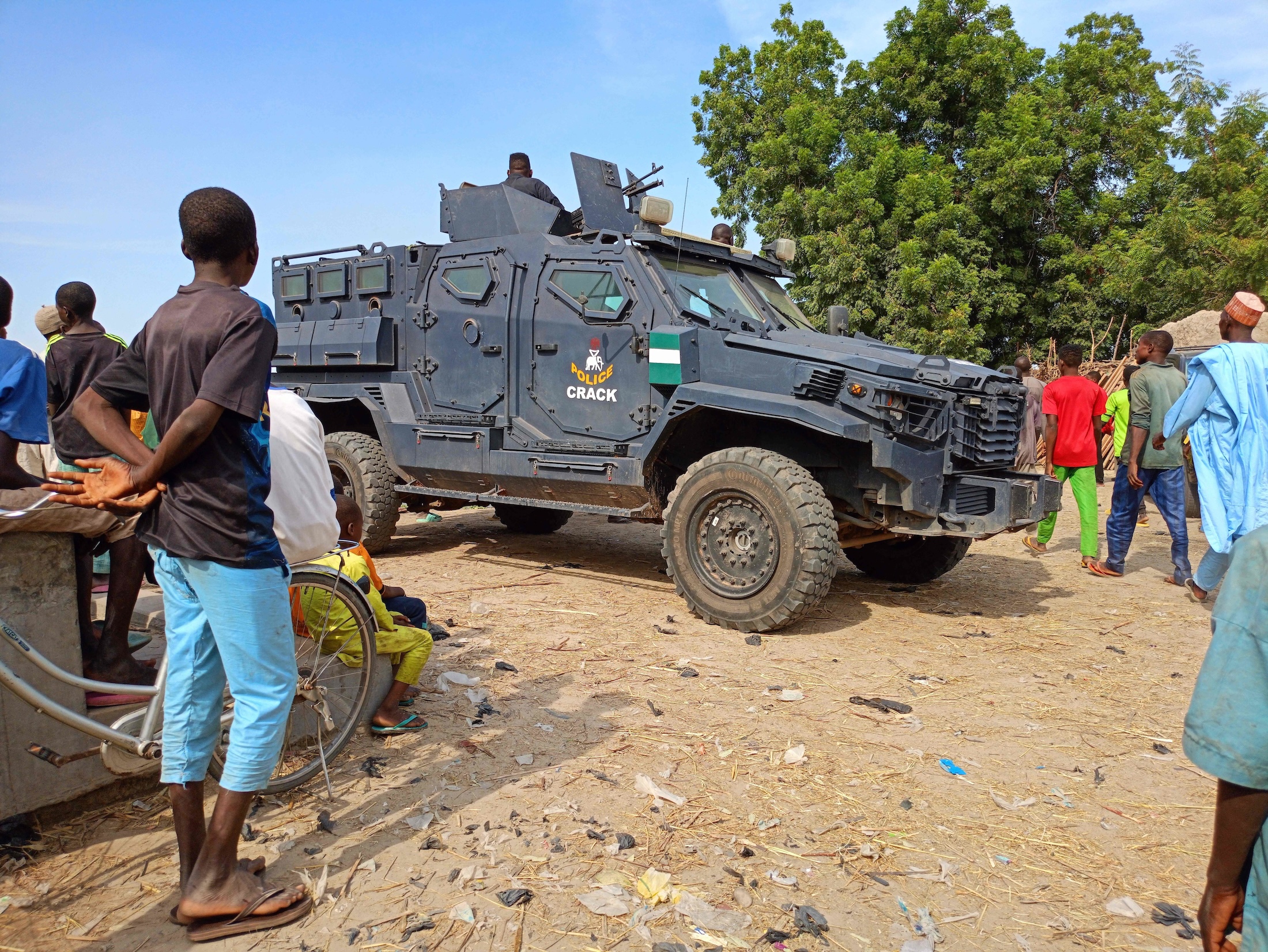
In Nigeria, militant groups will continue to exploit ungoverned areas and socioeconomic grievances, complicating counterterrorism efforts hindered by limited resources and competing threats across the country, while the ongoing fallout from the 2023 Niger coup presents challenges and potential opportunities to strengthen regional counterterrorism cooperation. On Jan. 23, the Federal High Court in Abuja officially declared the Lakurawa insurgent sect to be a terrorist organization. The court's decision cited the sect's involvement in acts of terrorism, including cattle rustling, kidnapping, attacks on security forces and government officials, and encouraging locals to reject state authority. Lakurawa, a newly re-emerged group linked to the Islamic State and active in northwestern Nigeria, further exacerbates the security threats the Nigerian government is facing across the country. Chiefly, the government continues to grapple with the existence of other jihadist groups, namely Jama'atu Ahlis-Sunna Lidda'Awati Wal-Jihad (JAS), frequently referred to as Boko Haram, and its splinter group, Islamic State West Africa Province (ISWAP), in the northeastern region. For more than a decade, the groups have attacked security forces and civilians, adapting their modus operandi over the years to sustain their operations. Illustrating this, in December 2024, ISWAP introduced the use of commercial drones equipped with explosives, a significant technological upgrade; meanwhile, in June 2024, JAS reintroduced the use of female suicide bombers, a tactic it had not employed in nearly a decade. Separate from these insurgencies, banditry remains a large threat across northern Nigeria, while there is an ongoing farmer-herder conflict in the country's Middle Belt and separatist movements in the southeast.
- According to the United Nations, some 35,000 civilians have been killed and more than two million others have been displaced in northeastern Nigeria since the jihadist insurgency began in 2009.
- Once a self-defense militia, various local and foreign experts believe that Lakurawa is connected to the Islamic State Sahel Province. The group's name (''the recruits'' in the local Hausa language) comes from the locals' name for those who initially fought with the group when it first emerged in 2018-2019. Lakurawa enforces strict religious laws, levies taxes (zakat) and carries out attacks on security forces and civilians. To recruit followers, the group offers up to 1 million naira (about $645) to new recruits and 10,000 naira (about $7) to local informants, which is particularly attractive in the less economically developed rural areas where the group operates. Lakurawa also distributes aid like farm tools and water pumps to win local support.
Over the past decade, Nigeria's militarized counterterrorism strategy has grown to include aerial components like airstrikes and drone surveillance, counter-radicalization programs, and a focus on socioeconomic issues, though persistent challenges like corruption and limited resources remain. Over the past decade, Nigeria's counterterrorism strategy has evolved in response to the growing complexity of threats from JAS and ISWAP. Early in the 2010s, JAS' territorial expansion and mass abductions, like the 2014 Chibok schoolgirls' kidnapping, prompted large-scale military campaigns such as Operation Lafiya Dole (meaning ''peace by force'' in the Hausa language), aimed at reclaiming captured areas in Borno, Yobe and Adamawa states. Regional collaboration through the Multinational Joint Task Force — involving Chad, Niger, Cameroon and Benin — became pivotal for joint operations and intelligence sharing. However, the emergence of ISWAP in 2016, with its more organized and strategically adept battlefield tactics (such as coordinated attacks on military bases), and its greater focus on building governance structures (such as setting up parallel judicial systems, providing basic services like security and dispute resolution, regulating trade, levying taxes, and imposing strict social and religious codes) required counterterrorism shifts, including toward technology-driven countermeasures like drone surveillance and targeted airstrikes. Meanwhile, escalating banditry in the northwest, often overlapping with jihadist activities, forced Nigeria to expand operations like Operation Hadarin Daji (''peace in the forest/bush'') to address these dual threats. At the same time, the government launched deradicalization initiatives like Operation Safe Corridor, which focuses on rehabilitating surrendered insurgents, and socioeconomic federal programs to address root causes of extremism, such as poverty, unemployment and weak governance. But Nigeria's counterterrorism efforts continue to face significant challenges, including inadequate resources, corruption and weak intelligence coordination, along with a lack of precision in airstrikes that has on several occasions resulted in civilian casualties. The upshot is that Nigeria faces protracted insurgencies in which jihadist groups adapt as quickly as counterterrorism efforts evolve, ensuring that conflicts remain unresolved.
- Nigeria's counterterrorism efforts have also been hindered by struggles to procure advanced military equipment and weaponry from traditional partners like the United States and European nations due to allegations of human rights abuses, such as extrajudicial killings, unlawful detentions and abuses during military campaigns by its security forces, according to high-ranking army officials.
- Operation Safe Corridor faces significant challenges, including strong community resistance due to fears of renewed violence and a lack of justice for victims. Transparency issues and security risks arise as some ex-fighters exploit the program to rejoin militancy. Economic reintegration remains weak, with limited job opportunities increasing the risk of recidivism. Poor coordination between stakeholders hampers implementation, while victims feel neglected as the program prioritizes former militants over justice and reparations. Additionally, ongoing JAS and ISWAP attacks create instability, making sustainable reintegration difficult and undermining the program's long-term effectiveness.
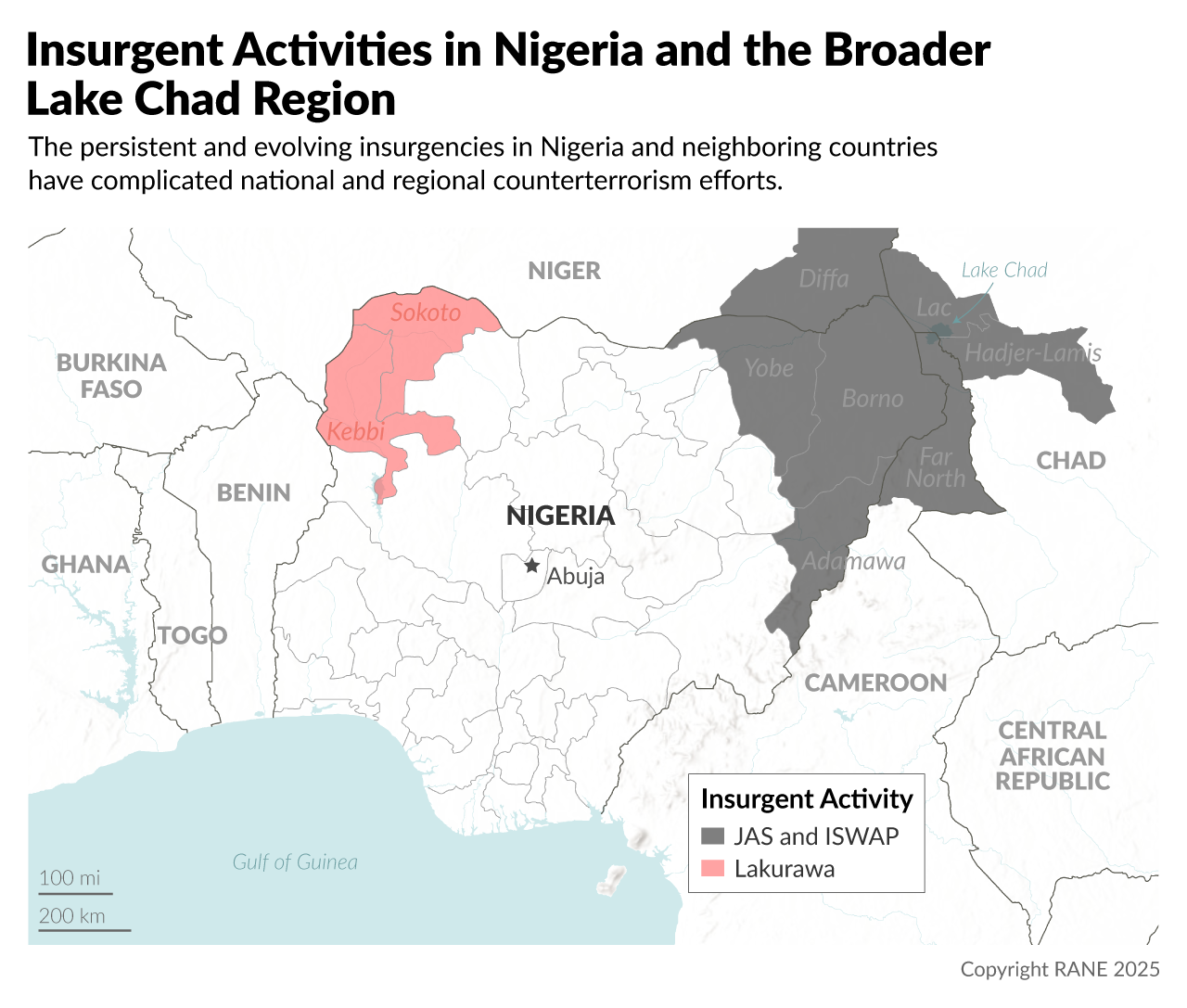 The JAS and ISWAP insurgencies will persist by exploiting ungoverned spaces, socioeconomic grievances, cross-border networks, and climate-induced displacement and resource competition, complicating counterterrorism efforts as temporary jihadist-criminal alliances emerge. Nigeria's reliance on a military-heavy counterterrorism approach, with limited investments in improving governance and addressing socioeconomic grievances, is unlikely to disrupt JAS and ISWAP's recruitment pipelines, allowing them to regenerate after setbacks. To this end, JAS and ISWAP will sustain their operations by adapting their strategies to counterterrorism pressures. As state presence in the northeast and Lake Chad Basin remains weak, both groups will leverage territorial control and community infiltration to maintain influence. Socioeconomic hardships and political marginalization will persist as key drivers of both recruitment and local sympathy for jihadist groups, particularly as climate-induced displacement and resource competition intensify. These conditions will not only push vulnerable individuals toward joining militant groups but will also create an environment where communities, feeling abandoned by the state, may tolerate or even support these groups. This dynamic will further facilitate jihadist operations by providing jihadists with safe havens, as well as intelligence and logistical support, ultimately strengthening their influence and ability to expand territorial control. Moreover, Nigeria's porous borders with Niger, Chad and Cameroon will continue to facilitate arms trafficking and the movement of fighters, ensuring operational resilience despite military offensives. While JAS and ISWAP's ideological divisions will prevent long-term unity, temporary tactical cooperation may emerge between the two jihadist groups in response to resource constraints or shared threats. Additionally, the worsening farmer-herder crisis in Nigeria and other nearby countries will provide further opportunities for jihadist expansion, particularly among displaced Fulani communities.
- JAS believes in total violence and relies on chaos to enforce its rule, attacking and looting all civilians without distinction. ISWAP, while still very violent, tries to gain support from Muslim communities by providing governance instead of indiscriminately attacking them.
- ISWAP and JAS may be willing to coordinate at a tactical level (by, for example, sharing intelligence and resources or carrying out joint attacks), which provides both groups with immediate, practical benefits against common enemies like the Nigerian military or rival militias. Short-term cooperation can strengthen their operational capabilities without requiring ideological alignment. However, at a strategic level, deep cooperation is unlikely because JAS and ISWAP's core ideologies and long-term goals differ. ISWAP seeks to build a structured governance system under the Islamic State's model, while JAS prioritizes indiscriminate violence and looting. Their fundamental disagreements on leadership, civilian treatment and overall vision for the insurgency will prevent lasting unity beyond short-term battlefield cooperation.
- The farmer-herder crisis in Nigeria and the broader Sahel is driven by competition over land and resources, worsened by climate change, population growth and weak governance. As conflicts escalate between farming communities and predominantly Fulani herders, many Fulani find themselves displaced, marginalized or targeted by security forces and local militias. Jihadist groups like ISWAP and JAS have exploited the situation by offering protection, financial support and a sense of belonging to displaced Fulani, many of whom feel abandoned by the state. This creates opportunities for jihadists to recruit fighters, expand their influence and further destabilize affected areas.
While Nigerian authorities will continue to focus on combatting JAS and ISWAP insurgencies in the northeast, the emerging threats in the northwest will force Abuja to increasingly devote greater resources to the region, but this is unlikely to fully address locals' underlying grievances, creating openings for jihadists to exploit security gaps in the northwest (or in the northeast if resources are diverted from there). Given the resource, personnel and other counterterrorism limitations the Nigerian government faces, it will likely prioritize regions based on their strategic and political importance. While the northeast will remain a critical focus amid the JAS and ISWAP insurgencies there, the government will likely increasingly turn its attention to the northwest amid the re-emergence of the Islamic State-linked Lakurawa, as well as the reportedly growing presence of the al-Qaeda-affiliated Jama'at Nusrat al-Islam wal-Muslimin (JNIM) in Kainji Lake National Park, among other security challenges facing the political important region. The northwest is Nigeria's most populous region and is inhabited by the influential Hausa community, the country's largest ethnic group. Thus, the region's stability is vital for maintaining national unity and ensuring political legitimacy. Furthermore, addressing the violence in the northwest is essential for securing rural communities, preventing further displacement and safeguarding agricultural productivity, a key pillar of Nigeria's economy. However, the greater prioritization of the northwest, at least in the short term, will likely focus more on containing immediate security threats through a militarized approach, as opposed to appeasing local grievances through a ''hearts and mind'' approach, as the army still lacks sufficient resources and will continue to be hampered by corruption. This means that government interventions will likely struggle to comprehensively address root causes of extremism like poverty, competition over scarce resources and weak governance, which are essential for winning the trust of affected populations. As seen in the northeast, this will leave grievances for militants to exploit and, should the government reallocate resources from the northeast toward the northwest, it will also leave a security gap that will enable jihadists to launch more attacks and seize more territory.
- Persistent economic challenges, including rising debt-servicing costs, inflation and insufficient revenue generation, will likely continue restricting the government's ability to provide essential services, fund military operations and invest in social welfare programs. These financial challenges will undermine the government's ability to deliver public services and exacerbate grievances, particularly in marginalized regions where insurgencies are active, further undermining efforts to win hearts and minds.
- The designation of Lakurawa as a terrorist group by Nigeria's top court will likely allow the government to intensify military operations, seize assets, prosecute members and affiliates under anti-terrorism laws, enhance intelligence gathering, and potentially call for international counterterrorism support, although the Nigerian army's human rights abuses may hinder the last measure. In the long term, while the designation could help disrupt the group's operational networks and potential collaboration with other criminal networks such as bandit groups, Lakurawa members could start using tactics seen in other extremist groups when they face military pressure from military operations, such as escalating to more brutal, indiscriminate attacks or stepping up kidnappings for ransom.
- JNIM, originally active in the central Sahel, has reportedly expanded its operations into northwestern Nigeria after crossing over from neighboring Benin. According to a 2024 report from the Clingendael Institute think tank in the Netherlands, these militants have established a presence in Kainji Lake National Park, one of Nigeria's largest parks renowned for its wildlife, which has been closed for over a year due to security threats posed by armed groups.
The worsening security situation resulting from the Niger coup will continue to disrupt regional counterterrorism efforts, creating more openings for jihadist expansion; however, it will also open the door to stronger Nigerian security cooperation with Niger and Benin, despite ongoing challenges to similar efforts with Cameroon. The fallout from the July 2023 Niger coup will continue to shape regional security dynamics, with counterterrorism coordination in the Sahel likely to remain fragmented. As Nigeria struggles with internal insurgencies and weakened regional influence, its ability to lead security efforts will be further tested, especially with Chad's threats to depart from the Multinational Joint Task Force with Nigeria, Niger, Cameroon and Benin due to reduced cooperation among member states, signaling deeper divisions. Meanwhile, Niger's shift away from Western military partnerships has deprived the Sahel nation of critical intelligence, air support and special forces capabilities that previously played a key role in counterinsurgency efforts. Jihadist groups will likely exploit these gaps to further expand their operational reach amid weakened state control. Given these developments, the ongoing reverberations of the Niger coup present both challenges and opportunities for collaboration between Nigeria and neighboring countries in addressing regional security threats. Lakurawa is geographically closer to the Niger-Nigeria border than JAS-held areas in Nigeria, which offers an immediate opportunity for joint operations targeting cross-border militant activities, particularly as Niger prioritizes securing the Niamey area. This is even more likely as both Niger and Nigeria in August 2024 signed a deal to boost their security cooperation. Additionally, collaboration with Benin could be expanded, given the alleged spread of JNIM networks into Nigeria's northwestern regions, posing a shared threat. However, cooperation with Cameroon will likely remain inconsistent. Historical disputes, divergent priorities and varying levels of trust have hindered counterterrorism cooperation between Abuja and Yaounde, despite the shared challenge of JAS along the Lake Chad Basin. Moreover, the upcoming October 2025 presidential election in Cameroon could further complicate counterterrorism operations as the government may be compelled to redirect resources to managing domestic political conflicts related to the election, leaving gaps that groups like JAS could exploit to launch further attacks.
- Cameroon's October 2025 presidential election will likely present significant security challenges, driven by 92-year-old President Paul Biya's age and the ambiguity surrounding his succession plans. If Biya decides to run, protests from opposition factions could spark violent crackdowns by security forces, raising the risk of unrest in major cities. Alternatively, if Biya steps down, a power struggle within the ruling party could ignite a coup or lead to popular protests.
- Nigeria's influence in regional counterterrorism efforts has declined due to its own internal security challenges, particularly growing JAS and ISWAP activity, political instability, corruption and governance issues. These factors have strained the country's military resources and weakened coordination with regional partners. Additionally, economic difficulties have further diminished Nigeria's ability to lead counterterrorism efforts in the region.
