
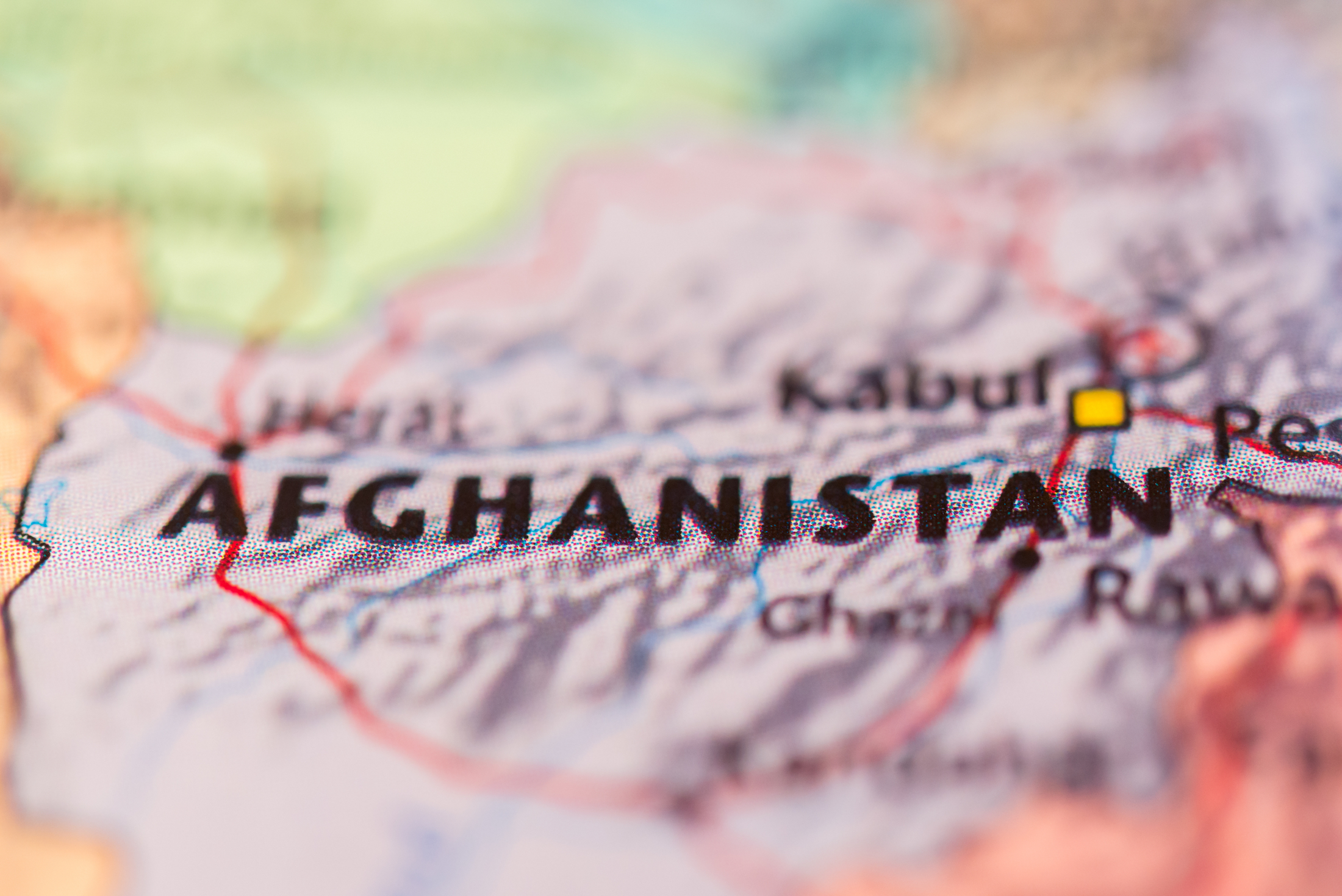
The Islamic State Khorasan Province claimed responsibility Jan. 22 for a shooting overnight Jan. 21 in Afghanistan's northern province of Takhar that killed an unnamed Chinese national whom Afghan Taliban officials said worked for a mining company operating in Afghanistan, Voice of America reported Jan. 22. The Chinese citizen's Afghan interpreter, who was driving him at the time, escaped unharmed. Local police say militants ambushed the pair as they traveled to Dasht-e-Qala district, but that the purpose of their trip remains unclear and they failed to notify local authorities of their travels as foreigners are required to do. ISKP's statement said its "soldiers" used a machine gun to target a vehicle carrying "communist Chinese," appearing to indicate the attack was motivated by animus against China.
The attack near Tajikistan comes two months after unidentified armed men carried out another deadly attack on several Chinese miners in the nearby Tajik border district of Shamsiddin Shohin. Tajik authorities believed the perpetrators of the November 2024 attack had crossed over from Afghanistan into Tajikistan, where Shamsiddin Shohin is some 17 miles (about 27.4 kilometers) from the edge of Afghanistan's Takhar province, and 7.3 miles from the edge of Afghanistan's Badakhshan province. Though whether the recent attack is in any way linked to the November 2024 attack remains unclear, both are the latest to target Chinese nationals as China ramps up diplomatic engagement with the Afghan Taliban and increasingly pursues resource extraction opportunities in Afghanistan. Since the Afghan Taliban retook Afghanistan in August 2021, ISKP has particularly criticized countries engaging with the Taliban regime — which ISKP views as an enemy for being insufficiently religiously hard-line and for engaging with countries ISKP deems apostates, among other things. ISKP has particularly criticized China for its engagement with the Afghan Taliban but also for what ISKP says is China's oppression of Uyghurs, whom ISKP has sought to recruit. ISKP carried out arguably its highest-profile attack on Chinese nationals in Afghanistan in December 2022, when its militants attacked a Kabul hotel popular with Chinese business travelers. It has also highlighted operations allegedly carried out by its Uyghur members. Beyond ISKP, the Uyghur militant Turkistan Islamic Party also has reportedly around 1,000 members in Afghanistan, though for years they have appeared to keep a low-profile, likely based on instructions from the Afghan Taliban to avoid inflaming Chinese concerns. Anti-Taliban resistance groups also continue to operate in Afghanistan's northeast and maintain an incentive to target countries deepening relations with the Afghan Taliban to disrupt the group's foreign relations. But the Afghan Taliban has severely degraded these resistance groups in recent years, and they have generally not been linked to attacks on local Chinese interests — certainly not to the degree of ISKP.
Recent attacks on Chinese nationals in Afghanistan and adjacent areas demonstrate militants' intent to target foreign countries' growing interests in Afghanistan, threatening personal safety and business continuity. Though the international community has avoided officially recognizing the Afghan Taliban and has broadly condemned its domestic policies and other actions in recent years, countries are also becoming increasingly pragmatic and opening up diplomatic and limited economic engagement with Afghanistan. This has in part been driven by the Afghan Taliban's improved counterterrorism capabilities, which since 2023 have helped weaken ISKP and limited its attacks in the country. Despite these gains, however, ISKP and other militant groups often have decentralized structures and other features that will likely prevent the Afghan Taliban from eliminating them. As foreign countries' interests in Afghanistan gradually grow, ISKP and other militants opposed to the Afghan Taliban — as well as those opposed to the countries engaging with the group — will increasingly target the foreign nationals and investment projects that accompany them. China will be at particular risk given its especially close relations with the Afghan Taliban and its leading role in resource extraction and other opportunities in Afghanistan. ISKP has also attacked Russian and Pakistani diplomats in Afghanistan, and virtually all foreign states or entities that bolster engagement with the Afghan Taliban will likely become vulnerable to militant attacks. Even with the Afghan Taliban's improved counterterrorism capabilities and weakening of ISKP in recent years, personal safety and business continuity will therefore continue to face critical risks in Afghanistan for the foreseeable future.
