
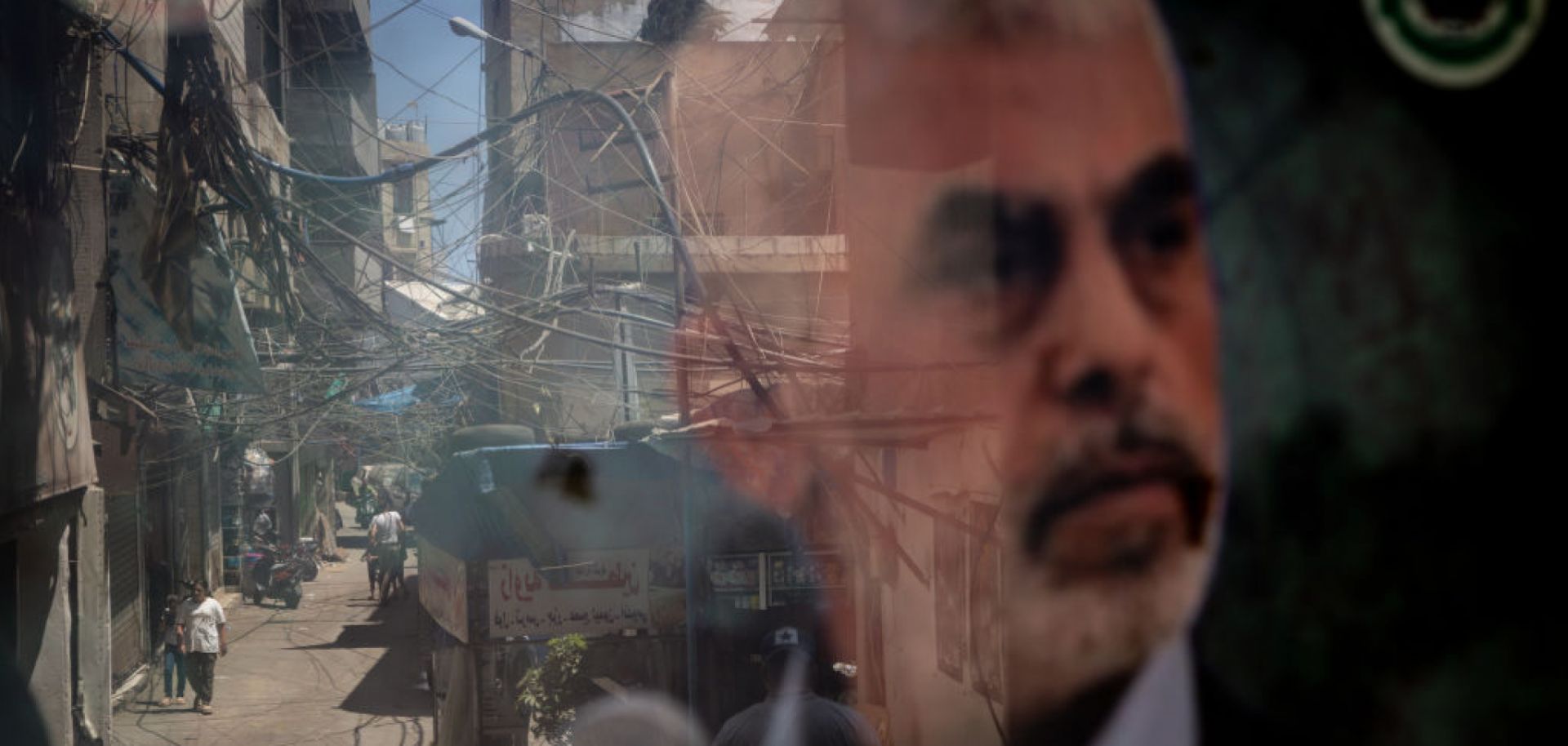
In the aftermath of Yahya Sinwar's assassination, Hamas' choice of new leadership will indicate whether the group is prepared to shift to pragmatism or remain hawkish, and if it is beginning to fragment. Meanwhile, Israel's government will face renewed political pressure to reach a cease-fire with Hamas, which will manifest in more substantial protests and strikes across the country. On Oct. 17, Israeli Prime Minister Benjamin Netanyahu confirmed that the Israel Defense Forces (IDF) had killed Hamas leader Yahya Sinwar in a combat operation outside Rafah in the Gaza Strip the previous day. Sinwar's identity was confirmed through DNA testing. Sinwar had been on the run from Israeli forces since Hamas' Oct. 7, 2023, assault on Israel, and Israeli forces reportedly stumbled upon him in a fighting position on Oct. 16. The Palestinian militant group reportedly has begun taking steps within its political bureau to elect new leadership in the aftermath of his death.
- Sinwar was appointed leader of Hamas in the Gaza Strip in 2017, not long after he was released from an Israeli jail as part of a prisoner exchange with the militant group. Sinwar was previously the leader of the Qassam Brigades, Hamas' military wing. He was elected full leader of the group after his predecessor, Ismail Haniyeh, was assassinated in Tehran in July 2024 in an operation all but assured to have been carried out by Israel.
- Sinwar had supposedly been hiding in Hamas' extensive network of tunnels, surrounded by Israeli hostages, since the beginning of the Gaza war in October 2023. But the fact that Israeli forces found and killed him in a fighting position in Rafah suggests Sinwar may have been on the front lines more often, particularly as Hamas has transformed from a conventional militia with organized brigades into an insurgency in the wake of Israel's extensive military campaign in Gaza.
Sinwar's killing will likely only have a marginal impact on Hamas' capabilities as most of its leadership remains intact, with sustained Israeli military pressure on the group as a whole being the greater factor for its degradation. The immediate impact of Sinwar's assassination is unlikely to significantly affect Hamas's military confrontation with Israel. The group's political bureau has 15 members, of which three have now been assassinated by Israel, including Sinwar, Haniyeh and Saleh Arouri in January 2024 in Beirut. The remaining top leaders capable of replacing Sinwar include the former chairman of Hamas' political bureau, Khaled Meshaal, former deputy chairman Mousa Abu Marzouk, and Shura Council head Abu Omar Hassan. Hamas has long prepared for its leadership to be assassinated or killed in the course of its conflict with Israel, meaning the group's capabilities are unlikely to be substantially interrupted by Sinwar's death. Israel's military campaign in the Gaza Strip has also already largely degraded Hamas' capabilities, with its battalions disrupted or driven underground into an insurgency, so Sinwar's death on its own should not be especially disruptive.
- During the Second Intifada in 2004, Israel assassinated Ahmed Yassin, widely considered Hamas' spiritual leader. The operation was unsuccessful in ending Hamas' then-ongoing suicide bombing campaign against Israel. Today, many of the group's other leaders remain in Doha, Qatar, Syria or Lebanon.
- For now, Israel is unlikely to try to assassinate Hamas leaders who remain in Qatar, like Khaled Meshaal. This is because such leaders cannot provide the same level of tactical guidance from abroad as Sinwar could in Gaza, but could define a broad strategy and engage in cease-fire talks, making them less attractive targets and potentially useful in Israel's post-war plans for Gaza. In addition, they continue to enjoy Qatari diplomatic protection.
Whomever Hamas' political wing chooses to replace Sinwar will indicate prevailing sentiment within the leadership regarding the group's future strategy. Sinwar's appointment in August 2024 was designed to showcase both continuity and a committed approach to militancy in the wake of Haniyeh's assassination. But with Sinwar's killing and the probable death of other hawks like Mohammed Deif in an Israeli airstrike in July 2024, it is unclear how many members of the political bureau are still willing to continue the confrontation with Israel in which they are increasingly likely to be assassinated, and in which the group's overall goals of achieving political victory in Gaza lack a clear immediate path. Hamas' political leaders may decide to return to the dual leadership structure that existed between Sinwar and Haniyeh, with one controlling the political arm and the other controlling the militant arm. If the organization switches back to such a system and puts a leader from the Qassam Brigades in control of the militant wing, or if someone from the militant wing takes unitary control of the organization again, it would suggest that Hamas intends to continue its long conflict with Israel in the hopes that wars of attrition in Gaza, the West Bank, Lebanon and Syria eventually wear Israel down. But if the political bureau instead chooses someone like Meshaal as its next chief in a unitary structure, it would suggest a renewed emphasis on cease-fire negotiations.
- Meshaal was considered a front-runner to replace Haniyeh after he was assassinated in July, in part because he was previously head of Hamas' political wing from 2004 until 2017, and in part due to his prominent role in cease-fire negotiations abroad. Khalil al-Hayya, the deputy head of Hamas' Gaza-based political bureau, also helped negotiate an end to the 2014 Gaza war. If al-Hayya is appointed to replace Sinwar, it could suggest Hamas is interested in restarting serious cease-fire talks with Israel.
- Members of Hamas' Qassam Brigades tend to be more ideological and committed to open-ended conflict with Israel. A choice from these ranks would thus suggest the group's political leadership wants to maintain fighting.
Should Hamas revive its dual leadership system or extend its succession process, it would suggest that the group is beginning to fragment under the pressure of Israel's military campaigns, which would make it harder to end the war. Sinwar's appointment as Hamas' sole leader was meant to showcase unity in the face of Israel's sustained assassination and military campaigns against the group. However, it is becoming increasingly difficult for Hamas' political leaders to communicate with one another, particularly in combat zones like Gaza, where Sinwar was reportedly out of contact for long periods. This has forced Hamas' various wings in Lebanon, Qatar, Syria and especially the Gaza Strip to adopt more operational and tactical independence. This freedom has not yet publicly manifested in the formation of rival factions, but Sinwar's death and the passing of other senior leaders who designed the Oct. 7, 2023, assault may lead successors to assert themselves more in their own geographies. Such assertions could result in an extended debate within the political bureau over the succession process for Sinwar or lead the group to return to its dual leadership structure in an attempt to manage growing factionalism. Further down the line, this factionalism could make it difficult for the group to sign a cease-fire that ends the Israel-Hamas war, with hawkish Hamas groups rejecting attempts to compromise with Israel.
- Sinwar and Haniyeh reportedly did not always see eye-to-eye on Hamas' overall strategy. Haniyeh, based in Qatar, was reportedly more willing to engage in negotiations than Sinwar, and Haniyeh backed the November 2023 temporary cease-fire, which saw the release of some Israeli hostages in exchange for Palestinian prisoners.
- Other militant groups like al Qaeda and the Islamic State have also fragmented under sustained military pressure, particularly as they lose their central geographic bases.
Although the government will face renewed domestic pressure to cut a cease-fire deal with Sinwar's successor, Israel's maximalist goal of destroying Hamas in the Gaza Strip is unlikely to change. Israel's opposition may seize on Sinwar's killing as a symbol that the war in Gaza must end, calling for more strikes and protests across the country to pressure the Israeli government into signing a cease-fire with Sinwar's successor(s) and gradually disengaging from fighting in the Gaza Strip. However, Sinwar's killing will likely further galvanize the IDF to maintain its aggressive, open-ended operations in the strip, and even if Hamas' successor shows greater interest in cease-fire negotiations than Sinwar, Israel's current far-right coalition government is unlikely to accept any conditions short of Hamas' surrender and the full release of the remaining Israeli hostages. Therefore, Israel will likely continue to pursue its goal of destroying Hamas, despite added political pressure.
The far-right members of Israel's coalition government demand not only the destruction of Hamas but a resettlement of Gaza, aiming to rebuild settlements evacuated in 2005.
