
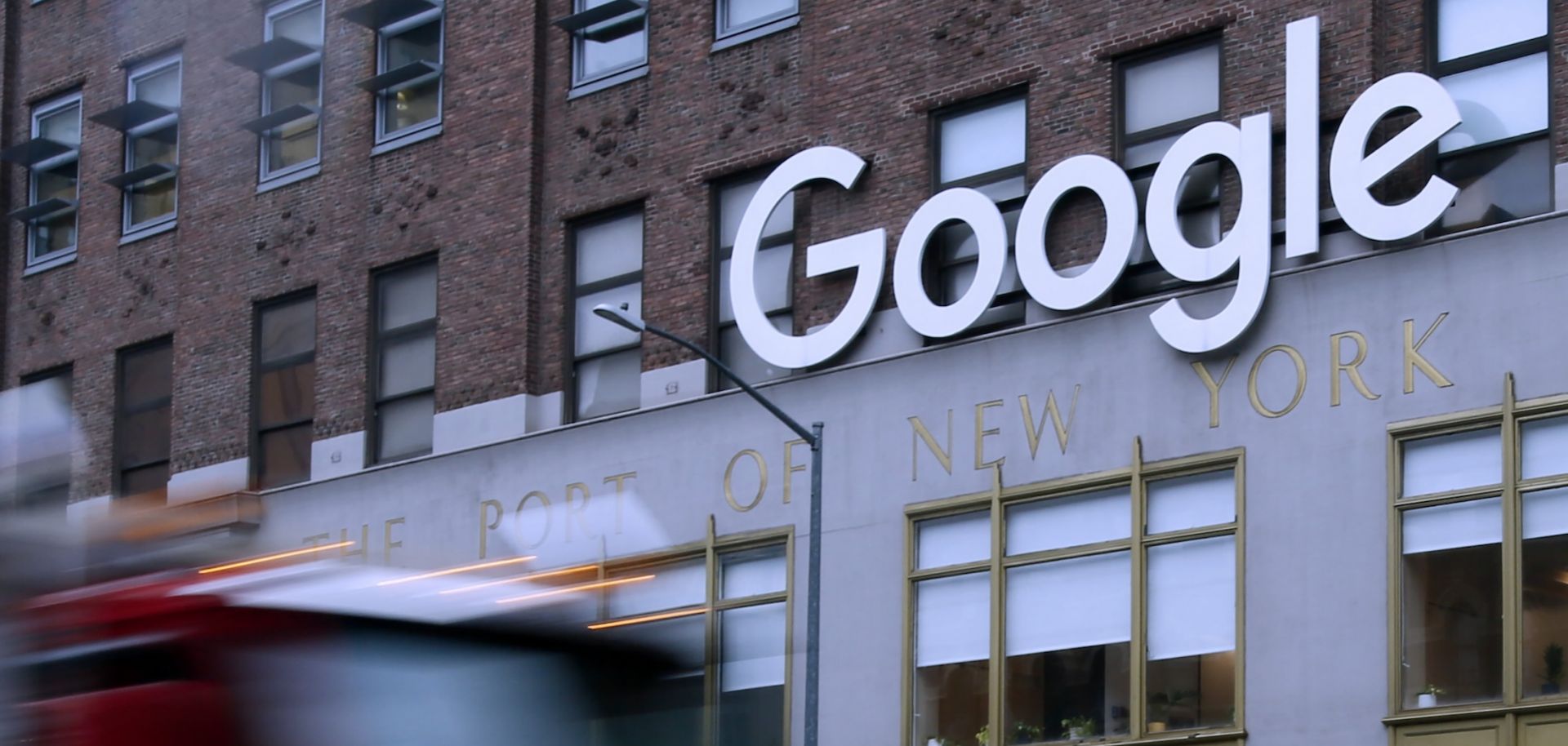
Google's antitrust loss shows that regulators can successfully challenge U.S. tech companies; but while such rulings will impact companies' operations, they are unlikely to weaken the dominance of major firms or stop the tech sector from creating large, sprawling corporations. In a landmark Aug. 5 ruling, a U.S. federal judge ruled that Google violated the Sherman Act in protecting its monopoly in online search after a ten-week trial held last year. In his ruling, Judge Amit Mehta said that ''Google is a monopolist, and it has acted as one to maintain its monopoly.'' Shortly after the ruling, Google announced that it would appeal. The ruling was closely watched as the Google online search case was the first to go to trial in a series of lawsuits filed by the two federal U.S. antitrust enforcement arms — the Department of Justice (DOJ) and the Federal Trade Commission (FTC) — against large U.S. technology companies over the last five years. This is the DOJ's first major antitrust victory against a large technology company since a 2001 victory against Microsoft.
- The DOJ launched its lawsuit against Google in 2020. The two will also square off in a second antitrust trial, this time with a jury, covering Google's advertising technology business that is scheduled to start on Sept. 9. The DOJ has filed a lawsuit against Apple as well, while the FTC has filed lawsuits against Meta (the owner of the social media sites Facebook, Instagram and WhatsApp) and Amazon.
- In 2021, Google spent $26.3 billion on deals with browser developers, mobile device manufacturers and wireless carriers to install Google as the default search engine out of the box — including around $18 billion to Apple alone to ensure Google remained the default search engine. In his ruling, Judge Mehta concluded that these distribution agreements were exclusive and had anticompetitive effects, and that Google had not justified the agreements with pro-competitive arguments. The court also found that Google earned monopoly profits through exercising monopoly power to charge supra-competitive prices for general search text ads.
Judge Mehta's upcoming decision on remedies will determine the ruling's impact on Google. The ruling did not include any potential remedies to restore competition to the online search market, but both parties must submit a proposed schedule for the remedy process by Sept. 4. The remedy phase could last several months or longer, depending on the appeal process and other factors. The options on how to address Google's dominance in the online search market and its monopolistic behavior vary widely. At the extreme end, the DOJ could seek major structural measures where Google would be forced to spin off its online search business from other key parts of its business, such as the Android operating system for mobile phones and the Chrome internet browser, or be forced to spin off other parts of its business related to search, such as the Android or Chrome. Critics of this approach warn that hiving off certain parts of Google's business model would only address one or a handful of ways that people access Google's search engine and would cause significant harm to consumers who use Google's suite of products as complementary products in the process. Narrower measures may more directly target Google's unlawful behavior by, for example, blocking Google from entering uncompetitive distribution agreements (and revenue sharing) with companies like Apple or forcing Android (and Apple) to offer a choice screen for the default search engine when setting up a device or installing a browser. But some have argued that this approach may not have a significant impact on reducing Google's share of the search engine market, as consumers are already accustomed to its browser and many would just likely continue using Google. Other measures could try to restore competition by better enabling Google's rivals to compete with the established giant. To that end, Google could be forced to share or license search and click-stream data with competitors like Microsoft. However, critics point out that this may only worsen the situation for consumers, who would stand to lose from a data privacy standpoint as Google shares more personal data with its rivals.
- In the European Union, where Google has been required to offer choice screens by the European Union since 2018, Google's market share on mobile devices remains above 95%. In recent years, Google's share of this market has declined slightly by 2%, primarily due to the growth of Russia-based search engine Yandex following Russia's 2022 invasion of Ukraine.
The decision on remediation could also impact how Google fairs in the growing competition over developing AI models, and may eventually disrupt Google's dominance in the search engine market if AI-enabled search becomes the norm. While many U.S. technology giants are facing antitrust investigations over monopolistic behavior, they are in competition against each other over AI model development and the shortage of human talent available in AI fields. During the Google trial, witnesses warned that Google's access to search queries gave it an unusual data set that uniquely equipped it to jump ahead of its competitors in developing AI overall and further entrench itself in the online search market through AI-enabled searches. Any decision by Judge Mehta that restricts Google's ability to leverage its search data for AI-enabled search applications (by, for example, breaking up its business, forcing it to license its search data to competitors, or blocking its ability to train AI models using search query data) could have a major impact on Google's long-term ability to maintain its monopoly position in search. In the technology sector, disruptive technologies are common and if Google is unable to leverage AI in AI-enabled online search due to the judge's restrictions, it could lead to one of their competitors, like Microsoft's Bing, developing those capabilities and surpassing Google as the technology matures. But from a functional perspective, this would likely result in one monopoly simply replacing another monopoly. Indeed, that is what happened in 2001 when the DOJ argued that Microsoft monopolized the browser market for Windows PCs and forced Microsoft to modify the way that it treated browsers and the Windows operating system, which largely paved the way for Google to rise and for Chrome to establish itself as the leading web browser.
The ruling demonstrates that U.S. antitrust regulators can succeed against technology companies, but the narrow nature of the DOJ's case against Google may limit the ruling from setting an important precedent for other cases. Before the ruling against Google, it was unclear the extent to which existing U.S. antitrust laws could be applied to U.S. technology firms. U.S. antitrust laws primarily focus on protecting consumer welfare rather than the fairness of markets, and companies like Google argue that they benefit consumers because they offer many of their products for free. This contrasts with European Union competition laws, which focus more on protecting small- and medium-sized businesses and creating a fair market where they can compete. The DOJ's victory in the Google case shows that U.S. antitrust regulators can succeed in applying current antitrust laws without new expanded powers via legislation. However, when it was first filed in 2020, the DOJ's lawsuit against Google was criticized by antitrust hawks for being a narrow case that did not focus on other aspects of the tech giant's alleged monopolistic behavior. Judge Mehta's decision focuses heavily on the economic impact of Google's practices, making it largely consistent with previous antitrust law applications in the United States. In fact, Mehta accused several U.S. states that joined the DOJ's lawsuit of trying to bypass the ''no duty to deal'' doctrine — which asserts that companies are not obligated to deal with their rivals, and has been upheld by the U.S. Supreme Court. In doing so, he accused Google of favoring its own ad platform over the Microsoft Ads platform on its it's Search Ads 360 search engine management platform and slowly rolling out features for Microsoft Ads that it already incorporated into Search Ads 360 for Google Ads, which the judge found Google had no obligation to do, thereby deeming these actions unlawful. This could have an important impact on the DOJ's case against Apple filed earlier this year where the department is effectively arguing that Apple's dominant position in the smartphone and tablet industry means it has the duty to deal with rivals to ensure their products work on Apple devices. That argument was always viewed as a legal longshot, and Judge Mehta's decision on the Google case will likely favor Apple's own defense. Finally, as these U.S. cases against Google and Apple are the first of their kind in the tech industry, it is likely that some elements of the rulings eventually wind up at the Supreme Court.
- In addition to the DOJ's cases against Google and Apple, the FTC has filed antitrust lawsuits against Meta and Amazon. In the case against Meta, the FTC is arguing that it is creating a monopoly in social media through its acquisitions of Instagram and WhatsApp and is seeking to force the deals, which were made more than a decade ago, to be unwound. In the case against Amazon, a federal judge has set the trial date for October 2026. The FTC is accusing Amazon of protecting an online monopoly in online retail sales, though critics have questioned the FTC's argument because it is not focused on the impact of consumer welfare. The case against Amazon is significant as FTC Chair Lina Khan gained significant popularity among those calling for more action against technology companies. When she was a law student at Yale in 2017, Khan wrote a paper titled ''Amazon's Antitrust Paradox'' in which she asserts that consumer welfare should not be the focus of antitrust cases against technology companies, arguing that this focus allows technology giants to gain dominance on digital platforms through low-cost products. Khan's success in making that argument as FTC chair has so far been somewhat limited and the actual case against Amazon does include more traditional antitrust tenants, like high prices.
Without major antitrust or structural tech sector reforms, both of which are far-fetched, U.S. antitrust rulings are unlikely to reduce the dominance of mega-corporations in the sector. Except for perhaps the FTC case against Meta, which could force Facebook to sell off Instagram and WhatsApp, all of the current antitrust cases against U.S. technology firms are narrowly focused on consumer welfare and definition-specific markets where companies have a monopoly. This is despite calls from many antitrust hawks for regulators to take a more holistic approach in their cases against these companies. The DOJ's case against Google, for example, did not broadly look at how the tech company is spreading into dozens of different markets — including online search, smart home and devices, advertising technology, browsers, artificial intelligence, smartphone hardware, cloud computing, digital payments and mobile operating systems — and leveraging its breadth of operations to compete as a juggernaut; instead, it primarily focused on Google's dominance in the search engine market. Critics of Big Tech argue that companies like Google can quickly move into new industries by buying up start-ups and leveraging their dominance in foundational technology that can then be applied to new markets (such as AI in publishing). Given the narrow focus of current antitrust law, without significant antitrust reform or new legislation setting up guardrails for different parts of the technology sector, large sprawling technology companies will likely continue to dominate the U.S. technology landscape for years to come. American tech firms will remain incentivized to expand into all sorts of industries, not only to boost their profits and revenue for their shareholders, but because the technology sector has demonstrated that innovation through a new technology revolution can quickly disrupt a market. Google did just that when it perfected its own search engine. Companies like Google are thus compelled to invest heavily in nascent technology areas that could eventually threaten their core business operations. Indeed, for Google, it was reportedly ''all hands on deck'' for AI after the release of ChatGPT because of the chatbot's potential to completely disrupt the online search industry (and, more broadly, the information search industry) that forms the bedrock of Google's business.
Ultimately, while the United States may force some companies to change their behavior, it is highly unlikely that regulatory action will meaningfully threaten the country's dominance in the technology industry. As the United States is concerned about growing global competition over technology, it appears unlikely that it will adopt new laws that risk its competitive advantage against China. Pushes for antitrust reform that would allow for more systemic action against technology companies show few signs of getting through Congress, particularly as Republicans continue to oppose drastic changes to antitrust laws that could affect sectors beyond the technology sector. Republicans have also pushed back strongly against any discussion of aggressive AI regulations reminiscent of the European Union's AI Act that entered force earlier this month. In fact, the Republican 2024 platform calls for reversing President Joe Biden's 2023 executive order on AI, criticizing it for being too disruptive for innovation even though the executive order is largely non-binding with only voluntary commitments. As a result of the lack of broader technology sector reforms, U.S. technology giants will likely still flourish. And while specific companies may rise and fall — and some may be broken up into smaller entities initially — the United States will likely retain its dominance in the technology sector. Even with more aggressive antitrust enforcement by regulators, the United States would remain the West's most accommodative regulatory environment for technology companies and the country would retain its dominance in software engineers, AI developers and other human talent necessary for the industry. While hobbling Google's efforts to develop AI may slow down the company's individual pursuits in AI, other U.S. companies will continue their own advancement largely unimpeded — and may even take advantage if Google is required to license its search data. And if regulatory scrutiny ever threatens the United States' dominance in tech, it is likely that U.S. leaders, particularly Republicans, will call for halting enforcement action against technology companies as a result.
