
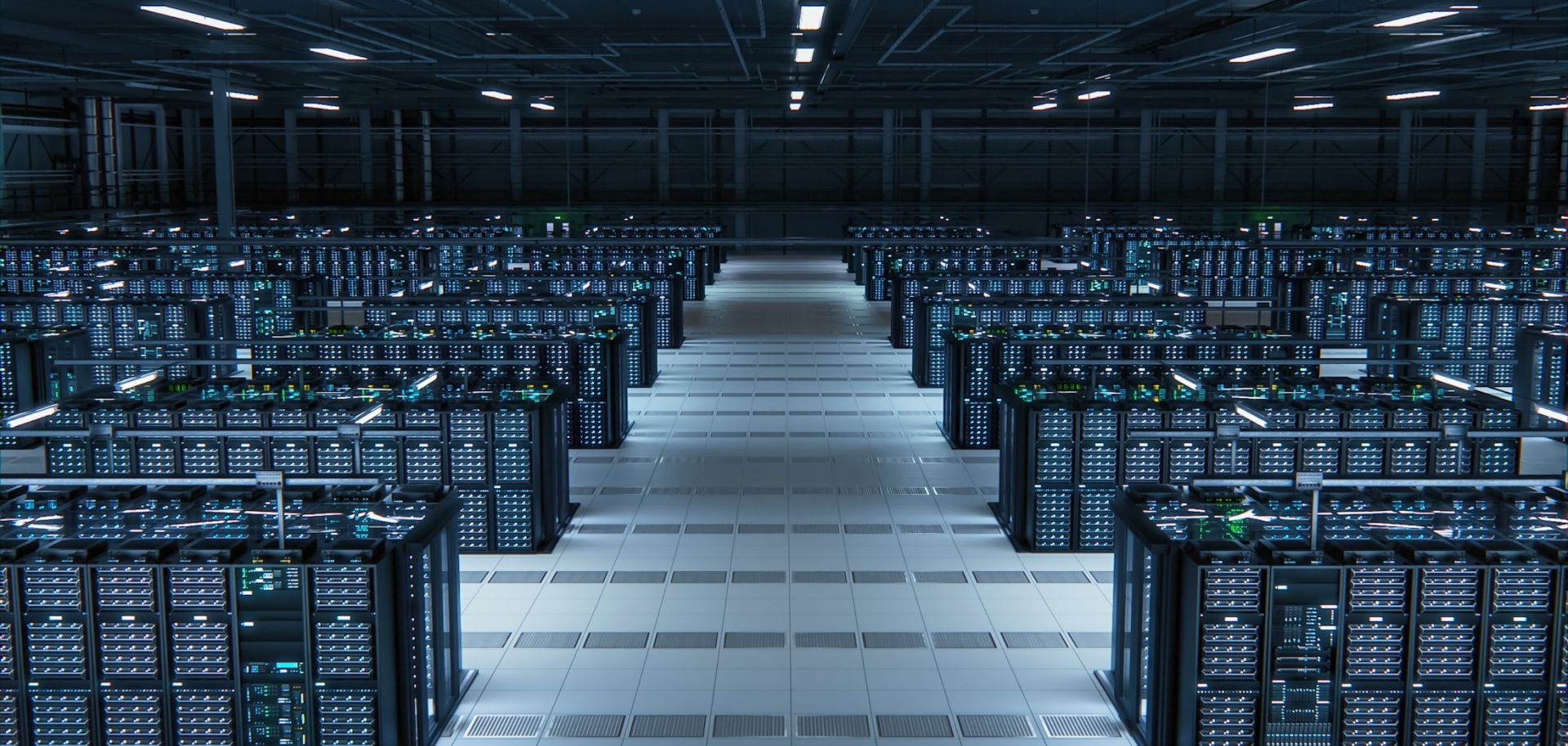
The growth of U.S. data centers will run into power availability issues and permitting bottlenecks, spurring more technology companies to secure access to electricity directly from renewable power generators, though any systemic risks to electrical grids will likely be localized. The growing importance of cloud computing and artificial intelligence is rapidly increasing demand for the physical spaces these technologies rely on to store, process, manage and share data. But these data centers also consume high levels of energy to both power, as well as cool down, the digital systems they house. Some individual data centers and campuses have capacities to consume above 100 megawatts (MW), while the capacity of some planned centers even surpasses 1,000 MW, which is roughly equivalent to the power created by a utility-scale, natural gas-fired power plant or a nuclear reactor. Much of the growth of data centers over the last five years predated the explosion of investment into AI following the November 2022 release of the AI-powered chatbot ChatGPT. But AI is proving to be extremely energy intensive, both when training an AI model and when using it to perform functions afterward. And as more AI systems are trained and rolled out, this has only exacerbated global concerns about data centers' energy consumption and their impact on countries' power grids — particularly in the United States, which is home to the world's largest data center market.
- In its Electricity 2024 report released earlier this year, the Paris-based International Energy Agency noted that data centers globally consumed 460 terawatt-hours (TWh) in 2022, a figure that in a base case scenario would increase to 650 TWh in 2026 and in a high growth scenario could exceed 1000 TWh, demonstrating how fast the sector's energy usage could grow. In the United States, which is home to about a third of the world's data centers, the International Energy Agency forecast that data centers could represent 6% of total electricity demand by 2026, up from 3% currently. Other estimates suggest that data center electricity demand in the United States could reach 8-9% by 2030.
- In 2022, Ireland's state-owned electric power transmission operator EirGrid announced it would stop accepting new applications for data centers in the Dublin area until 2028, effectively capping growth in the European Union's most important hyperscale data center hub, as data centers' electricity demand in the country reached 18% of Ireland's total electricity demand in 2022. In its Electricity 2024 report released earlier this year, the International Atomic Energy Agency forecasted that data center demand in Ireland may reach 31% of overall Irish electricity consumption in 2026.
- The total energy consumption used to train OpenAI's flagship GPT-4 foundational model has not been publicly divulged, though the model is believed to have been trained over the course of about 90 to 100 days using around 25,000 GPUs, mostly Nvidia's A100 that, depending on the model, have a max thermal design power of 250-400 watts. A query on ChatGPT is also estimated to consume about nearly 10 times as much energy as a query on Google search (without AI).
The growth in electricity demand from data centers in the United States, when coupled with other mounting energy demands, is rapidly increasing the need to expand the U.S. electrical grid and power availability, particularly in localized areas. The fast-paced growth in electricity demand from data centers is coinciding with the significant growth in electricity demand from other sectors of the U.S. economy, like the adoption of electric vehicles and electric heat pumps. Electricity consumption in the United States was relatively flat from 2010 to 2023 at around 3,900-4,000 TWh. While most of the expected overall electricity demand growth in the United States is due to growth in other sectors, the nature of the demand growth in the data center segment is what concerns people, particularly when coupled with AI training. Most data center power workloads peak at different times throughout the day depending on the types of functions they are performing. However, the training of AI workloads poses a constant demand on the grid running for days (or, in the case of GPT-4, months) at or near peak power, adding to a high constant demand on the grid, even during peak times that is not sensitive to price spikes. Moreover, data centers are not evenly geographically distributed, which will lead to the concentration of increased demand from data centers in certain areas.
- Data centers tend to be clustered around one another due to electricity availability, regulations and a desire to be near sources of demand.
The ongoing surge of demand from data centers, as well as from the electrification of many sectors amid the energy transition and intermittent renewable energy sources, will aggravate the challenges for interconnection grids. The sudden surge of demand from data centers in the United States coincides with the accelerating shift to clean energy, which is seeing more sectors (such as the transportation sector) replace traditional fossil fuel sources with electricity. As part of the energy transition, a growing amount of the U.S. electric grid is also being powered by renewable energy sources like wind and solar, which are intermittent by nature. When paired with the spike in demand from data centers, this increasing use of electricity and intermittent renewable energy sources will exacerbate the challenges already facing the grid in the United States. Many of those challenges stem from outdated infrastructure, including worn-out equipment and inefficient archaic technologies, given that the backbone of U.S. electrical systems was built during the 1900s. In areas where there is already a high concentration of data centers (like Northern Virginia), this will spur more investor interest — and need for investment — into electricity generation, electricity transmission and distribution networks, and natural gas pipelines in order to ensure grid stability and mitigate the risk of rolling blackouts or grid failures. Transmission operators in these cluster areas may also place restrictions or pauses on new data center connections to the grid due to transmission capacity shortages, and an effort by power companies and grid operators to ensure that the connection of new data centers does not have a material impact on grid stability.
- Northern Virginia's so-called Data Center Alley, which is located just west of Washington D.C., is by far the largest concentration of U.S. data centers, with roughly 300 data centers located in the region. In 2023, data center electricity consumption in Virginia was estimated to be roughly a quarter of the state's overall electricity consumption and, in higher growth scenarios, could exceed 30-35% by 2030. Other key areas in the United States with high concentrations of data centers include Texas (Dallas), California (Silicon Valley) and Illinois (Chicago).
- In a May 2024 client note, Goldman Sachs forecasted that electricity demand in the United States will grow by roughly 2.4% CAGR from 2022 to 2030, with data centers alone comprising about 0.9 percentage points of that growth.
While experts widely agree that electricity demand from data centers will skyrocket over the next decade, various mitigating factors — including potential plateauing demand for AI and advances toward more energy-efficient technologies — may still limit the threat to the U.S. power grid. Critics of the hypothesis that the proliferation of data centers threatens future power supplies point to the fact that data center demand growth over the last decade did not significantly impact the U.S. electrical grid's stability. High electricity demand growth estimates are also based on the idea that demand for AI will grow unconstrained, but in practice, many AI models eventually may become ''good enough'' for certain applications (such as language translation) without the need for as many large more energy-demanding advanced models. From a technical perspective, data center and AI efficiency is bound to improve as well, even if overall electricity demand increases substantially in tandem with demand for total computing. The energy efficiency of semiconductor chips continues to increase over time, and there are few signs that this decades-long trend will reverse in the coming years. Companies are also increasingly using more energy-efficient computational hardware, including semiconductor chips that are specifically designed for AI applications as opposed to general-purpose CPUs and GPUs (like field-programmable gate arrays and tensor processing units specially designed for machine learning operations). Moreover, computing power only comprises about 40% of a modern data center's overall energy demand, with another 40% used to cool down the data storage systems that they house. But the energy used on cooling systems is set to also decrease in the future amid a surge of investor interest in new, much more energy-efficient technologies, including air-assisted liquid cooling and immersion cooling. Finally, companies are increasingly shifting data processing and computations away from on-site enterprise processing (i.e., servers at a company's own premises) toward co-locating with a handful of other companies to rent space where they all share some equipment and use hyperscalers like Amazon Web Services (AWS). Larger data centers are more energy efficient than smaller ones, though this shift will only deepen the geographic concentration of power demand from data centers, as most of these so-called colocation centers (also sometimes called retail or multi-tenant data centers) are cropping up in Northern Virginia and other areas where hyperscalers (like AWS) are already building their data centers.
- Over the last decade, the energy intensity of data centers has declined by 20% as efficiency continues to rise, with more advanced chips being released that consume less power per FLOP.
Regardless of their broader impact on U.S. power grids, the growth of hyperscale data centers and their tendency to concentrate in certain geographical areas will create localized bottlenecks that cause lengthy timelines to get a center fully operational. Hyperscale data centers — in which the largest tech firms operate a facility to support the highest-volume data activities that support AI and other data-intensive processes — are also set to proliferate in the coming years. The operators of these data centers are already having to deal with connection lead times for one-to-two years in some areas as the number of requests increases, and as transmission operators plan for capacity increases — not only in power generation, but also in transmission and distribution — while simultaneously processing requests for power and electric utilities. Moreover, the United States has a laborious permitting and approval process for major transmission projects, something that is critically needed as overall U.S. energy demand increases, regardless of whether that demand is coming from data centers, or from new green technologies and the energy transition. To address some of these concerns, the U.S. Department of Energy finalized a rule in April 2024 designed to expedite the siting, permitting and construction of electric transmission infrastructure. In May 2024, the Federal Energy Regulatory Commission also passed a new rule on electricity transmission requiring transmission operators to conduct and periodically update long-term transmission planning over a 20-year time horizon in an effort for them to better recognize emerging needs. However, it is unclear whether either rule will be effective once implemented, or if they would survive a second Donald Trump presidency. Nevertheless, while bottlenecks are emerging in the more common attractive locations for data centers, like Virginia, this is unlikely to significantly slow the proliferation of data centers and AI. This is because data center operators will likely broaden their investments to second-tier markets, as electric utilities in Virginia and other hotspots place restrictions on connecting new data centers to the grid as they await for their own transmission lines to come online.
- In U.S. areas with a large concentration of data centers, local government leaders and lawmakers are also facing pressure from their constituents to ensure that the growth in demand does not undermine grid stability and/or knock energy transition targets off track. In January 2024, a Virginia state lawmaker proposed a bill requiring data center operators to meet certain energy efficiency requirements. In Texas, which is home to the second-most data centers of any U.S. state behind Virginia, the growth of data centers — not only for AI and hyperscalers, but also for cryptocurrencies — has also sparked concern about grid stability in the wake of the 2021 power crisis where a cold spell knocked much of the state's electric grid offline for several days. Still, data centers in Texas comprise less than 5% of the state's overall electricity demand, though this is expected to reach 6-10% by 2030 as more data centers are built in the state — especially following the passage of a law in 2021 that grants new transmission lines under three miles the right to proceed with fewer permits than before.
- In July 2022, Virginia power company Dominion Energy, which provides power to Data Center Alley, said it would delay providing new connections to data center companies in Eastern Loudoun County, Virginia, for years due to bottlenecks in its transmission infrastructure. Two months later, however, Dominion Energy announced that it was resuming new connections in Eastern Loudoun County, albeit at a lower level of power requested.
Facing power availability and permitting bottlenecks risks, technology companies setting up large data centers will be increasingly creative in trying to buy on a long-term basis reliable renewable energy power, even if at a relatively high cost. By investing in the power sector themselves or signing long-term contracts with energy companies, technology firms hope to attract a surge of investment into the power sector to alleviate the power availability issues. However, for technology companies, the issue is not just the availability of power, but the availability of specifically green electricity. Amazon, Microsoft, Google and other hyperscalers have ambitious energy transition targets, often targeting net zero (or negative) carbon emissions by 2030, not 2050 like many other companies. In order to meet this goal, they will need to ensure that the vast majority of electricity they are securing for their data center operations comes from low-carbon or renewable sources. These companies are increasingly signing large long-term Power Purchase Agreements (PPAs) with electric power providers to secure renewable power and receive so-called renewable energy certificates saying that their purchases off the grid are a certain part of an electric power company's renewable energy portfolio — though in practice, the power the companies receives comes from a mix of sources, unless renewable energy is installed onsite (like solar panels on rooftops). Most renewable energy sources, however, provide only intermittent energy depending on the time of day for solar power and wind speed for wind power. And the consistently high demand needed for some AI applications is also driving increased demand for more stable low-carbon energy sources, including geothermal and nuclear power.
- In March 2024, Talen Energy announced a $650 million deal to supply nuclear power to a new 48-megawatt AWS data center in Pennsylvania.
- In May 2024, Microsoft and Brookfield Renewable Partners signed the world's largest clean-energy PPA worth $10 billion where Microsoft will buy up to 10.5 gigawatts of renewable power capacity for its operations by the end of the decade.
- In July 2024, Dominion Energy — the Virginia-based electric utility company providing electricity to Data Center Alley — announced a request for proposals for nuclear power technology companies to submit plans for new reactors, including small modular reactors, at its North Anna nuclear power facility in Virginia.
