
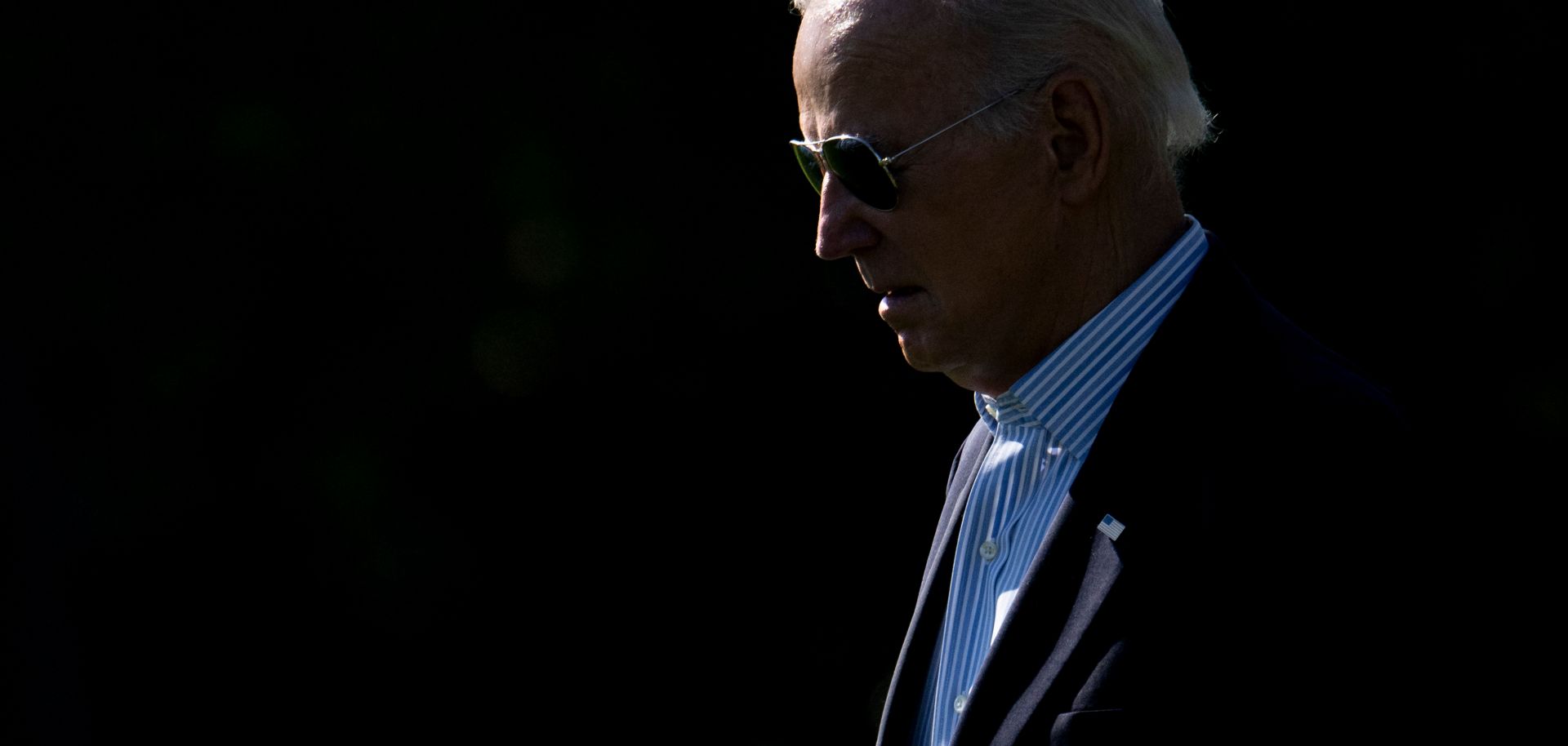
U.S. President Joe Biden's withdrawal from the presidential race and endorsement of Vice President Kamala Harris make her the likely Democratic candidate. While any Democratic president would face significant obstacles in enacting policy due to legislative and judicial constraints, foreign policy positions would remain largely aligned with Biden's, particularly on China, Russia and NATO. After weeks of speculation, Biden dropped out of the November presidential race July 21 due to electability concerns and endorsed Harris for the presidency. Afterward, Harris officially announced that she was seeking the party's nomination for president. Biden's endorsement does not immediately make Harris the party's official nominee, but it gives her an advantage over other potential candidates, such as California Gov. Gavin Newsom. Shortly after Biden’s announcement, a new filing with the Federal Election Commission switched the official Biden campaign previously known as "Biden for President" to "Harris to President," making the Biden campaign now the Harris campaign.
Biden's endorsement of Harris positions her as the likely candidate despite other potential challengers. While Biden was the Democratic Party's presumptive nominee and won state primary votes easily, he was not yet the party's official nominee, which in the U.S. political system only occurs after delegates officially pick the nominee. Prospective Democratic candidates will now compete for the support of the roughly 3,800 delegates who were previously going to vote for Biden. The Democratic National Committee and Democratic Party leaders will likely try to get delegates behind a consensus or near-consensus candidate, whether it be Harris or someone else, ahead of the Democratic National Convention scheduled for Aug. 19-22 in Chicago. The DNC has already been considering holding a virtual vote ahead of the convention to nominate Biden as the party's official candidate. It is possible that if there is a clear candidate (most likely Harris) then a pre-convention vote for a nominee would allow for the convention to proceed and give time for the new candidate to raise campaign funds and for various mundane processes to be carried out, like printing new campaign posters, pins and signs. It would also allow the new candidate to quickly vet potential running mates, usually a long and arduous process, and pick one. In the absence of a clear candidate, then the Democratic Party will hold an open convention. If this were to occur, intense horse-trading and lobbying at the convention would ensue to select a candidate, a process that could take several votes.
- As many Democrats view Republican presidential candidate and former President Donald Trump as a threat to U.S. democracy, party leaders will likely try to avoid an open convention, as its chaotic nature would only likely increase the comparatively more organized Republican Party ticket's chances of winning. For this reason, Biden's endorsement of Harris is significant, making her the most likely candidate.
Many Democratic candidates hold more progressive stances than Biden on issues such as climate change, student debt relief and data privacy, but will likely face significant obstacles in enacting these policies due to a lack of legislative support and potential court challenges. Most Democratic candidates are more progressive than the president on a number of issues. Harris, for example, has called for more aggressive action on climate change and banning the oil and gas industry's use of hydraulic fracturing, called for more action on student debt relief, and called for more action pushing against states that have restricted access to abortion. Harris (and Newsom) are more likely to back more significant regulatory action on data privacy to protect people's personal information and back a stronger push for regulations on artificial intelligence and the risks it poses to Americans. If elected, however, they will likely face significant constraints on being more progressive than Biden on domestic policy. Legislative action on major progressive issues will be a nonstarter, as the Democratic Party will lack a supermajority in the Senate needed to bypass a Republican filibuster without some Republican support, forcing Harris and others to rely more on executive action to implement any shift to the left — a move that will run into court challenges. The conservative-majority Supreme Court has also ruled against progressive policies on a number of different issues, including affirmative action in college admissions, student debt relief and abortion rights, likely meaning federal courts will likely block any attempt to use executive action to push a more progressive agenda than Biden's agenda. Moreover, the Supreme Court's June ruling against so-called Chevron deference has curtailed the ability to use executive action. Moreover, the Biden administration's push against Big Tech companies over data privacy and antitrust concerns — something supported by many progressives — has struggled once cases brought by the Federal Trade Commission and Justice Department have reached court.
The new Democratic candidate is likely to align closely with Biden's foreign policy, particularly on China, Russia and NATO, though there is some debate within the party on the extent of U.S. support for Israel. On foreign policy, it is highly likely that a different Democratic candidate largely aligns with Biden entirely. The Democratic Party is largely aligned with Biden's position on most foreign policy issues. Having a strong policy toward China and targeting China with technology restrictions and even tariffs is popular across the U.S. political system given the perceived rising strategic threat China poses to U.S. interests and the U.S. economy, meaning there will likely be no change in policy. The same is true about the threat that Russia poses and the need to work with NATO and European allies to support Ukraine against Russia. A key area where there is debate within the party on foreign policy, however, is the extent to which the United States should support Israel and continue to give arms to Israel. Pro-Palestine and anti-Israel protests and counterprotests at college and university campuses earlier in 2024 put Biden in a political bind, as he was steadfast in supporting Israel against Hamas and Iran. Due in part to geopolitical pragmatism — and to the fact that the majority of Americans back U.S. support for Israel — it is unlikely that another Democratic candidate's relationship with Israel would differ significantly. The United States may more frequently sanction far-right Israelis, including government officials, for their support of various policy measures, like Israeli settlements in Palestine. But the United States would still be unlikely to meaningfully drop or reduce military and political support for Israel against Hamas and Iran. U.S. efforts to negotiate a deal between Saudi Arabia and Israel that includes normalization is also unlikely to change, as resolving differences between its two long-standing Middle Eastern partners is crucial to the push against Iran, and eventually would allow the United States to shift its focus to China and the Indo-Pacific.
