
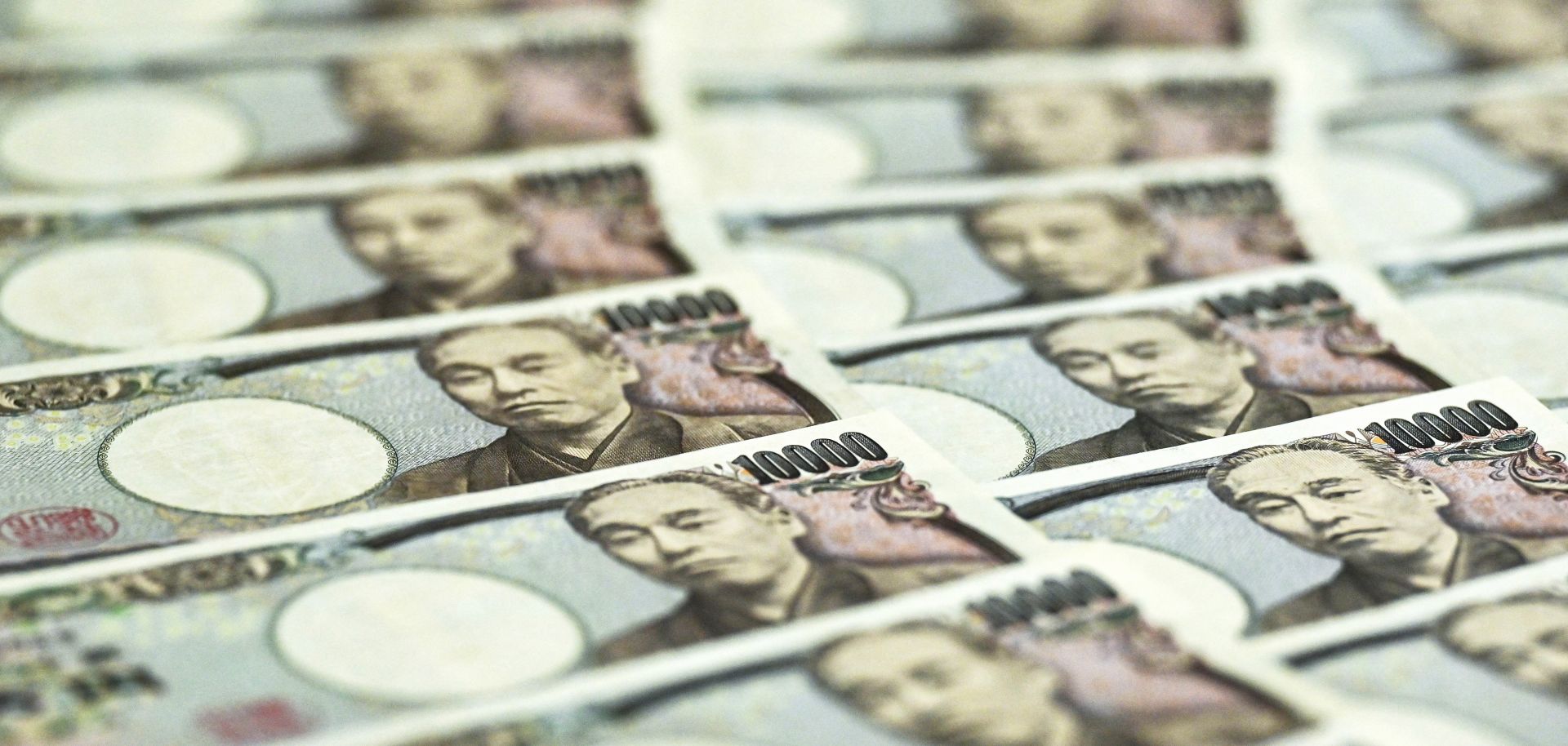
A decision by the Bank of Japan to end negative interest rate and yield curve control policies is meant to reestablish greater monetary policy flexibility, and will benefit the Japanese banking sector. On March 19, the bank announced that it would exit its negative interest rate policy and end its yield curve control policies, marking the first interest rate increase in 17 years. The Bank of Japan expressed hope that it can sustainably reach its 2-percentage inflation target in light of favorable recent wage growth dynamics. The central bank also ended its multitier deposit policy that had helped shield banks from the effects of negative interest rates. The Bank of Japan also announced that it will continue its policy of buying 6 trillion yen (about $40 billion) worth of government bonds a month, though the bank governor said the bank planned to purchase fewer Japanese government bond purchases at some point. Finally, the bank said it would refrain from purchasing exchange-traded funds and real estate investment trusts. The decision to reform the operational framework and raise short-term interest rates was taken in the context of rapidly declining headline and core inflation but unusually strong wage inflation.
- The central bank raised its main policy rate to 0-0.1% and simplified the previous multitier deposit rate system. It also abolished its long-standing yield curve control policy, which had been in place since 2016 and which the Bank of Japan had modified several times in the 11 months since bank Gov. Kazuo Ueda took office. In October 2023, the bank modified its yield curve-control policy by switching from a 1% ceiling (with a 0.5%-point band) on 10-year government bond yields to a reference rate.
- Year-on-year inflation declined to 2.2% in January from 2.6% in December 2023. Core inflation fell from 2.3% to 2%, down from 2.5% in November, the third consecutive monthly decline. The Bank of Japan's inflation target is 2%.
- Japan's biggest companies agreed the week of March 17 to a major wage increase of 5.3% for 2024, the largest pay increase in more than 30 years.
The Bank of Japan became keen to exit unconventional policies like negative interest rates and yield curve control following the acceleration of inflation in 2021 in a bid for greater policy flexibility to fight inflation. The 2021-22 supply-side and currency-driven inflation surge caught the bank engaged in the application of unconventional monetary policies meant to increase inflation, in part by restricting its policy flexibility. The sudden surge in inflation almost caused the central bank to make a sudden, disruptive policy change, but central banks prize stability and predictability and it did not. In the event of another surge in inflation, the March 19 monetary policy adjustment and reform of the bank's operational framework will give it more flexibility to respond. But inflation dynamics in the past three to six months raise doubts as to whether monetary policy tightening was necessary. Both headline and core inflation have been declining. The Bank of Japan itself seems to harbor doubts as to whether it can reach its 2% inflation target on a sustainable basis. With inflation falling, this was perhaps the last opportunity to exit its unconventional policy, because tightening policy while inflation is running below target would have been harder to justify. At the very least, the inflation outlook remains highly uncertain. The size of the interest rate adjustment and the fact that the Bank of Japan will continue to buy Japanese government bonds suggests that the bank is equally uncertain.
- Japanese core inflation peaked at a multidecade high of 4.2% in January 2023. In January 2024, it fell to 2%. The combination of declining inflation and accelerating wage growth in the context of subdued economic activity creates a very uncertain outlook for future price dynamics. Structurally, there is very little reason to expect inflation will accelerate, not least because much of Japan's inflation was largely due to a weak exchange rate, higher import prices and COVID-19 related supply chain disruptions, all of which are transitory.
- Although the Bank of Japan exited its yield curve control policy, it will continue to buy 6 trillion yen worth of government bonds a month and it will stand ready to intervene in case of long-term yield spikes. This suggests that the bank recognizes the need to maintain policy flexibility to insure against future disinflation, not inflation.
The macroeconomic impact of the Bank of Japan's decision will be limited, but the Japanese banking sector is set to benefit from greater profitability on account of higher interest rates. The end of negative interest rates will help boost Japanese banks' profitability and share prices. Meanwhile, the Japanese yen remains at multidecade lows, but this is largely due to high U.S. interest rates and recent revisions regarding how quickly and by how much the Federal Reserve will lower interest rates this year. The 10-basis point increase in Japanese short-term rates will have a negligible impact on the continued large U.S.-Japanese interest rate differential. Once the interest rate differential narrows more significantly, the Japanese yen will appreciate and imports into Japan will become cheaper, which will exert further downward pressure on inflation. In the medium term, inflation will likely be too low rather than too high, particularly once the Fed begins lowering interest rates and the yen appreciates. Higher nominal interest rates, including higher long-term interest rates, would increase the government's debt-servicing costs in yen terms. But while higher interest rates will make for higher government interest payments, higher inflation means the real interest and debt burden will not increase. A change in nominal interest rates will only negatively affect medium-term government debt dynamics if it translates into increasing real interest rates. In the short term, the bank of Japan's decisions will have a very limited impact on government debt dynamics. Much will depend on where real interest ends up, and this is a function of both interest rates and inflation.
- The Japanese equity market index is near all-time highs, largely on account of a weaker yen, higher inflation and perhaps recent corporate reform. The shares of Japan's largest banks have rallied as much as 80% over the past two years due to an improving outlook for profitability due to higher nominal interest rates.
- The Japanese yen remains near 30+ year lows against the dollar due to the large U.S.-Japanese interest rate differential. The Bank of Japan's short-term rate is 0-0.1%, while the Fed funds rate is 5.25-5.5%. Japanese 10-year government bond yields remained virtually unchanged at below 0.8%, roughly the same level as a month ago. Equivalent U.S. yields are 4.3%.
