
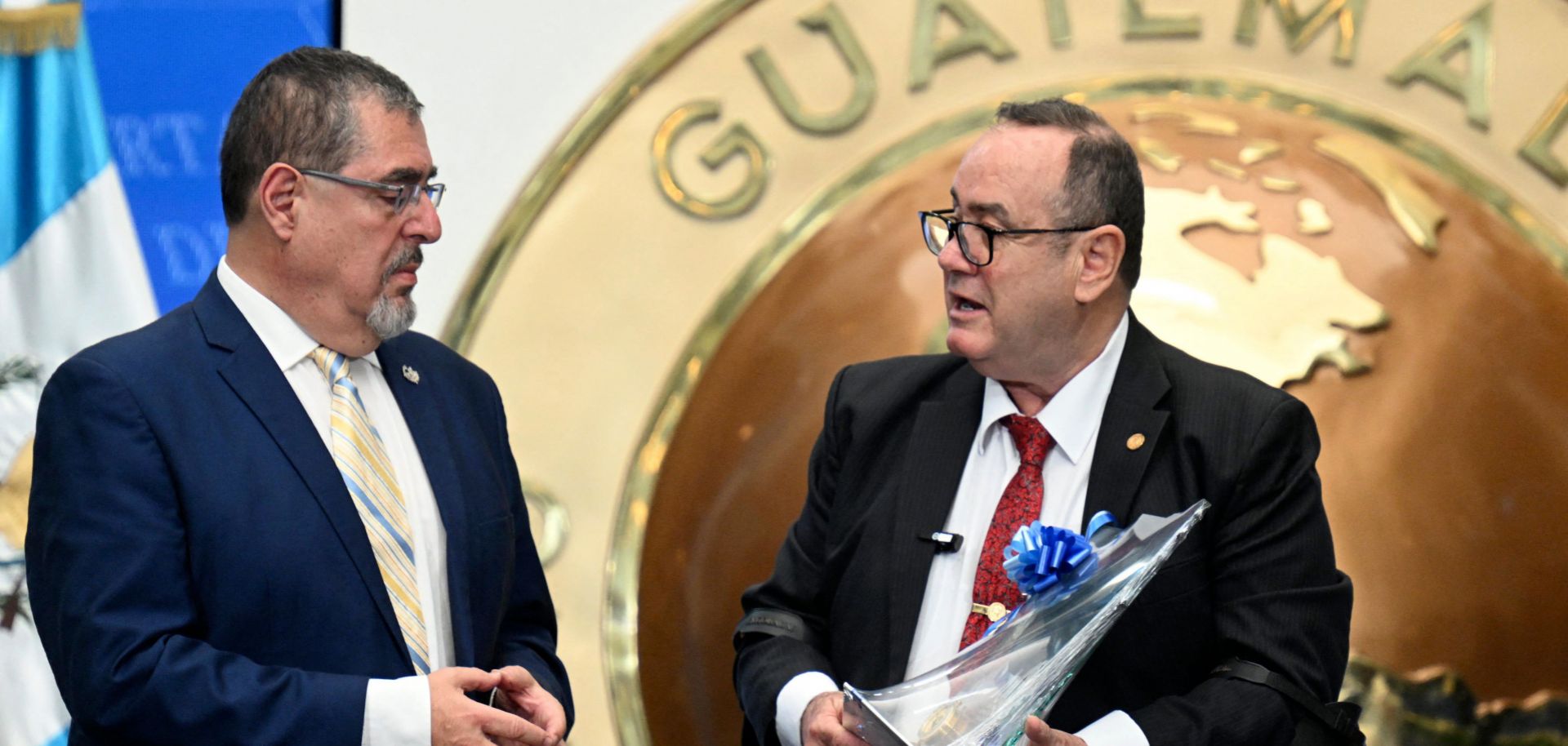
Threats of further U.S. sanctions against Guatemala are unlikely to sway the country's political elite from potential efforts to challenge the results of the presidential election, creating risks of unrest, compliance challenges and potential political instability. While visiting Guatemala on Oct. 24, U.S. Assistant Secretary of State for Western Hemisphere Affairs Brian A. Nichols said the United States could impose sector-based sanctions against Guatemala over the country's democratic backsliding. The statement referred to ongoing legal actions by the Attorney General's office targeting President-elect Bernardo Arevalo and the Supreme Electoral Tribunal (TSE) since Arevalo's victory in the Aug. 20 presidential runoff election. Attorney General Consuelo Porras' office has conducted repeated raids against the TSE and launched investigations into Arevalo and his Seed Movement party, which critics allege are part of broader efforts to invalidate the results of the presidential election and prevent Arevalo from taking office on Jan. 14, 2024. Nichols met with Arevalo on Oct. 24 to discuss the transition of power and the next government; however, Nichols did not meet with outgoing President Alejandro Giammattei, who said the meeting was "not convenient." Nichols instead met with Minister of Foreign Affairs Mario Bucaro.
- Arevalo surprised many by coming in second place in the first round of the presidential election on June 25, putting him in the Aug. 20 runoff against National Unity of Hope (UNE) party candidate and former first lady Sandra Torres — a close ally of President Giammattei. Arevalo won the runoff in a landslide with approximately 60% of the vote.
- Actions against the TSE included a raid on Sept. 12, during which members of the Attorney General's office controversially opened ballot boxes and photographed their contents. On Oct. 23, the Attorney General's office issued a request to the TSE for information on the computer program and backup services used for the 2023 election in response to a complaint of a possible "abuse of authority" and fraud.
- Arevalo campaigned on promises to crack down on government corruption — a major concern among Guatemalan citizens but a direct threat to the country's political elite, including President Giammattei and Attorney General Porras, both of whom have faced corruption allegations.
Nichols' actions are likely intended to demonstrate U.S. support for the president-elect and disincentivize legal actions against him. The U.S. government has expressed concern over risks to Guatemala's democratic institutions since the first round of the election. As concern regarding potential efforts to undermine the election results increased over subsequent months, the United States issued additional statements and imposed sanctions on members of the Attorney General's office. Nichols' comments on the potential for further sanctions to target specific sectors reflect U.S. sanctions on Nicaragua over authoritarianism and human rights abuses under President Daniel Ortega. Actions against Nicaragua have included sanctions against particular officials, as well as measures targeting the mining sector. Nichols' meeting with Arevalo and Giammattei's apparent snubbing of Nicols' visit also demonstrates increasing tension between the United States and the current Guatemalan government, likely as a result of U.S. criticism.
- U.S. sanctions against Guatemalan officials have so far been limited to measures restricting entry into the United States. Porras has been under such sanctions since 2021 over allegations that she hindered corruption investigations. The United States similarly sanctioned Prosecutor Rafael Curruchiche and Judge Fredy Orellana over their actions related to the 2023 elections.
- In October 2022, President Biden signed an executive order giving the U.S. Treasury Department "the authority to target certain persons that operate or have operated in the gold sector of the Nicaraguan economy." The order also allowed the government to ban new U.S. investment in specific economic sectors.
- The Biden administration's concern about democratic backsliding in Guatemala is part of a wider regional policy of supporting anti-corruption efforts and promoting regional economic and political stability. These efforts have previously put the Biden administration at odds with other governments in the region over their unwillingness to cooperate with anti-corruption efforts, including El Salvador.
U.S. retaliatory threats are unlikely to push Guatemala's current government to change course due to the United States' limited options for broader economic sanctions and political constraints, preventing the political elite from facing more significant sanctions risks. It remains unclear if the Attorney General's office will launch a formal effort claiming that the results are invalid to prevent Arevalo from taking office. The Attorney General's office could launch legal actions challenging the election results at any time or take actions against him after he assumes office, including impeaching or arresting him. Regardless, the threat of U.S. sanctions is unlikely to significantly change the political elite's calculus on how to proceed. Materially, Guatemala is considerably less dependent on extractive industries than Nicaragua, where officials have used the gold sector to enrich themselves. The largest sectors in Guatemala are agriculture and manufactured products, the sanctioning of which would cause significant economic harm to a large portion of Guatemala's poorer citizens, making them an unattractive option for U.S. sanctions. In addition, previous corruption allegations against Guatemalan officials indicate the prevalence of bribery, nepotism and involvement in organized crime — all schemes that elude sector-wide sanctions. Guatemala remains an important partner in combating the regional migration crisis, a significant priority for the Biden administration as the U.S. moves into the 2024 presidential election cycle, which will further constrain U.S. sanction options. Finally, while democratic backsliding and worsening corruption in Guatemala are of significant concern for the country's long-term political situation, repression is nowhere near that under Nicaragua's government, which will likely lead the United States to limit retaliatory actions further. While the United States may opt to increase sanctions in response to actions undermining democratic norms, such sanctions will likely not be expansive and will fall short of creating significant challenges for Guatemala's political elite, therefore failing to sway members of the current government from their planned course of action.
- Gold, a major funding source for the Nicaraguan government, accounted for 14.2% of the country's total exports in 2021, according to the Observatory of Economic Complexity, providing an attractive target for U.S. sanctions. In comparison, precious metals accounted for only 0.17% of Guatemala's total exports in 2021, with broader extractive industries only ranking low in economic importance compared to other sectors.
As Guatemala's political crisis continues, operations in the country will face challenges from potential additional U.S. sanctions, mass unrest and political instability. If the United States imposes further sanctions — either in response to officials stopping Arevalo from taking office in January or additional legal actions against him over the coming months or years — organizations operating in the country may be forced to adjust their operations to ensure compliance. Large organizations with significant operations in the country may additionally face greater scrutiny from U.S. authorities as well as increasing operating costs. Regardless of how the United States responds, there remains a significant risk of mass unrest following roadblock demonstrations in support of Arevalo led by the "48 Cantones" Indigenous activist group from Oct. 2-22, which created significant disruptions to regional transportation and business activities, the daily costs of which are estimated to be in the millions of dollars. Though the group announced on Oct. 22 that future protests would focus on the Public Ministry in Guatemala City, additional roadblock demonstrations have occurred over subsequent days, indicating the continuing risk of disruptions to supply chains and transportation. Future protests could also see higher levels of violence; Interior Minister David Barrientos resigned on Oct. 16 following Attorney General Porras's criticism that he failed to effectively end disruptive protests, indicating the risk that his replacement, Byron Rene Bor Illescas (a retired brigadier general), could be more willing to respond to demonstrations with force. Such a development would increase safety risks to demonstrators and bystanders alike. Finally, the continuing lack of clarity on whether Arevalo will be allowed to take office means it is unclear what the policies of the Guatemalan government will be in three months. Furthermore, even if Arevalo does take office, it is unlikely that he will be able to govern effectively, given challenges from the political elite and almost certain hostility from the political elite-controlled Congress. Under these conditions, the government may be unable to pass needed legislation and respond to a range of crises, including economic challenges, food insecurity, crime and high regional migration.
- At the height of nationwide demonstrations, protesters erected over 100 roadblocks per day throughout the country. The Association of Exporters of Guatemala reported that El Salvador did not receive $52 million in shipments from the country during the first 10 days of the roadblock protests.
- During a roadblock demonstration in the western city of Malacatan, a group of 50 people armed with guns and other weapons attacked protesters, killing one.
