
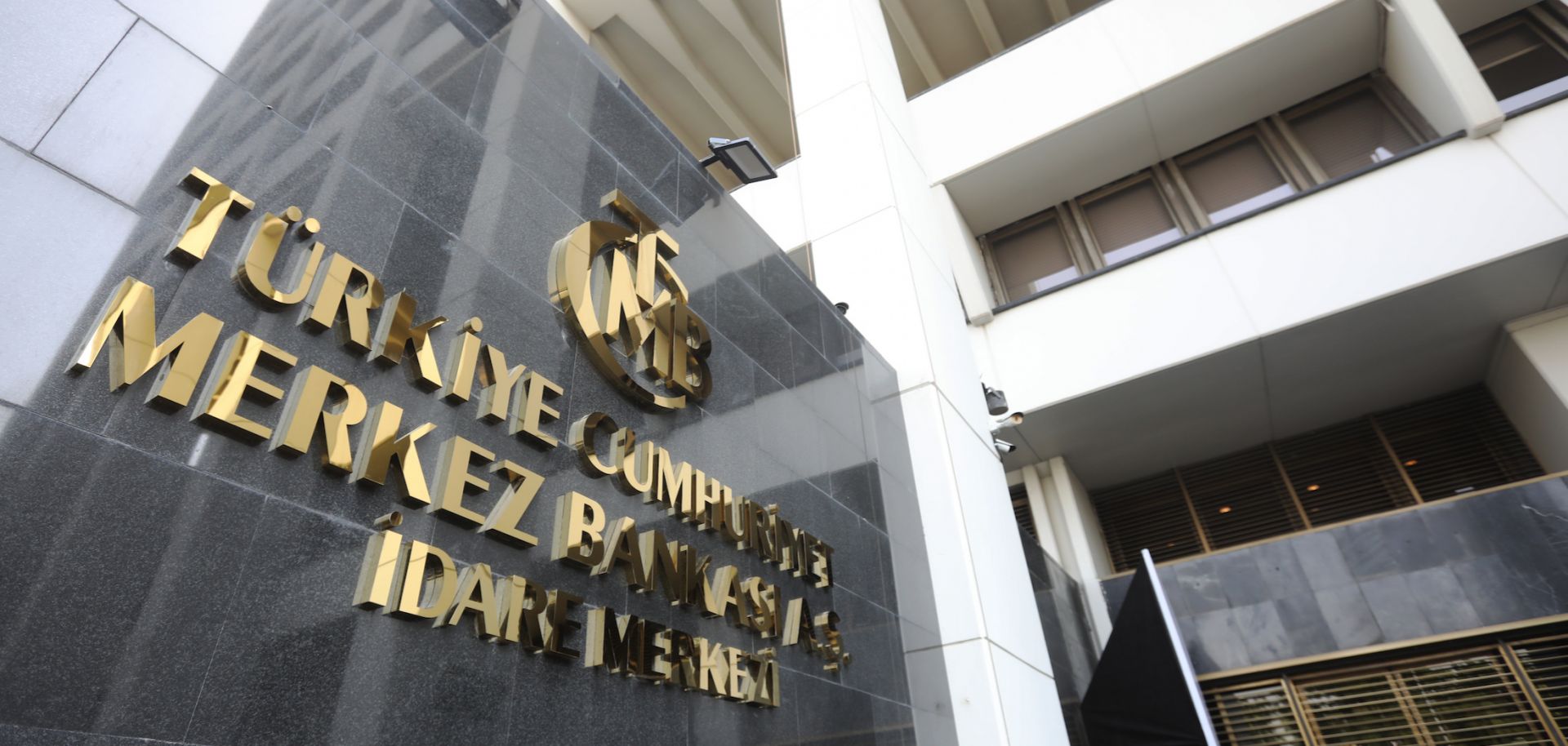
Turkey's government is gradually turning toward more orthodox economic policies in an attempt to improve the country's financial fundamentals. But possibly as soon as later this year and certainly by 2027, Ankara will once again face political incentives to revert to less stability-oriented, pro-growth measures. Following his reelection in May, Turkish President Recep Tayyip Erdogan appointed a technocratically-oriented economic team with a mandate to shift policies toward greater orthodoxy in an attempt to rein in inflation. The most prominent members of this team are Finance Minister Mehmet Simsek, a former finance and deputy prime minister, and Central Bank governor Hafize Gaye Erkan, a former Goldman Sachs executive. The new economic team has promised a more ''rational'' policy and a ''credible'' program of macroeconomic adjustment and reform after years of unconventional macro- and microeconomic policies. In particular, Simsek and Erkan aim to roll back some of the interventionist, market-distorting policies that were introduced in the run-up to the 2023 general elections, as well as introduce new policies to help Turkey shift back toward a market-based system.
- The Turkish Central Bank raised its nominal central policy rate from 8.5% to 15% in June, and then to 17.5% in July. It has also refrained from intervening in the foreign exchange market in order to let the exchange rate depreciate and the balance of payments adjust. Before Erkan's appointment, the government artificially maintained the lira's value against the dollar, which drained the country's foreign exchange reserves, in part to ensure that essential imports remained relatively affordable and contain domestic inflation ahead of the May 2023 elections.
- In July, the government announced a sharp increase in petrol taxes to improve the government's fiscal position. And in August, the Turkish government increased the amount of reserves banks must hold against short-term foreign exchange deposits in an attempt to encourage greater demand for the lira.
- In addition to introducing these new policies, the central bank has rolled back several other distorting micro-economic measures that aimed to limit domestic demand for dollars. The retired policies include a measure that required banks to hold additional lira reserves if they held foreign currency, a measure that insured depositors against a depreciation of the lira, and a measure that penalized banks if they failed to convert dollars into foreign exchange-protected accounts.
A prolonged period of unorthodox macroeconomic policies in the run-up to Turkey's May election raised inflation and likely increased financial risks in the banking sector. The extra-loose monetary policy that preceded the election pushed inflation to multi-decade highs that threatened to send the country into a balance-of-payments crisis. In an attempt to limit the lira's devaluation, the last government spent much of its foreign exchange reserves to stabilize the exchange rate and implemented policies that distorted the market. The combination of these policies has led to several macroeconomic vulnerabilities. For one, the central bank has kept its key interest rate in negative territory, which has fueled unsustainable monetary expansion and inflation. Turkey's low real interest rates have also led to rapid loan growth and deteriorating bank asset quality, which will increase the banking sector's financial risk, particularly once interest rates normalize. Additionally, low foreign currency reserves in the wake of propping up the lira have limited the central bank's ability to intervene in support of the currency. The continuation of these pro-growth policies following the election would have increased the risk of greater economic and financial instability, which is why the new government has shifted to more orthodox, stability-oriented policies since taking office.
- High inflation improves a government's fiscal position in the short term, as government revenues increase in line with inflation, while most expenditures are initially nominally fixed. In Turkey's case, it is difficult to say for sure how significant the increase of financial risk has been, though it is clear that high inflation is flattering the country's fiscal position — not least due to extremely negative interest rates.
- Turkey's inflation rate hit a 24-year high of 85% in October. Inflation has since eased but remains high, reaching 48% in July.
- To keep its economy from crisis, Turkey has also recently sought to ease tensions with former regional rivals like Saudi Arabia and the United Arab Emirates, in the hopes of securing investment, currency swaps and other financial aid from these wealthy Arab Gulf countries.
For now, the government will likely continue to gradually shift toward more orthodox policies in order to improve Turkey's economic fundamentals. From President Erdogan's point of view, a scenario where economic growth slows and unemployment somewhat increases is still preferable to a politically costly financial or economic crisis. Moreover, improved fundamentals will allow authorities to again stimulate the economy in the future. The economic and political imperative to prevent Turkey's economic fundamentals from further deteriorating thus makes it likely that Turkey will stick to gradual economic adjustment in the short term. Indeed, Turkey's economy has already shown signs of stabilization as a result of this shift. In July, Turkey registered a current account surplus, while spreads on five-year sovereign default swaps fell to a two-year low of less than 400 basis points. But while Ankara may be returning to orthodoxy by allowing for a market-determined exchange rate, limiting fiscal risks (e.g. insuring deposits against lira depreciation) and tightening monetary policy, the government has taken a more gradual approach to adjustment than markets had expected. This probably indicates that key decision-makers do not believe Turkey faces an immediate risk of financial destabilization, thus reducing pressure to implement harsher reforms. A more measured approach to macroeconomic adjustment is also politically more palatable, as it promises less short-term economic pain compared with a stronger adjustment program, which would risk triggering a sharper economic slowdown and more widespread unemployment.
- The relative lack of institutional checks and balances in Turkey's government means the implementation of economic policies is uniquely beholden to the president's personal beliefs and political-electoral calculus. While the Turkish Central Bank is technically independent, President Erdogan has frequently replaced bank chiefs in recent years when they refuse to abide by his monetary policy of choice.
But the Turkish government's commitment to adjustment and reform may weaken ahead of 2024 local elections — and especially the 2028 general election — which will open the door to heightened economic risks in the coming years. For the time being, the Turkish government is focused on avoiding further financial instability risks by pursuing macro adjustment. But in the medium-to-long term, Ankara will be tempted to revert back to less stability-oriented, pro-growth policies. Local elections in March 2024 will serve as the first test of Turkey's commitment to macroeconomic stabilization. If President Erdogan believes that shifting back to a growth-oriented policy increases his ruling Justice and Development Party (AKP)'s chances of regaining Istanbul or Ankara in the local elections, he will probably force his economic team to abandon or adjust its adjustment policy sometime during the second half of 2023. The larger test, however, will be Turkey's 2028 general election. While Erdogan will be unable to run for president again due to term limits, he'll probably still seek to keep the AKP in power, which would help shield him from political and legal attacks after he leaves office. This means that even if he decides reversing policies is not worth the risk ahead of the 2024 local ballot, President Erodgan will be incentivized to boost his AKP-led government's popularity ahead of the 2028 ballot by promoting expansionary economic measures. The probability of a return to unorthodox policies will thus increase toward the end of 2026 or early 2027 as the general election approaches. Such a return to growth-oriented policies would lead to a renewed increase in inflation and a build-up of external vulnerabilities.
