
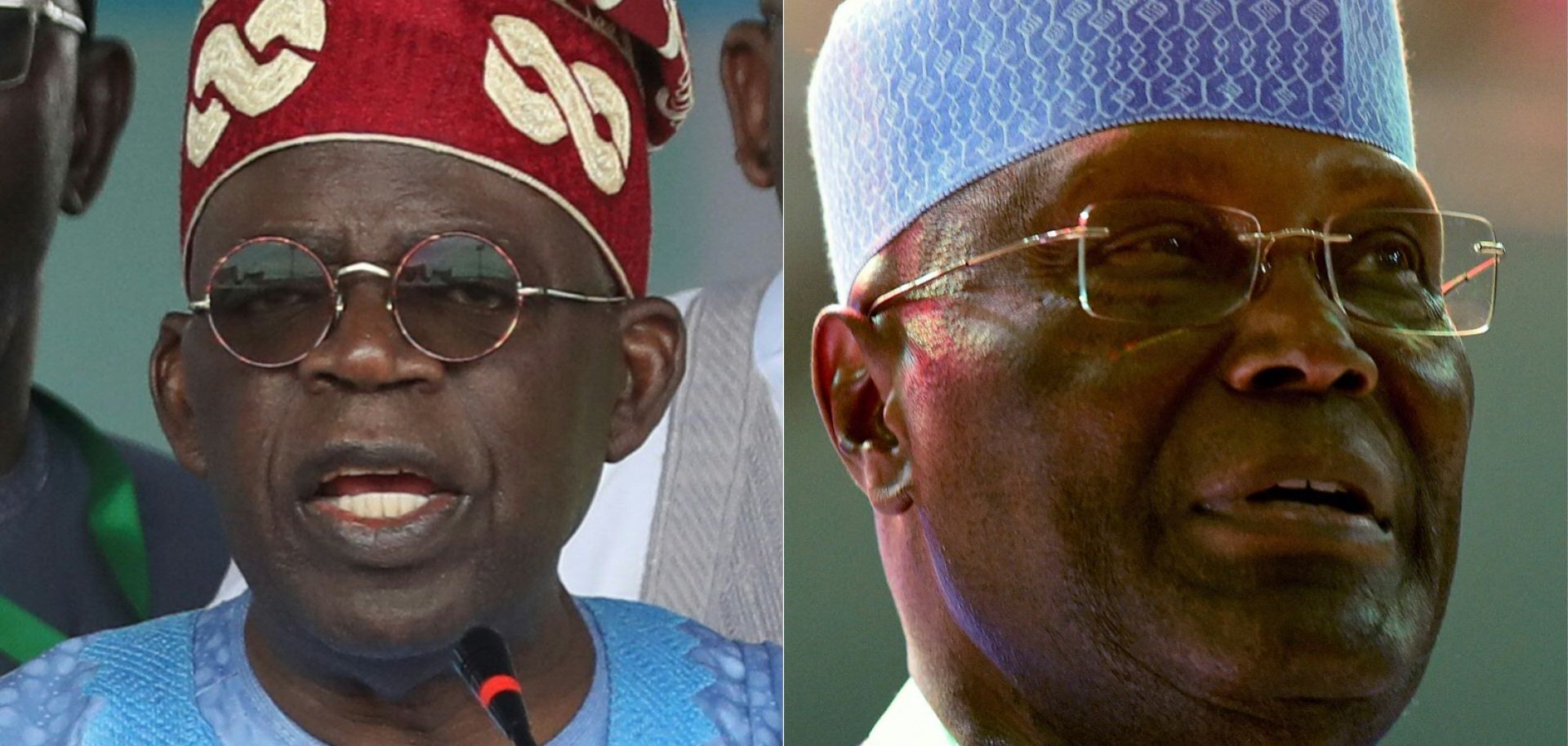
A combination of file pictures shows the two main candidates running in Nigeria’s 2023 presidential election; Bola Tinubu of the ruling All Progressive Congress is seen on the left, and Atiku Abubakar of the opposition Peoples’ Democratic Party is seen on the right.
Nigeria’s next presidential election will test the continuity of the country’s informal distribution of power between regions and religious groups, which could create winners and losers in terms of who receives more government funding and will raise the risk of sectarian clashes. During the ruling party’s June 6-8 convention, delegates from the All Progressives Congress (APC) nominated Bola Tinubu, a longtime political kingmaker who governed the southwestern state of Lagos from 1999 to 2007, as their candidate for Nigeria’s February 2023 presidential election. Tinubu’s primary challenger will be former Vice President Atiku Abubakar, who received the nomination from Nigeria's main opposition Peoples’ Democratic Party (PDP) on May 31. Both Tinubu and Abubakar have released “manifestos” outlining their legislative priorities that will undergird their respective potential administrations:
- Bola Tinubu, ruling party candidate: 70-year-old Tinubu is widely credited for developing Lagos — the most populous city in Nigeria, which is the most populous country in Africa — into the massive commercial hub it is today. He retains widespread support across southwestern and northwestern Nigeria, despite being dogged by hundreds of corruption allegations spanning decades. If elected president, Tinubu has pledged to tackle growing insecurity in the north resulting from the local Islamic State affiliate, ongoing farmer-herder conflict and local “bandit” groups. He’s also promised to address widespread poverty and unemployment, as well as advance Nigeria’s manufacturing capabilities.
- Atiku Abubakar, opposition candidate: 75-year-old Abubakar has run for the presidency five times and served as vice president for former Nigerian President Olusegun Obasanjo between 1999 to 2007. Abubakar has focused his 2022 presidential campaign platform on boosting Nigeria’s economy through private-sector growth and job creation by dismantling what he calls the government monopoly on the country’s infrastructural sectors (rail transportation, oil refineries and power generation).
But while Tinubu and Abubakar’s stated priorities on the campaign trail differ, the greater ideological platforms of the APC and PDP — the two parties that have dominated Nigeria’s political system since 2013 — are virtually indistinguishable. In February, many Nigerians will instead primarily base their vote on which candidate they feel is more likely to grant them resources based on ethnic, religious and geographic ties.
What's at Stake
In the lead-up to next year's vote, there are several key questions regarding the future of the Nigerian presidency and political system:
1. How will the election impact the future of presidential zoning?
Since 1999, Nigerian presidents have rotated between the country’s six “geopolitical zones” to promote a fair regional, religious and ethnic distribution of power in a patronage-based political system. Current President Muhammadu Buhari is Muslim and from Katsina state in Nigeria’s north-west zone. According to the informal practice known as “zoning” the presidency, this means that Nigeria’s next president should be Christian and from the south-east zone, or at the very least one of the three southern zones. But neither of the top contenders in the upcoming presidential race fit this profile. Tinubu from the ruling APC is Muslim, ethnic Yoruba and from the southwestern state of Lagos. His challenger Abubakar from the opposition PDP is also Muslim, as well as ethnic Fulani and from the northern state of Adamawa.
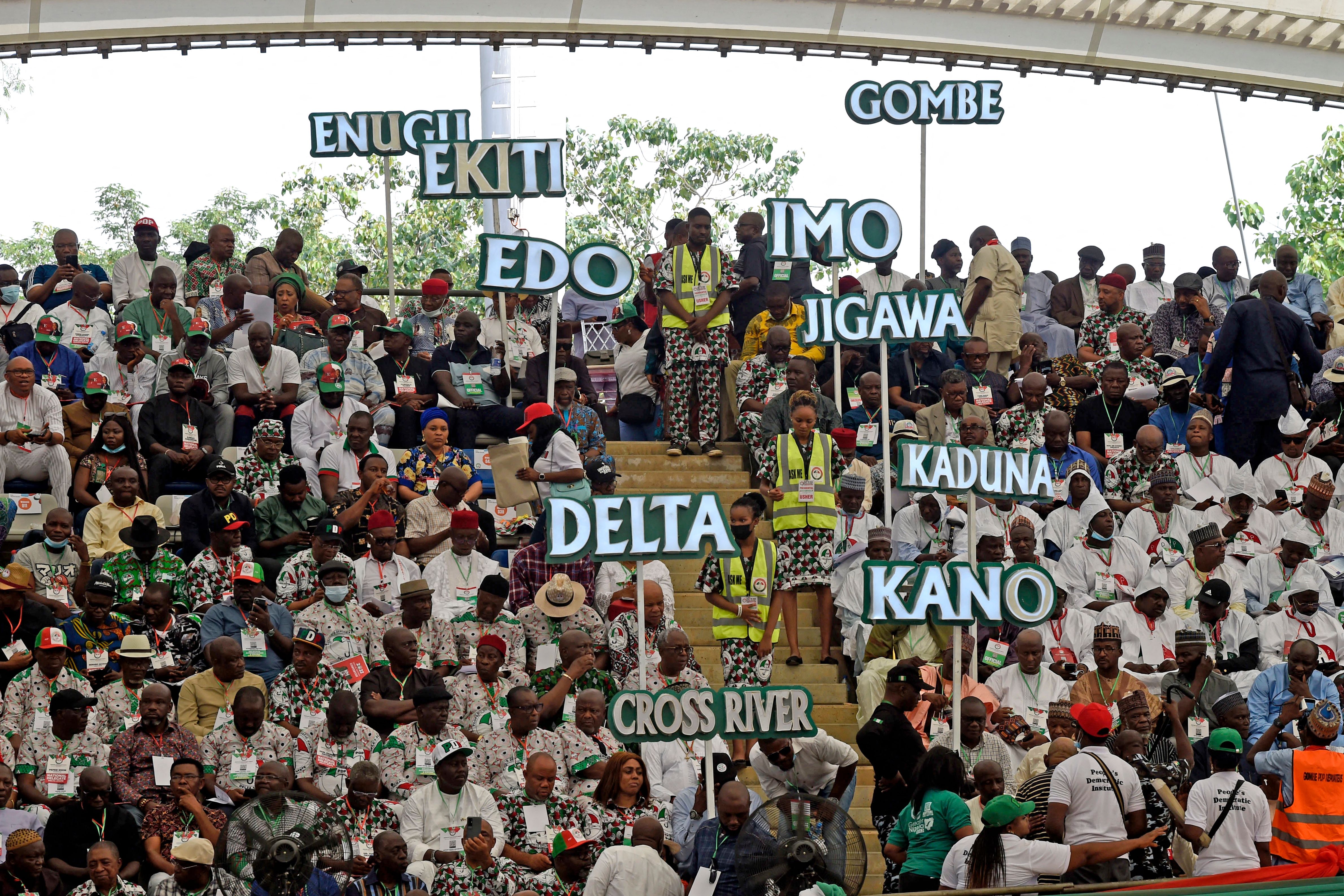
Delegates attend the opposition Peoples Democratic Party's presidential primary in Abuja, Nigeria, on May 28, 2022. (PIUS UTOMI EKPEI/AFP via Getty Images)
Tinubu’s election would adhere to the general zoning policy even if it doesn’t satisfy the unspoken agreement that the next president should be from the south-east zone. Even so, a Tinubu presidency would mean that zoning remains in effect (at least until the next election) and continue the trend of APC dominance. The party has been in power since 2013, and a Tinubu win would further legitimize the APC's claims of pan-Nigerian appeal and grassroots institutional support.
An Abubakar victory, on the other hand, would effectively end the informal zoning system for distributing power. A northern PDP presidency would support two-party dominance over rotational zoning, potentially spurring renewed debate over transferring greater powers to states and perhaps new methods of resource allocation, particularly from southerners snubbed by another president from the north.
2. How will religious identity impact the election and power distribution?
Additionally, the election of either candidate would continue Muslim dominance over the presidency. The influential Christian Association of Nigeria recently warned that the selection of a Muslim vice presidential candidate by the PDP and/or APC would be taken as a declaration of war. Given this risk, both parties will likely avoid a Muslim-Muslim presidential ticket for fear of exacerbating religious tensions. On June 16, Abubakar announced Ifeanyi Okowa, a two-term Christian state governor of Delta in the south-south zone, as his vice presidential nominee. Okowa’s selection is a nod to the Christian south, and likely an attempt to assure southern Christian voters of federal representation in an Abubakar presidency. Tinubu is expected to announce his vice presidential nomination on June 17.
But, that won’t change the fact the election is all but certain to yield another Muslim president, which will likely lead to increased calls for greater political representation from Christian groups and majority Christian regions in Nigeria’s south and southeast regardless. Continued Muslim dominance over the federal government could also result in increased Christian militancy and/or unrest in the southern regions. Southern politicians would likely use such an uptick in violence to bolster their calls for greater resources and representation.
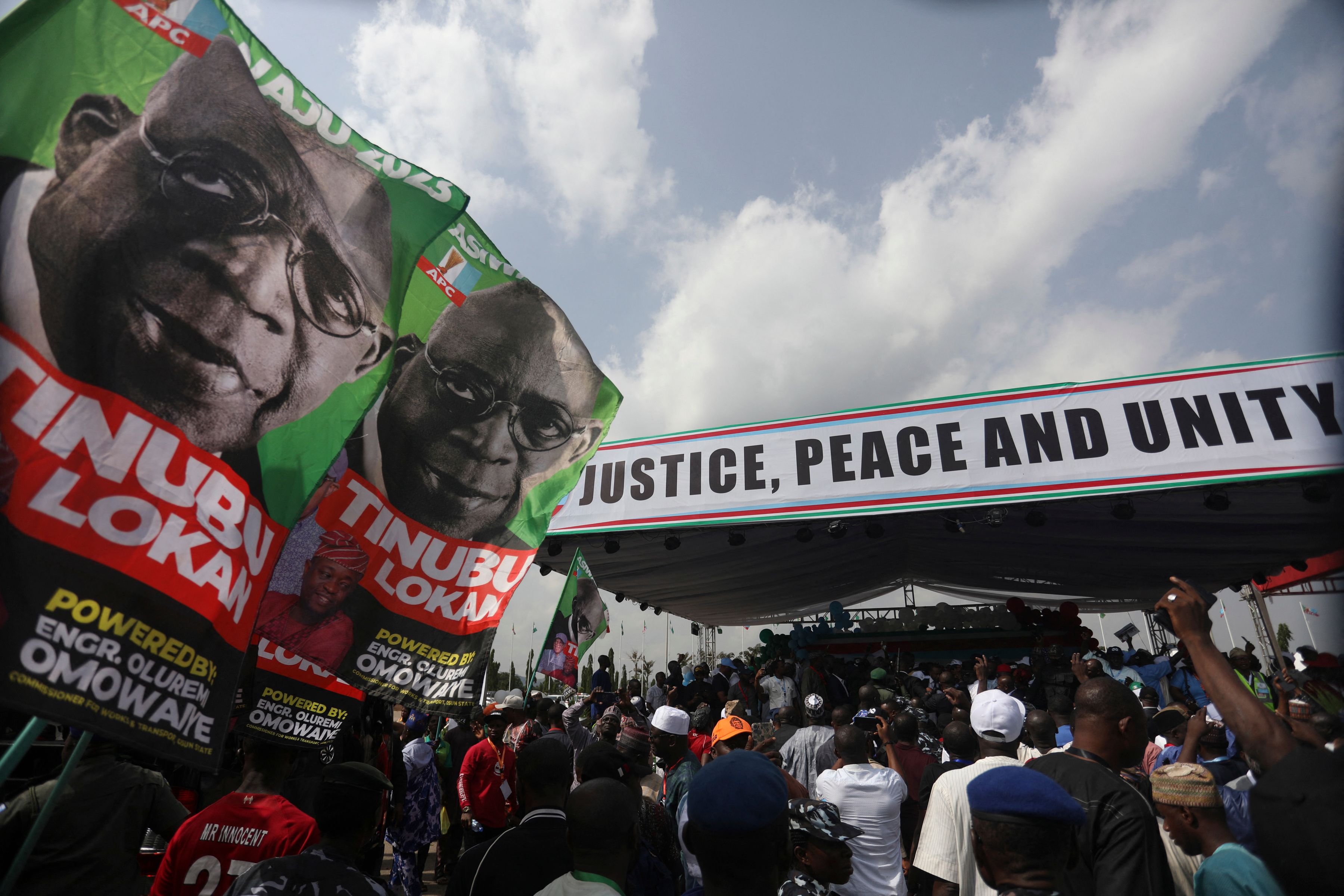
Supporters of Nigeria's ruling All Progressive Congress celebrate after the party announced Bola Tinubu as the winner of its presidential primary in Abuja, Nigeria on June 8, 2022. (KOLA SULAIMON/AFP via Getty Images)
3. How will the presidential candidates manage southern power blocs?
Nigeria’s next president will be forced to grapple with the historical rivalry between Lagos, the country’s southwestern economic hub, and the oil-rich states in Nigeria’s south and southeast that have long complained of being overlooked by the federal government.
This rivalry may pose an especially steep barrier for the ruling party candidate Tinubu, whose notoriety as the “godfather” of Lagos will likely hamper his popularity in Nigeria’s south-south and south-east zones. The APC could theoretically attempt to gain support in these areas by selecting someone like Rotimi Amaechi, a former transportation minister who hails from the southern state of Rivers, to run as Tinubu’s vice president. But selecting a local vice president is highly unlikely to offset concerns held by southern and southeastern voters regarding Tinubu’s vocal allegiance to Lagos and promises to steer investment to his home state, potentially in the form of new port and transportation projects. As such, the APC is far more likely to select a vice-presidential candidate from the north in order to satisfy influential northern governors within the party, though this will come at the risk of further alienating Nigerians in the country’s south-south and south-east zones.
For Abubakar, popular support for the PDP in the party’s historic strongholds (largely concentrated in 11 states in the southeastern parts of the country) will bolster his odds of securing votes, although perceptions that he will funnel resources to his home state in the north may mitigate his popularity. Abubakar may attempt to show allegiance to the south-south and south-east by proposing policies favorable to oil-producing states, like environmental restoration and greater investment in local employment opportunities. In the case of an Abubakar victory, the election of a president from the north-east zone would likely continue to see northern Nigeria receive disproportionate investment compared with the rest of the country, potentially resulting in a greater focus on the security fight against terrorism, banditry and insurgencies.
