
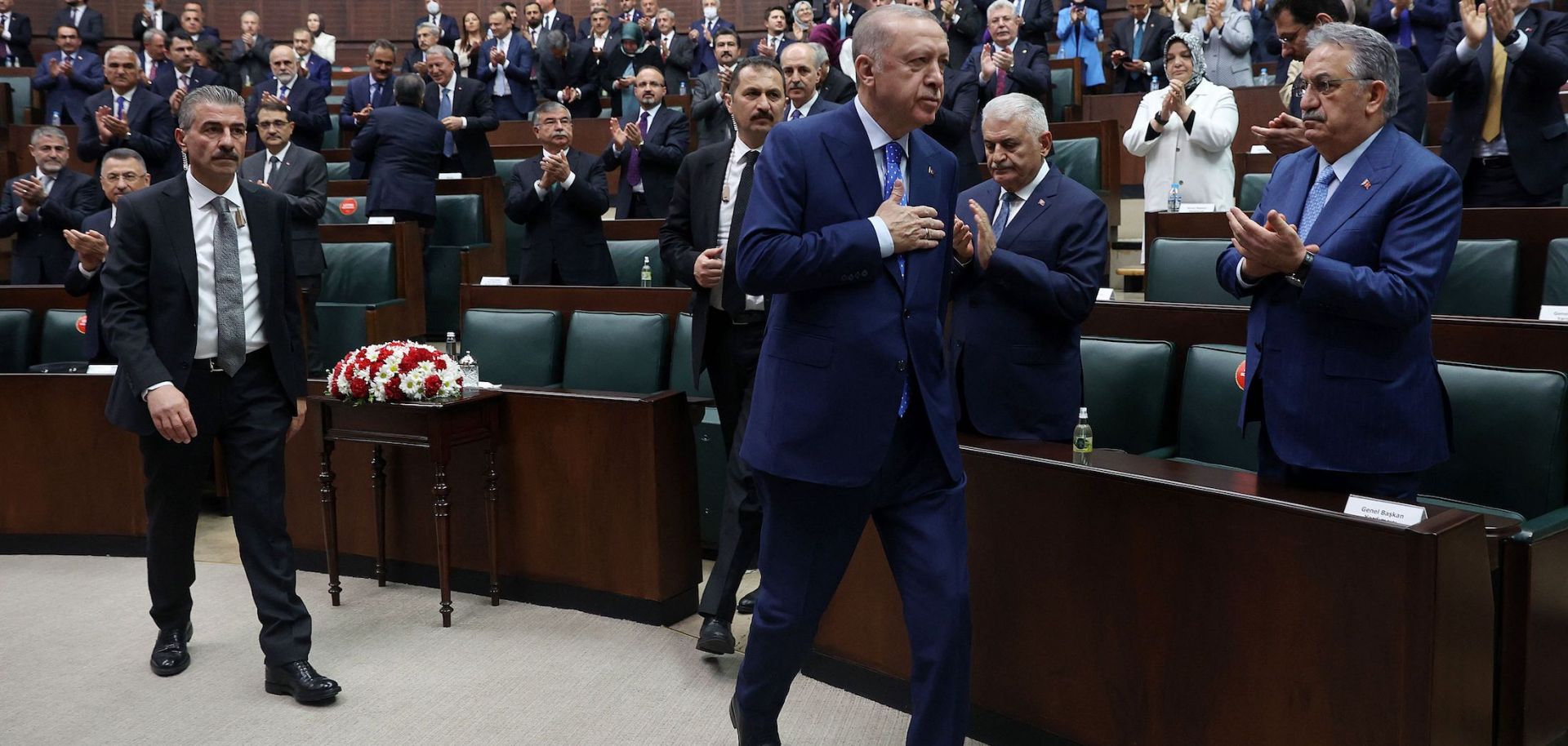
Turkish President Recep Tayyip Erdogan on May 18, 2022, at the Turkish Grand National Assembly in Ankara.
Ankara's strategy of delaying Finnish and Swedish membership in NATO to wrest concessions from Helsinki and Stockholm could jeopardize arms deals and aid packages for Turkey from NATO members. Turkish President Recep Tayyip Erdogan has threatened to veto Sweden's and Finland's efforts to join NATO in a bid for a foreign policy win he can display to Turkish voters increasingly skeptical of his government. To this end, Erdogan has objected to the two Nordic nations' entry into the trans-Atlantic alliance because of their support for Kurdish separatist organizations, and because they have prohibited arms exports to Turkey on human rights grounds. Erdogan has said he cannot accept new NATO members backing policies he deems anti-Turkey, even though Finland and Sweden both have banned the most militant Kurdish group, the Kurdistan Workers' Party (PKK), from operating on their territory.
- Turkey joined NATO in 1952; under Article 10 of the 1949 North Atlantic Treaty that founded the alliance, any country can veto a new candidate's membership.
- Sweden and Finland, each longtime neutral countries, have recently ended their nonaligned foreign policies in reaction to the Russian invasion of Ukraine.
- Sweden banned the PKK in 1984, and Finland followed suit after a 2002 EU ban. Even so, the PKK has managed to fund-raise and organize activities through shell organizations or partners thanks to lax enforcement of European bans. The People's Protection Units (YPG), a key Western ally in Syria against the Islamic State, is a PKK splinter group that Europe and the United States have not banned. This angers Ankara, which considers the YPG and PKK the same organization.
- Sweden and Finland banned arms exports to Turkey after Turkey made an incursion in Syria in late 2019 to battle the YPG during an abortive U.S. withdrawal.
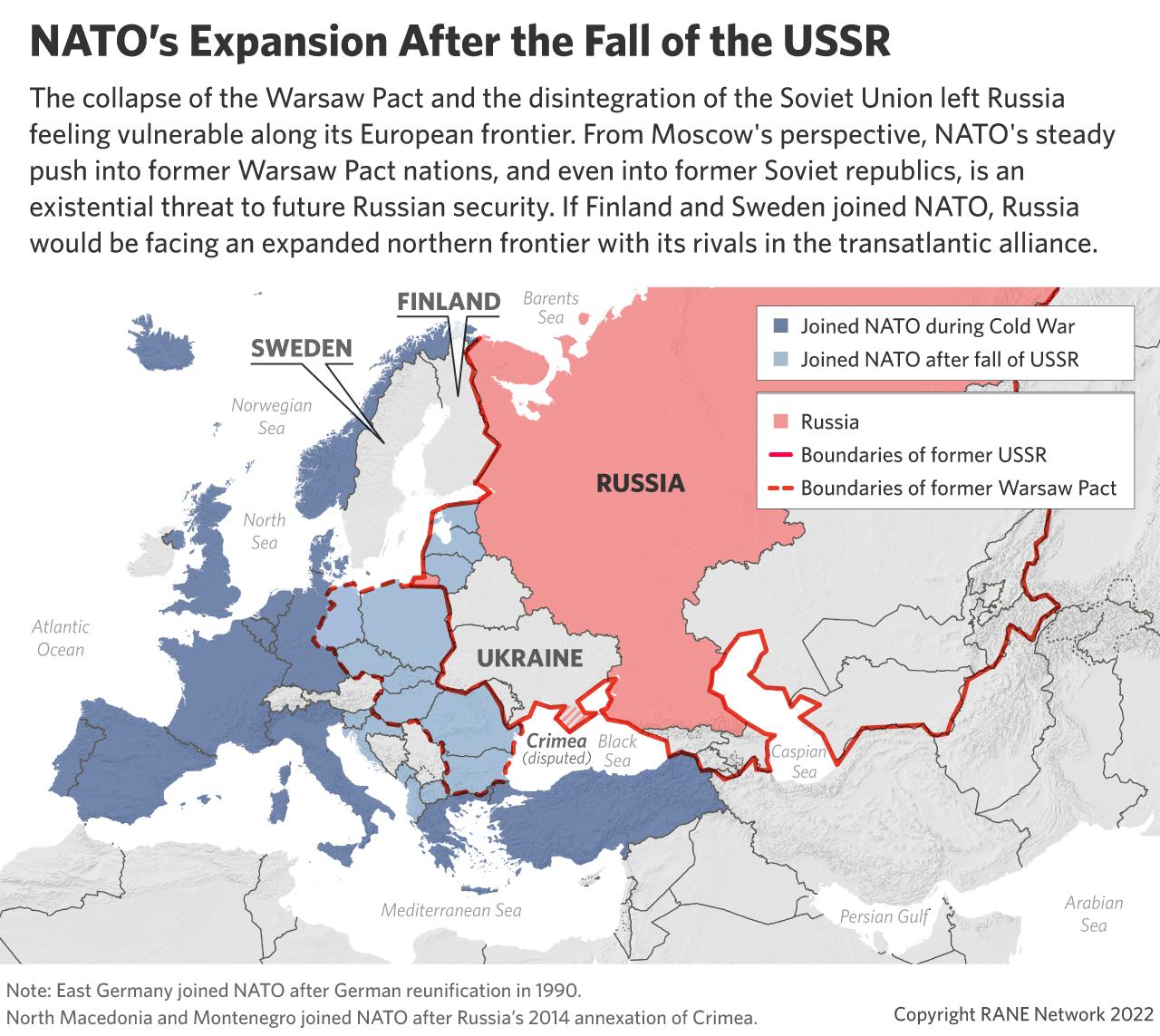
Turkey will prevent Sweden's and Finland's rapid accession to the NATO alliance as Ankara seeks concessions from them. On May 18, Turkey blocked a rapid vote to allow the formal beginning of the accession process and is poised to continue doing so as it awaits concessions from Stockholm and Helsinki. Though this delay was unpopular with other members of NATO, neither Sweden nor Finland is under imminent threat of Russian military aggression, giving Turkey some time to delay the process while it negotiates with the pair. So far, no NATO member has floated the possibility of punitive measures against Turkey, preferring to focus on a diplomatic solution to maintain alliance cohesion amid its newfound purpose in the wake of the war in Ukraine.
- Sweden will struggle to accept Turkey's demands, in part because the Swedish government includes members of parliament of Kurdish descent. Sweden has also softened its stance on the PKK after a 2020 inquest cleared the group of involvement in the 1986 killing of former Swedish Prime Minister Olaf Palme.
- Far fewer Kurds call Finland home, but Helsinki's long-standing commitment to human rights shapes its arms export policies, complicating ending its arms export ban to Turkey amid Ankara's controversial military operations against Kurds in Iraq, Syria and Turkey.
Turkey is unlikely to permanently block the two countries' NATO accession given the substantial pushback Ankara would endure from the rest of the alliance for doing so. Turkey's role in NATO is already controversial some alliance member countries. Turkey has come close to war with fellow NATO member Greece in the past over ongoing territorial disputes in the eastern Mediterranean Sea. If Turkey permanently blocked Sweden's and Finland's accession to the alliance, countries like the United States, the United Kingdom, France and Germany could respond with punitive measures like sanctions, reduced defense ties and questions over Ankara's place in the alliance. That kind of pushback could destabilize Turkey's already frail economy and undermine Erdogan's current foreign policy of reaching out to former rivals to build up trade links and offset some of the economic pain at home. It would also play into the hands of the Turkish opposition, which would use it to reinforce public perceptions of Erdogan as erratic and ineffective.
- NATO has never ejected a member; what this process might look like is not specified by the alliance's founding charter.
Even a delayed accession process could harden anti-Turkey sentiment in Europe and the United States, delaying or disrupting aid and arms deals. As Turkey drags out the process, some — including Turkey critics in the U.S. Congress — will want to pressure Ankara to drop its veto. Congress might be tempted to block U.S. arms deals, such as a potential sale of F-16s to Turkey; it might also enact new punitive measures against Turkey, such as sanctions over the government's human rights record. EU politicians could question the annual 6 billion euros (about $6 billion) the bloc sends to Turkey to support the 4 million refugees living in the country and the billions of euros it gets from the EU budget as an EU candidate country. Activists meanwhile might call for a boycott of Turkish goods throughout the Continent.
- Turkey's defense industry is already sanctioned under the U.S. Countering America's Adversaries Through Sanctions Act, which went into effect after Turkey took delivery of the Russian S-400 missile system in 2020. Congress also remains critical of Turkey's refusal to recognize the World War I-era widespread killings of Armenians as a genocide, and some in Congress see Ankara as undermining U.S. counterterrorism strategy in Syria by targeting the YPG.
- The European Union imposed sanctions on Turkey's energy industry in reaction to Turkey's aggressive drilling off the coast of Cyprus, which the European Union saw as a violation of Cypriot sovereignty. The sanctions had only a minor effect on Turkey's overall economy, and did not stop Turkey from drilling in the disputed waters. The European Union also remains concerned about the authoritarian drift of the Erdogan government, though it has yet to impose sanctions over that issue.
