
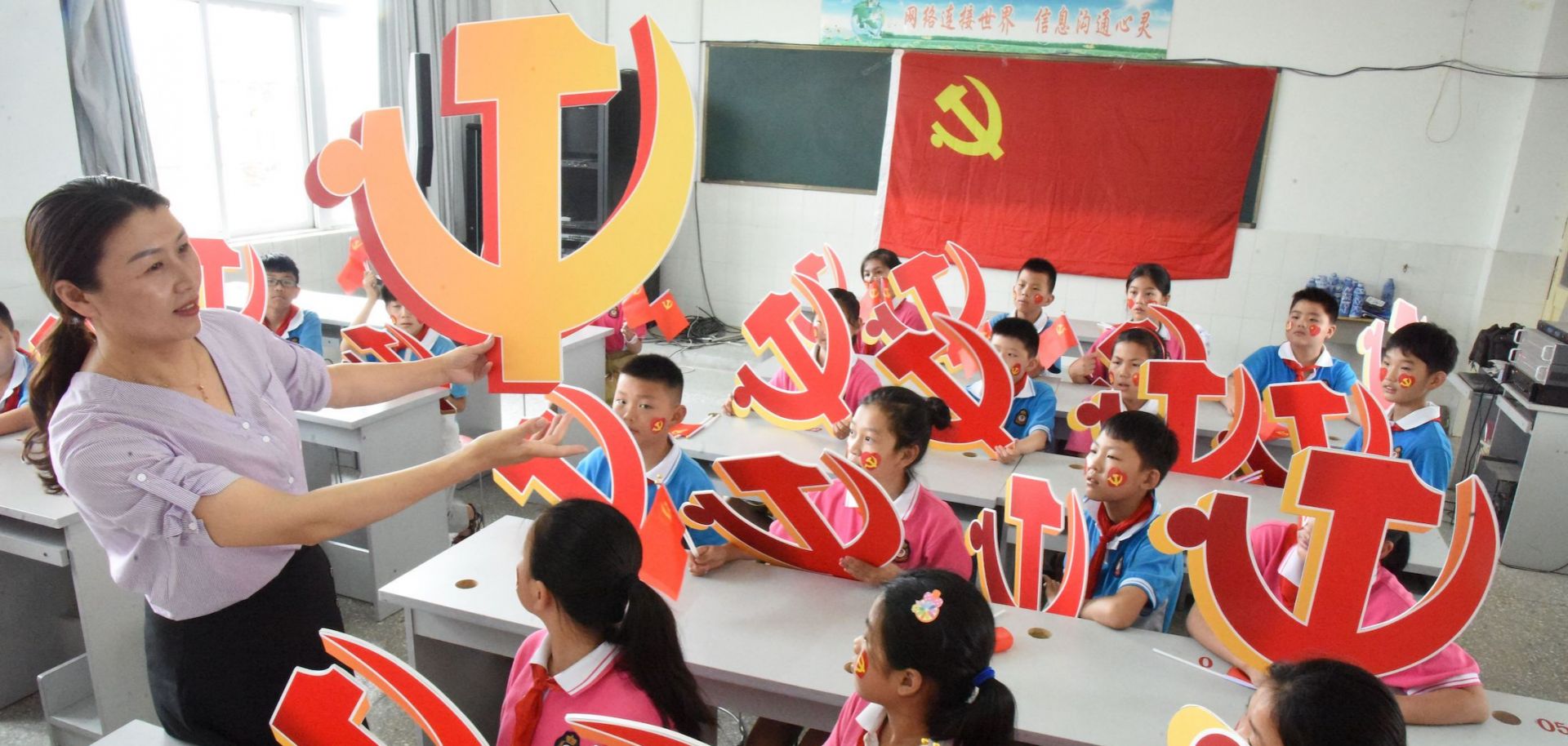
China’s new family education law, if strictly implemented, may cause greater policy gridlock under President Xi Jinping by increasing support for liberal political factions and prompting public protests against local authorities from parents and youth. On Oct. 23, the Standing Committee of the National People’s Congress passed the Family Education Promotion Law (FEPL), which requires social institutions and parents to educate minors in line with Beijing’s orthodox political views. The law, which will come into force on Jan. 1, stipulates parents and all social institutions that nurture children (including schools, healthcare facilities, public entertainment venues, and news outlets) must conduct “family education services” that cultivate socialist moral qualities, physical fitness, political loyalty, cultural orthodoxy, and “healthy” (less digital) leisure activities in minors. This includes requiring parents and institutions to encourage children to love the Chinese Communist Party (CCP), develop an unflinching work ethic driven by a desire to make China a great nation, balance schoolwork with other life endeavors, and avoid excessive use of the internet. Schools and local governments could be held liable for failing to implement FES. Institutions and family members are also encouraged to inform the authorities of parents who aren’t sufficiently implementing FES, after which authorities may order parents to undergo FES training.
Beijing is hoping to counter trends among China’s youth, including disillusionment with the social contract and support of Western liberal ideals, that could threaten the central government’s hold on power and plans for economic growth. Authorities aim to use the FEPL to encourage minors to work harder, adopt Beijing’s traditional cultural values, and respect social institutions like filial piety and marriage — primarily with entreaties to embrace unpopular socialist ideals.
- China’s youth are growing disillusioned with the long hours at school and in the office required to create successful careers and support their families. This has resulted in a “lying flat” movement where young Chinese workers (especially those in the tech industry) opt for lower pay in exchange for having less stressful jobs, which, in Beijing’s view, runs the risk of creating a less productive workforce.
- For decades, Chinese children have idolized foreign cultures, including those of the United States, Western Europe, South Korea, and Japan. Many younger Chinese citizens have also steeped themselves in foreign music, movies, television shows and (sometimes) values like democracy and liberalism — running counter to Beijing’s aim to ensure the new generations value Chinese culture and support Chinese socialism.
- In recent years, socially progressive movements that contradict the values of senior officials in the male-dominated and conservative CCP have also begun popping up in China. This has included nascent movements to end domestic and sexual violence, question gender and sexuality norms, and reject raising a family in a hyper-expensive society.
This represents a major escalation in the state’s expanding intervention in social affairs to boost China’s economy and political loyalty by legislating a strong work ethic and a stronger sense of nationalism. The FEPL moves beyond Beijing’s current restrictions on education and leisure activities by directing how parents raise their children and attempting to mandate how youth think about China’s highly competitive society. This marks a further escalation of Beijing’s new campaign to reshape culture, which has seen the Chinese government distort supply and demand signals, impose content restrictions, and outright ban certain markets since July.
- In July, China banned private tutoring services in what Beijing claims was an effort to improve education equity. But critics have argued the move is instead aimed at funneling more students through the public school system, which is subject to Beijing’s political and ideological campaigns, with China banning foreign curriculum in K-9 schools in May.
- In late August, China restricted the time minors can spend playing video games to one hour per day on Fridays, Saturdays and Sundays. Beijing also called on regulators to block games that contradict Beijing’s views on China’s history, which emphasize the benefits of socialism.
- In early September, Chinese social media companies like WeChat banned popular fan pages of South Korean pop stars amid a campaign to curtail “fan culture” in which China’s youth idolize (especially foreign) pop stars that espouse Western views of individuality and don’t represent traditional CCP values.
The FEPL, however, does little to address the grievances driving young Chinese to question social norms, and instead risks generating more opposition and local protests among Chinese parents and discontented youth as Beijing’s nationalism campaigns continue to divide the populace. The child-parent relationship is a cornerstone of Chinese society — stemming from both the Confucian virtue of honoring elders, as well as China’s weak social safety net that makes parents reliant on their children for retirement. The aftershocks of the One Child Policy, which restricted family sizes from the late 1970s through 2015, and rising urban incomes have driven most Chinese parents to have only one child. Social security is underfunded and parents often move in with their adult children, who financially and materially provide for them. Given this retirement norm, and China’s cultural tradition of valuing education, parents are heavily invested in their children’s education and career success. Thus, Beijing’s interventions in child-rearing via the FEPL and its “balanced living” guidelines will be ill-received by parents who need to prepare their children for China’s cut-throat work environment (in part to secure their own retirement). Even average citizens who are otherwise apathetic to Beijing’s political campaigns will likely shirk at the idea of social institutions taking up their children’s valuable time to spread propaganda. Youth, especially young adults, will also be upset by Beijing’s bans on their hobbies and attempts to paper over societal concerns with admonitions to “just work harder” and “support the CCP.” Furthermore, Chinese society is increasingly divided into a vocal minority who supports Beijing’s political campaigns and a majority who desire minimal state intervention in their lives. If strictly implemented, the FEPL could further aggrieve this silent majority and spur local protests from parents and youth aimed at city officials.
Despite these risks, Beijing will not back down on its cultural crackdown, which could fuel national policy gridlock with President Xi’s conservatives by nurturing grassroots support for liberal factions in the CCP. President Xi’s need to maintain a strong leadership image and buttress the CCP’s damaged political image amid China’s increasing diplomatic isolation and persistent economic slowdown will compel his government to maintain its cultural campaign. But some local officials will be slow to enforce FEPL violations on parents and youths directly, lest they breed protests targeting local government offices. They may still enforce FEPL mandates on schools and other social institutions charged with family education, in order to curry favor with Beijing, causing sectors from health and entertainment to education and internet services to cater their products to Beijing’s orthodox cultural preferences. CCP members and senior officials widely support efforts to bolster worker productivity and child-rearing and eschew social justice campaigns, so many Beijing officials will support FEPL implementation. But should protests proliferate in localities where the new law is strictly enforced, liberal voices in the upper echelons of the CCP may gain power (with support from some local officials) and increasingly question Xi’s market interventions, leading to more economic policy gridlock. Sudden leadership changes are exceedingly rare in China, so Xi’s presidency is secure. But many of Xi’s predecessors have been hamstrung by policy disputes between conservatives and liberals. And a strictly implemented FEPL, along with other policies that attempt to legislate Beijing’s morality, may well push China toward such gridlock over the next five years.
