
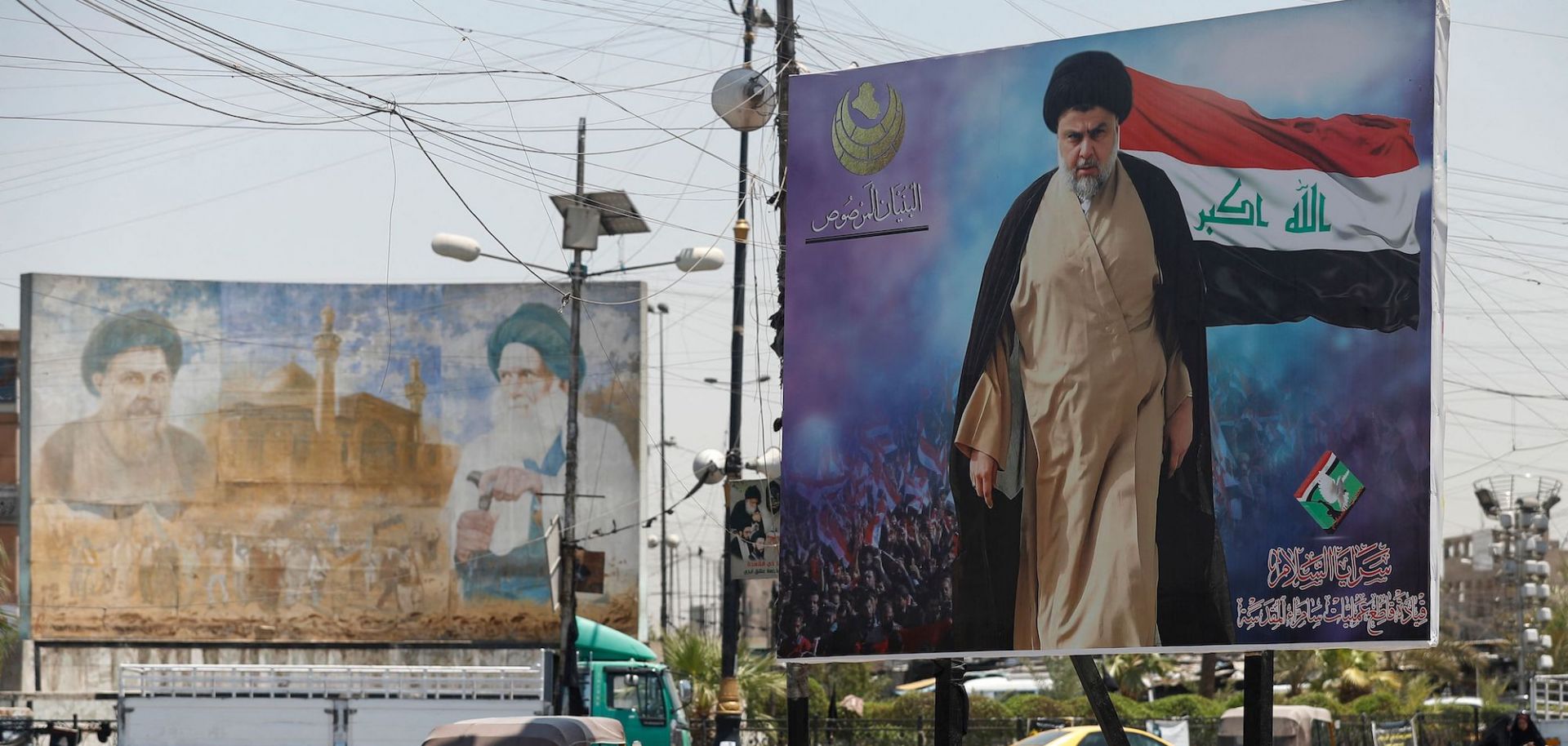
A large poster of Shiite cleric Moqtada al-Sadr is seen in al-Sadr City, Iraq, on July 15, 2021.
By backing out of Iraq’s October parliamentary elections, Shiite cleric Moqtada al-Sadr is positioning himself as a likely agitator of the next government’s stability and risks handing more votes to allies of Iranian-backed militias. In a televised speech on July 15, al-Sadr announced his “withdrawal from the upcoming elections'' in order to “preserve the rest of the country and to save Iraq which was burnt by the corrupt.” A handful of his political followers have also since said they would boycott the upcoming parliamentary elections.
- Al-Sadr’s Sairoon (“Forward”) alliance won 54 seats in Iraq’s 2018 parliamentary election, the most of any other alliance or bloc. Given the size of al-Sadr’s bloc, many of its members will still likely run in the polls, just without the cleric’s explicit endorsement.
- Unlike the many rubber-stamp or symbolic legislatures of its regional neighbors, Iraq’s parliament wields real power and largely influences who becomes prime minister, the country’s most powerful political position.
Al-Sadr is likely trying to maintain his political capital amid growing anti-government anger following a recent major hospital fire in Nasiriyah. The deadly July 12 fire has concentrated popular anger at the Iraqi government and risks eroding the political influence and popularity of those currently in office due to the likely government negligence that contributed to the tragedy. The fact that the fire took place under a Sadrist-controlled health ministry is especially threatening to al-Sadr’s political legitimacy. al-Sadr is a firebrand Shiite cleric with a famous political family, an enormous following among Shiite Iraqis and a history of having indirectly led and organized violent militias during the 2000s. Notably, al-Sadr also currently leads the largest political alliance in the parliament and champions anti-corruption causes, which makes the hospital fire potentially more damaging to his influence.
- The July 12 Nasiriyah hospital fire killed at least 92 people, mostly patients and medical staff in a COVID-19 isolation unit — has since prompted immediate public protests and anger. The recent tragedy is aggravating existing Iraqi frustration about ineffective governance, given that it follows a similar deadly fire at a Baghdad hospital in April that was likely also caused by similar negligence (faulty infrastructure).
Al-Sadr will likely channel his political influence into pushing the future government to reform in line with his own anti-corruption agenda. Withdrawing from a more visible political role will position al-Sadr to play an opposition-type role in the next parliamentary cycle, where he will likely demand social and political reform measures that are popular with his base but often difficult for the government to achieve, like populist economic measures or dramatic overhauls of government ministries. This could help rehabilitate his political image but will become an enormous headache for the next government, given al-Sadr’s ability to channel popular frustrations into large protests.
- Al-Sadr led and galvanized significant and disruptive anti-corruption protests in Baghdad in 2016 and likely maintains the political influence to do so again in pursuit of anti-corruption objectives. In the intervening years, al-Sadr has repeatedly called for reform measures but has also been more muted publicly since his alliance became the largest in parliament in 2018, in part because critiquing the government critiques his own allies.
- Prior to previous elections, al-Sadr has issued similar ultimatums and warnings that he will withdraw or pull back from political action, underscoring how withdrawing from politics is a frequent tactic he has used to maintain his political capital. However, this is the first time al-Sadr has done so while also controlling the largest bloc in parliament, creating some uncertainty regarding how he will maintain political influence while also playing an opposition role.
Without his overt backing, al-Sadr’s political alliance could suffer in the October elections, opening up more space for Iranian-backed Shi’ite politicians to gain seats and political influence. Iraq is majority Shiite and competition for the Shiite popular vote among political blocs often determines who will lead the next government.
- The next largest bloc in Iraq’s parliament is the Fatah bloc, which is closely aligned with Iranian-backed militias and is led by a close ally of the government in Tehran and former militia leader. Iranian-backed Shiite militias have seen their political freedom expand in Iraq in the years since they were empowered by the federal government to fight the Islamic State alongside federal forces. They are also believed to be behind the ongoing assassinations, harassment and intimidation campaigns targeting pro-reform activists in the country.
- If al-Sadr’s allies lose some seats in the upcoming polls, it could also open up more space for independent candidates not explicitly aligned with any existing alliances, creating some unpredictability in government formation after the elections. While these independents may form their own alliances, they may also fall under the sway of Iranian-backed politicians.
