
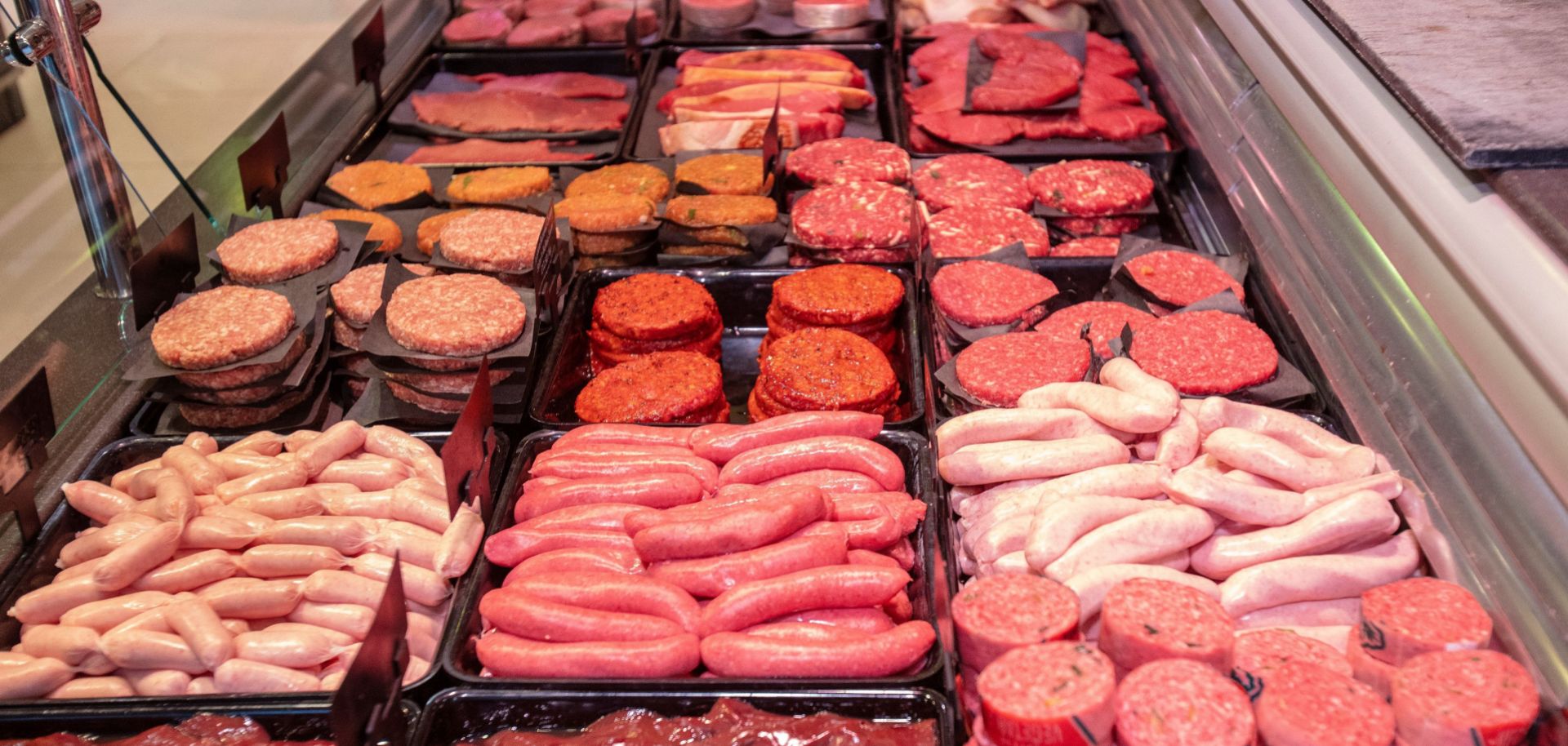
Pork sausages and beef burger patties are seen at a butcher's shop in Ballymena, Northern Ireland, on Dec. 10, 2020.
A truce in the EU-U.K. trade dispute will temporarily calm tensions, but disagreements over the long-term implementation of the Northern Ireland protocol will continue to threaten the continuity of the Brexit trade deal. On June 30, the European Union and the United Kingdom agreed to delay for three months the implementation of a ban on the sale of some British meat products in Northern Ireland, which was set to enter into force on July 1. The ban is a part of the Northern Ireland protocol of the 2019 Brexit agreement, which establishes customs controls at the Irish Sea in order to keep the land border between Northern Ireland and the Republic of Ireland open. The British government argues that the protocol disrupts trade between Great Britain and Northern Ireland and demands a softer implementation of it.
- As a part of the June 30 agreement, the European Union will allow the movement of generic medicines from Great Britain to Northern Ireland. Brussels will also waive a requirement for Northern Irish motorcyclists traveling to Ireland to have an EU insurance certificate. In addition, farm animals crossing the Irish Sea will not need to have ear tags changed multiple times.
- In recent weeks, the U.S. government has urged London and Brussels to solve their disputes over Northern Ireland, arguing that the preservation of the 1998 peace agreement is essential to prevent a return to sectarian violence on the island. According to the EU Commission, preserving peace in Ireland was a key factor in its decision to delay the implementation of the ban.
In the immediate term, the truce reduces the possibility of the European Union and the United Kingdom imposing punitive trade measures on each other and should contribute to a somewhat calmer political situation in Northern Ireland. The European Union has threatened to impose tariff hikes on U.K. products if London does not fully comply with the Northern Ireland protocol, which would probably result in the United Kingdom retaliating with trade measures of its own. The delay of the ban on chilled meat imports will also contribute to a relatively calmer political situation in Northern Ireland, where unionist forces want to abolish the Northern Ireland protocol. Still, the upcoming unionist parades in July and August could result in renewed episodes of social unrest, including clashes between unionist and republican groups and with the police.
- The Brexit agreement allows for London and Brussels to impose punitive measures if one or both of them violates the terms of the deal.
- Northern Irish unionist forces are worried that the Northern Ireland protocol grants the territory a separate legal status from the rest of the United Kingdom, which they fear could be a prelude to reunification with the Republic in the south.
- On June 30, a High Court judge in Belfast ruled that the Northern Ireland protocol is legal, dismissing a challenge from a group of unionist politicians.
While this truce buys London and Brussels some time, conflicting trade priorities and unionist pressure will still threaten the continuity of the entire Brexit legal framework. The European Union wants the United Kingdom to follow EU rules and standards on products including food to minimize disruption in trade between Great Britain and Northern Ireland. But the United Kingdom wants to remain free to establish its own regulations, in order to negotiate trade agreements with other countries and trade blocs. At the same time, unionist forces in Northern Ireland will continue to resist any attempts to give a special status to their region. Both issues will continue to generate problems with the implementation of the Northern Ireland protocol. Failure to reach a permanent solution could result in tit-for-tat punitive measures that, over time, could jeopardize the EU-U.K. free trade agreement and increase trade and operational costs for businesses in the United Kingdom and the European Union.
- The United Kingdom has identified signing free trade agreements around the world as a core element of its post-Brexit foreign policy, which explains London’s reluctance to follow EU norms and standards that could reduce room for agreements with other countries or trade blocs.
- The European Union wants to prevent Northern Ireland from becoming an entry point for products, including food, that does not align with single market standards, which explains Brussels’ pressure for London to align itself with EU rules.
- On June 30, the European Commission warned Britain that it does not intend to extend grace periods in the Northern Ireland protocol indefinitely.
